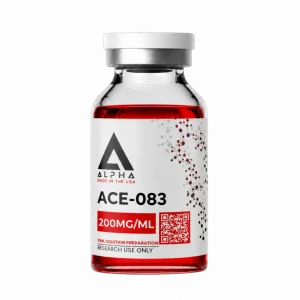
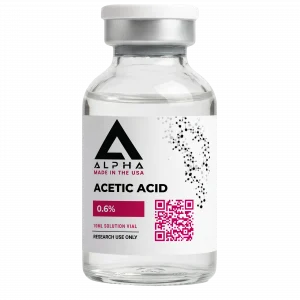
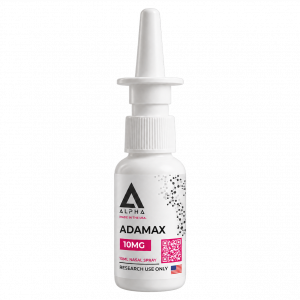
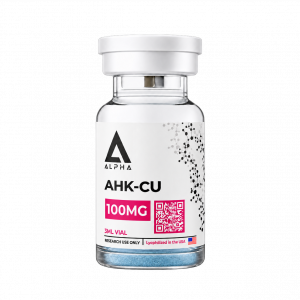
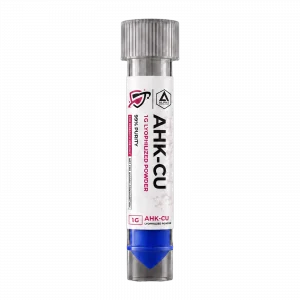
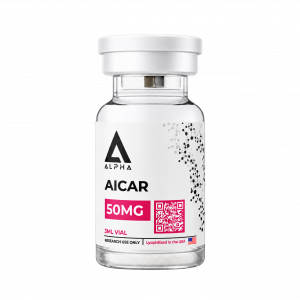
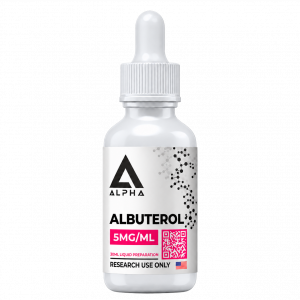
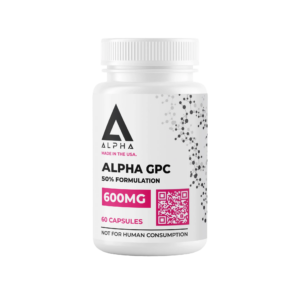
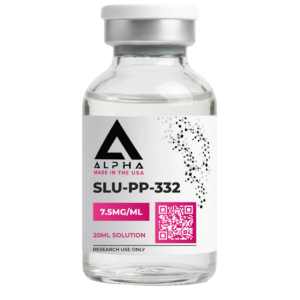
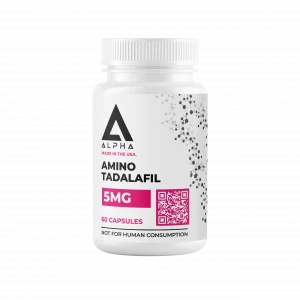
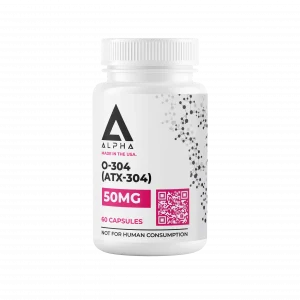
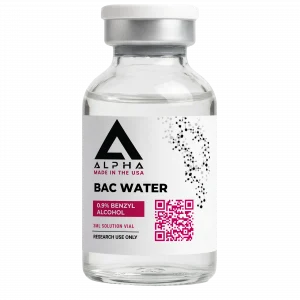
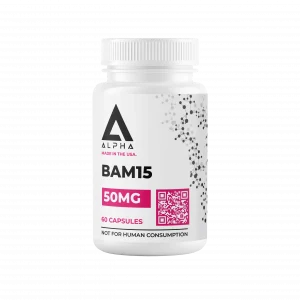
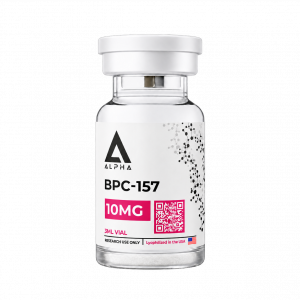
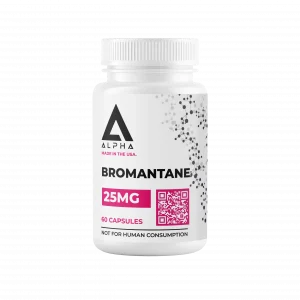
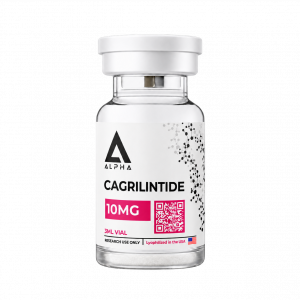
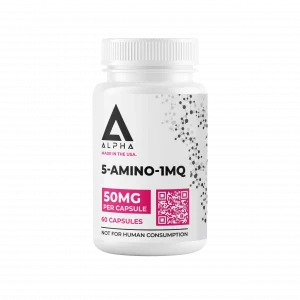
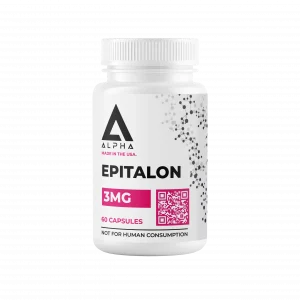
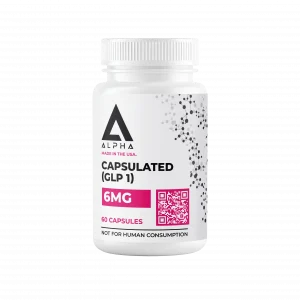
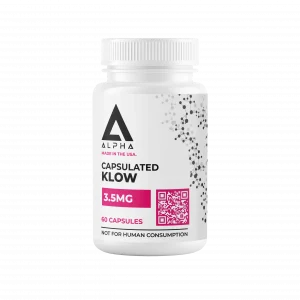
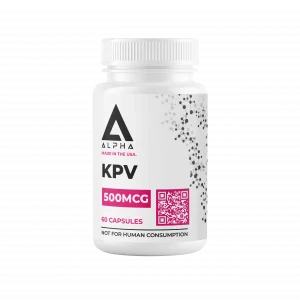
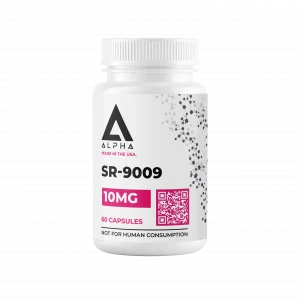
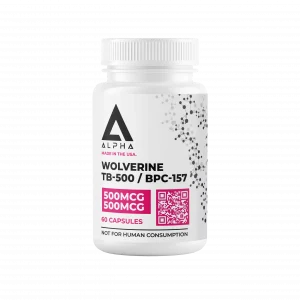
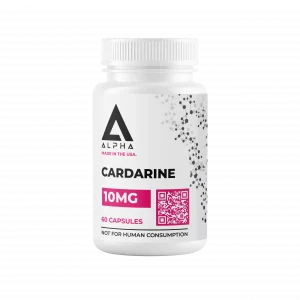
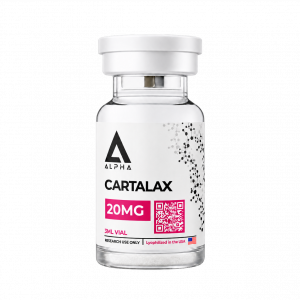
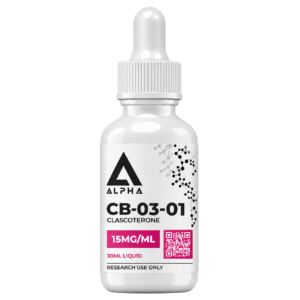
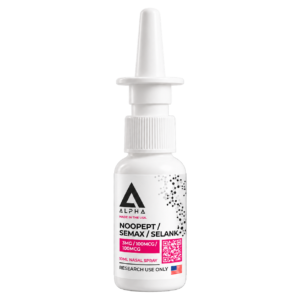
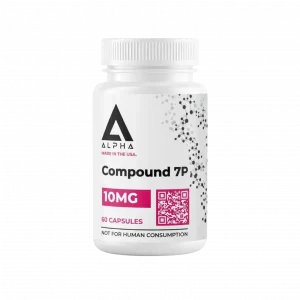
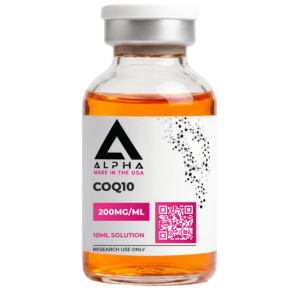
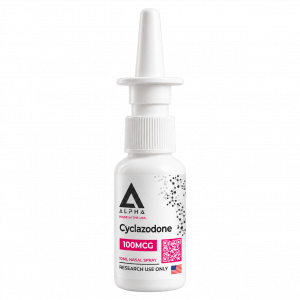
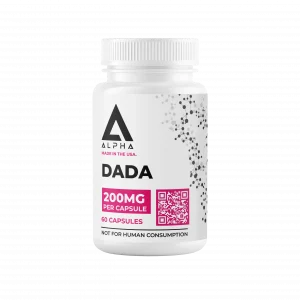
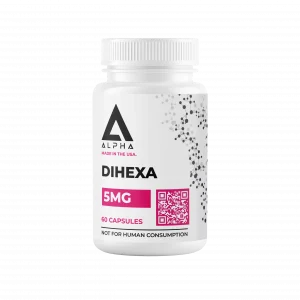
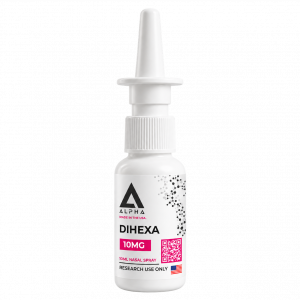
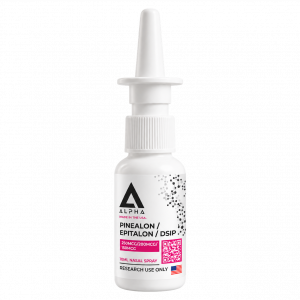
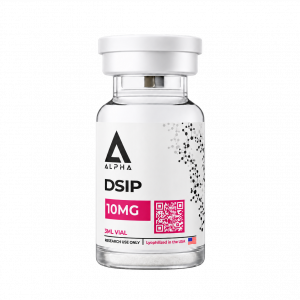
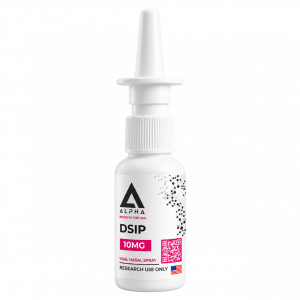
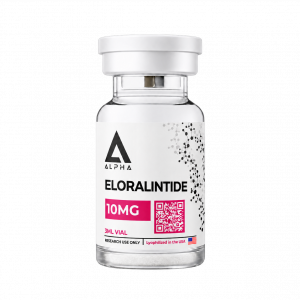
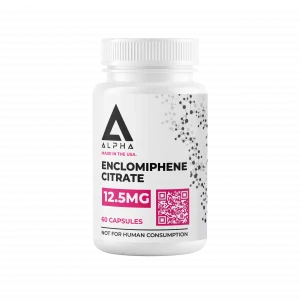
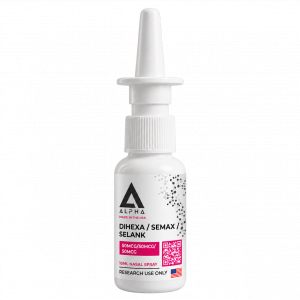
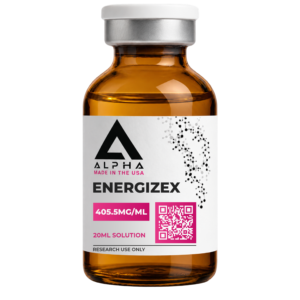
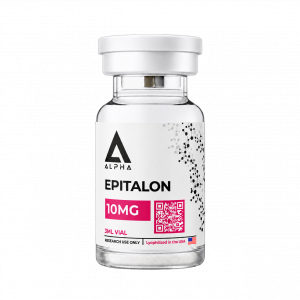
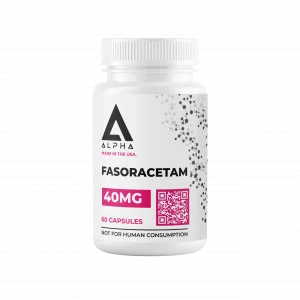
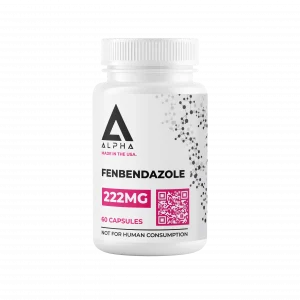
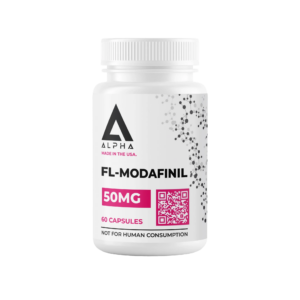
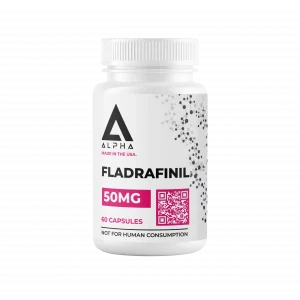
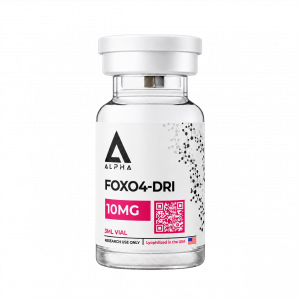
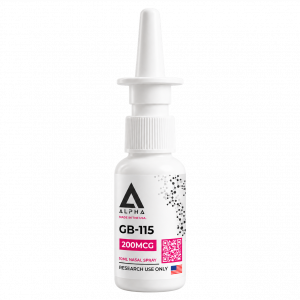
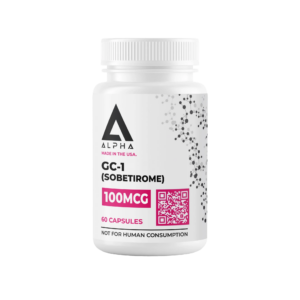
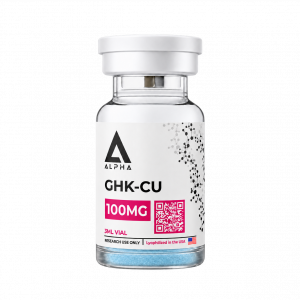
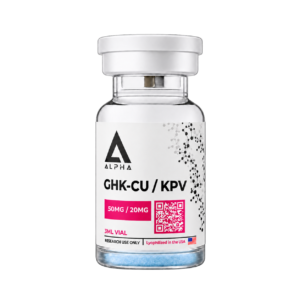
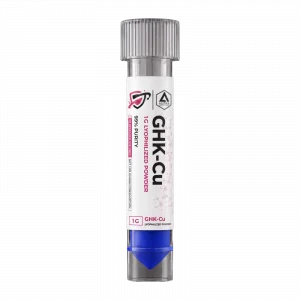
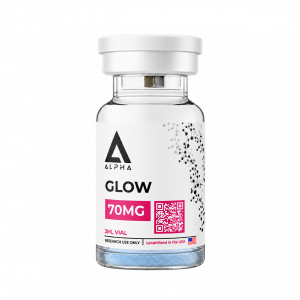
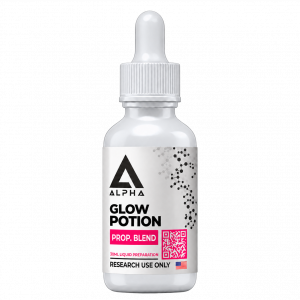
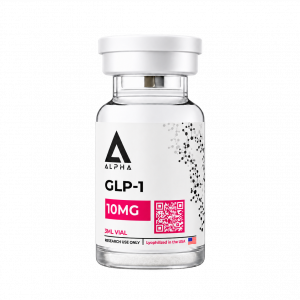
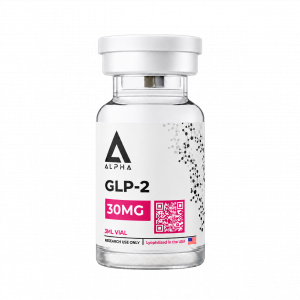
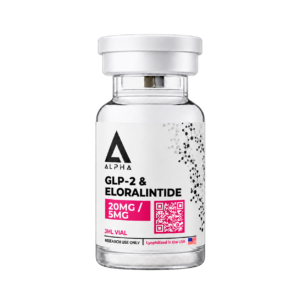
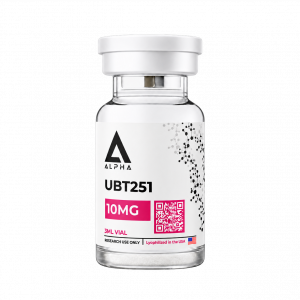
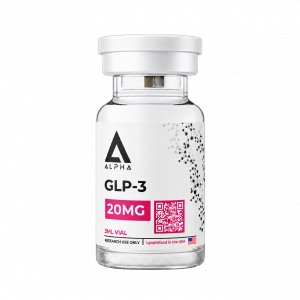
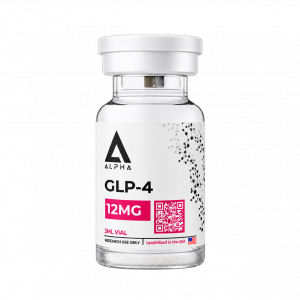
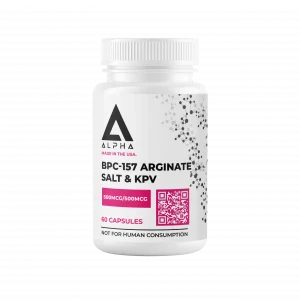
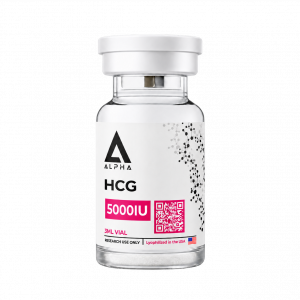
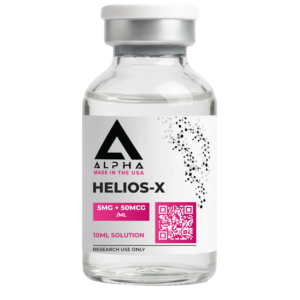
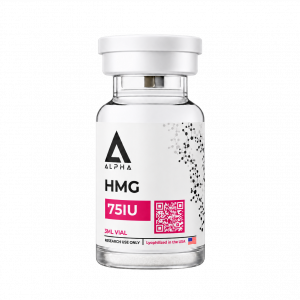
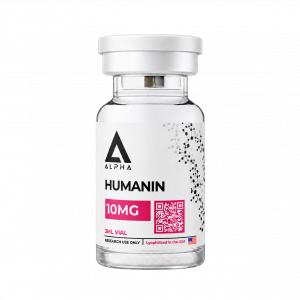
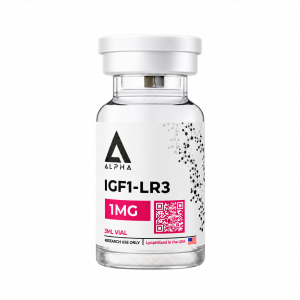
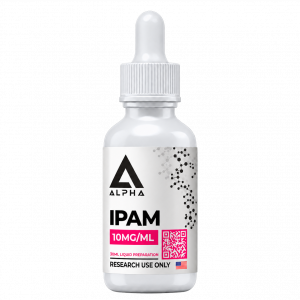
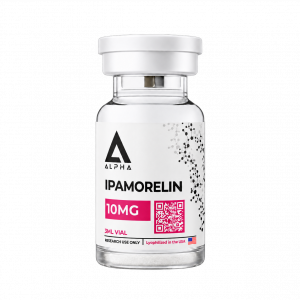
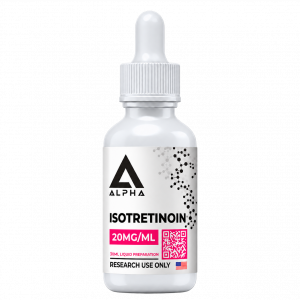
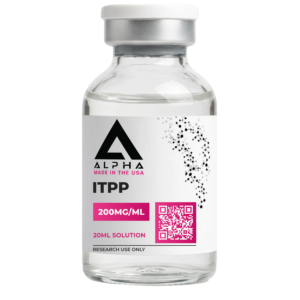
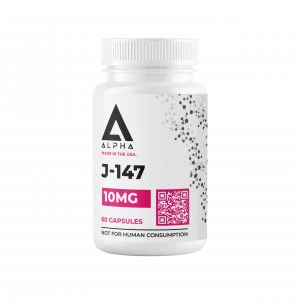
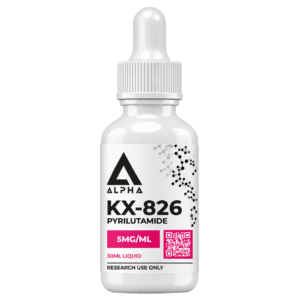
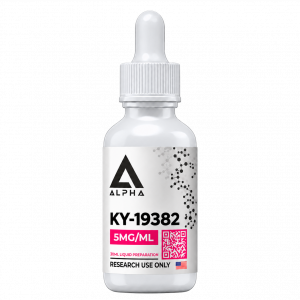
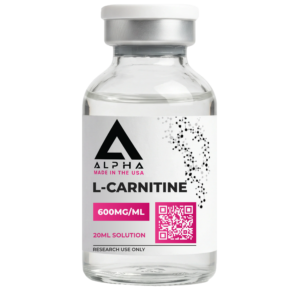
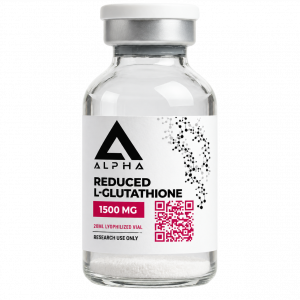
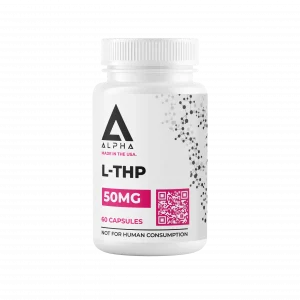
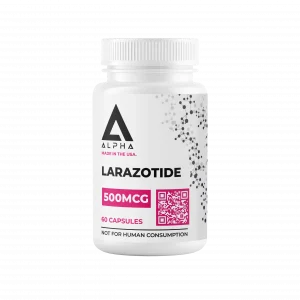
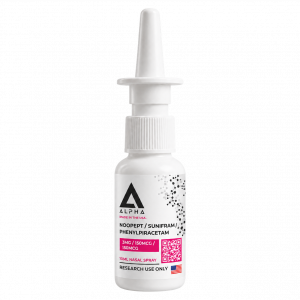
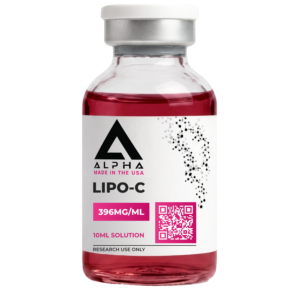
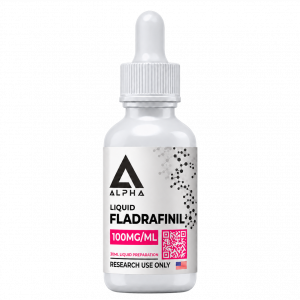
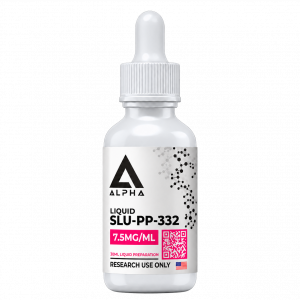
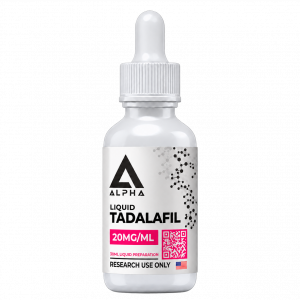
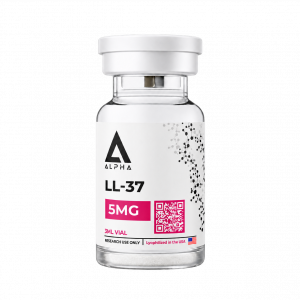
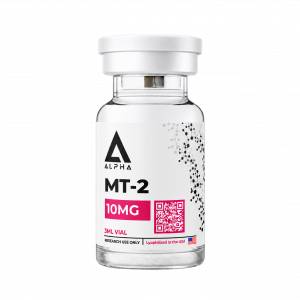
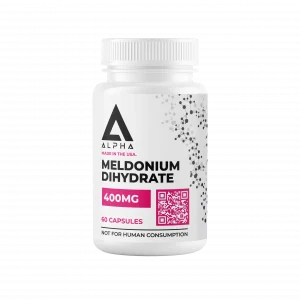
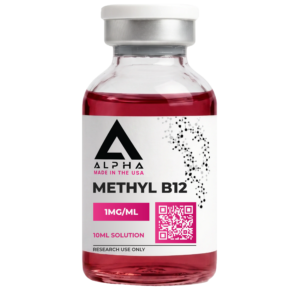
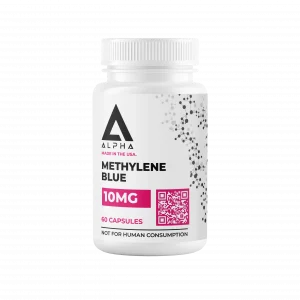
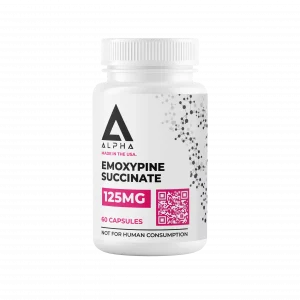
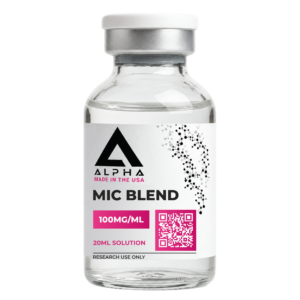
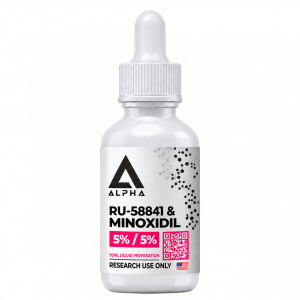
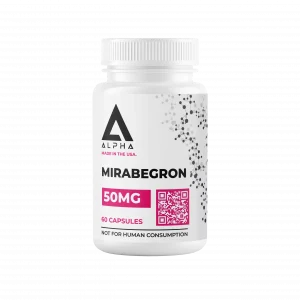
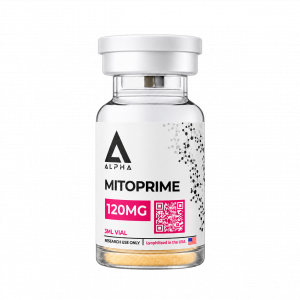
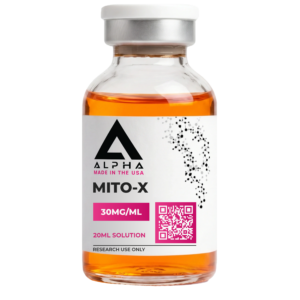
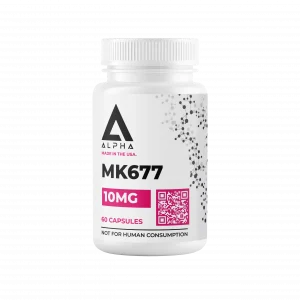
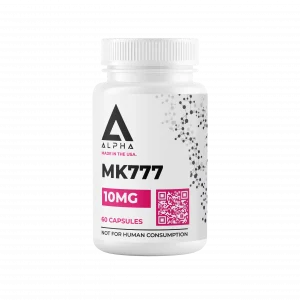
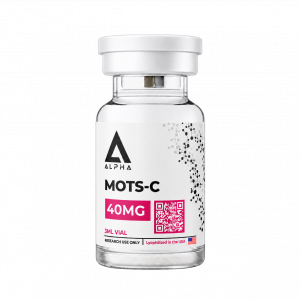
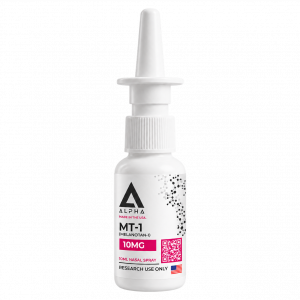
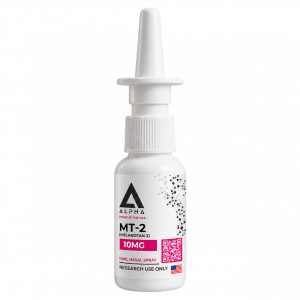
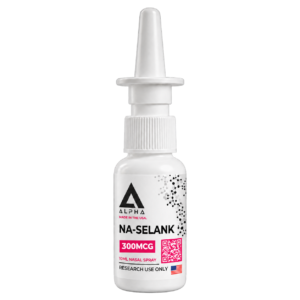
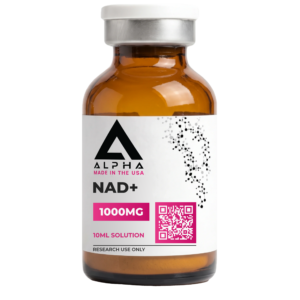
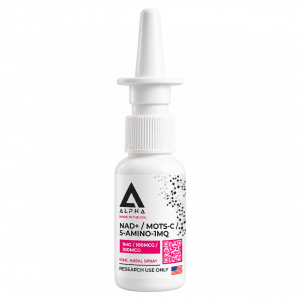
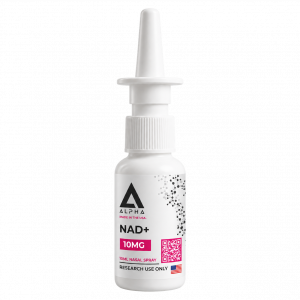
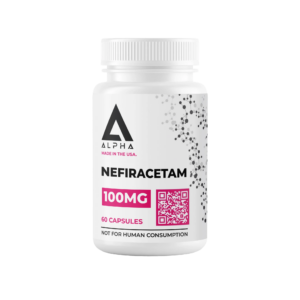
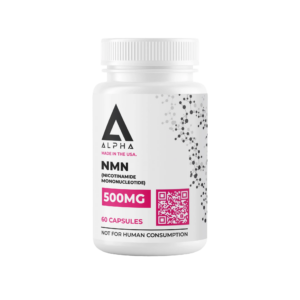
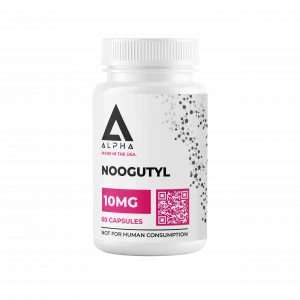
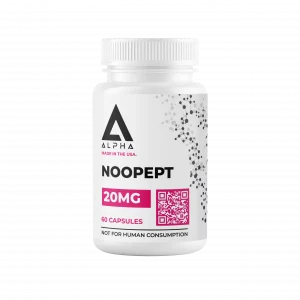
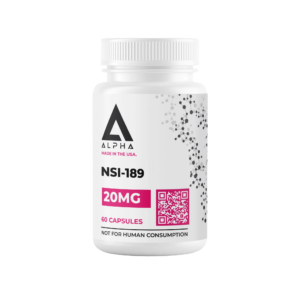
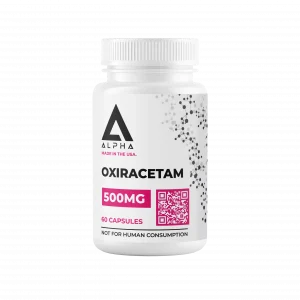
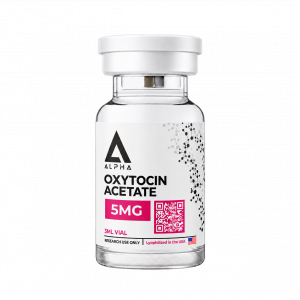
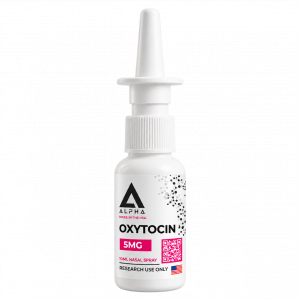
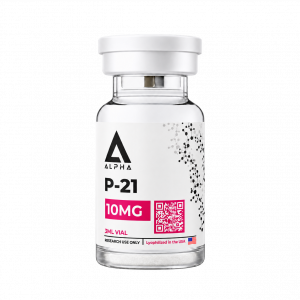
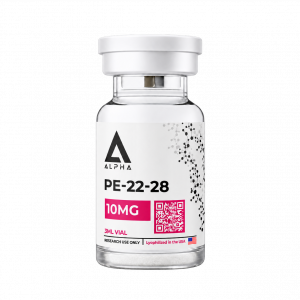
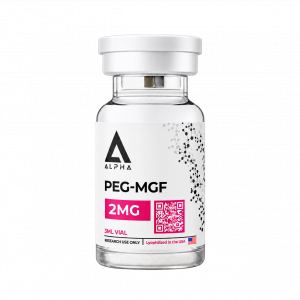
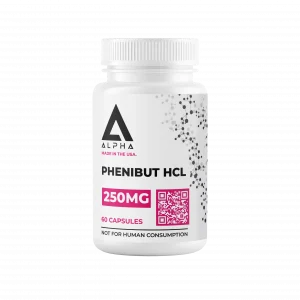
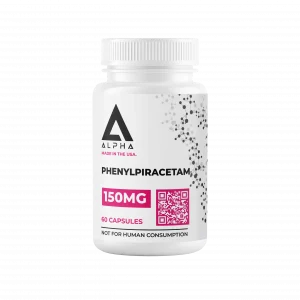
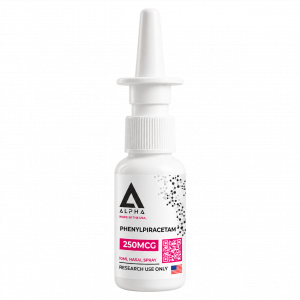
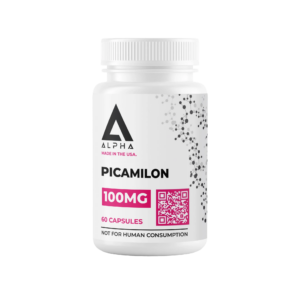
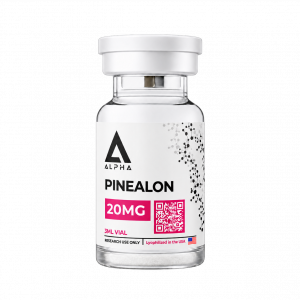
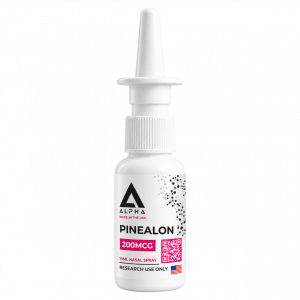
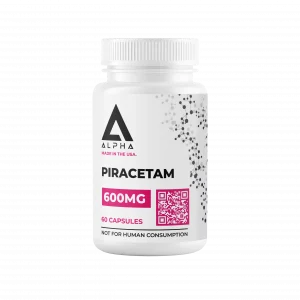
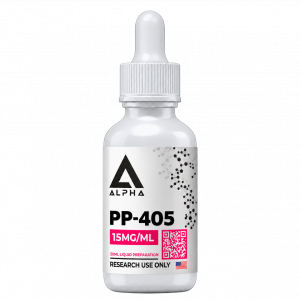
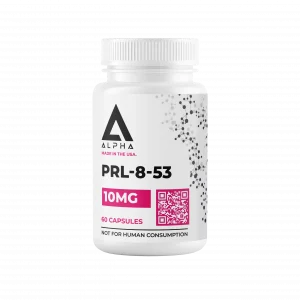
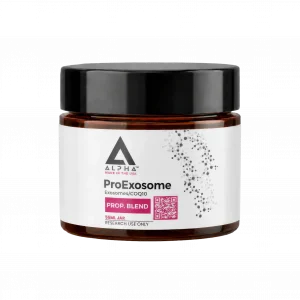
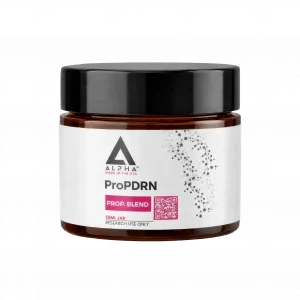
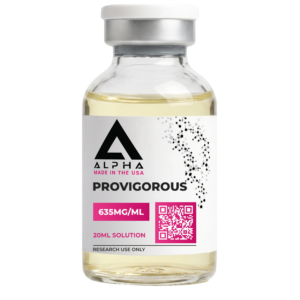
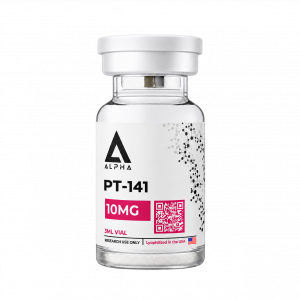
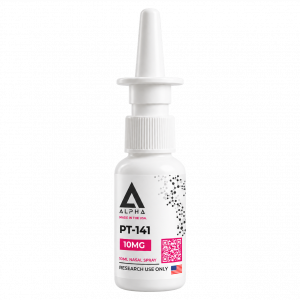
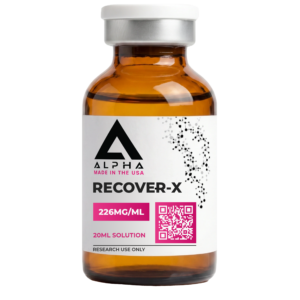
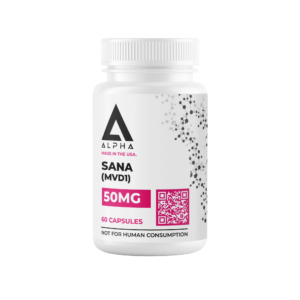
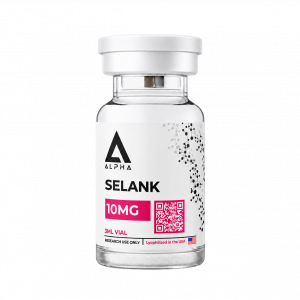
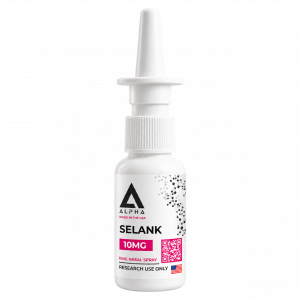
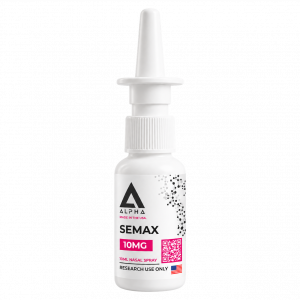
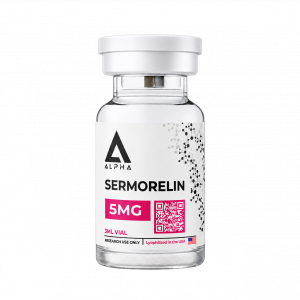
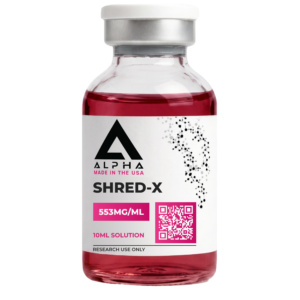
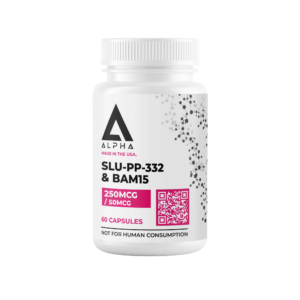
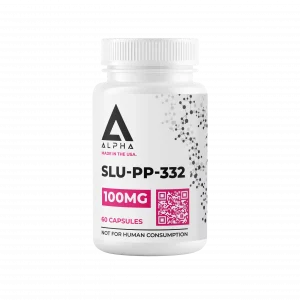
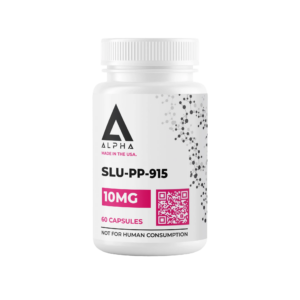
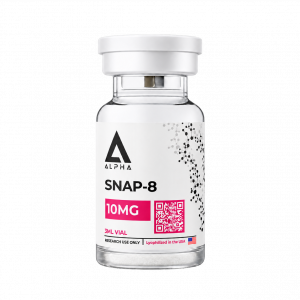
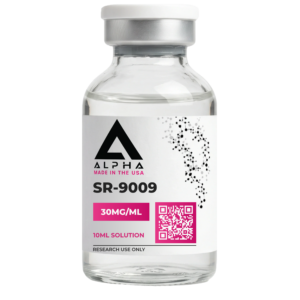
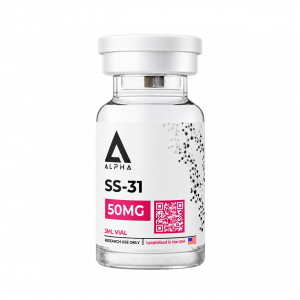
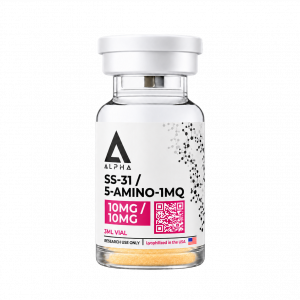
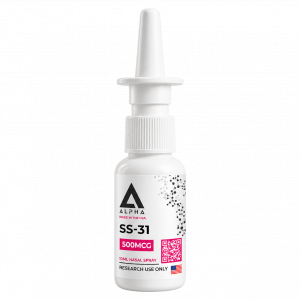
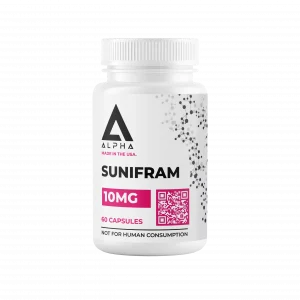
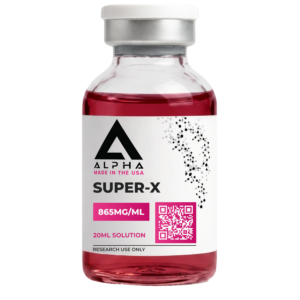
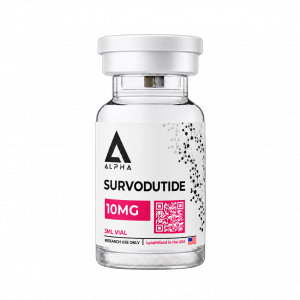
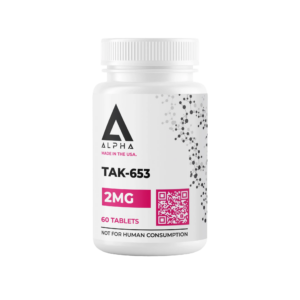
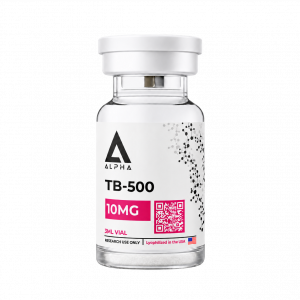
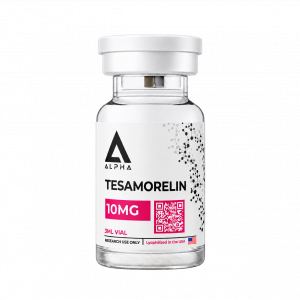
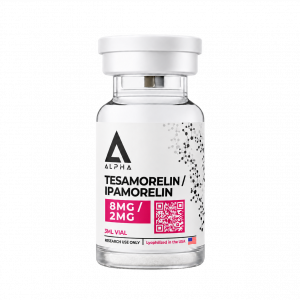
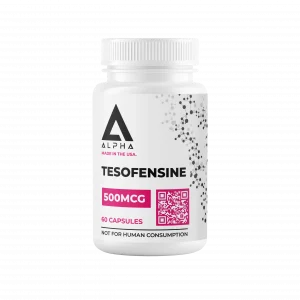
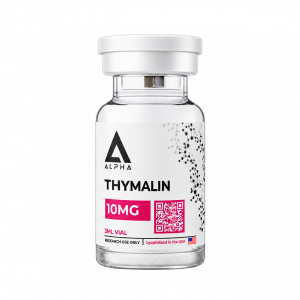
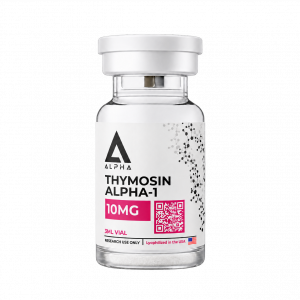
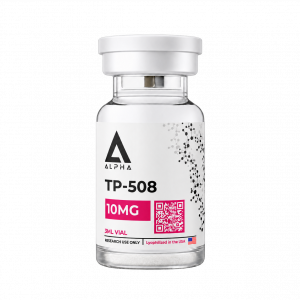
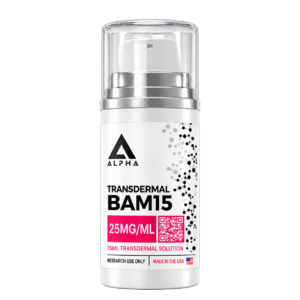
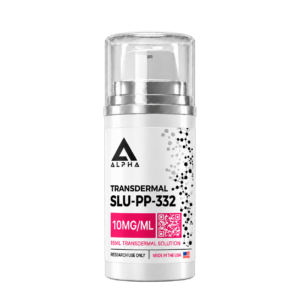
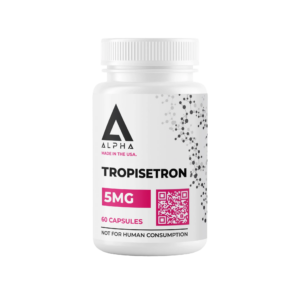
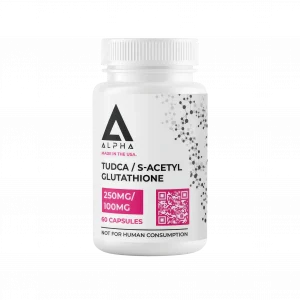
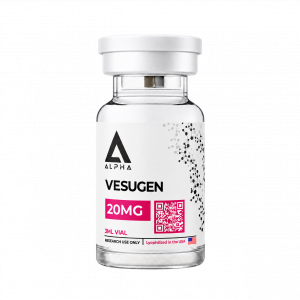
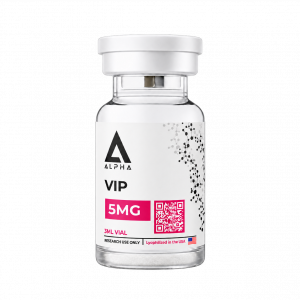
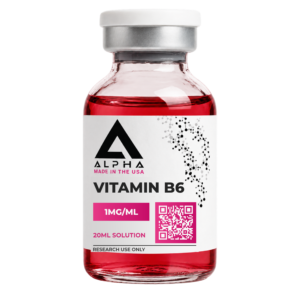
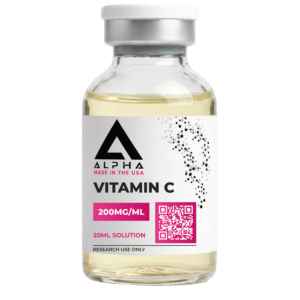
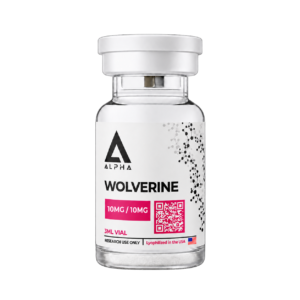
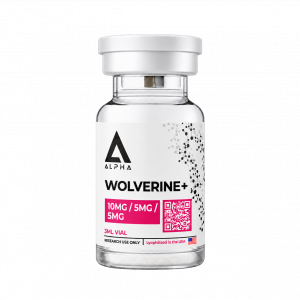
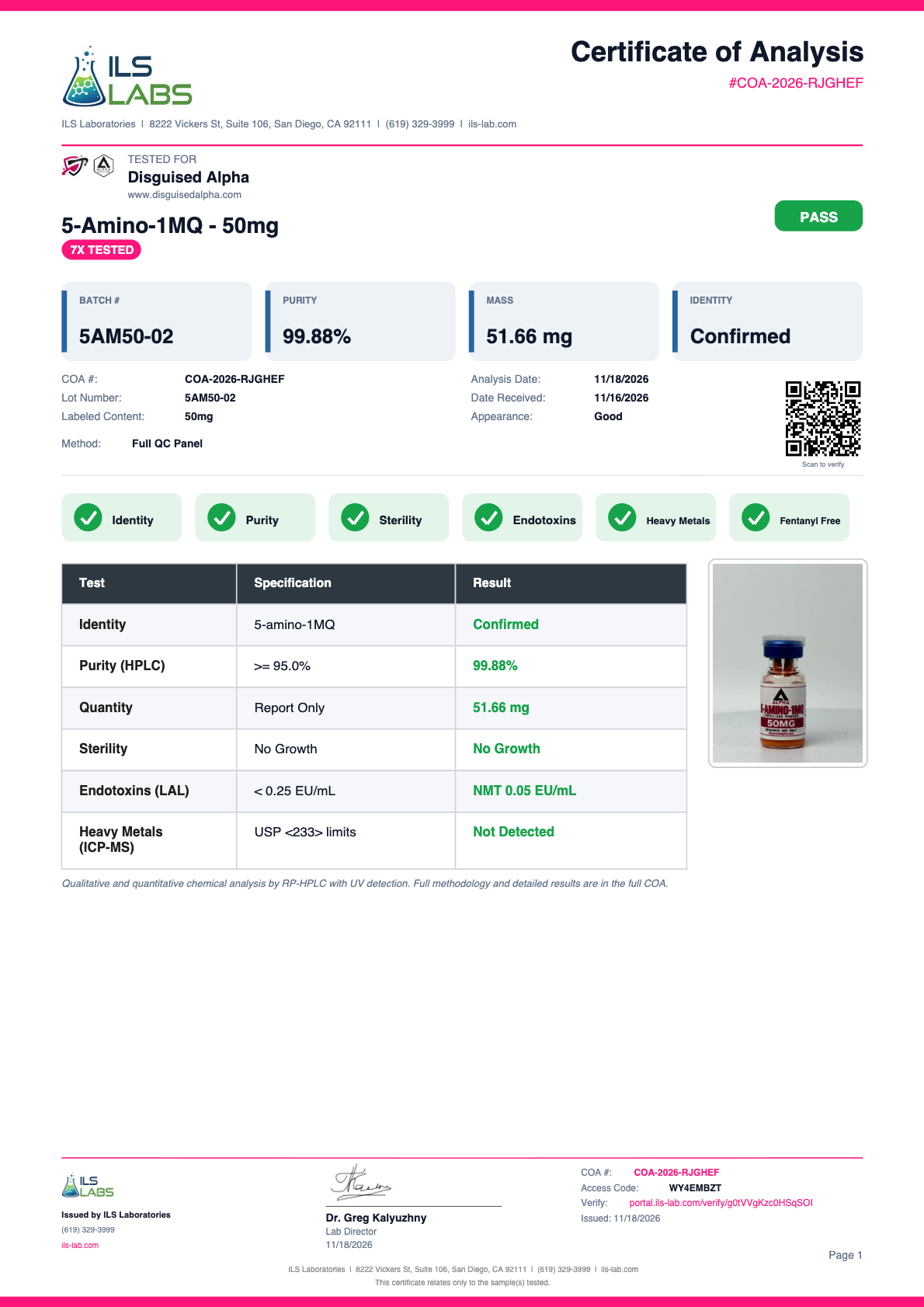
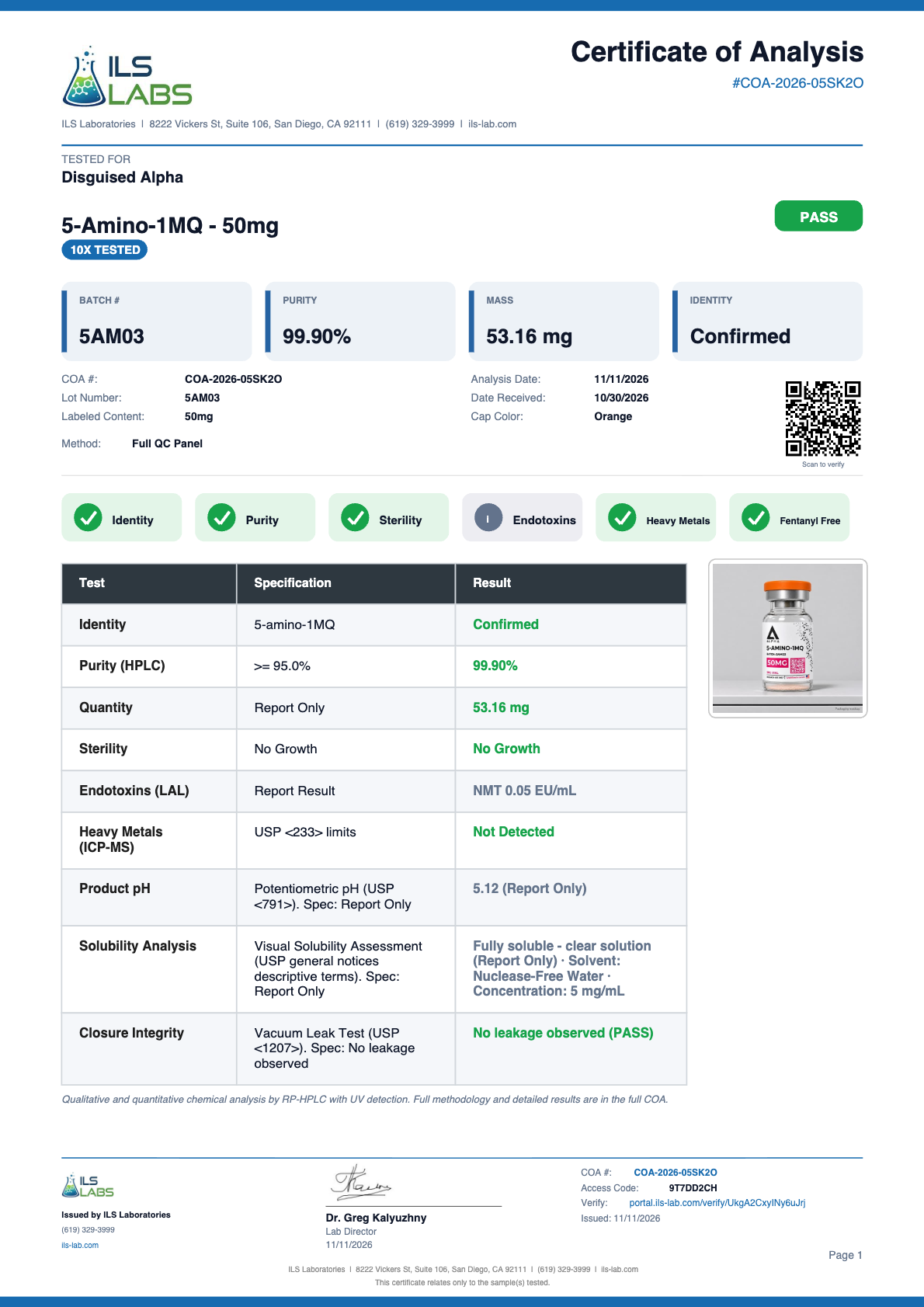
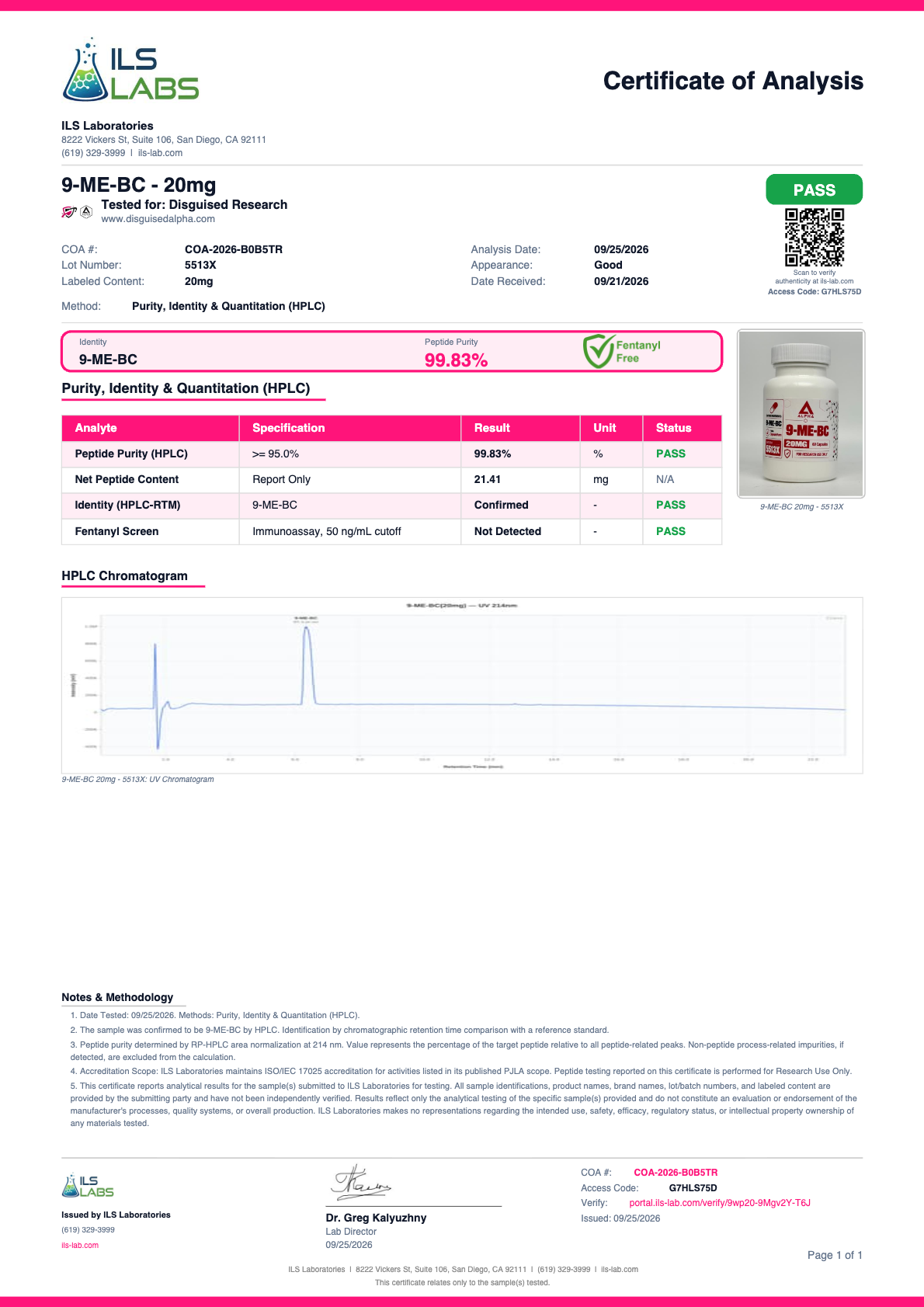
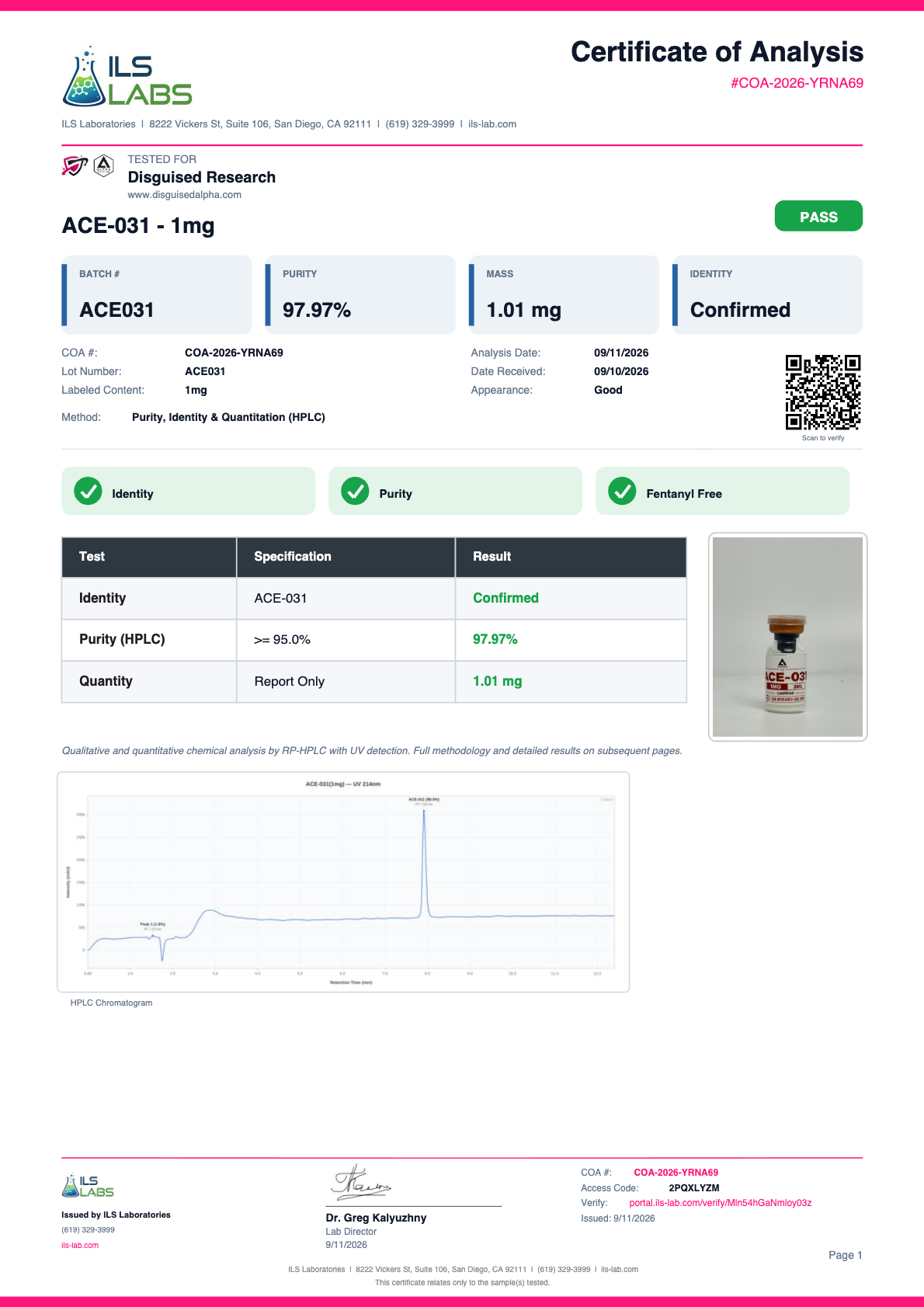
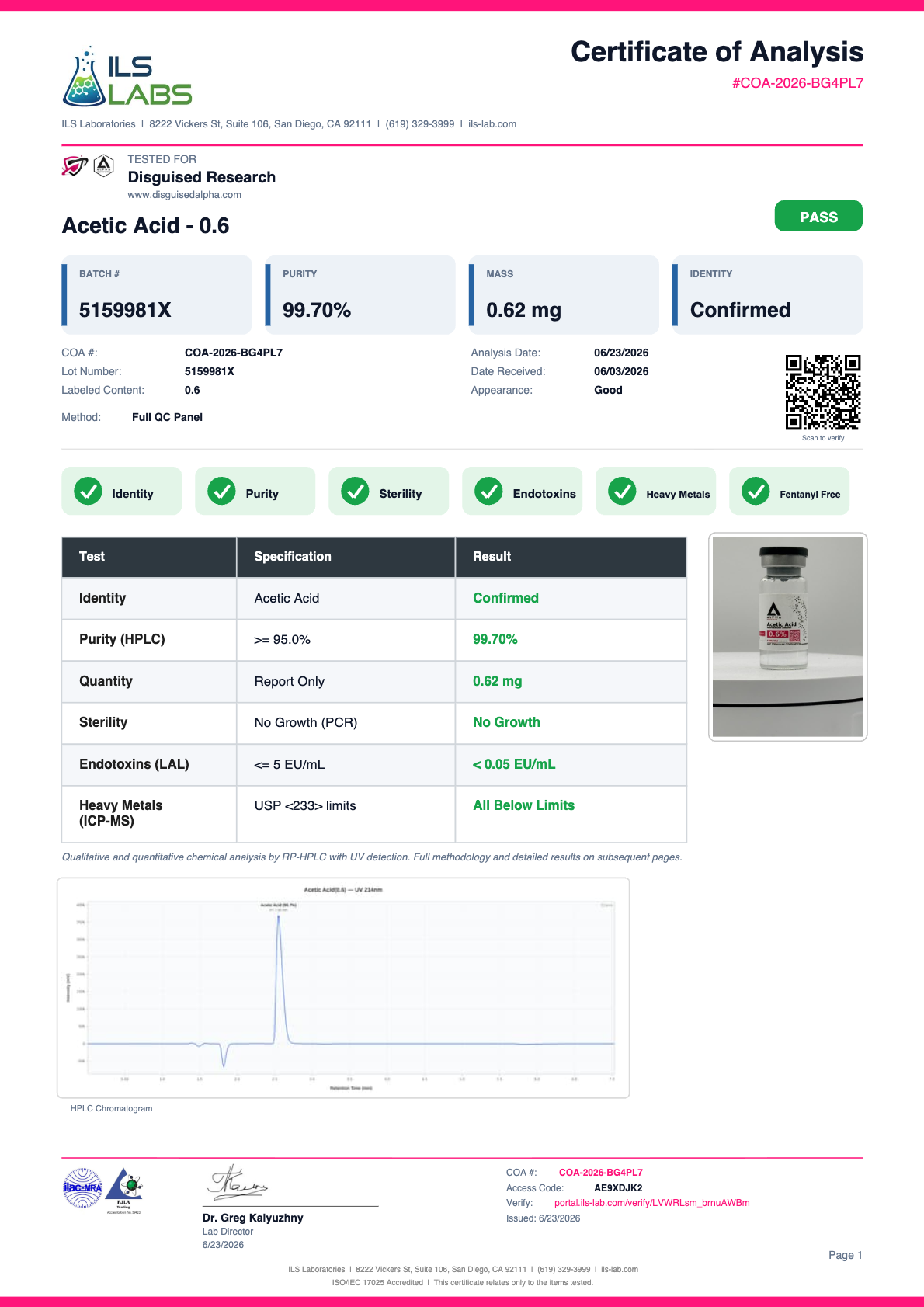
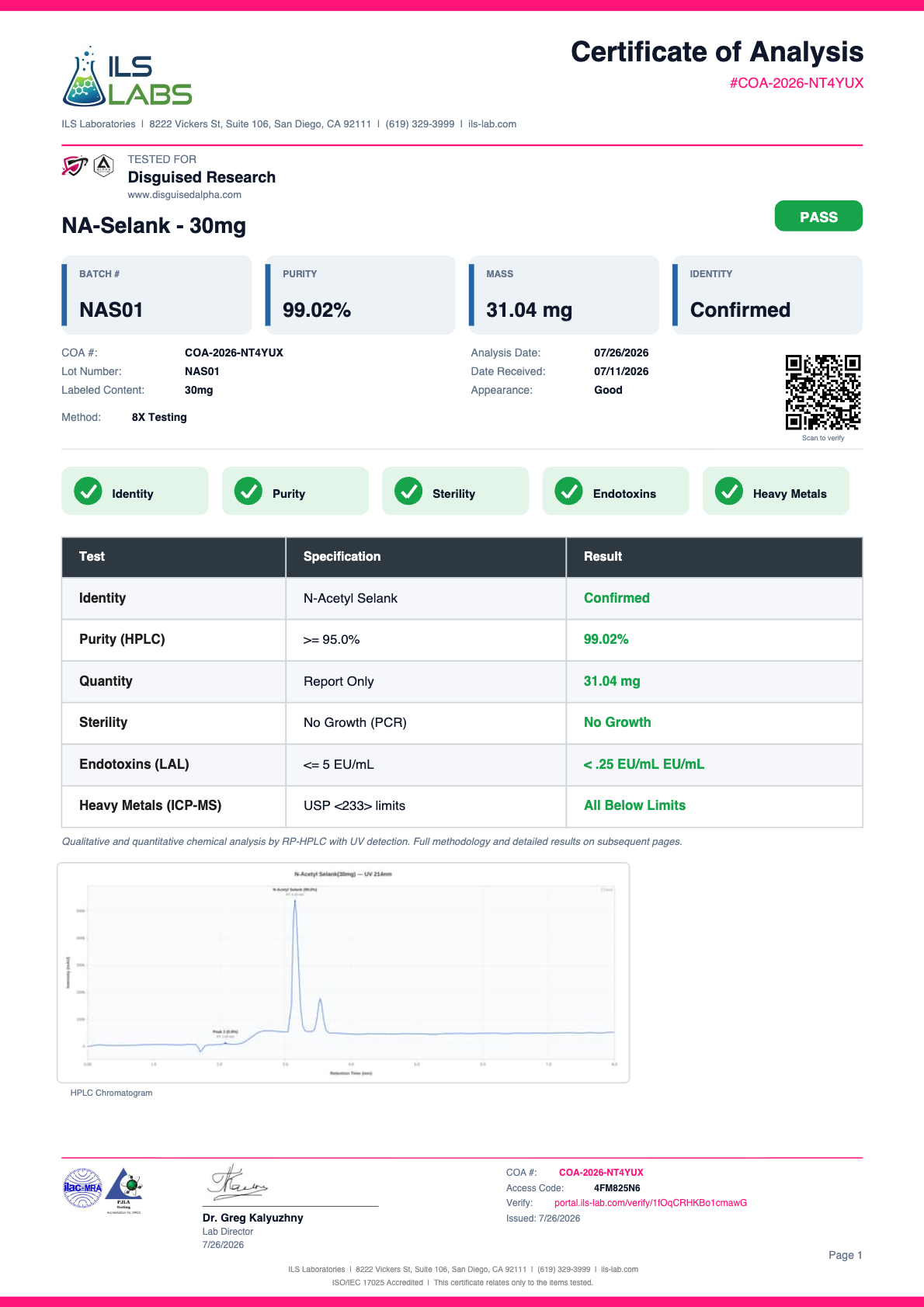
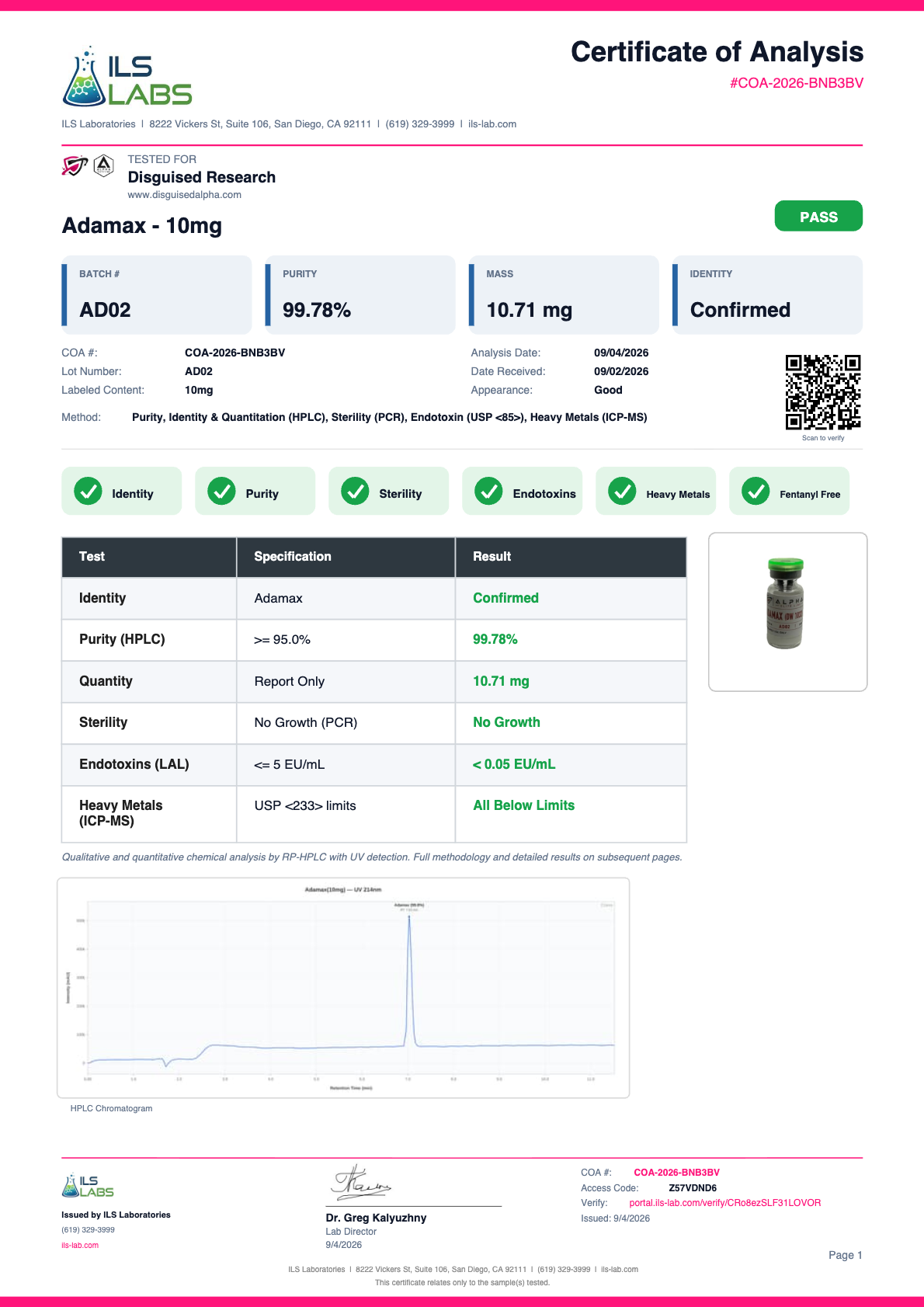
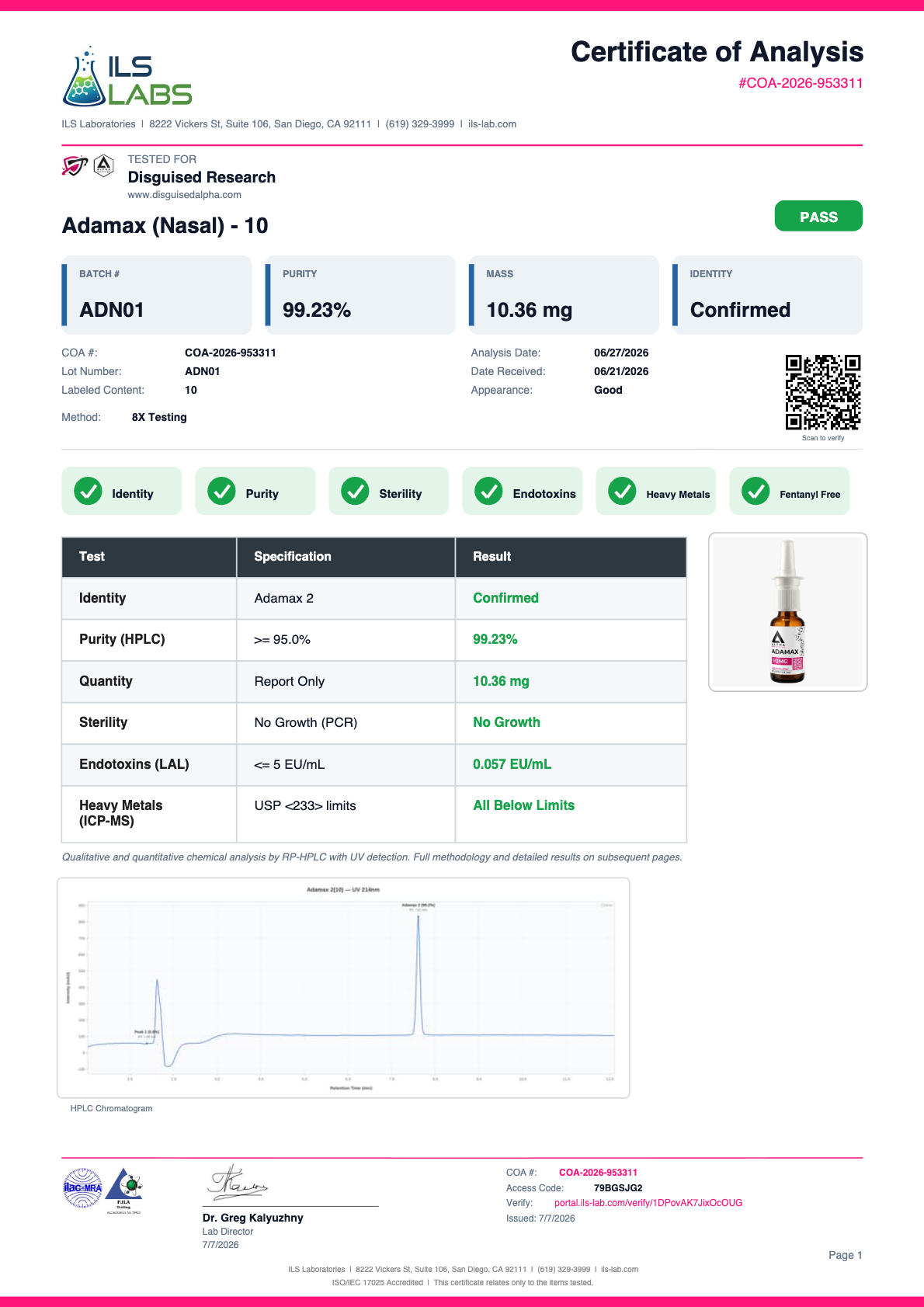
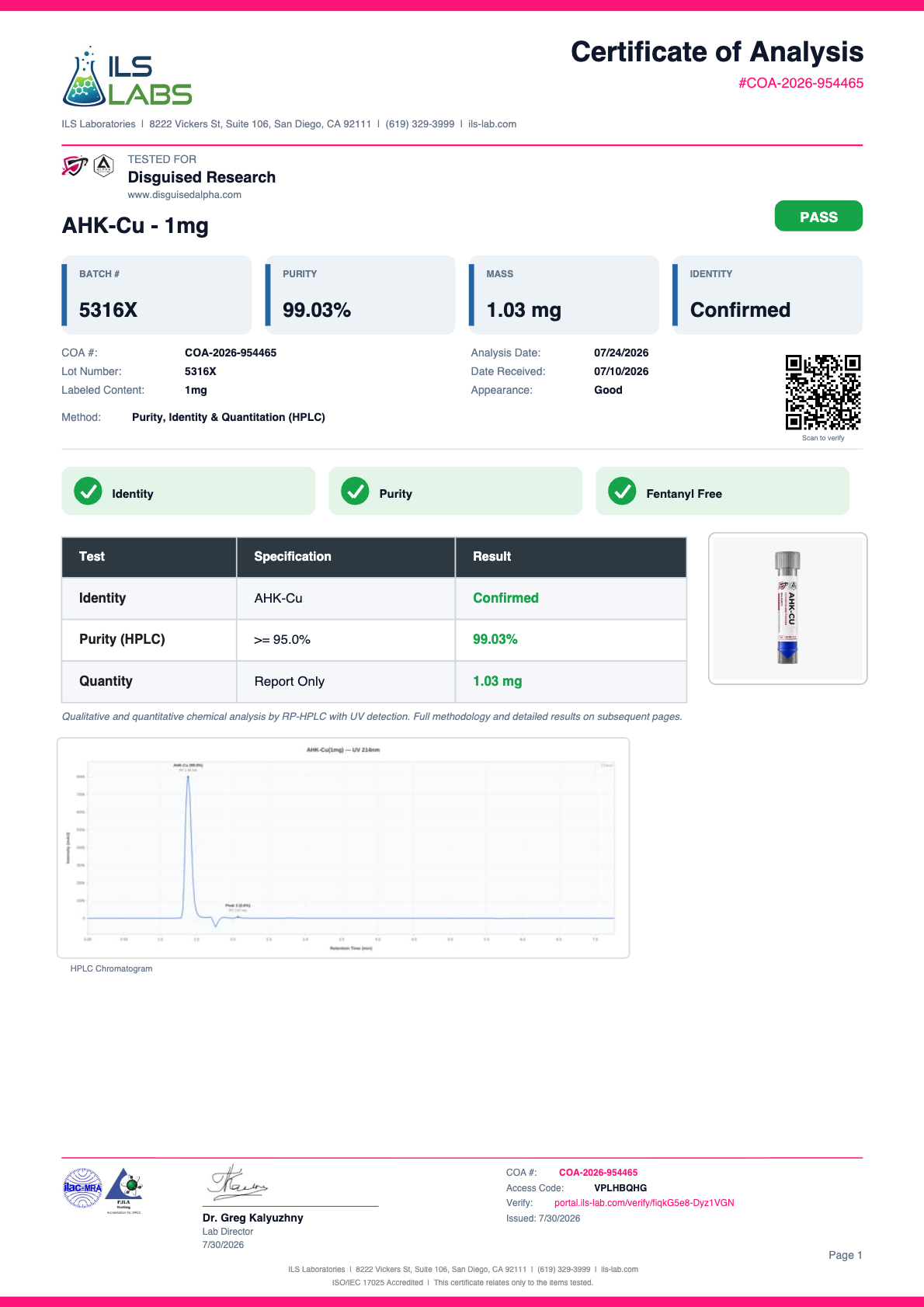
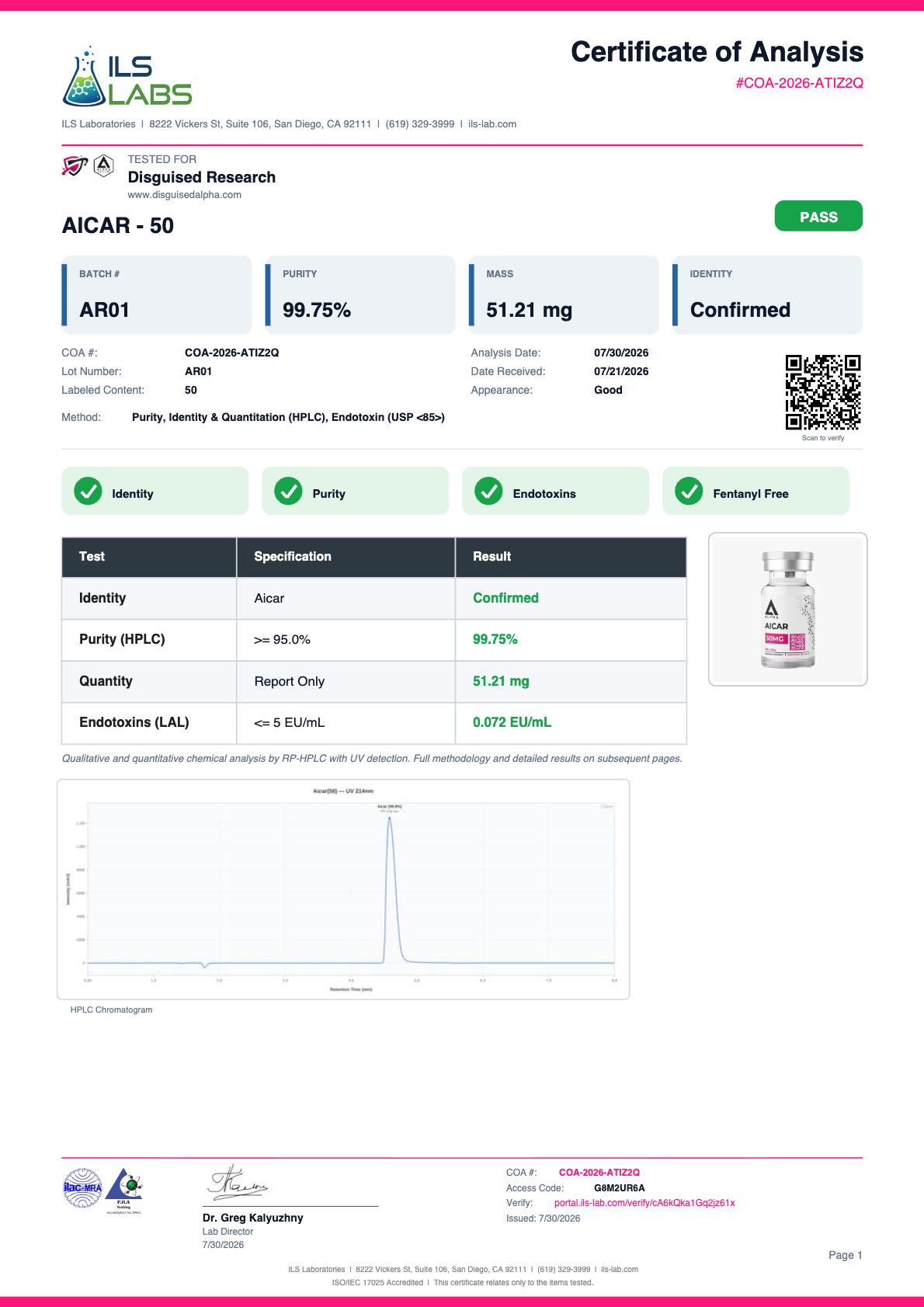
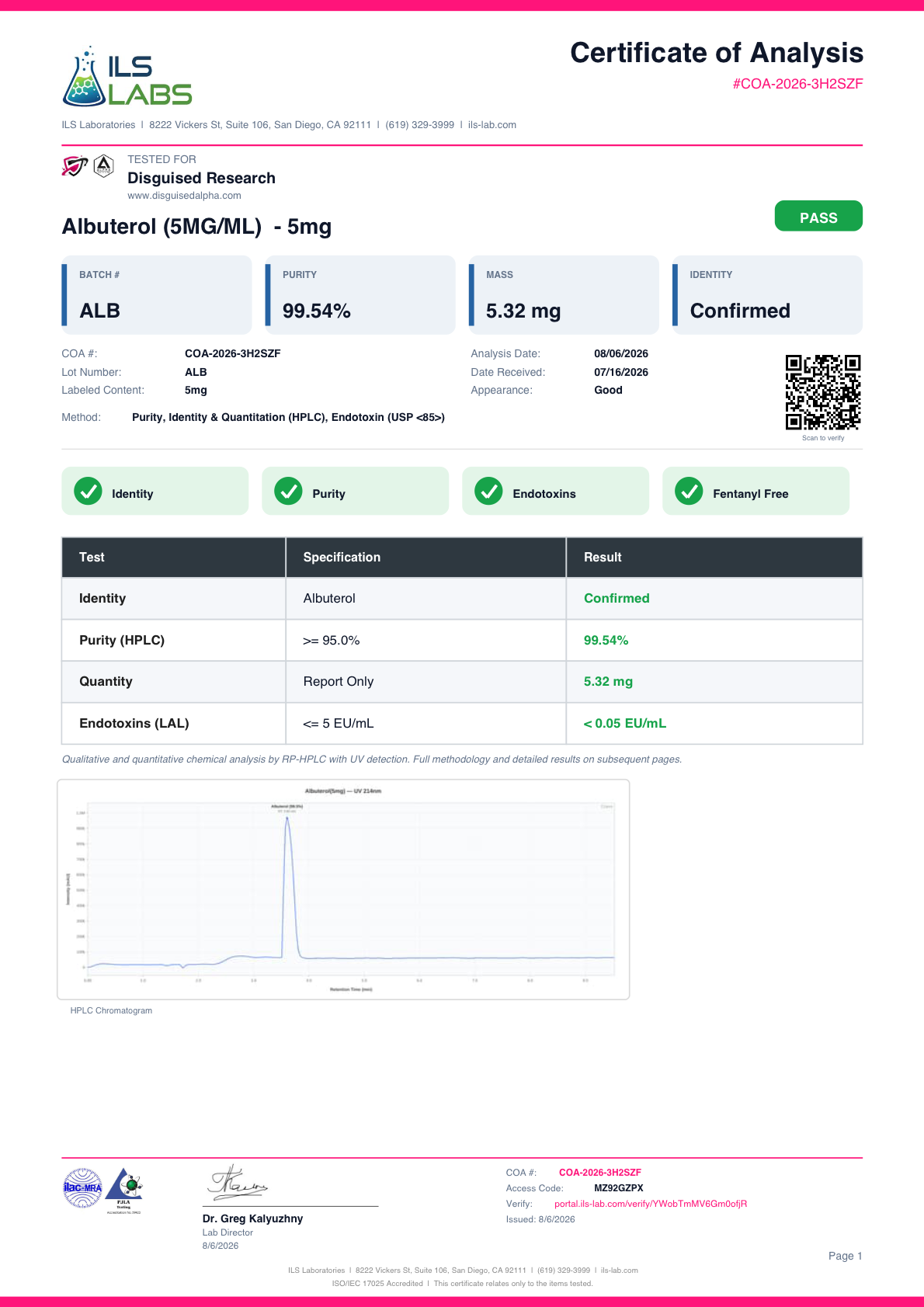
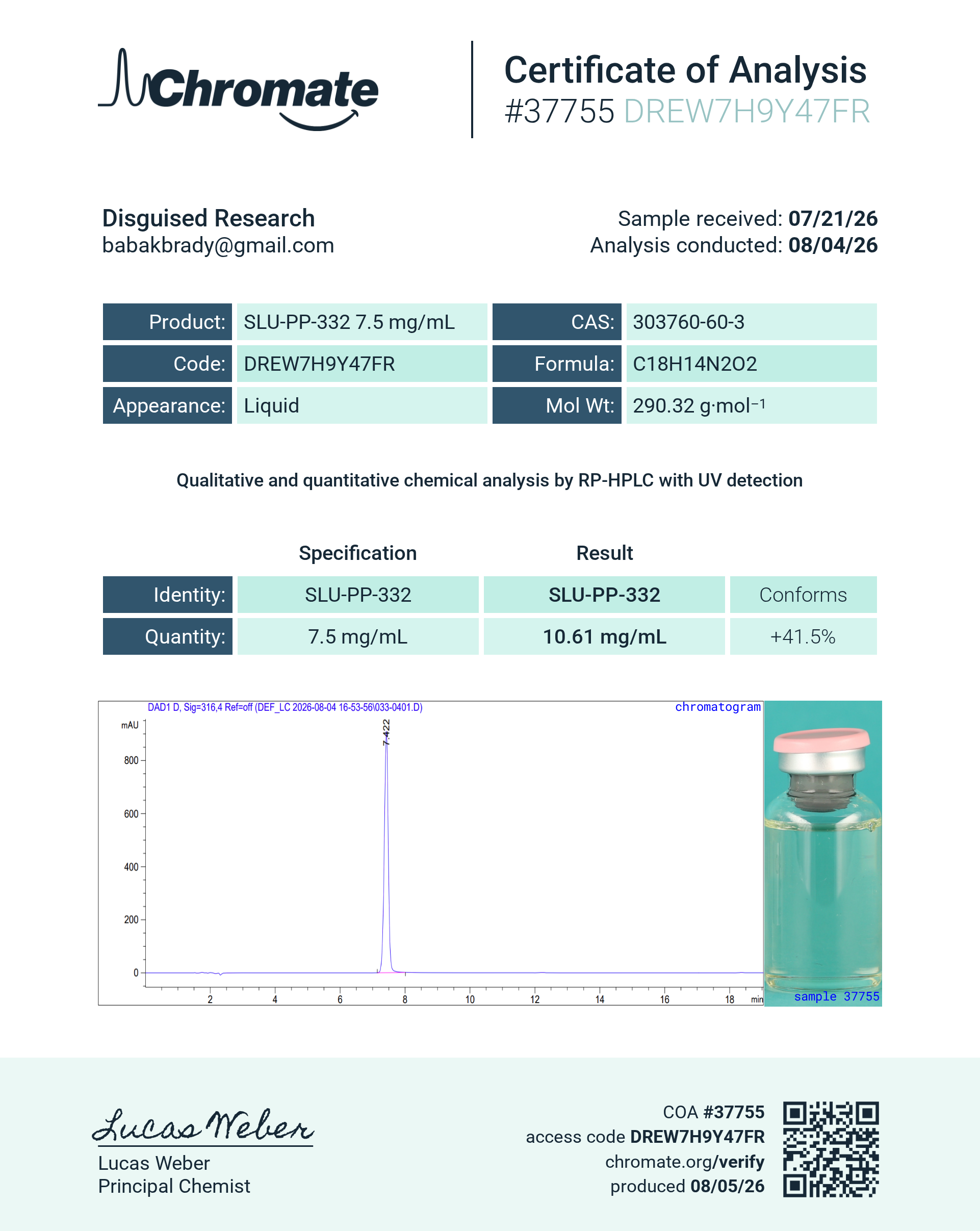
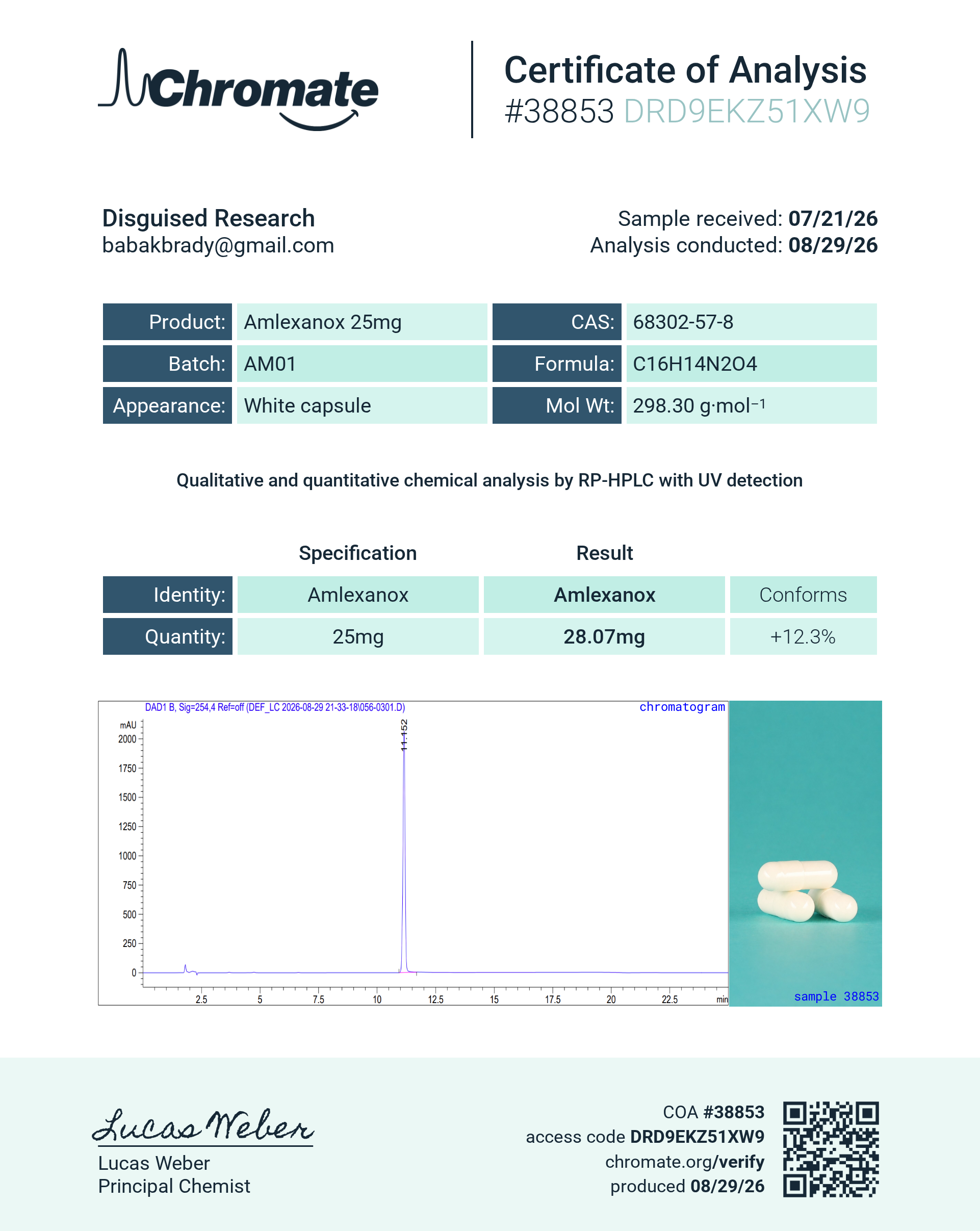
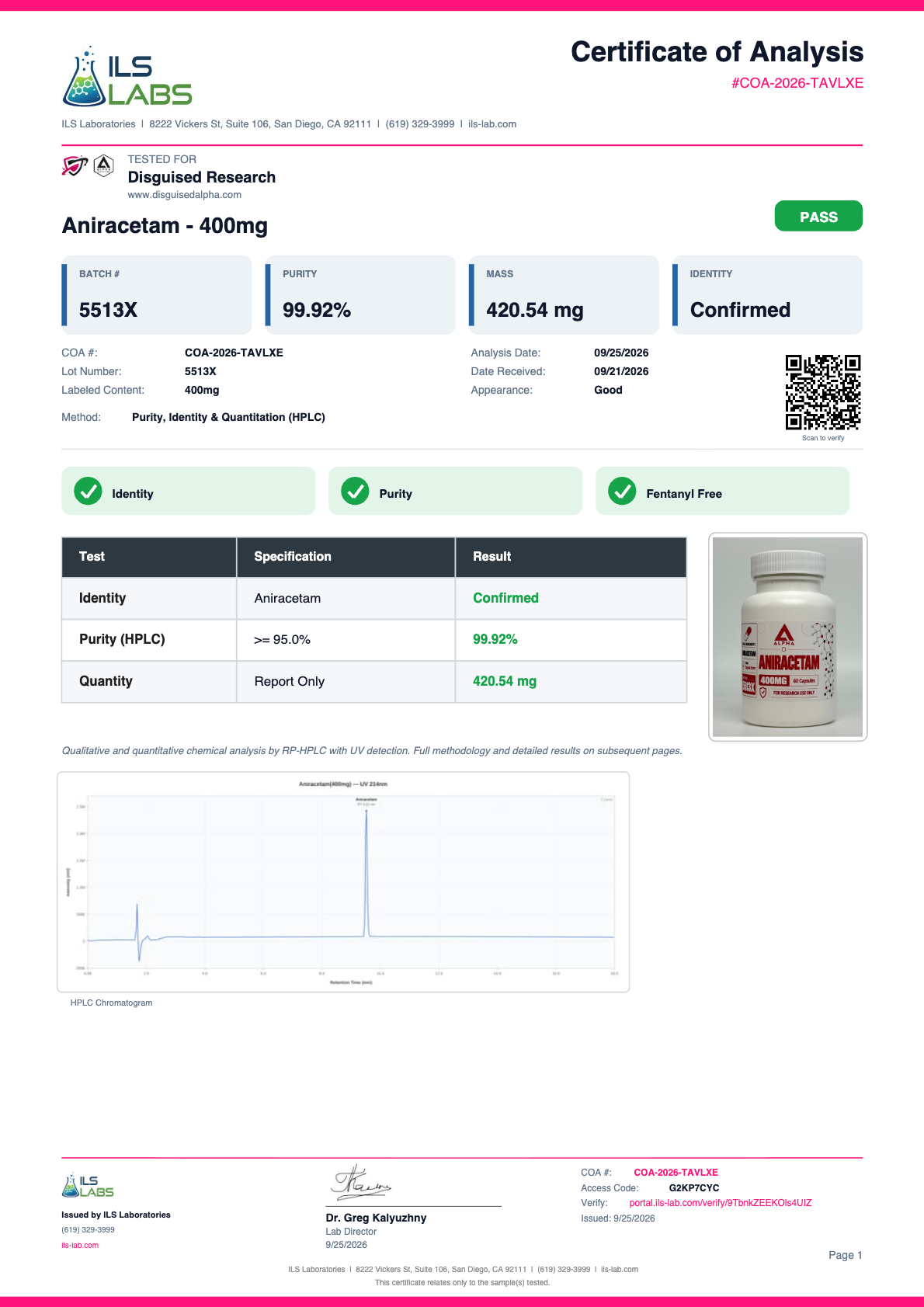
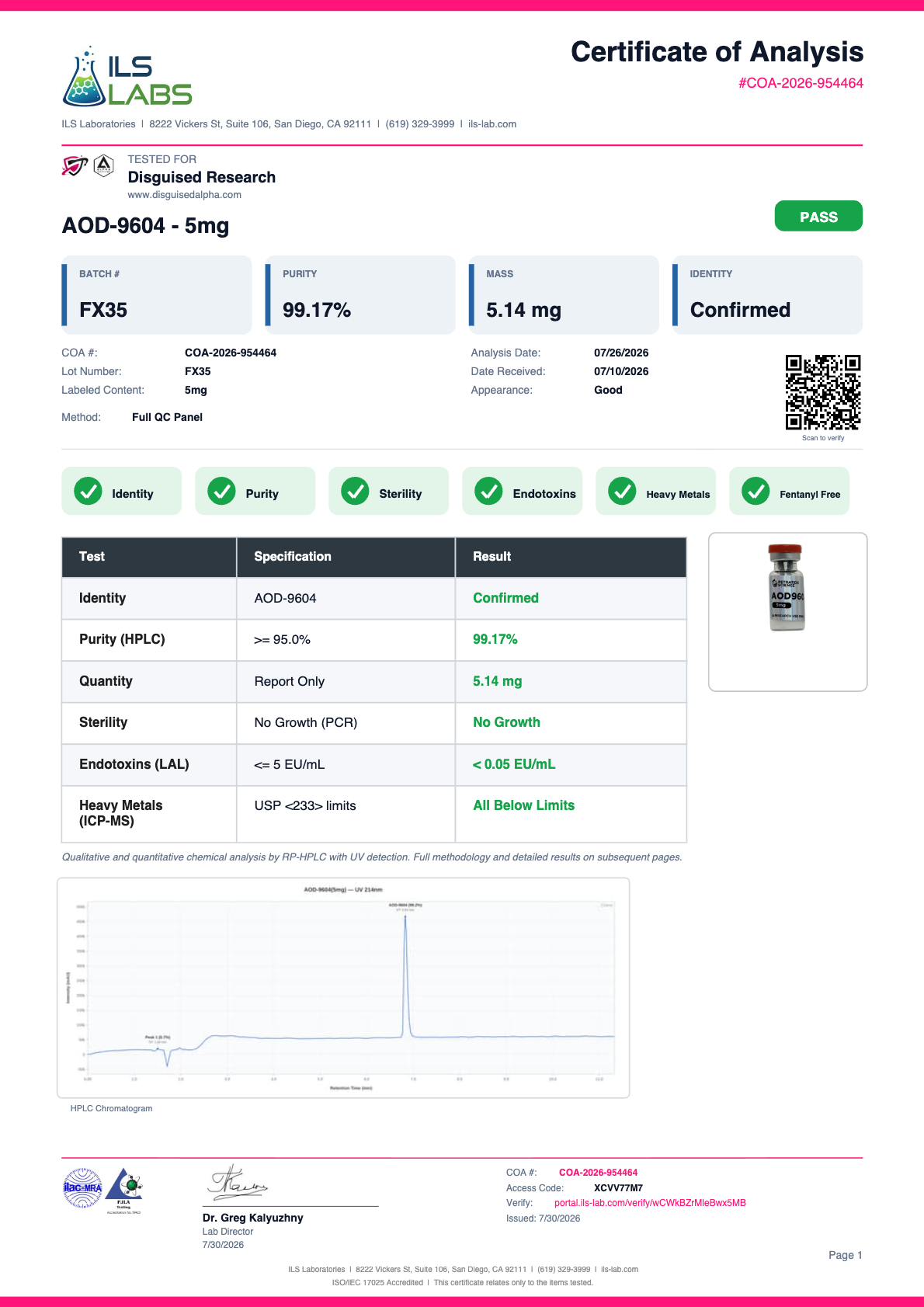
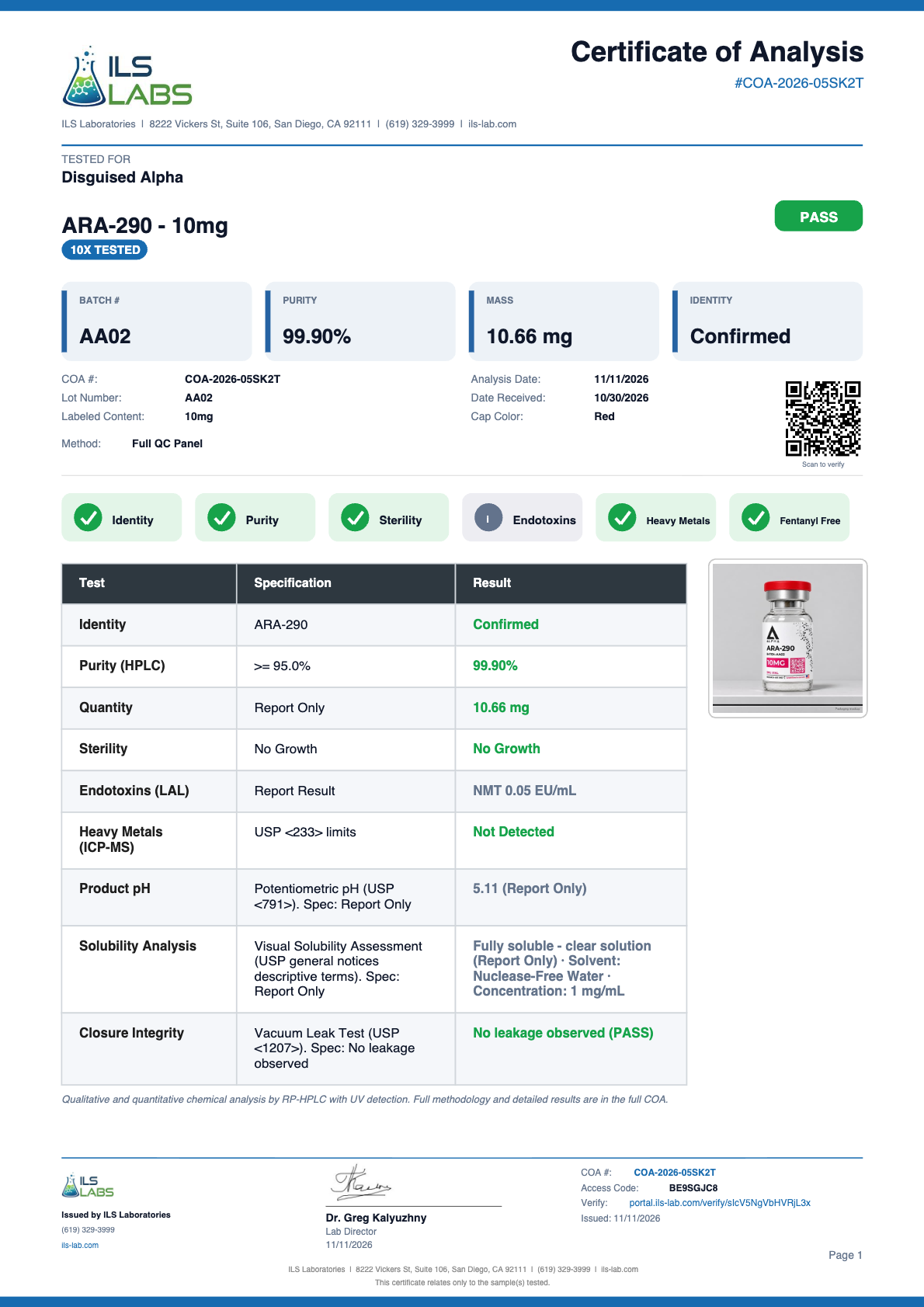
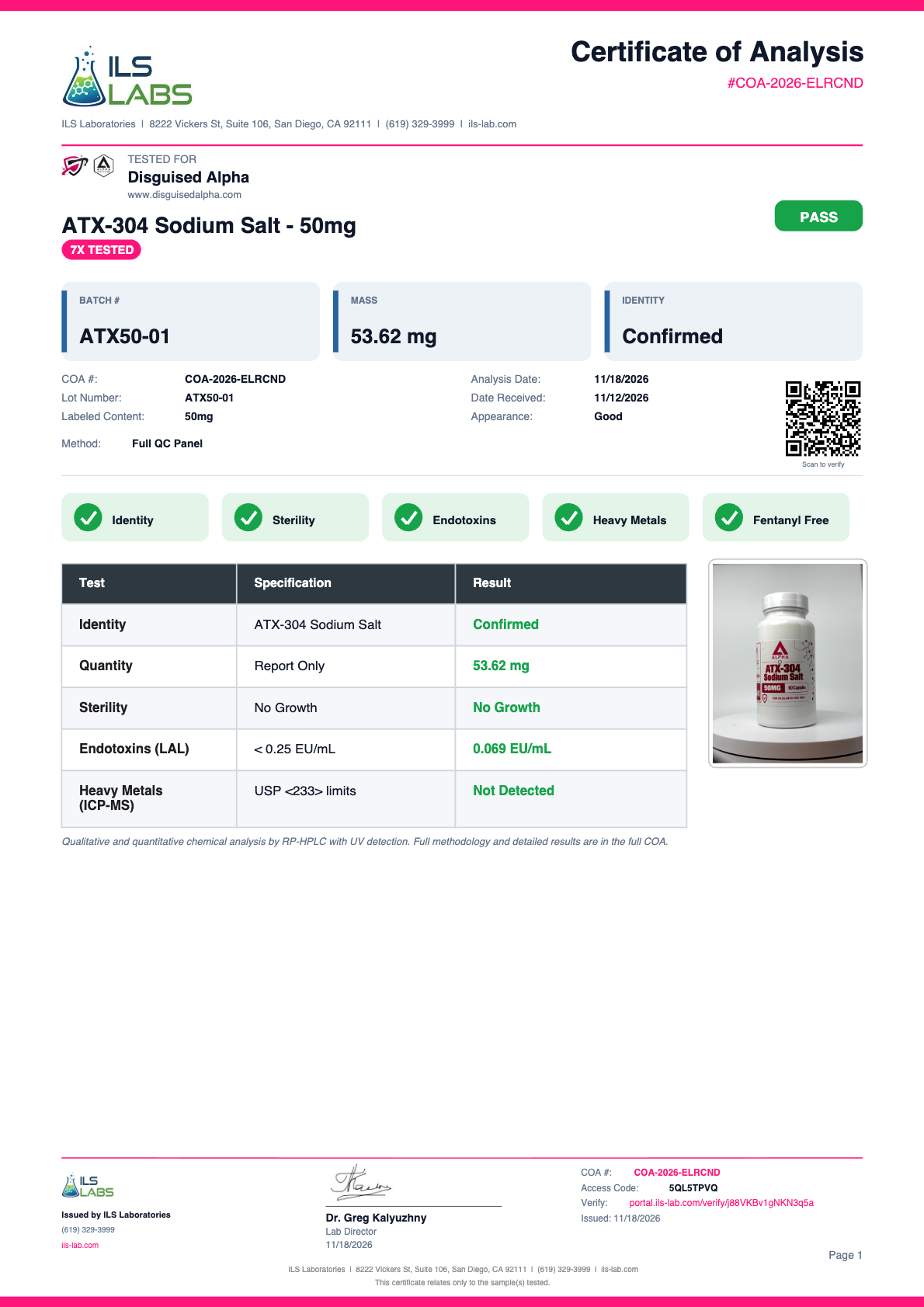
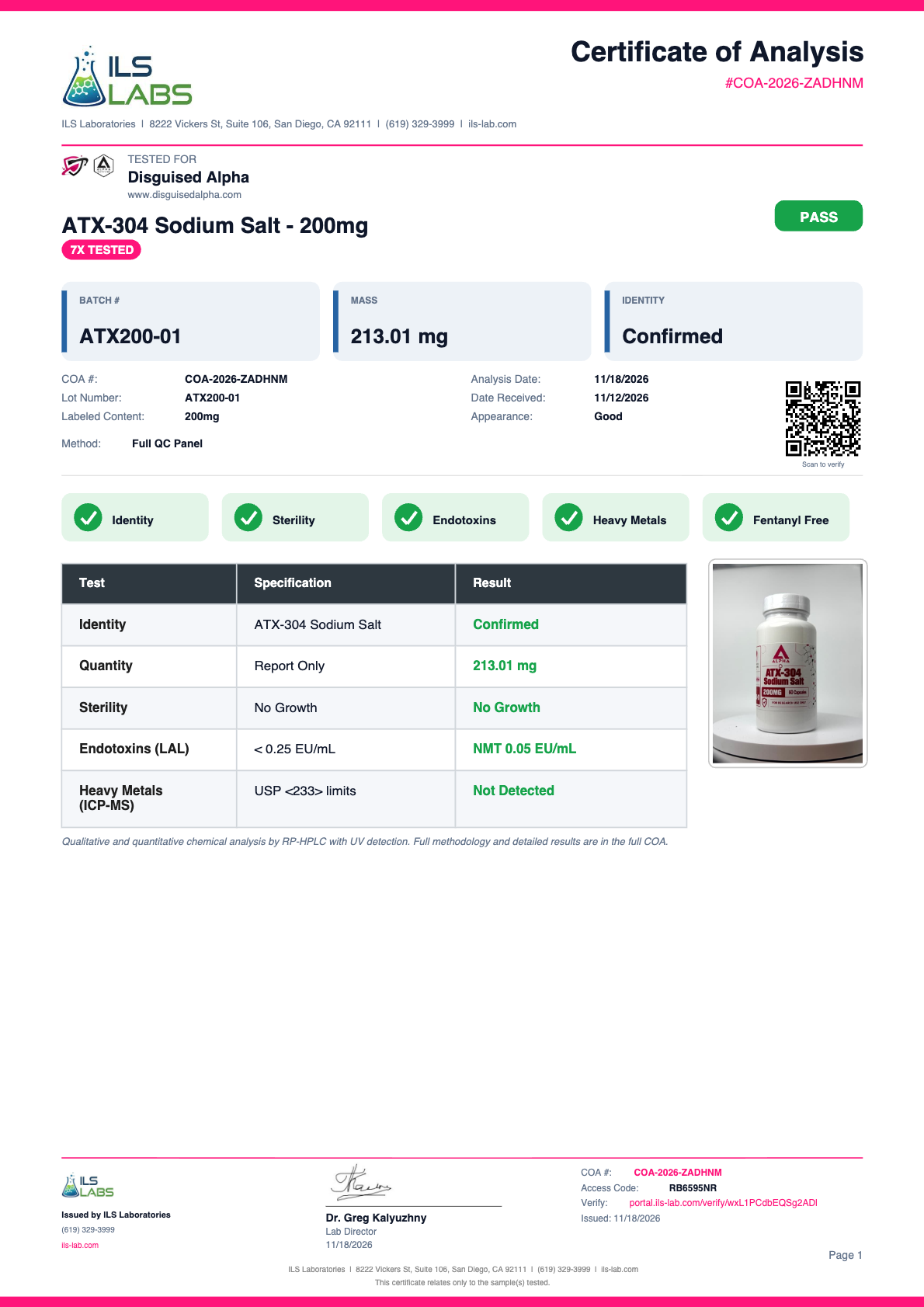
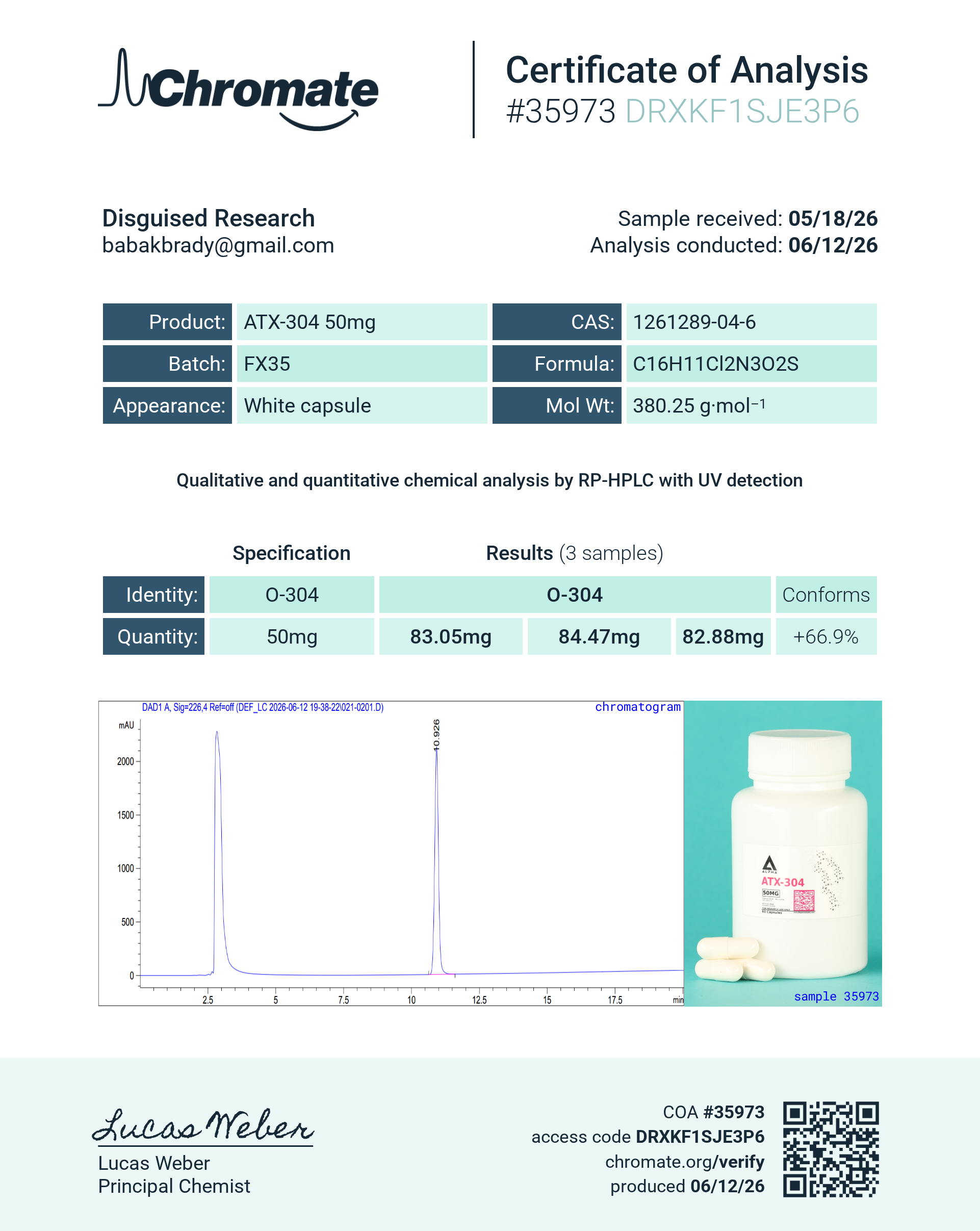
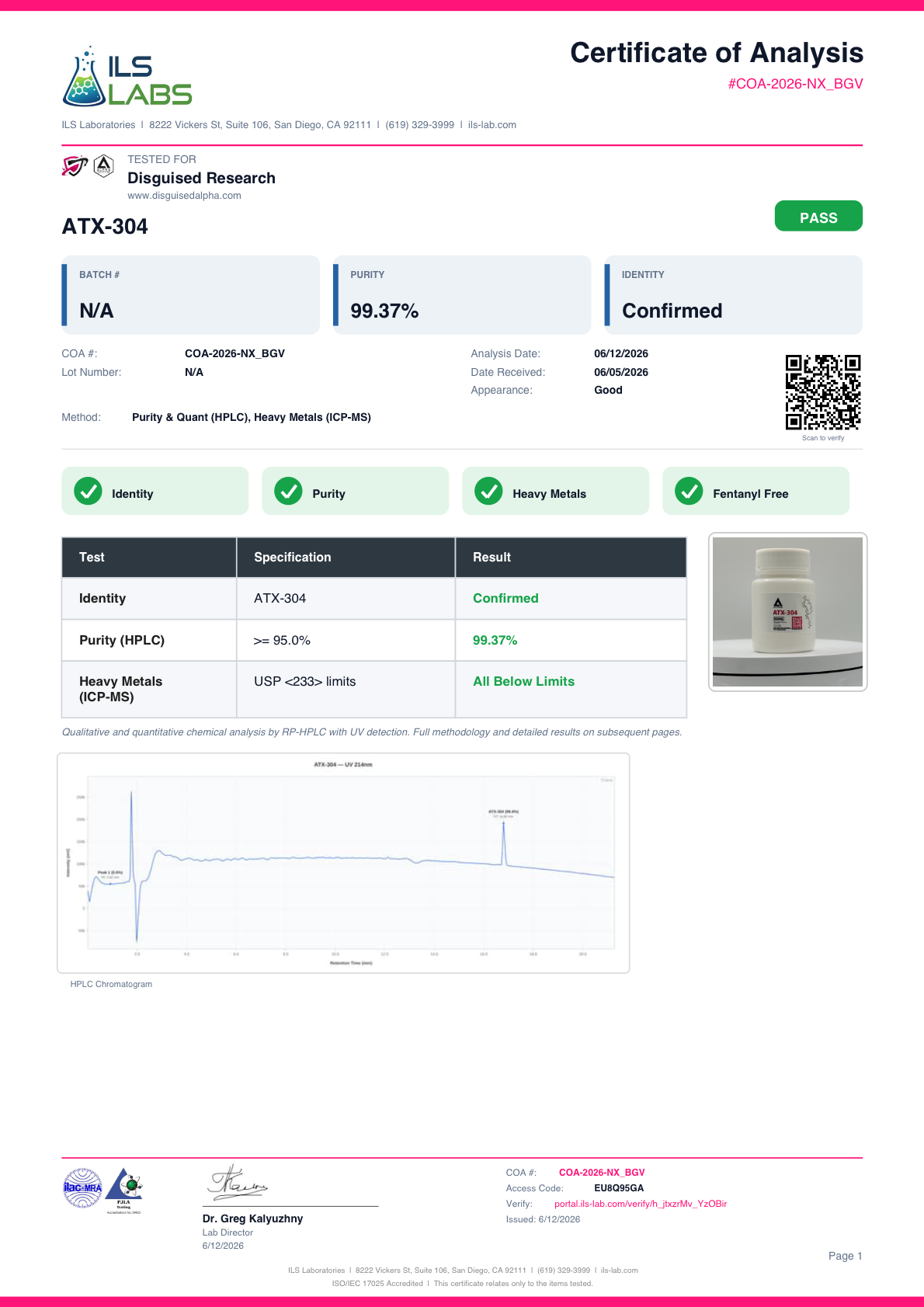
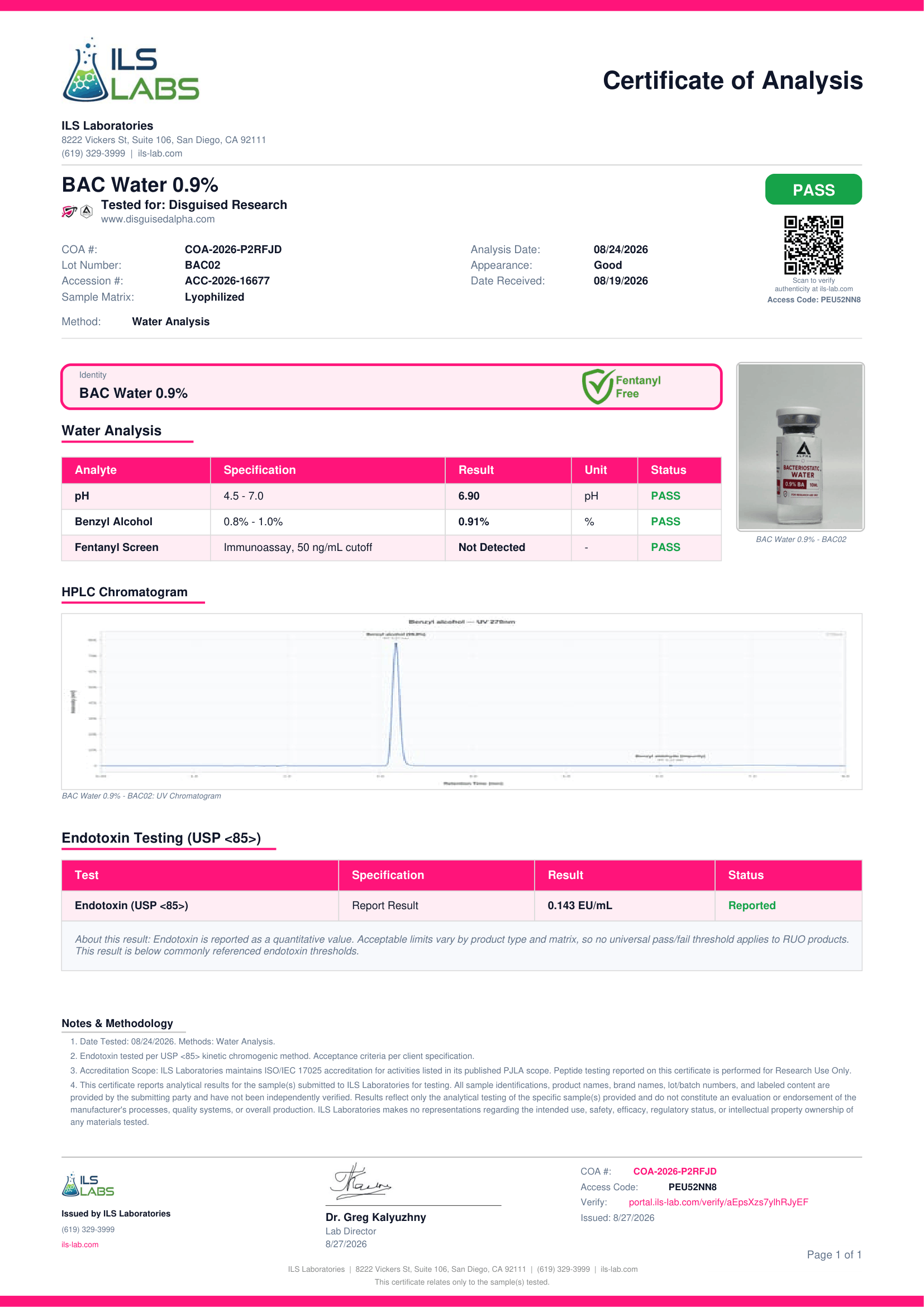
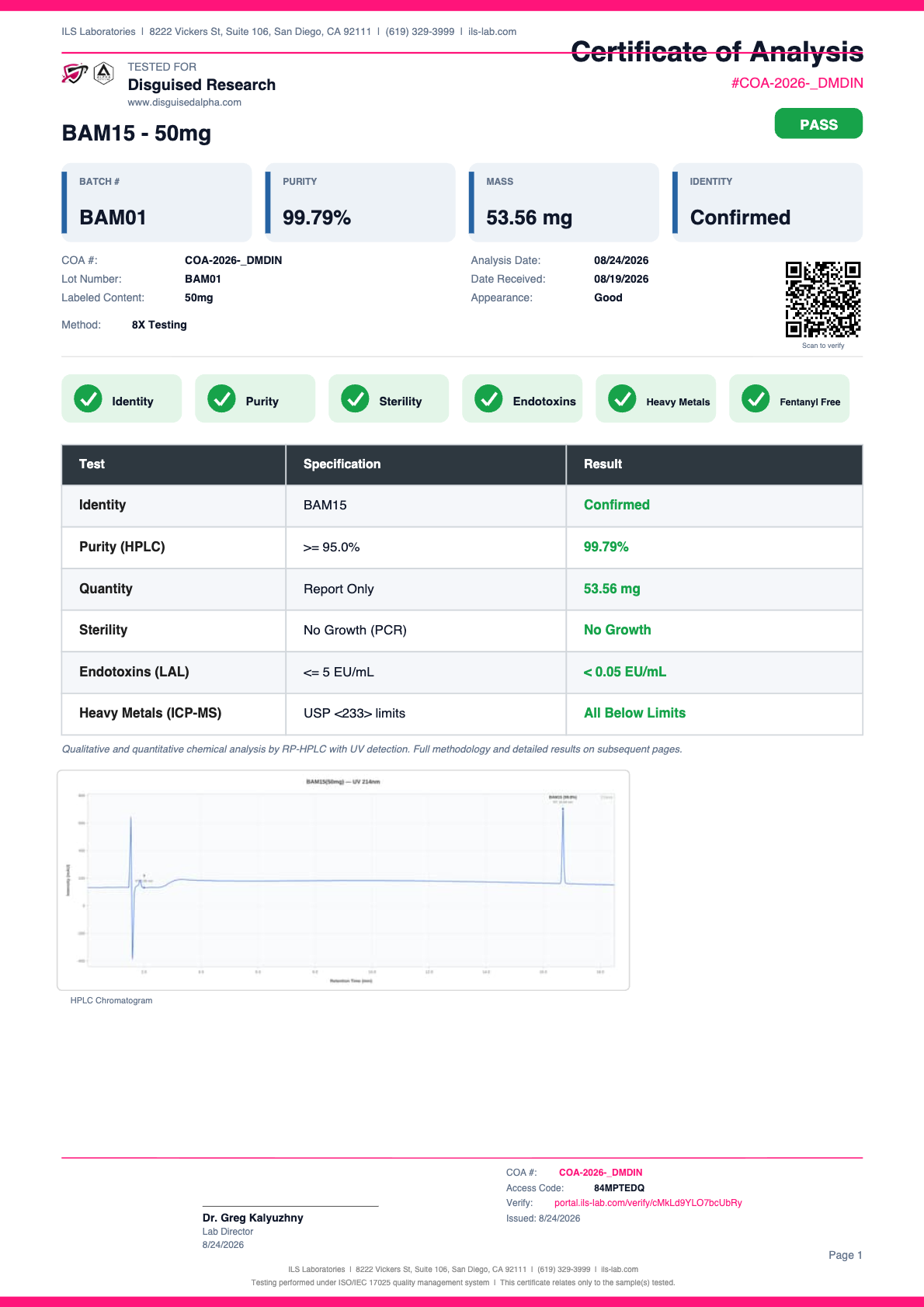
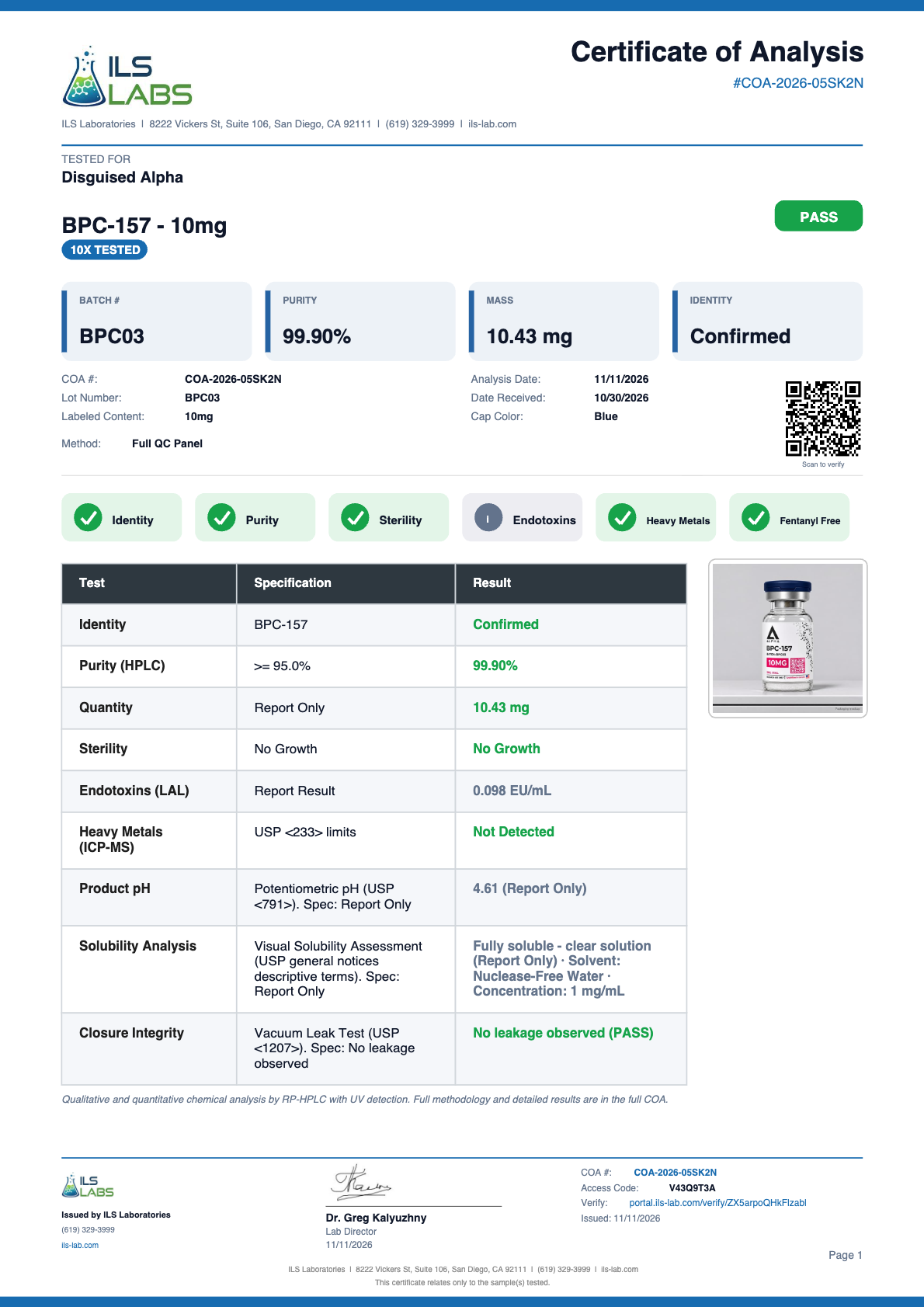
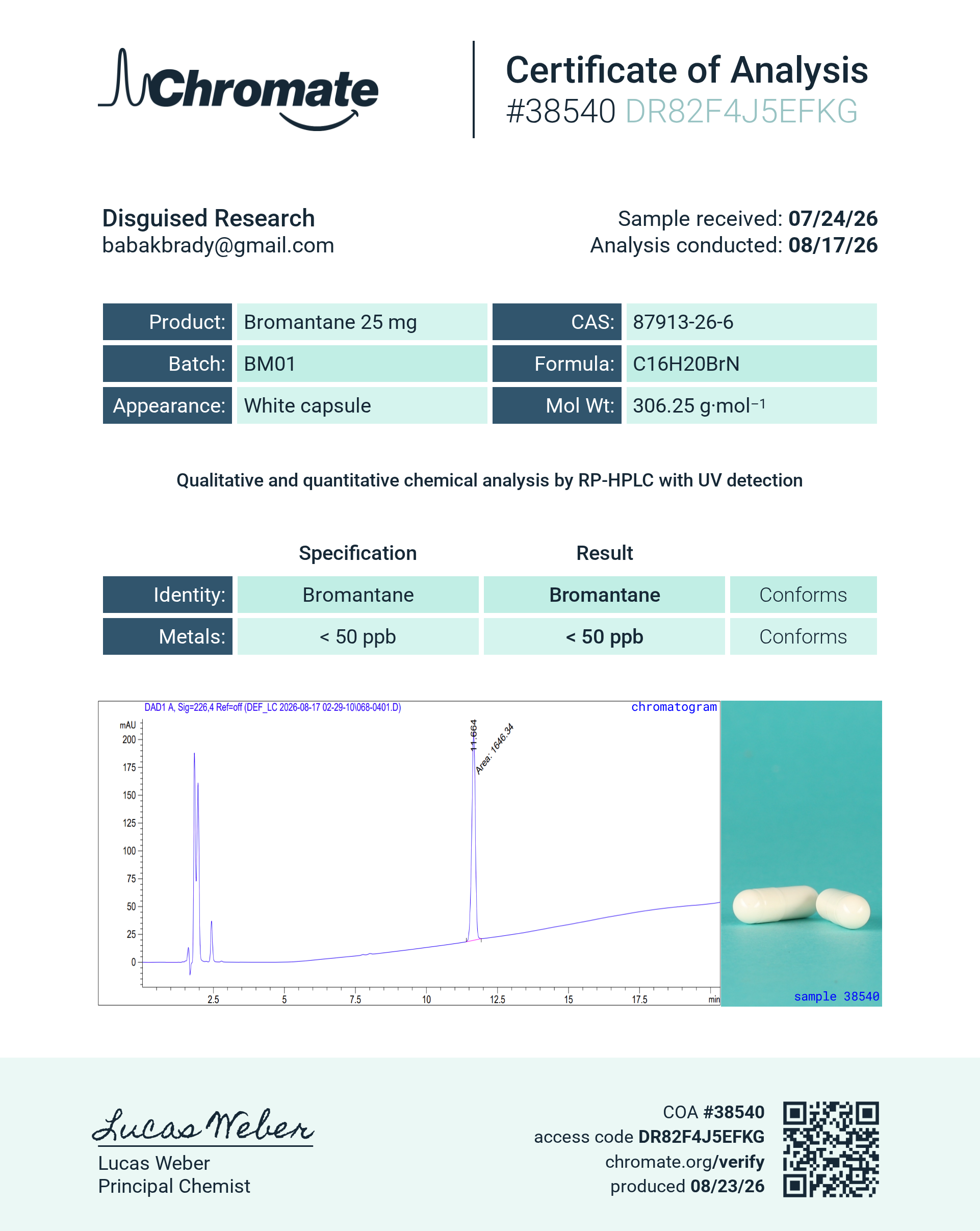
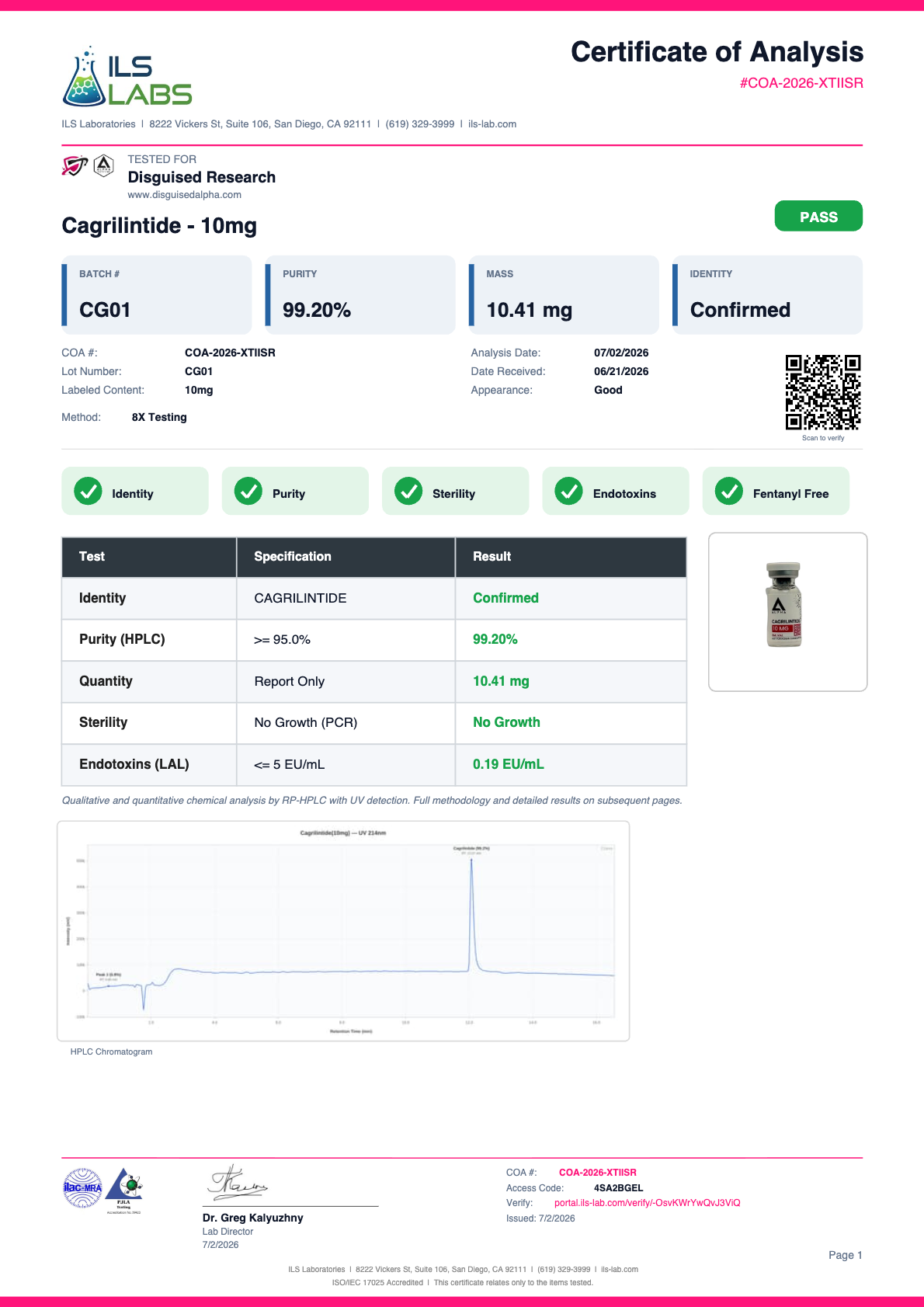
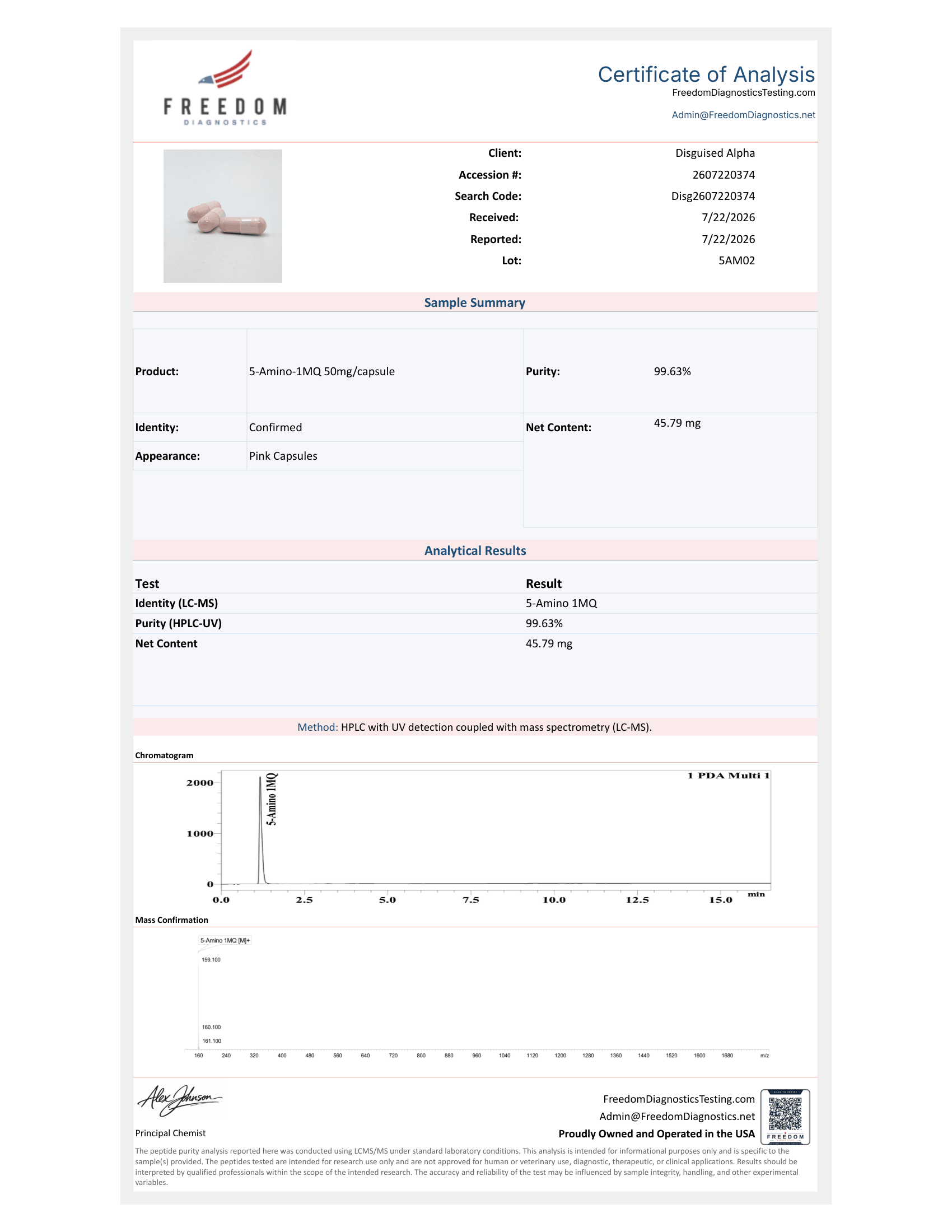
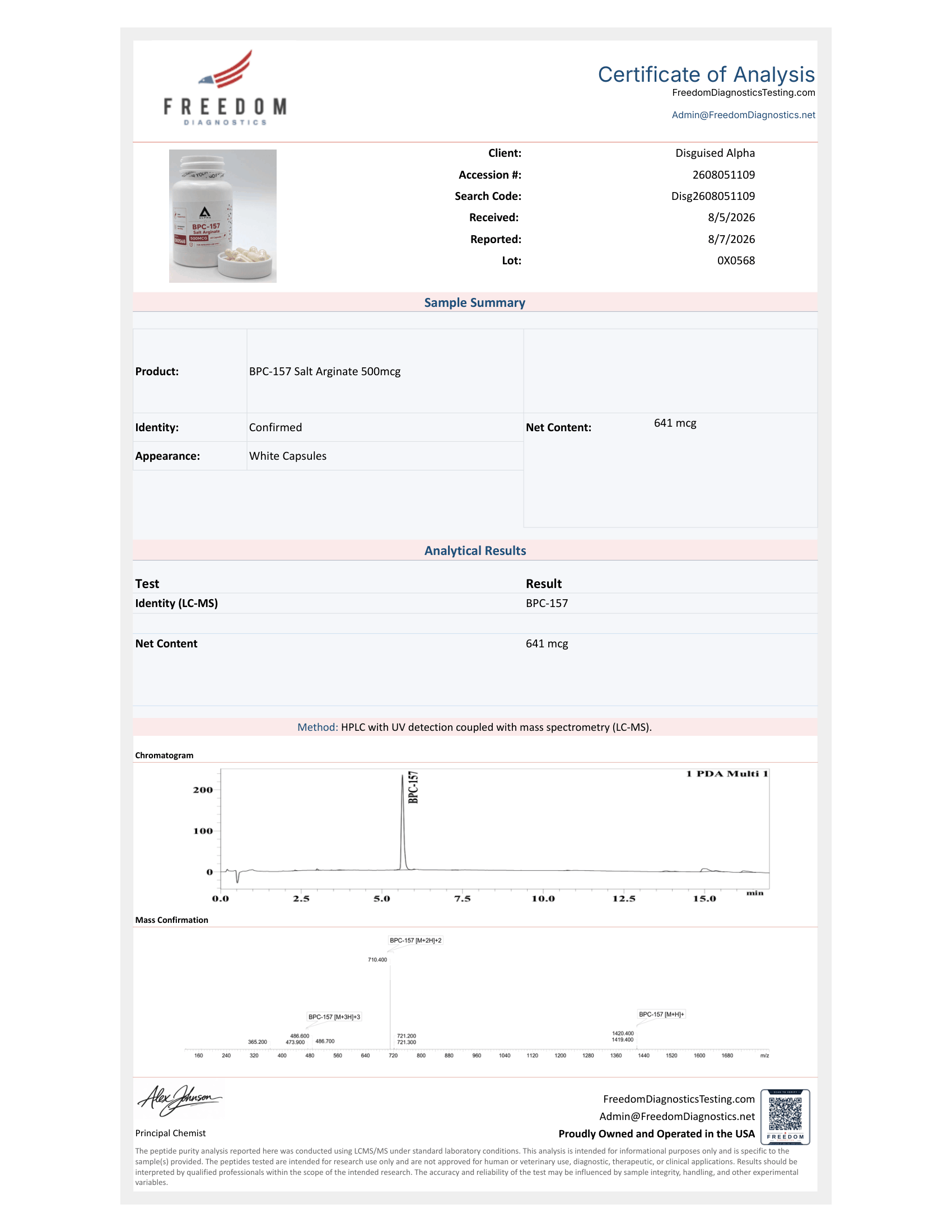
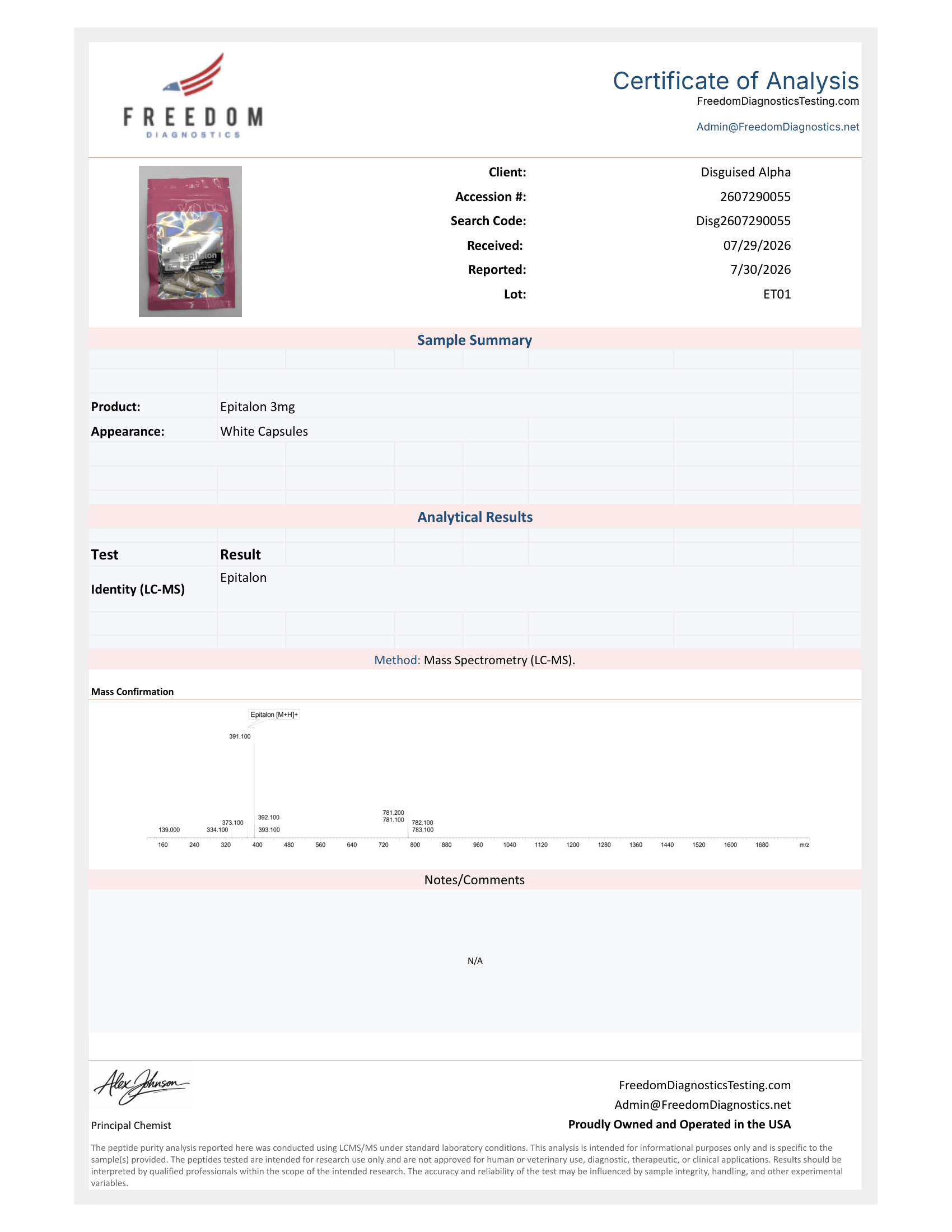
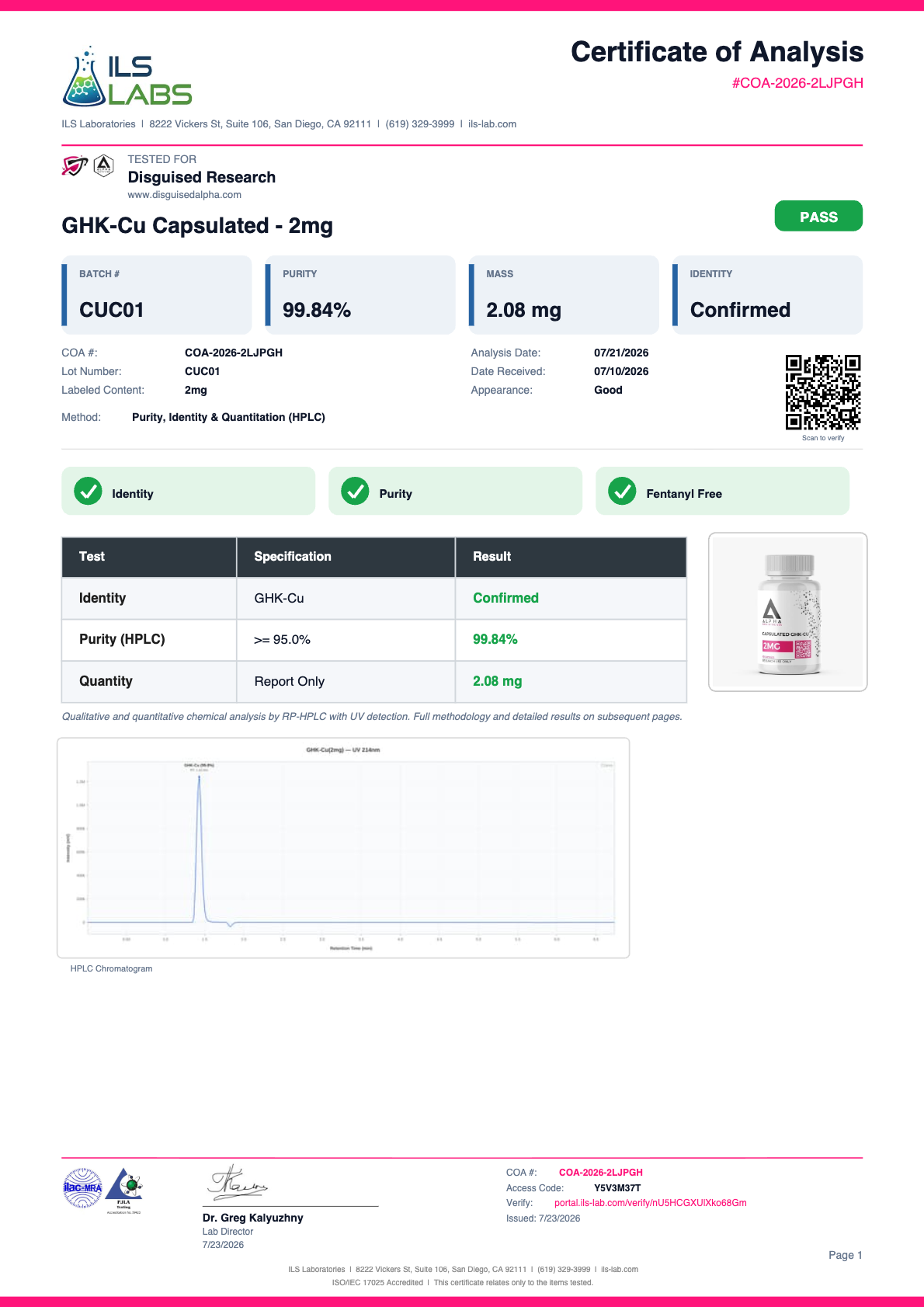
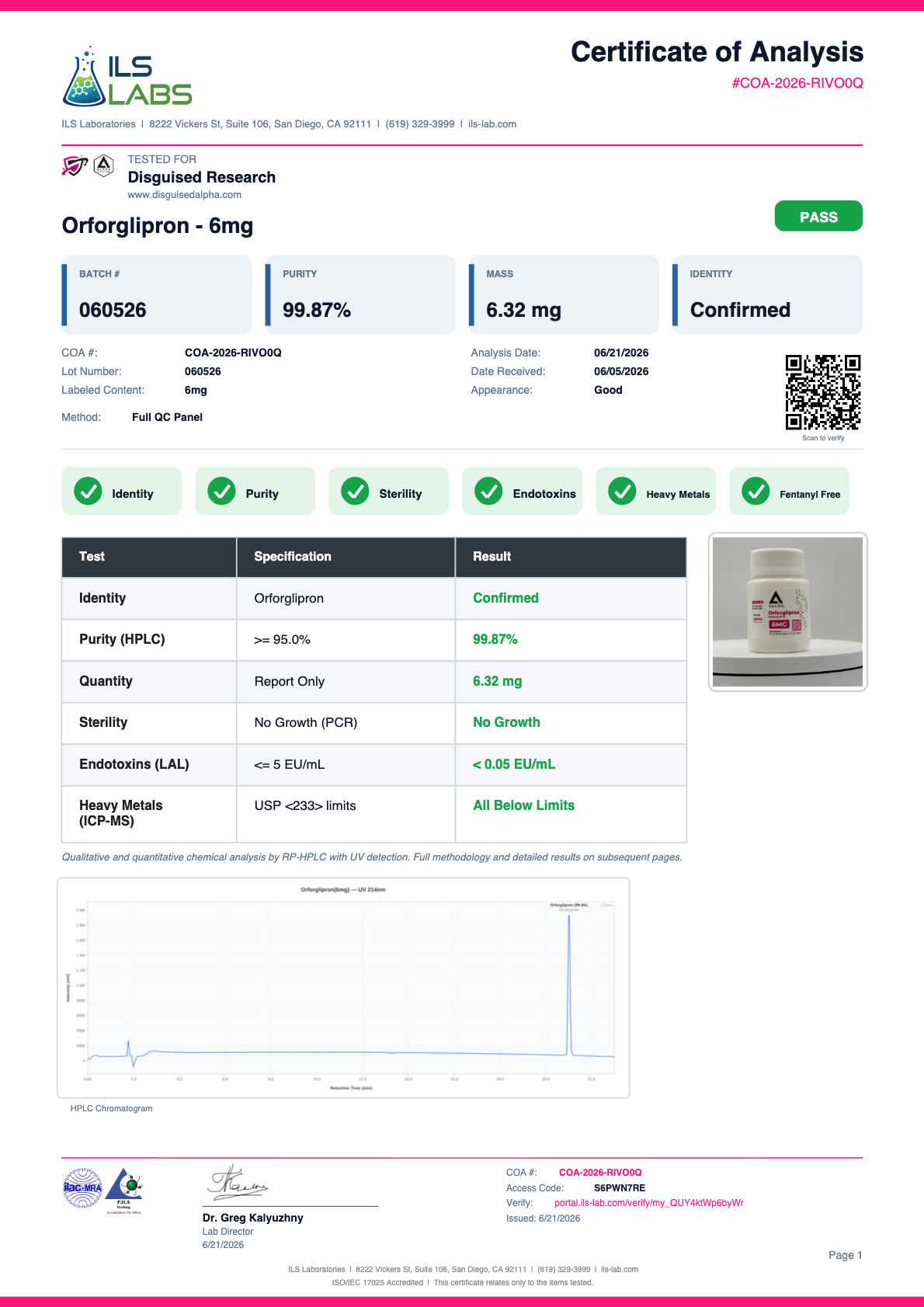
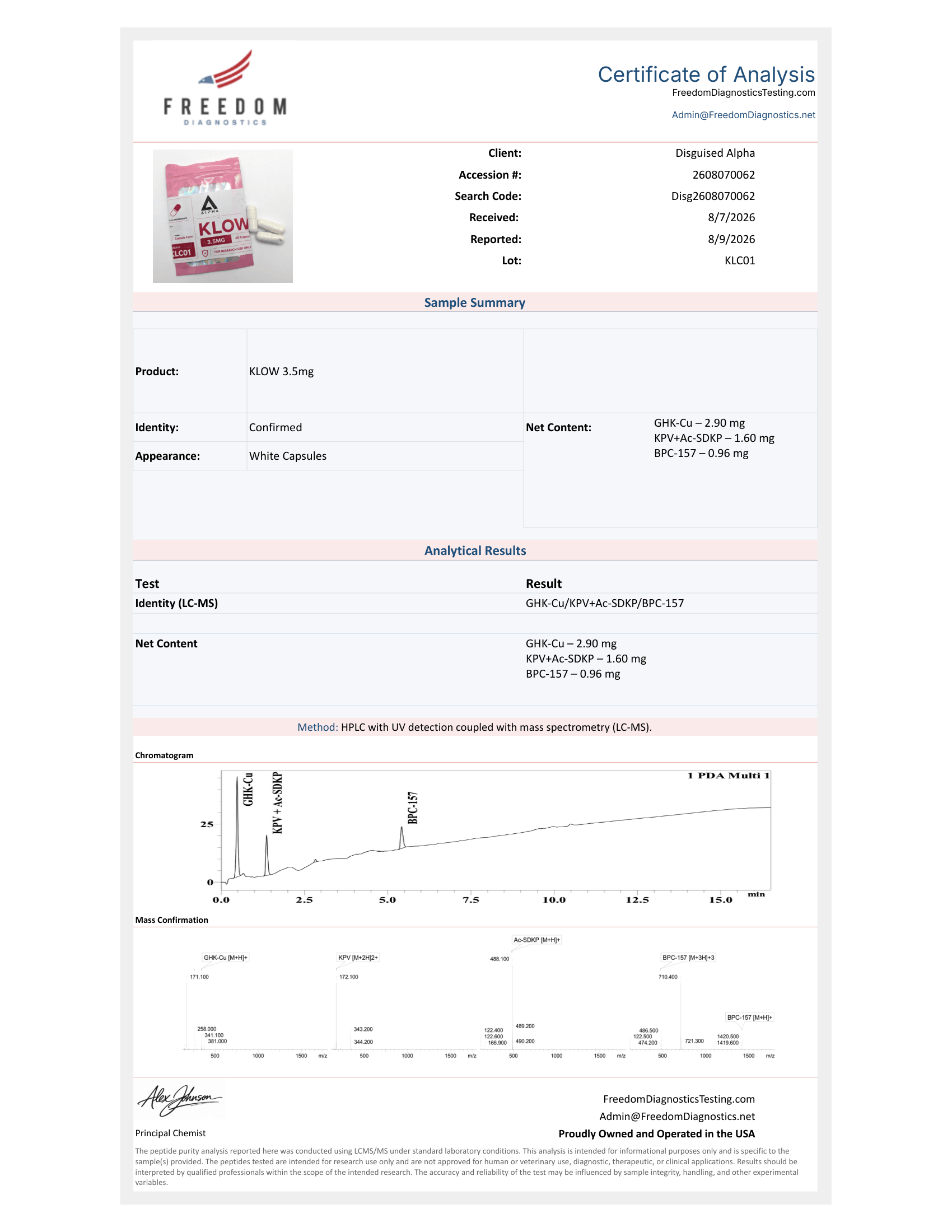
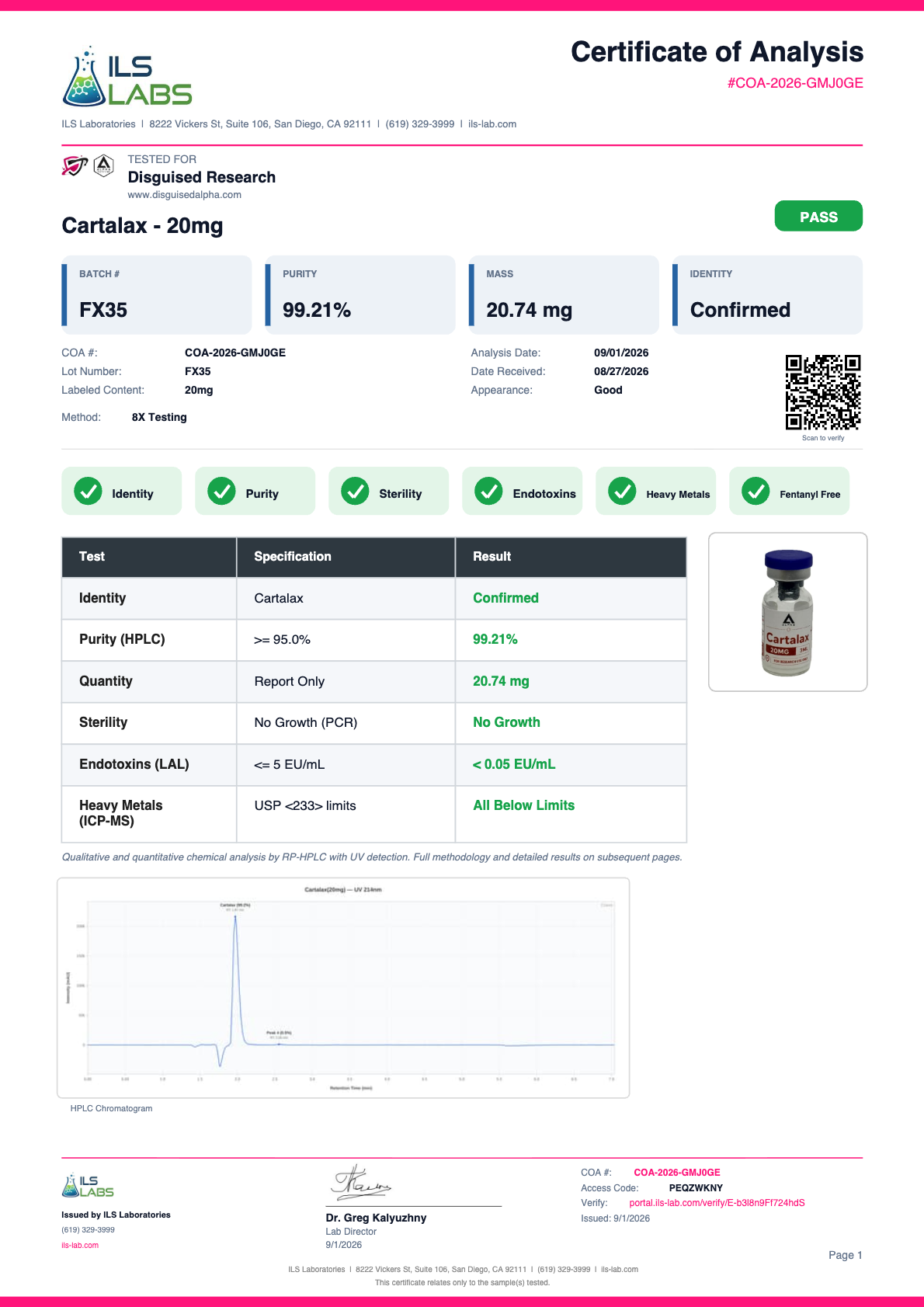
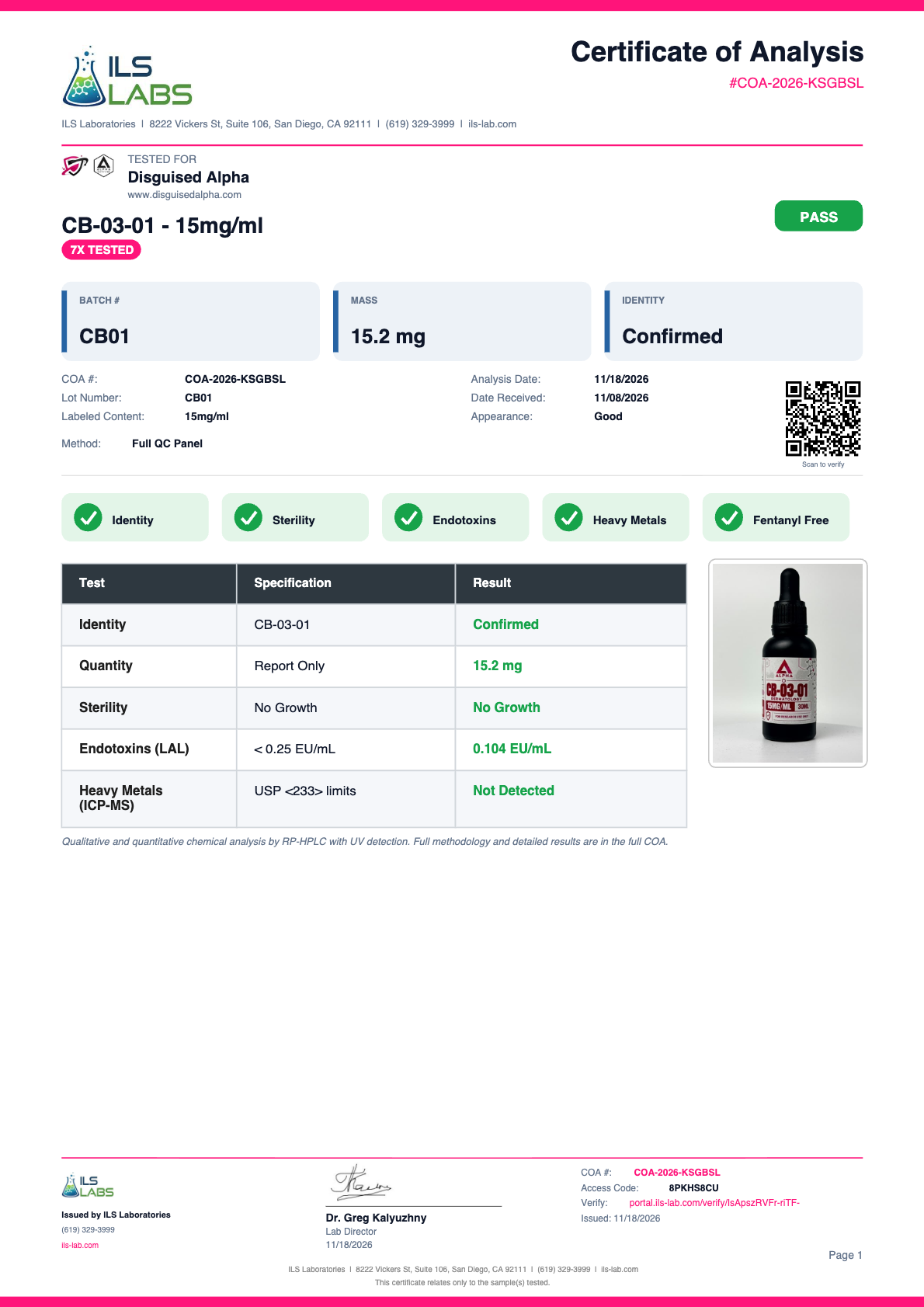
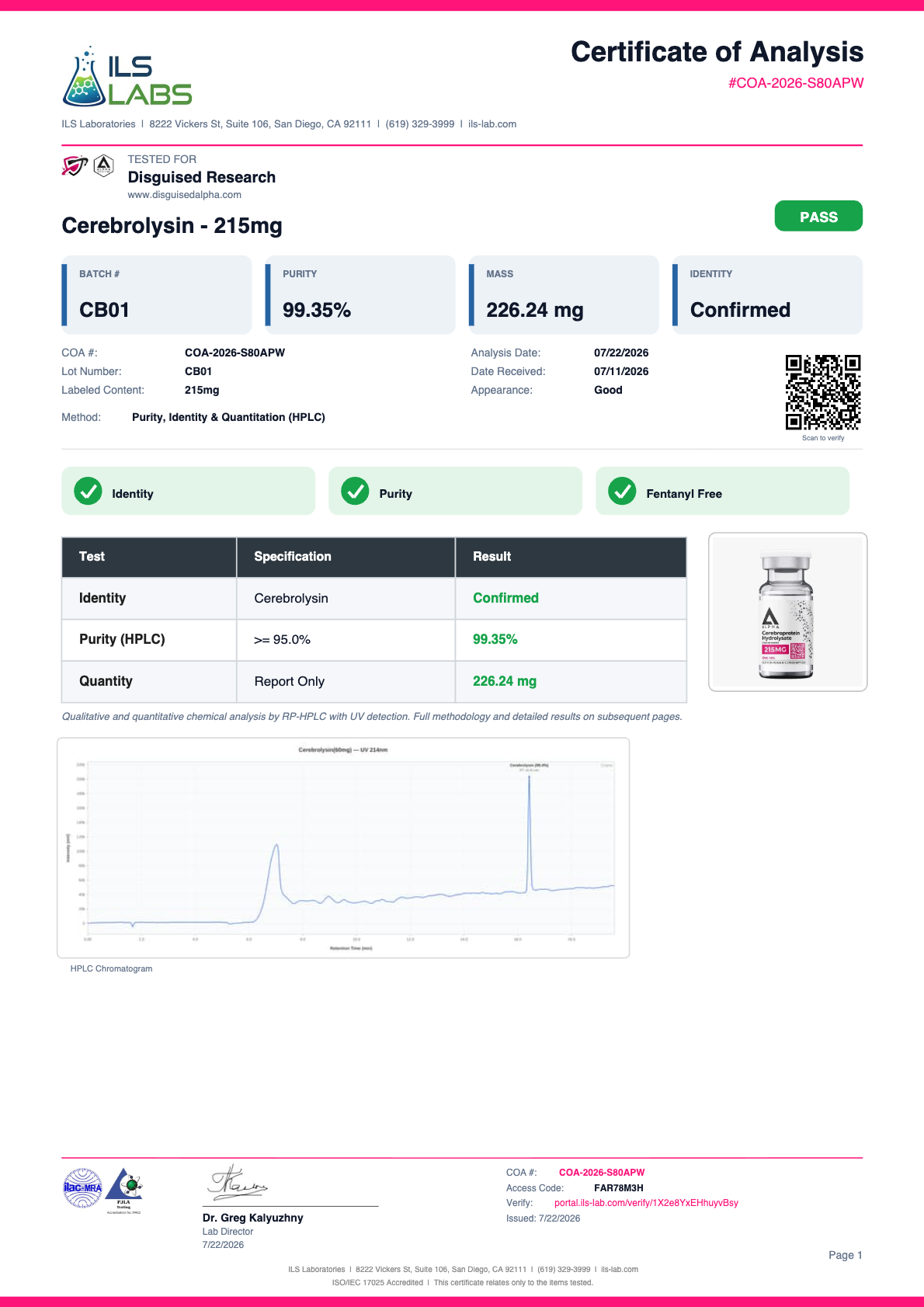
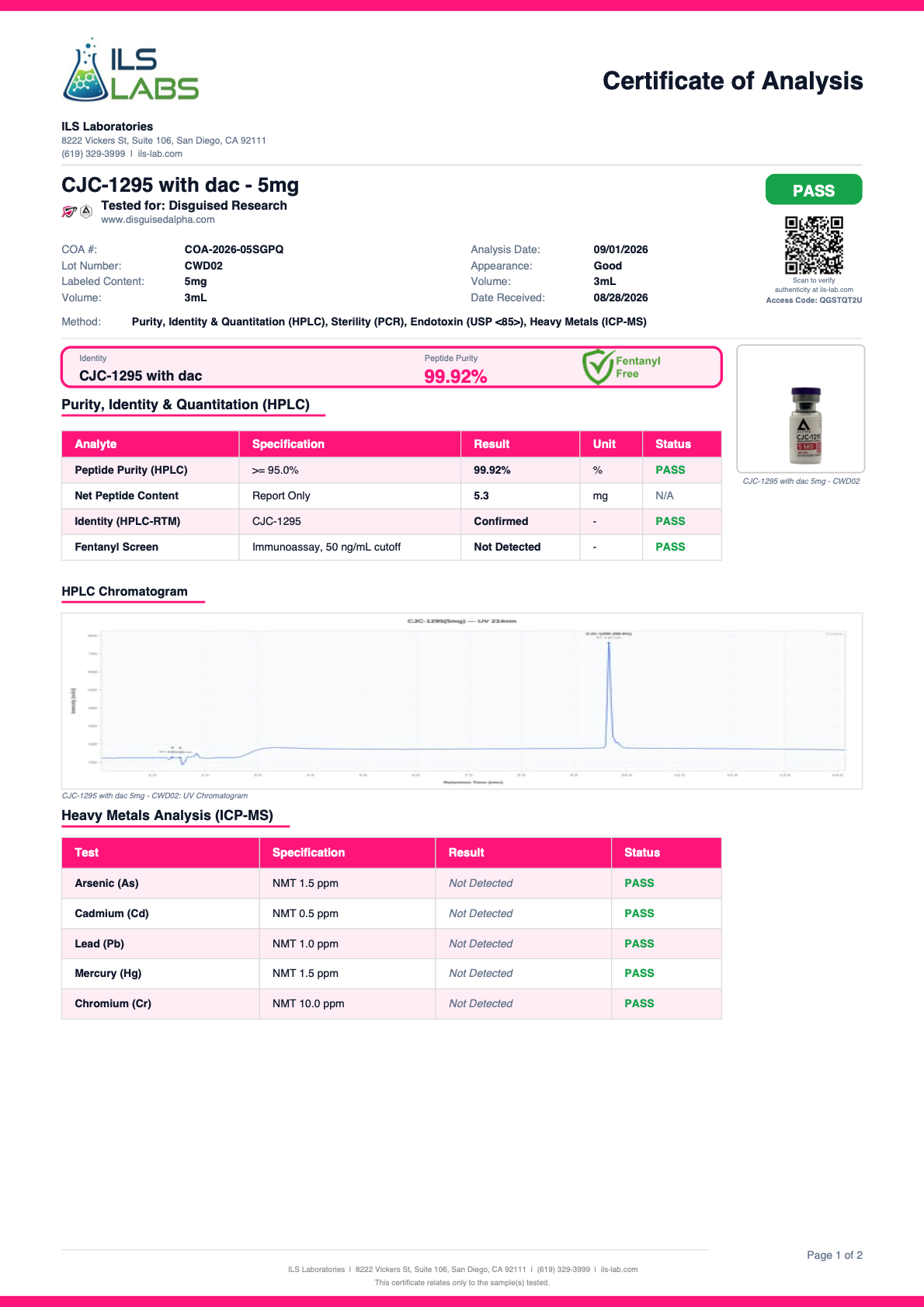
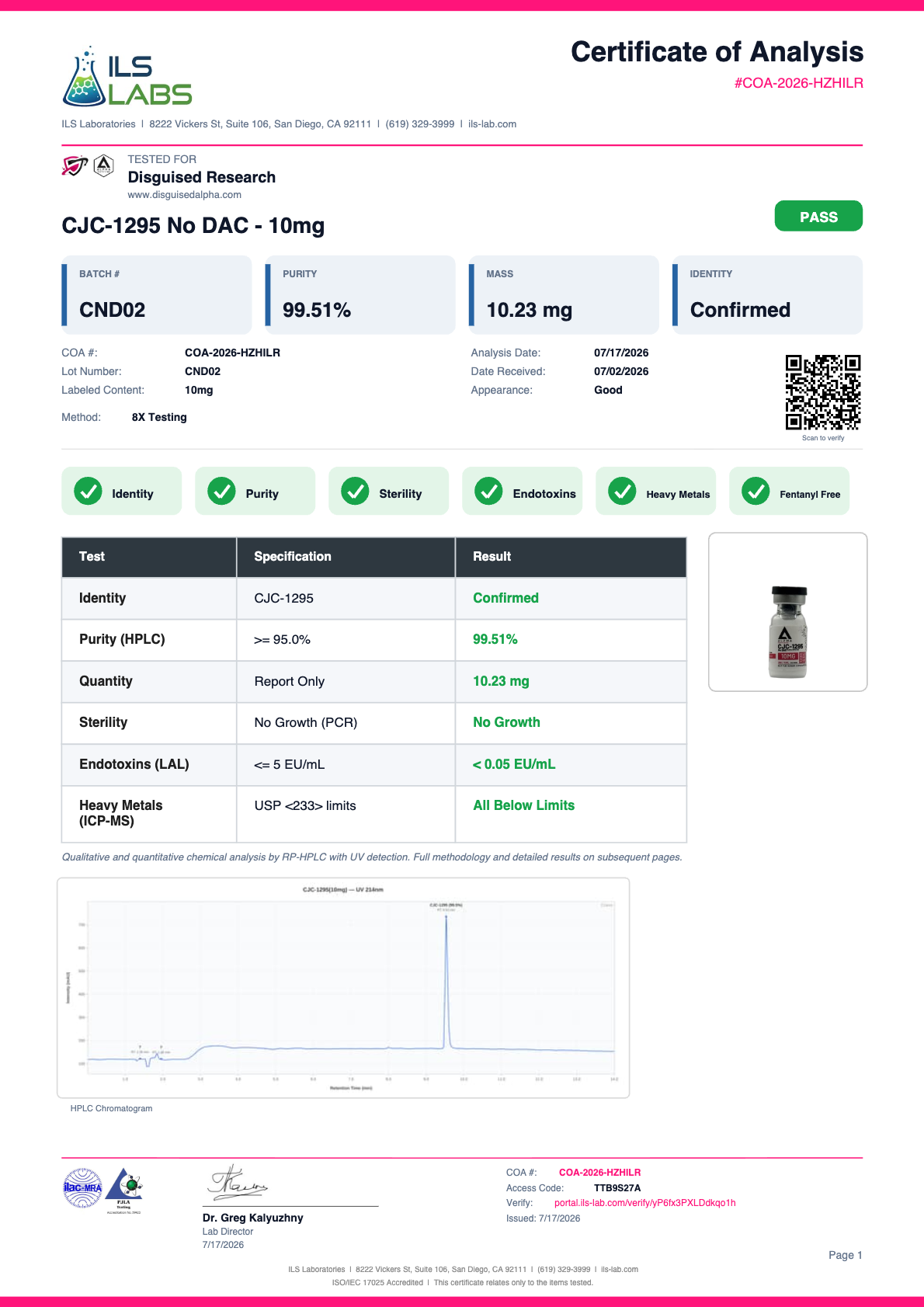
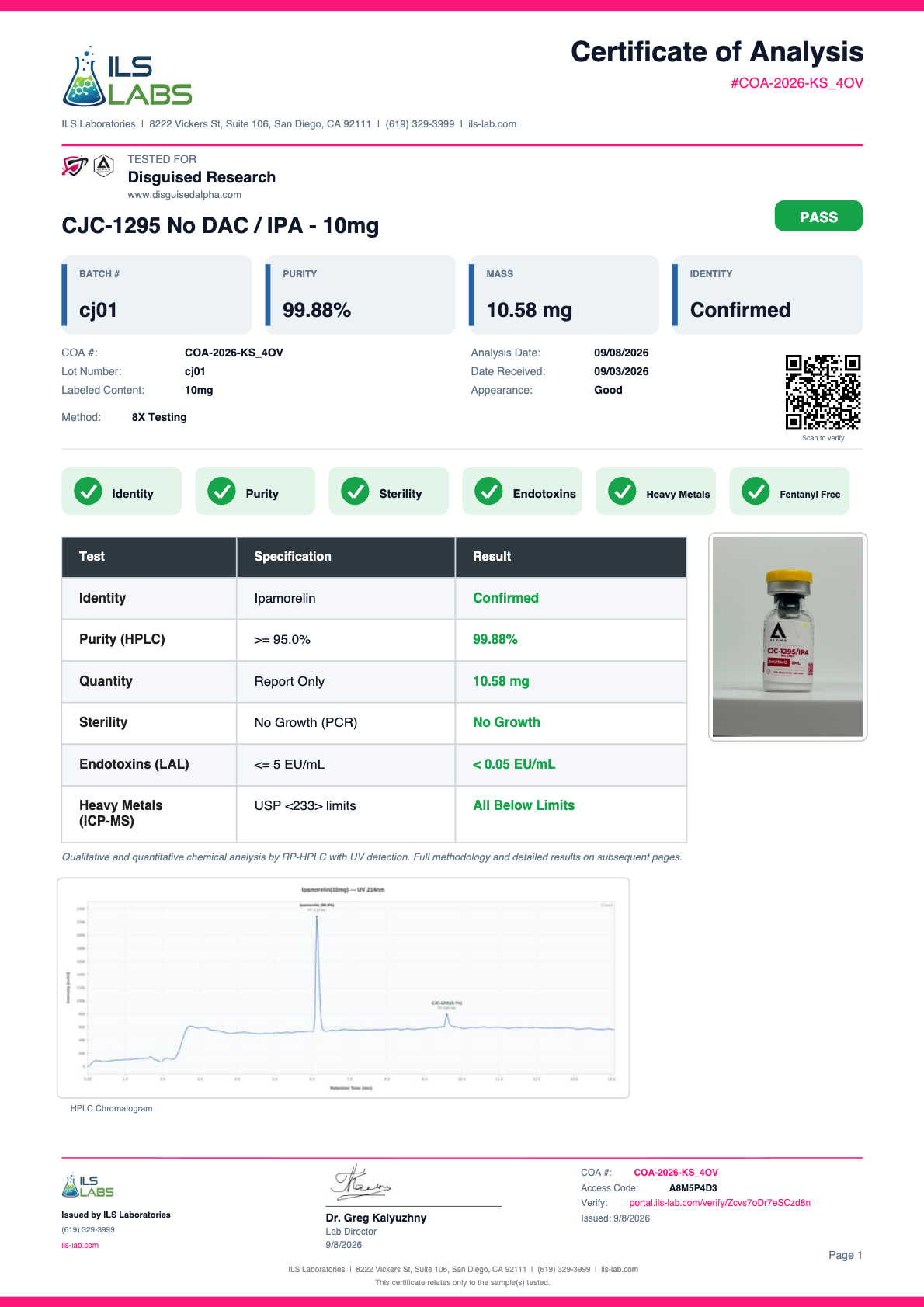
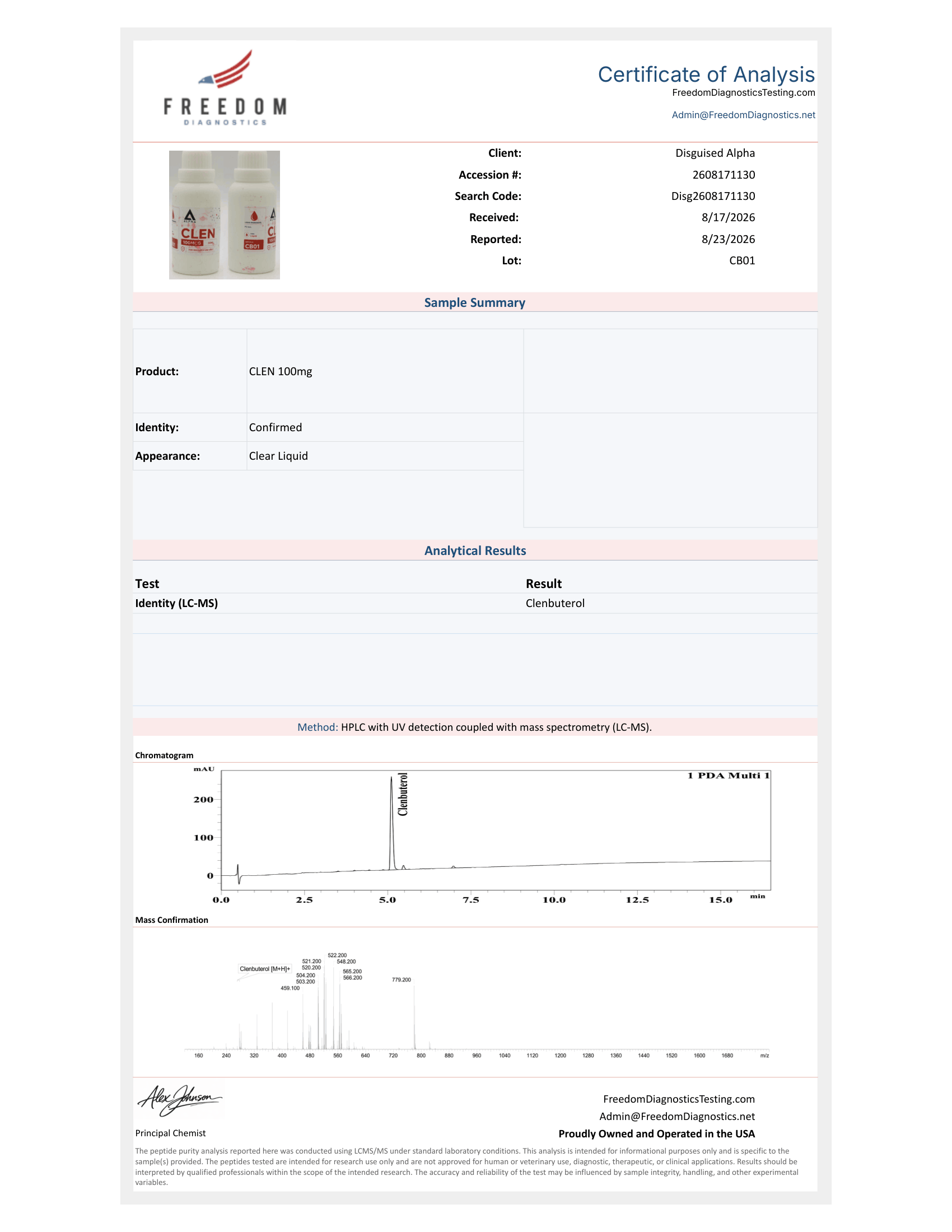
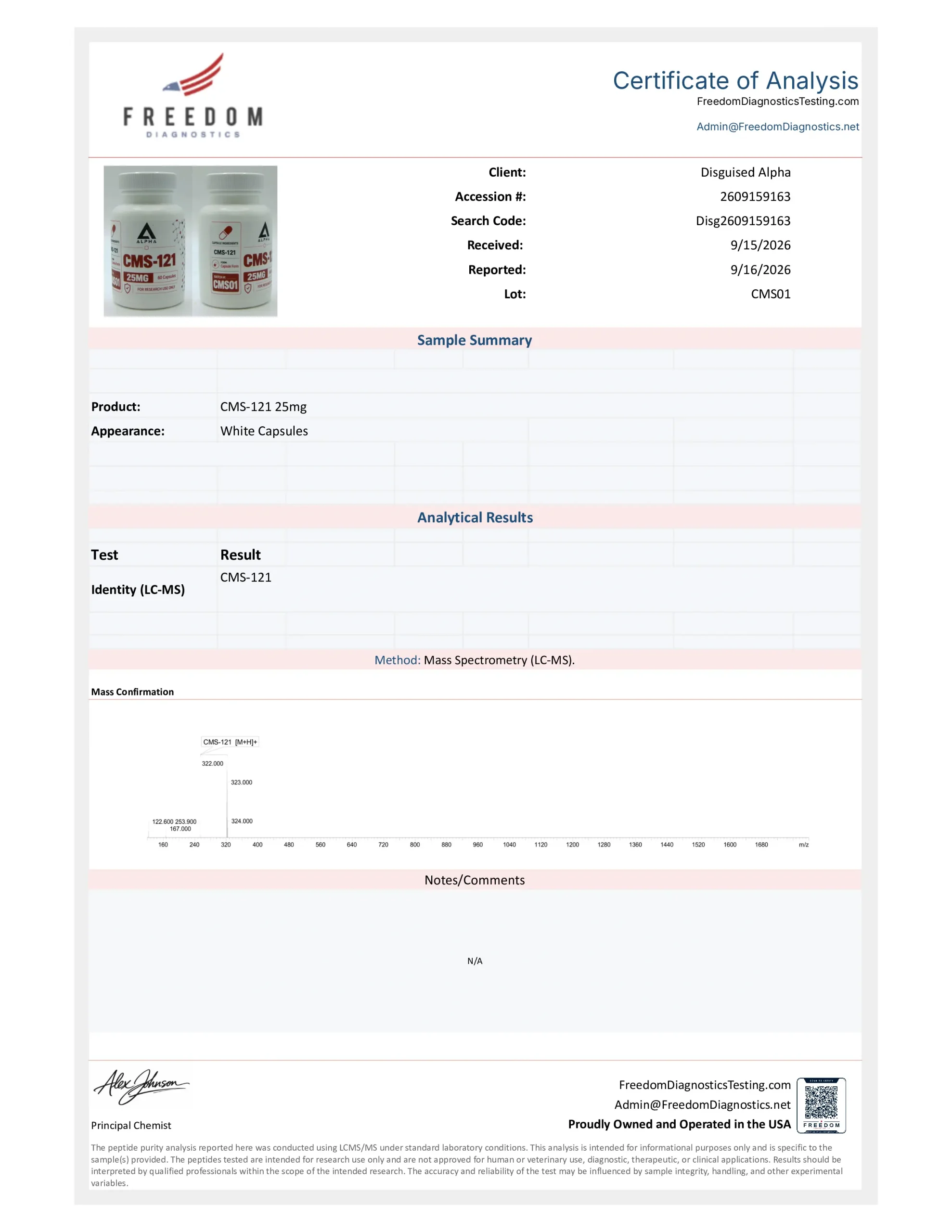
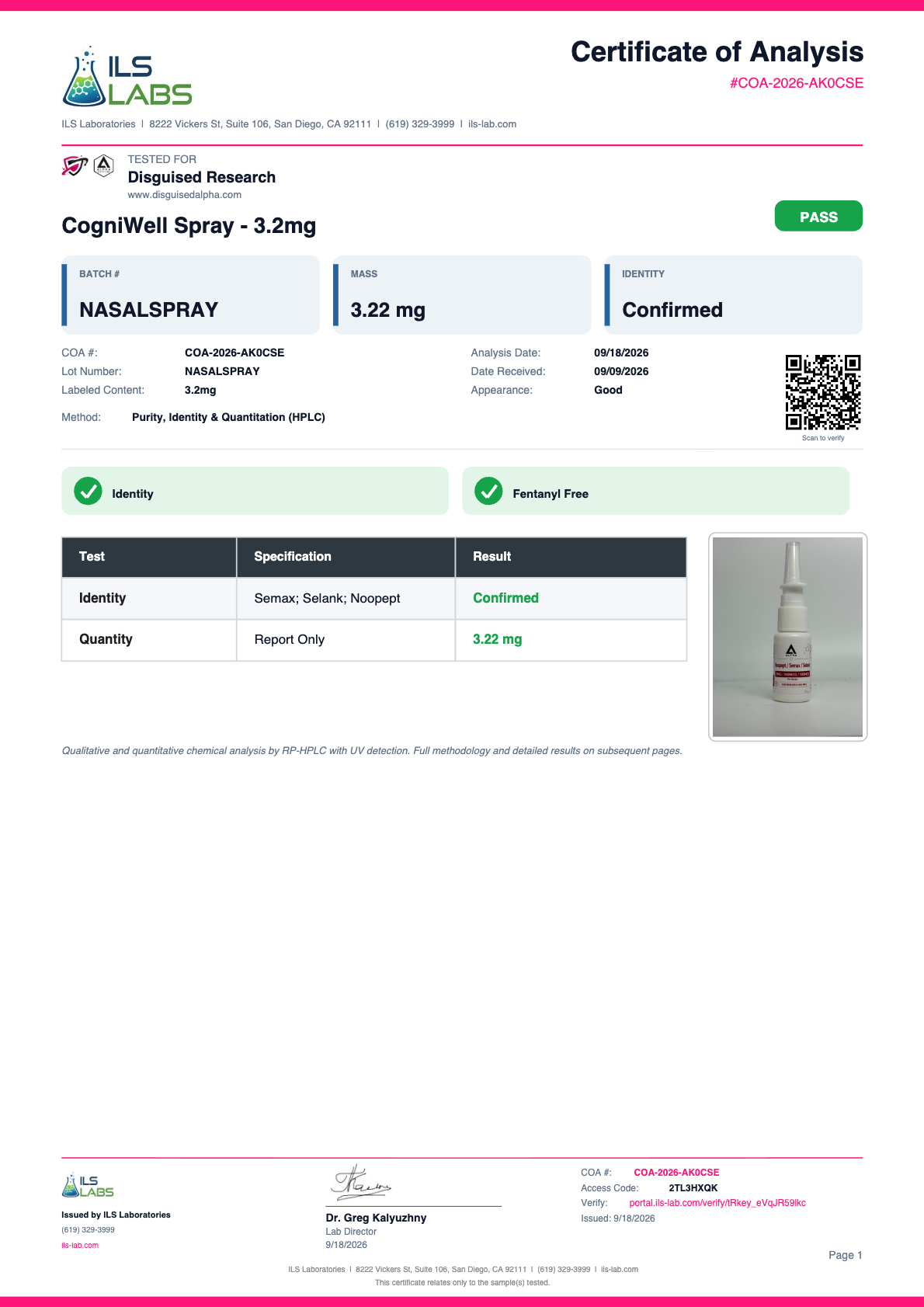
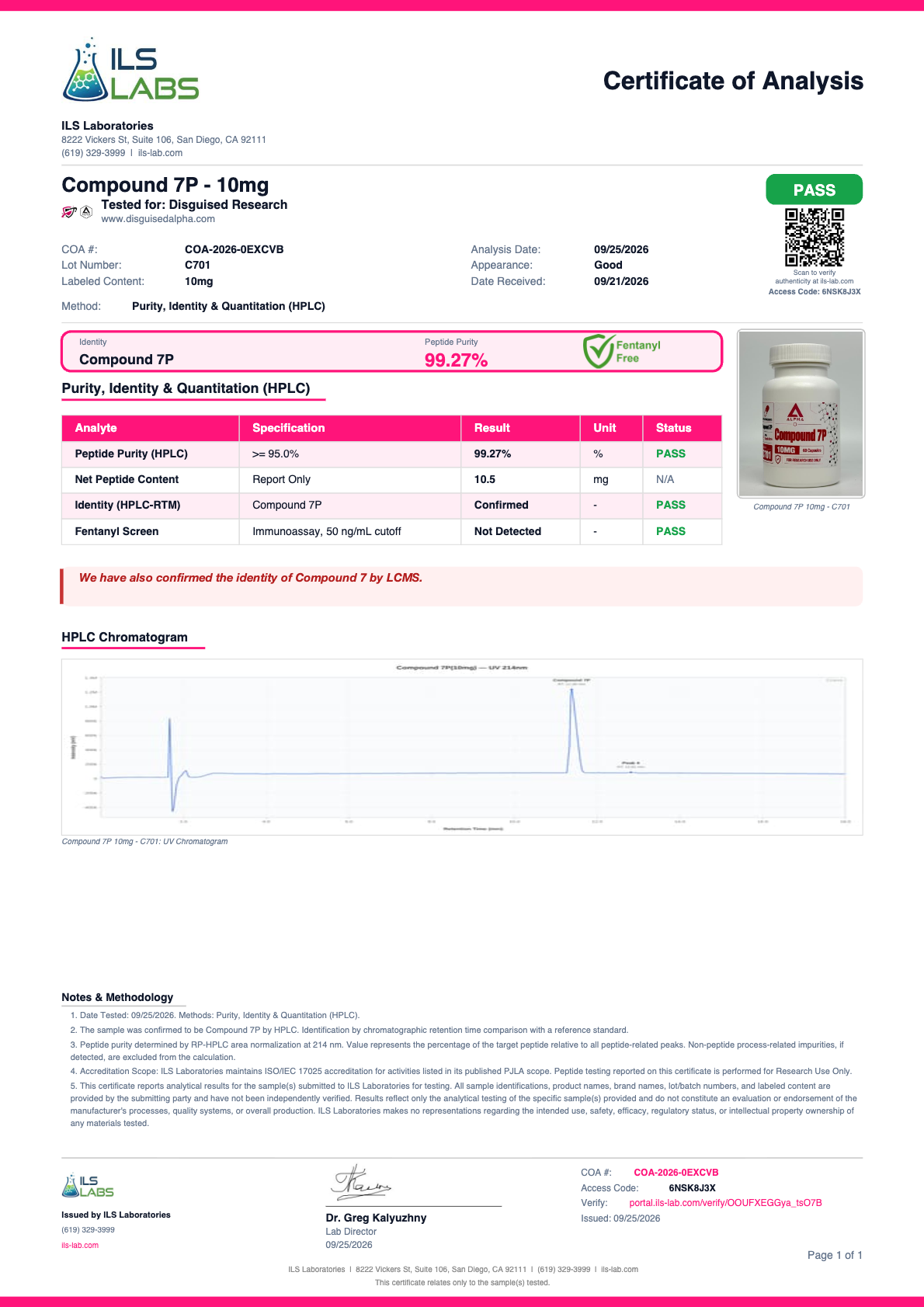
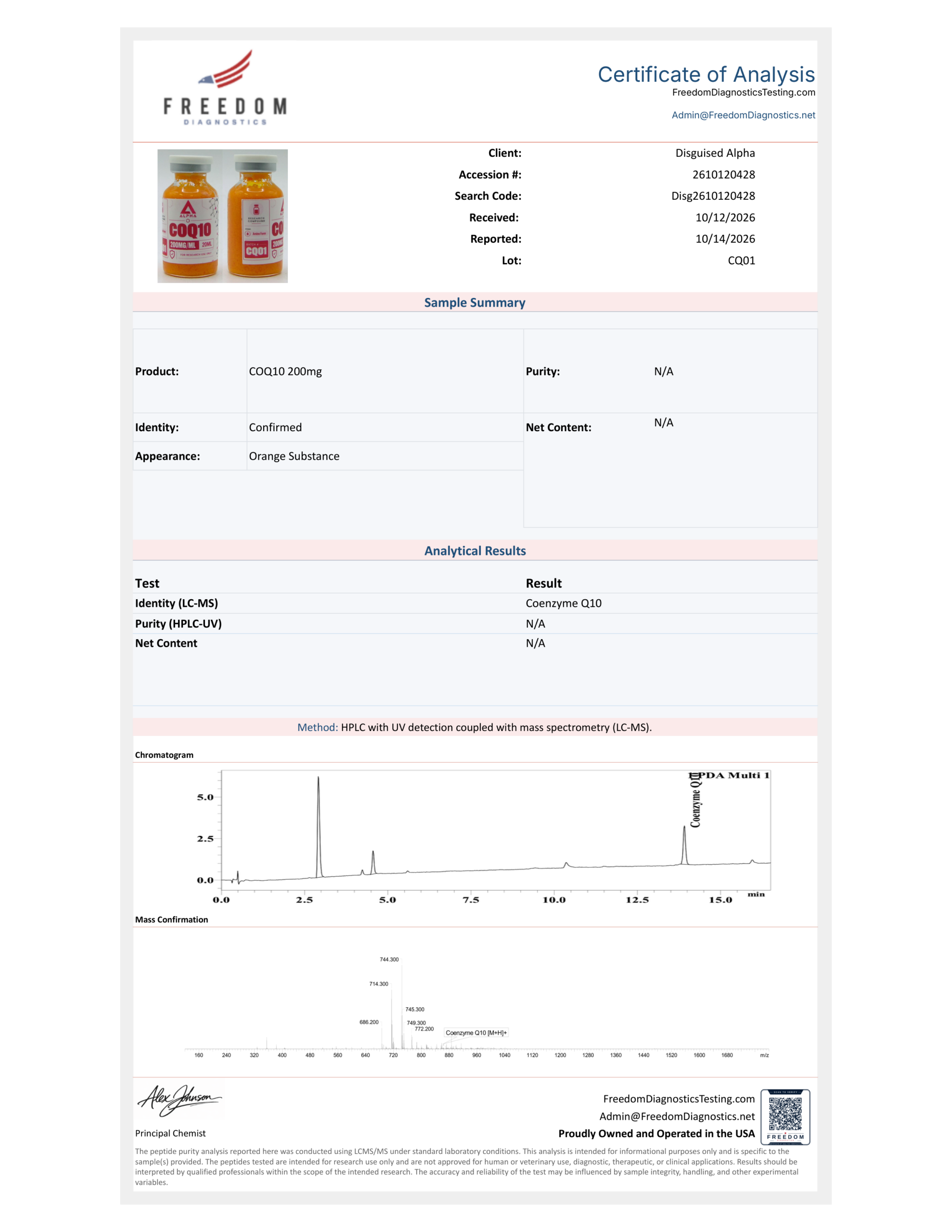
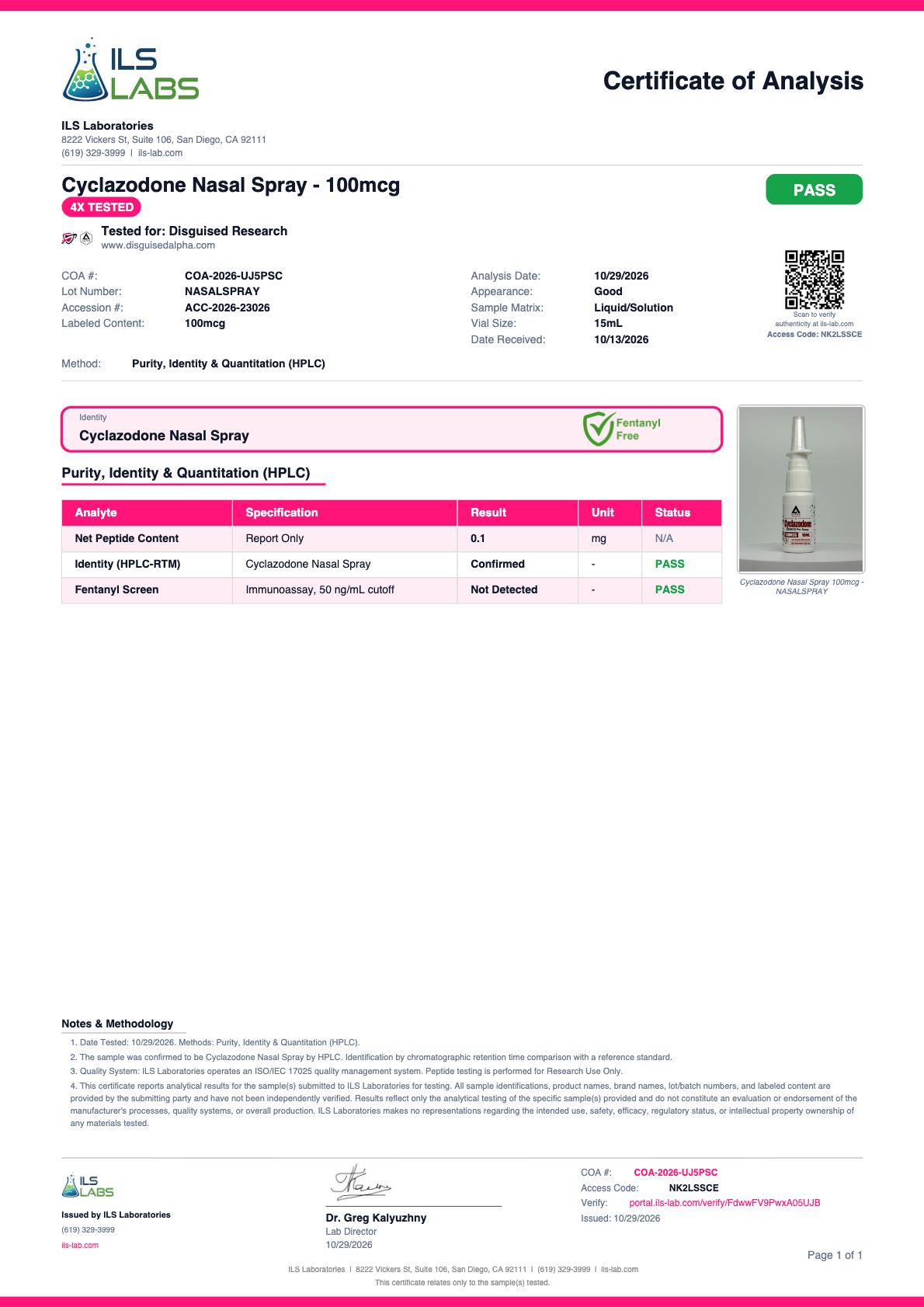
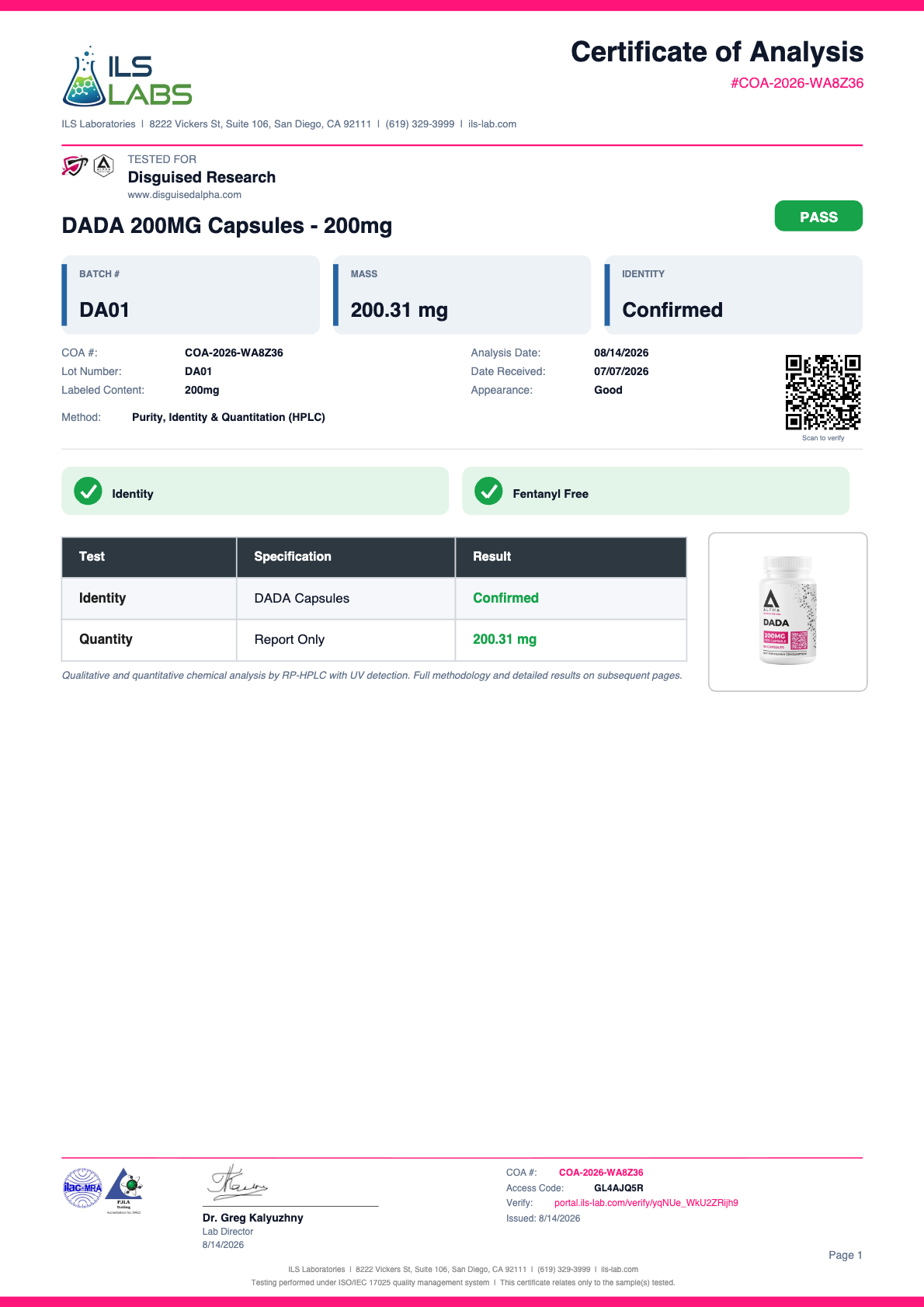
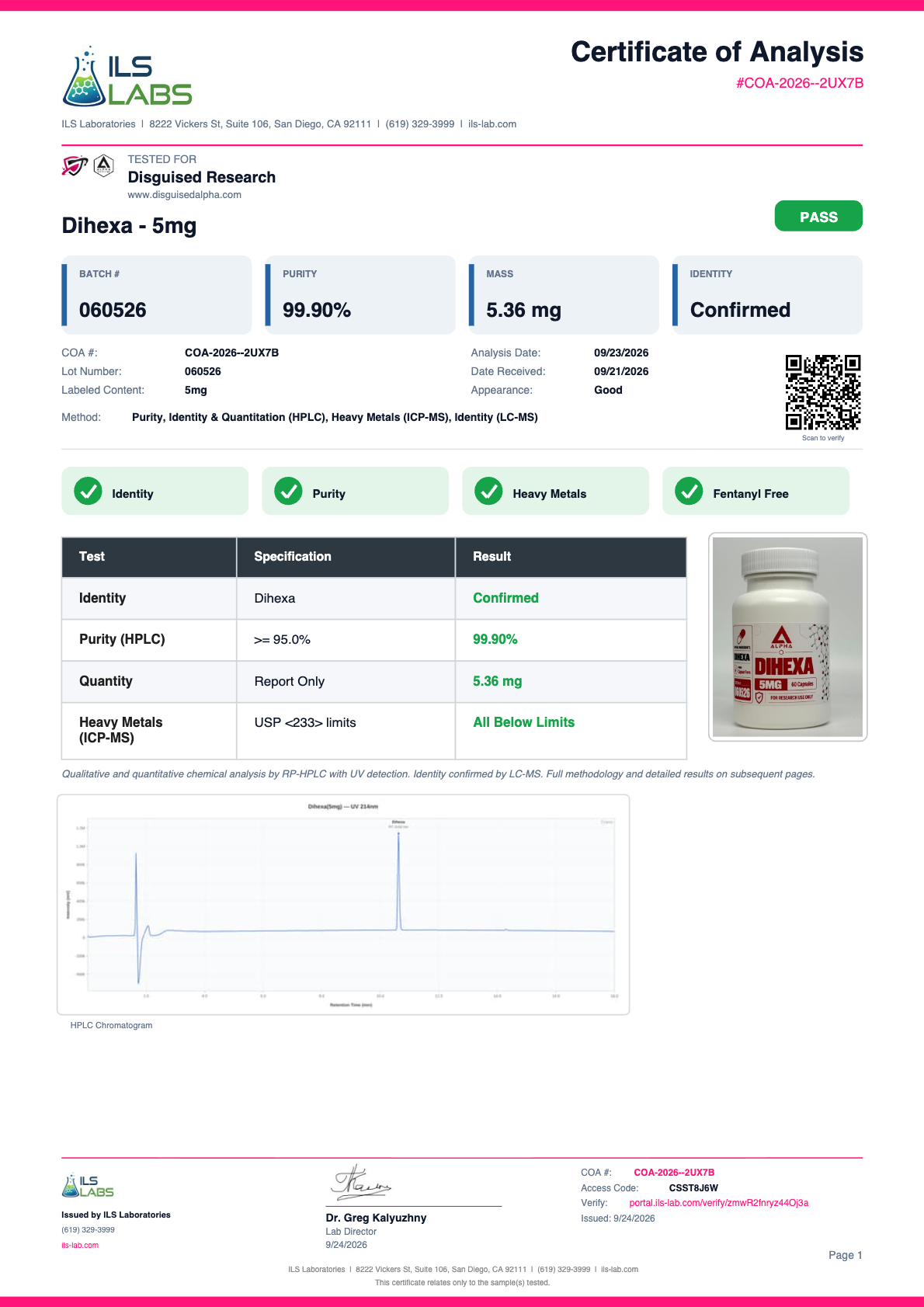
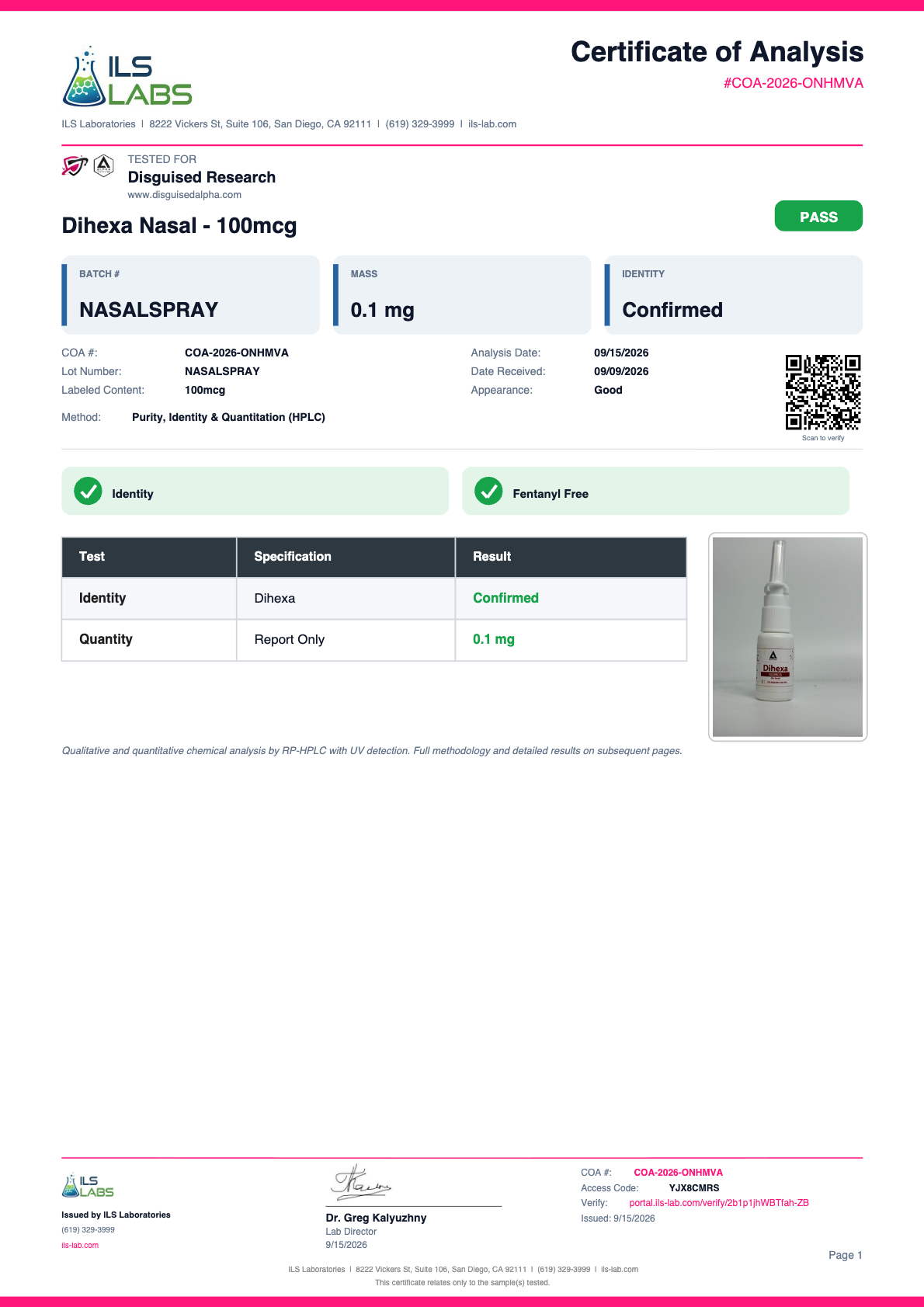
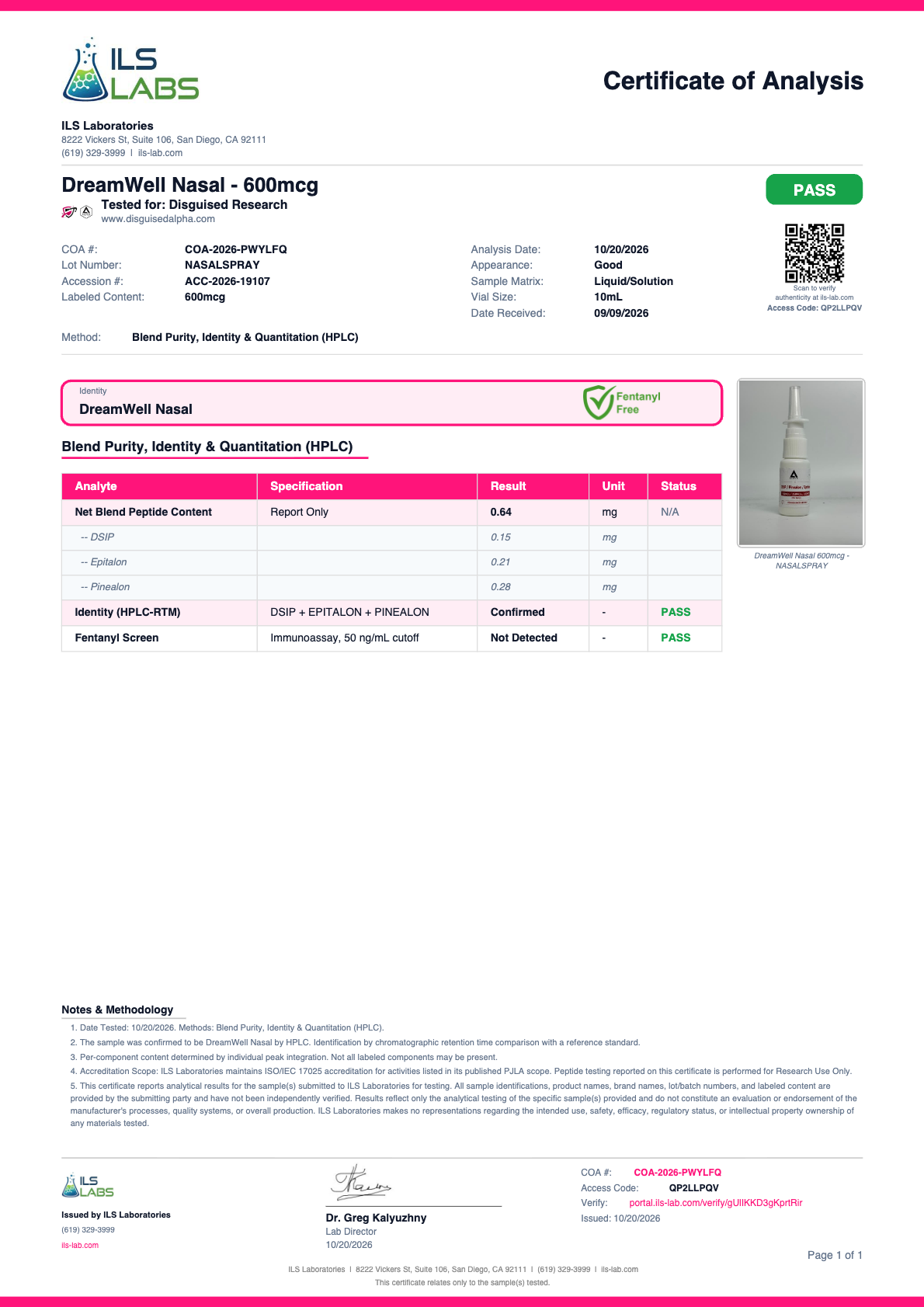
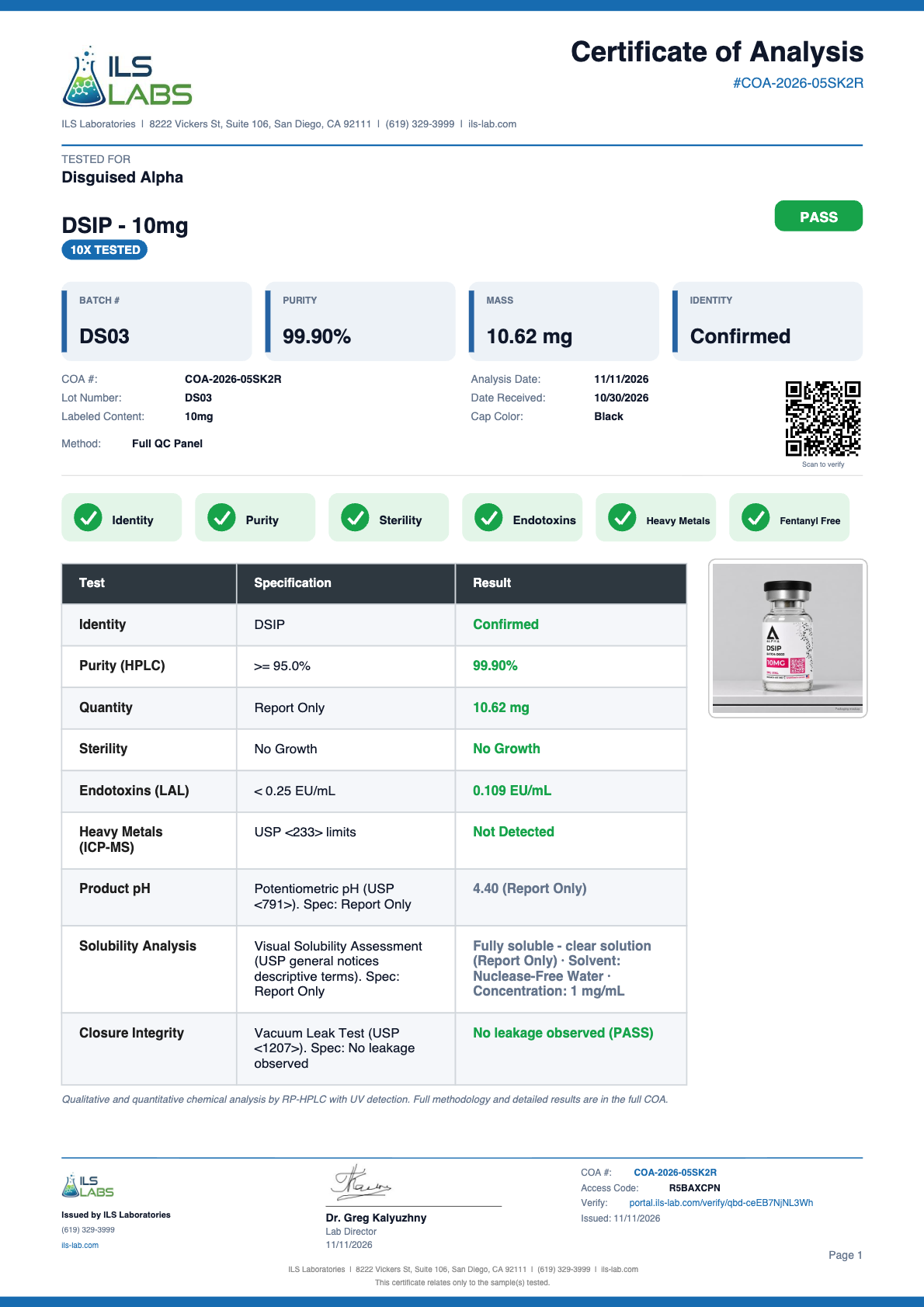
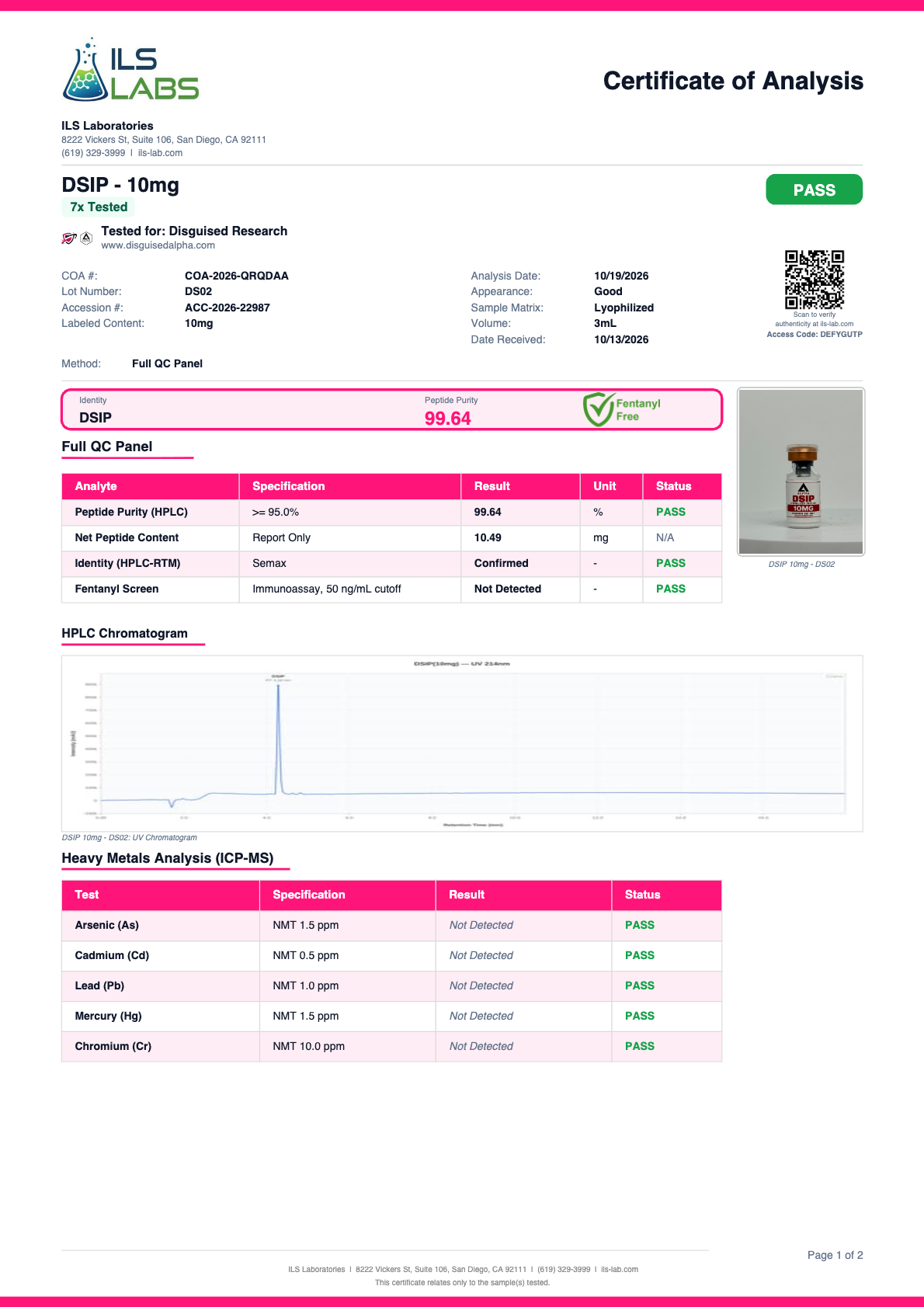
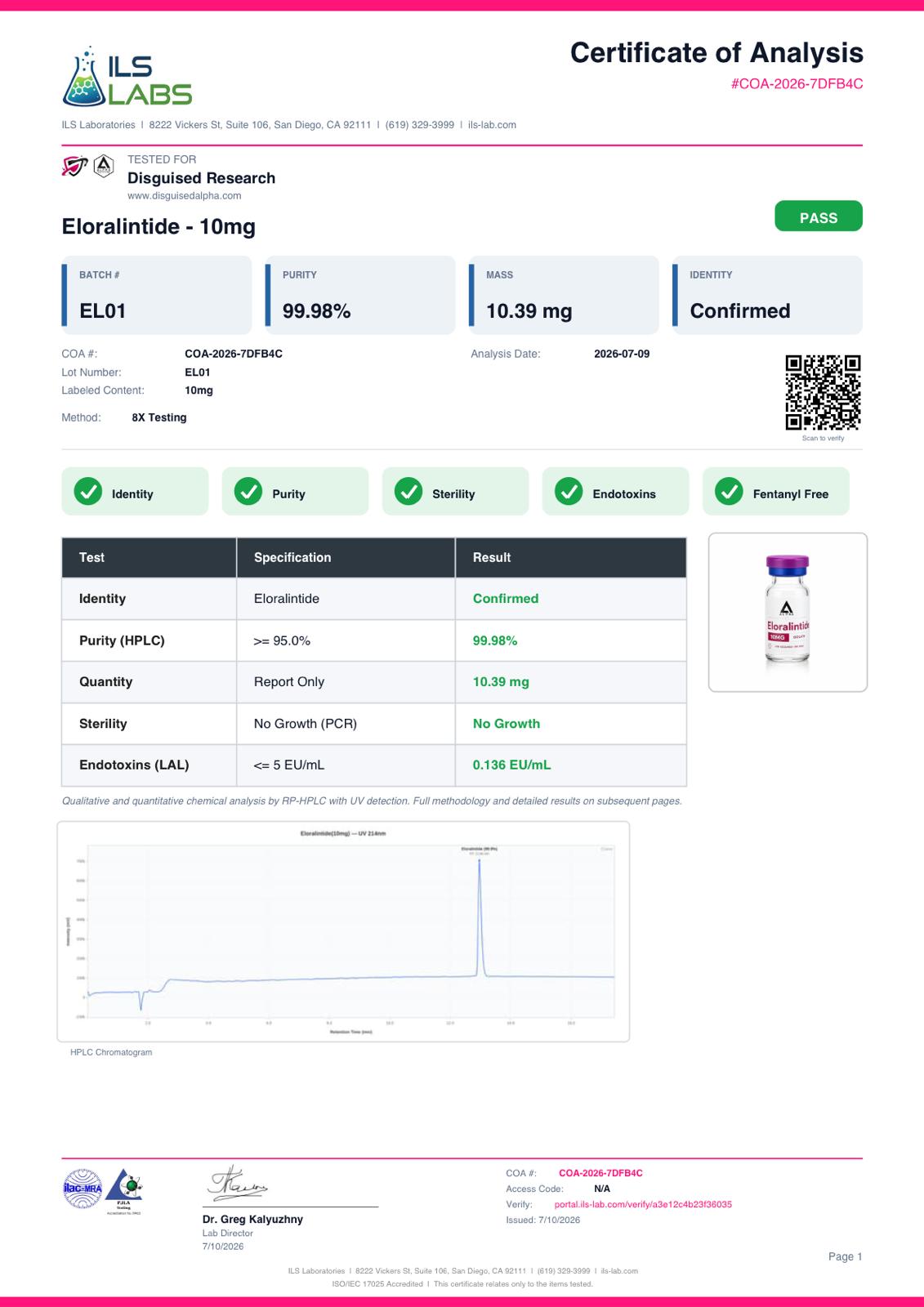
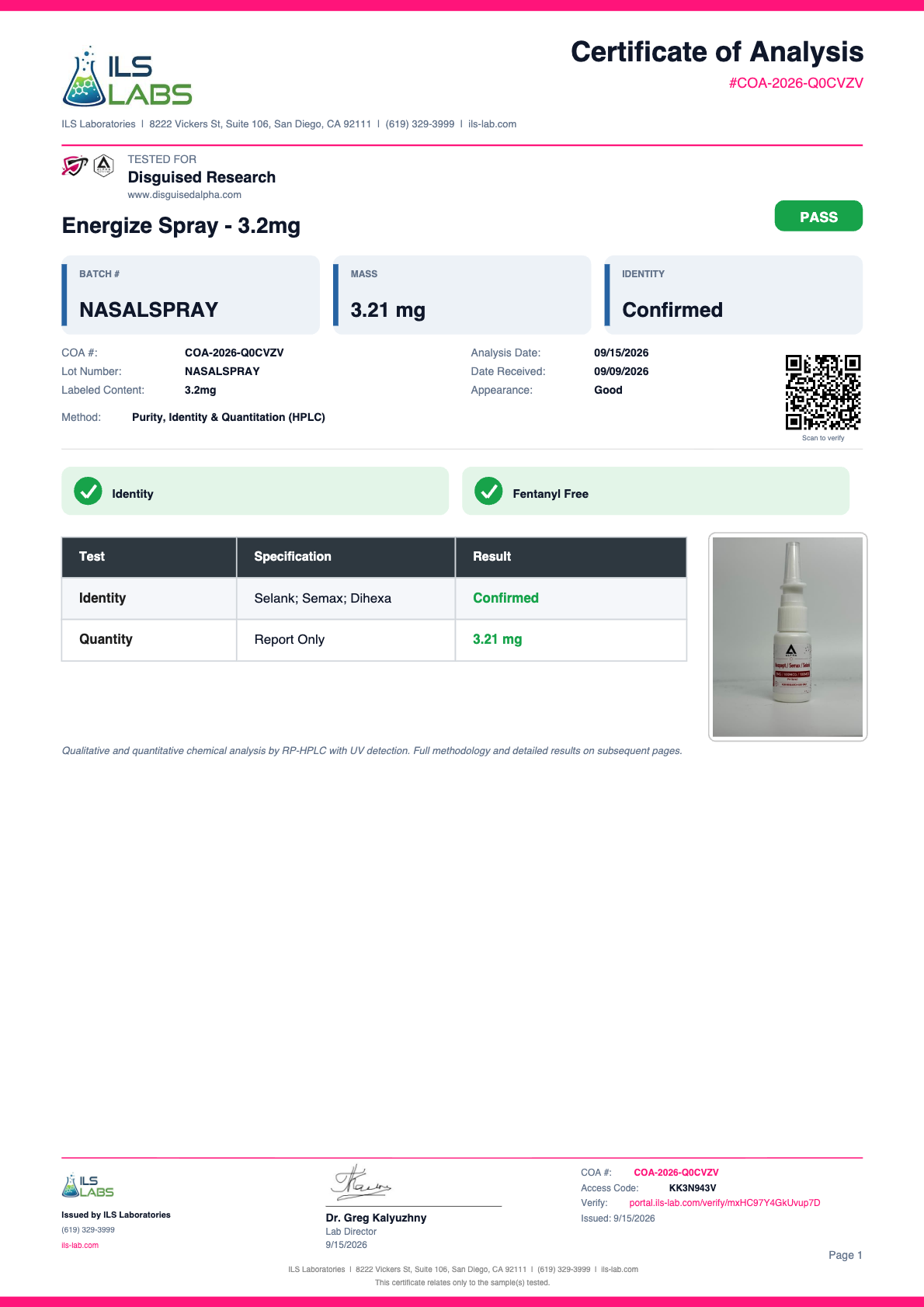
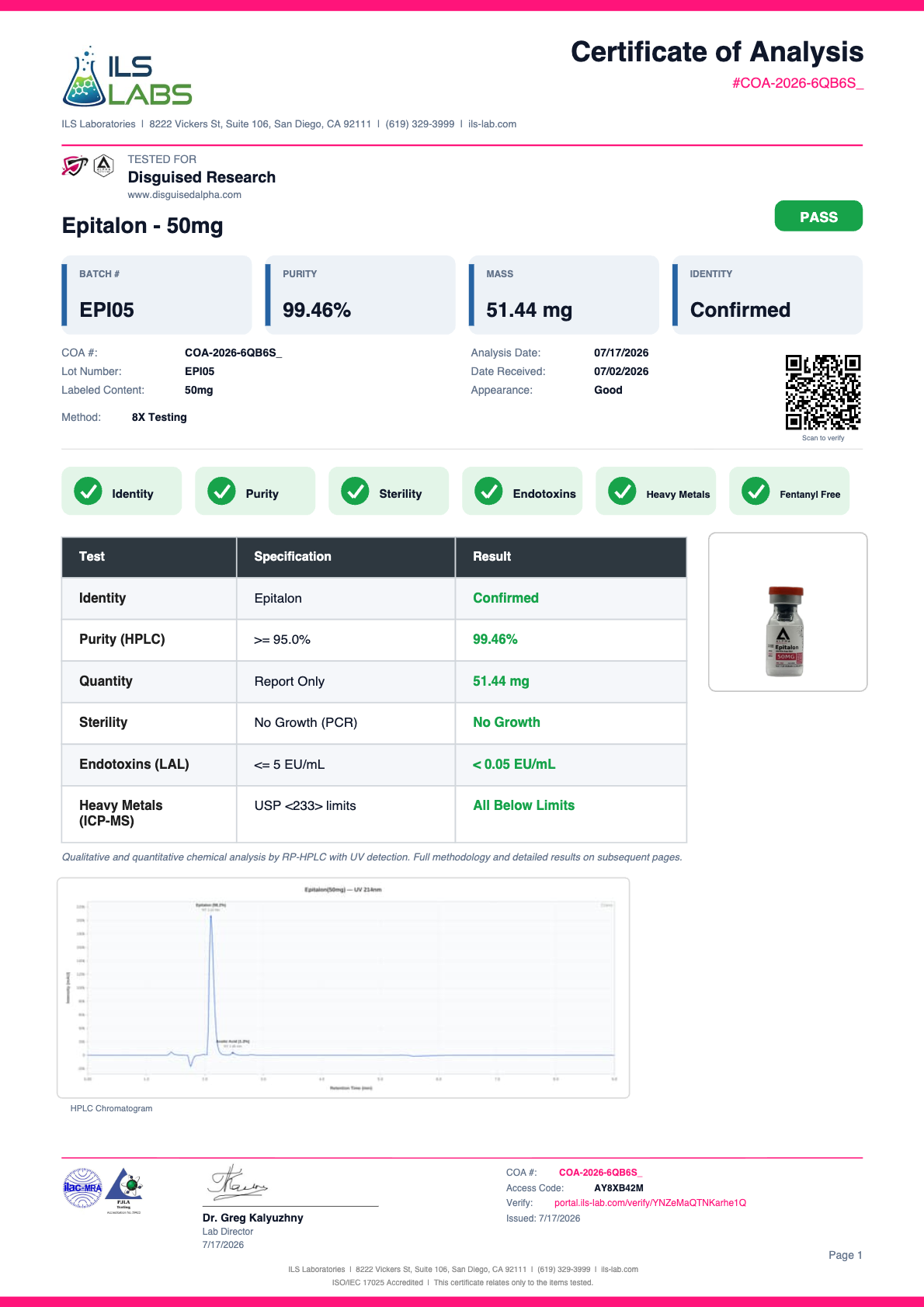
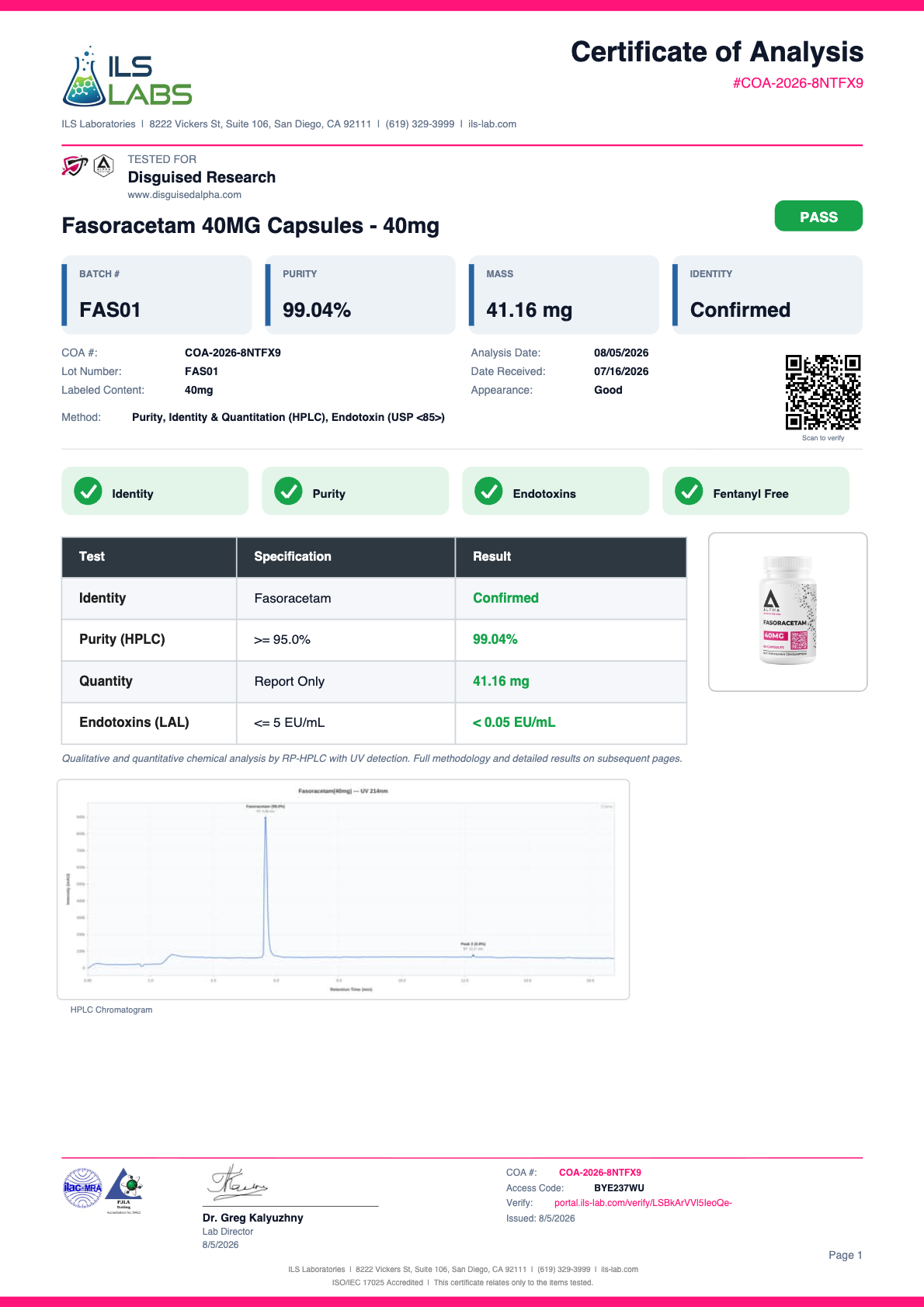
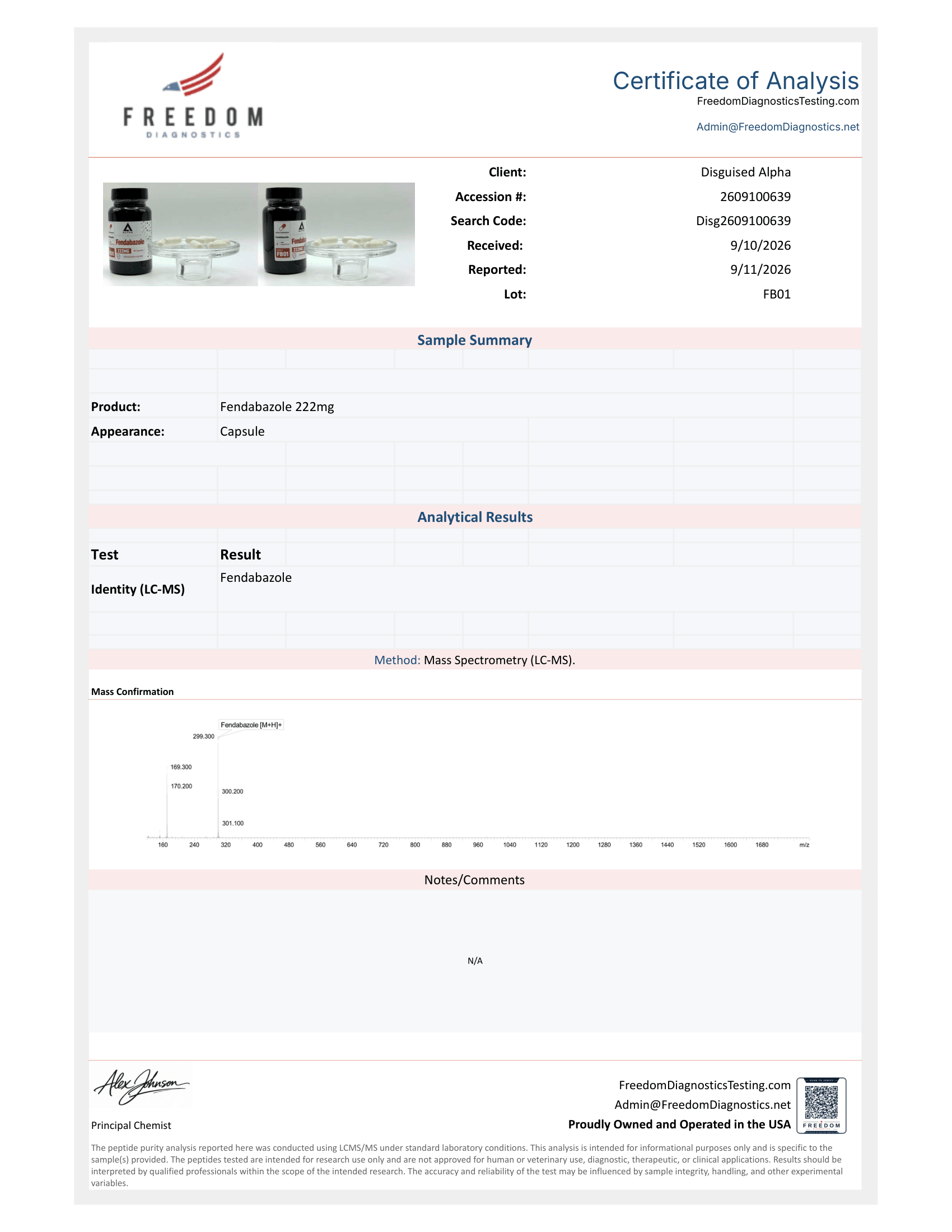
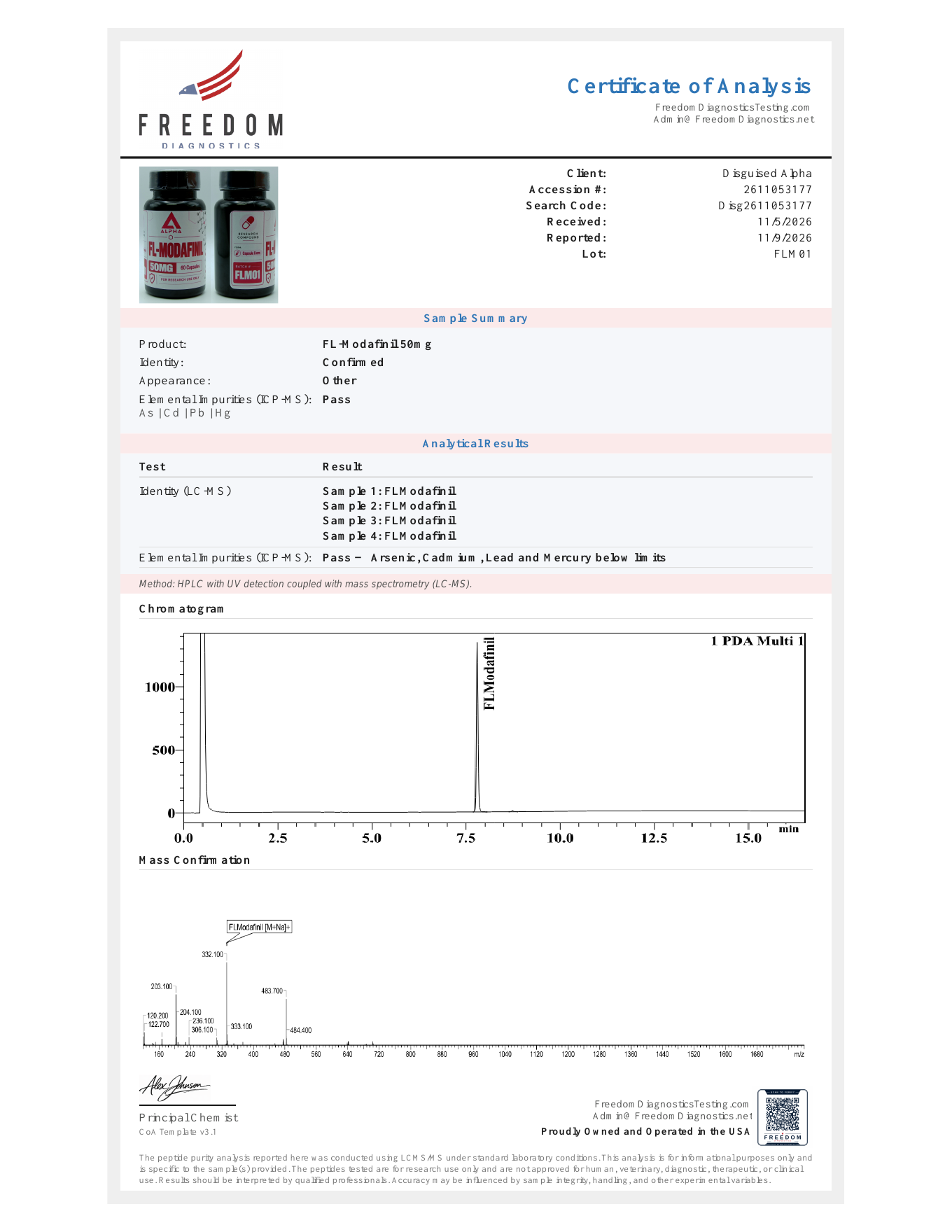
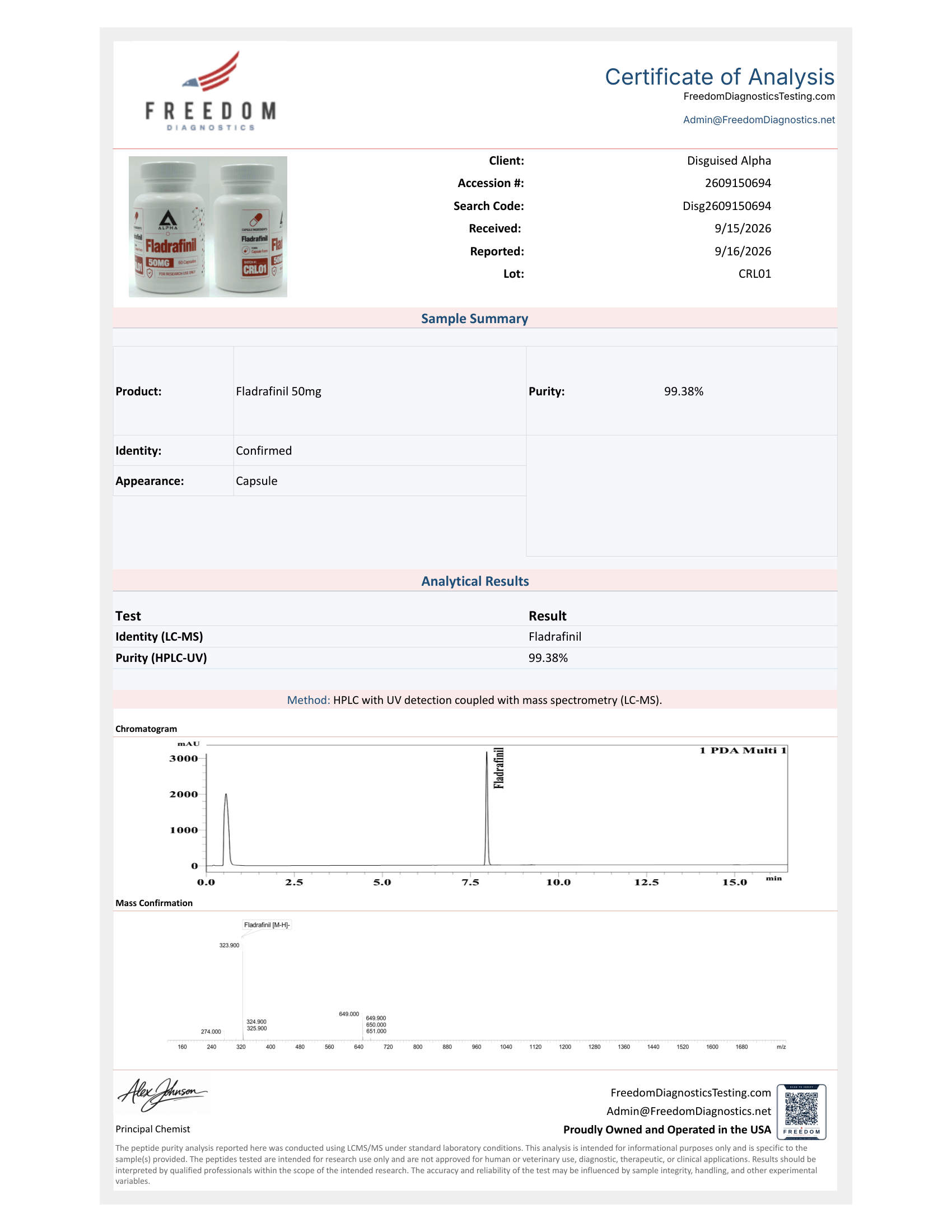
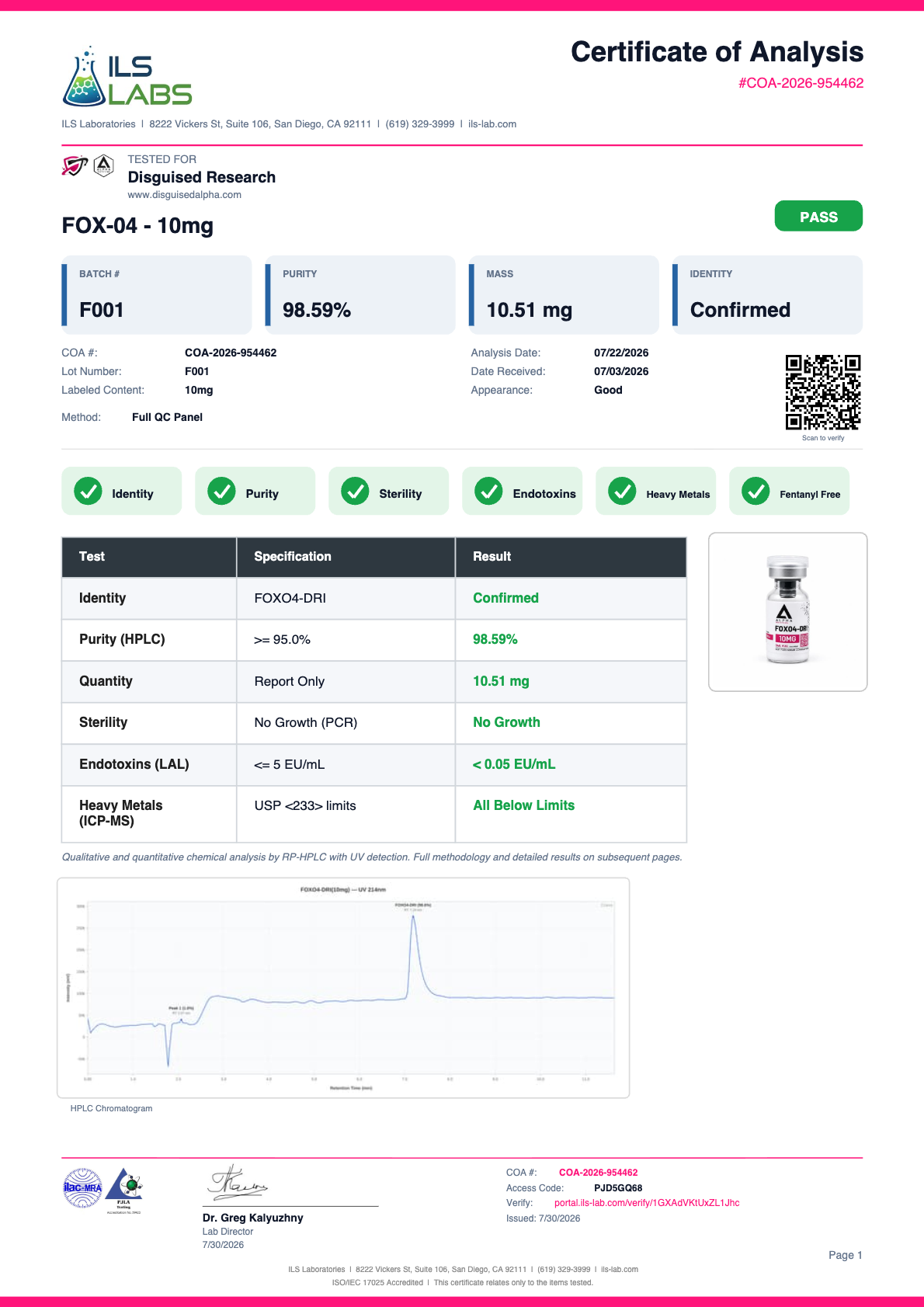
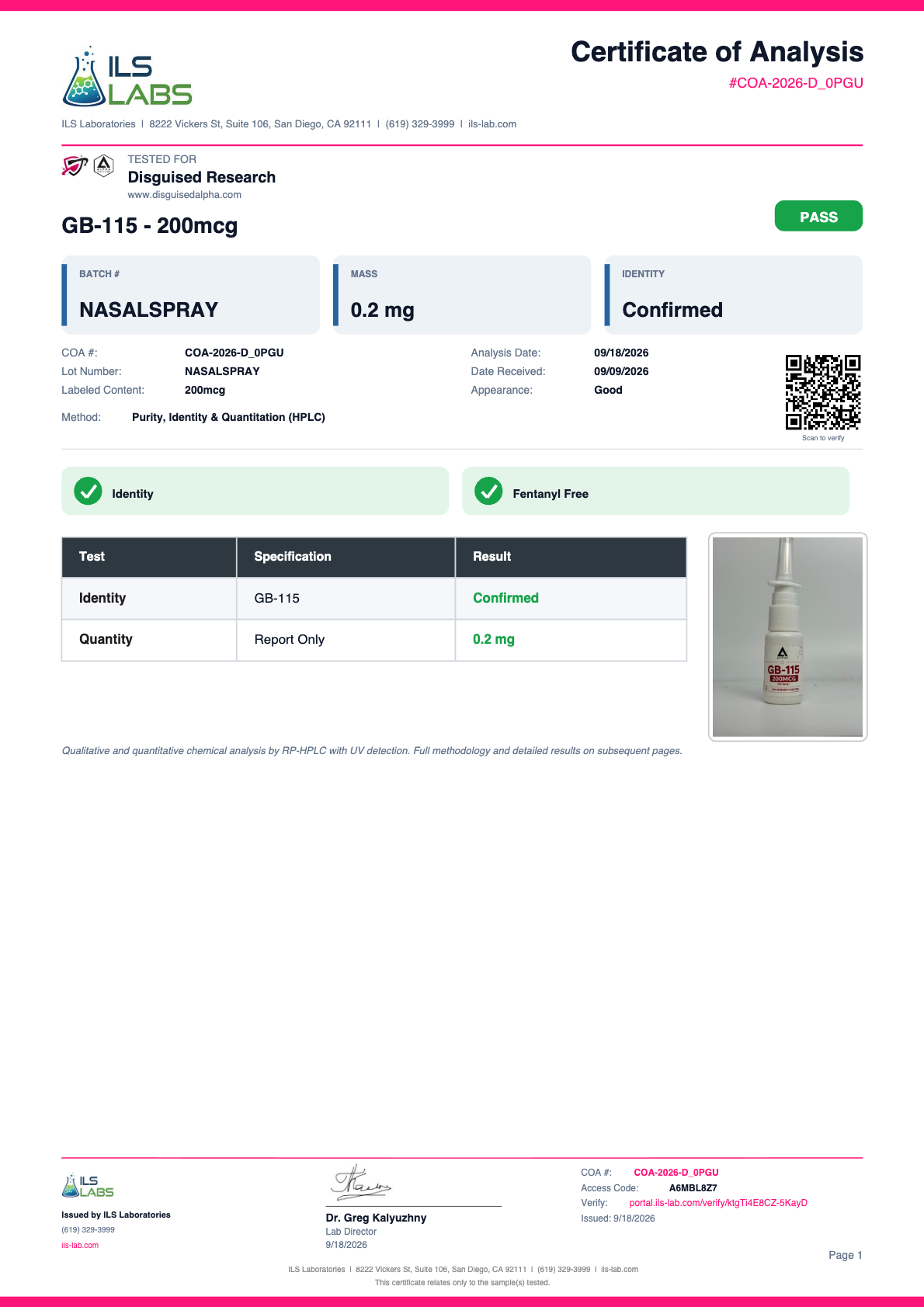
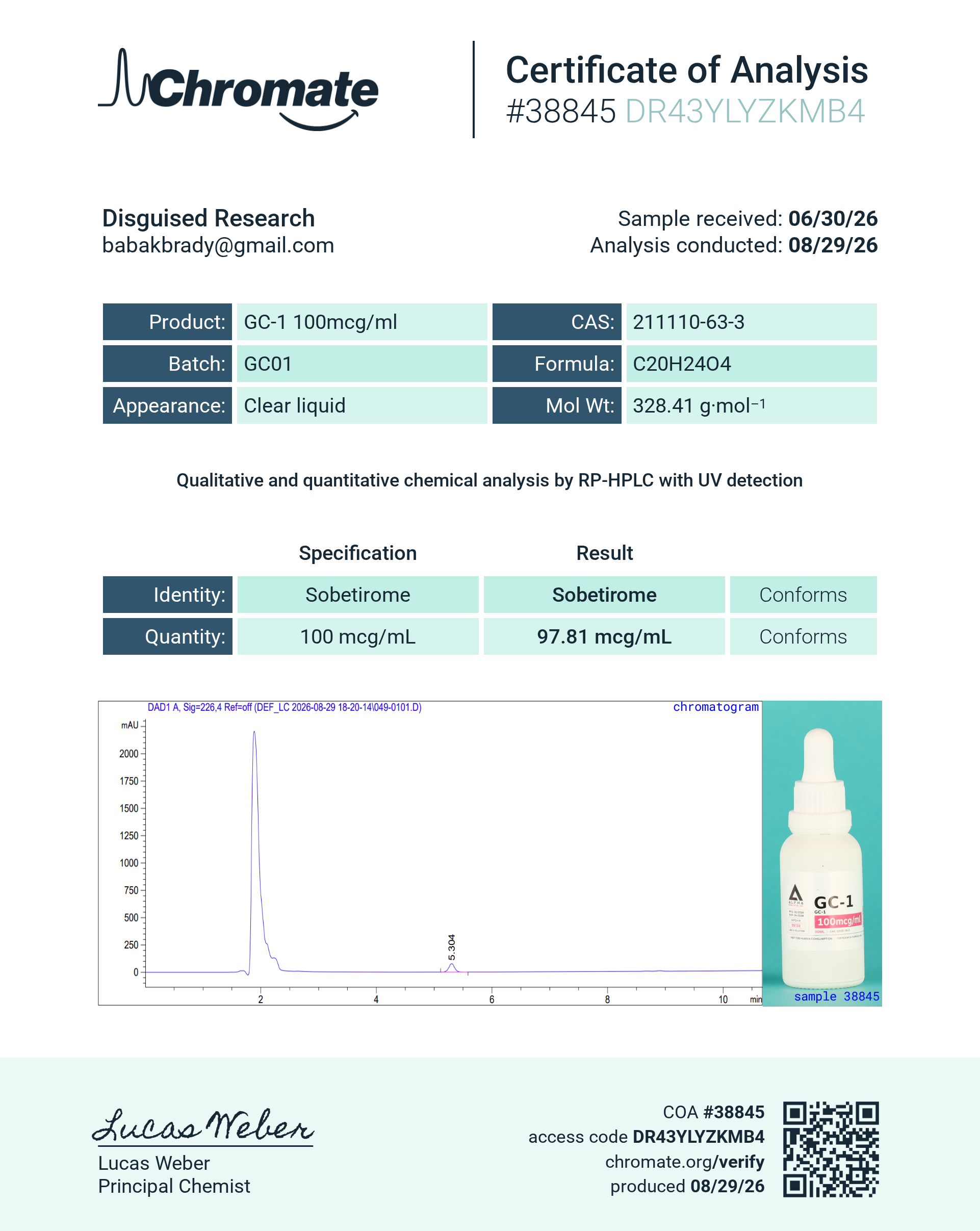
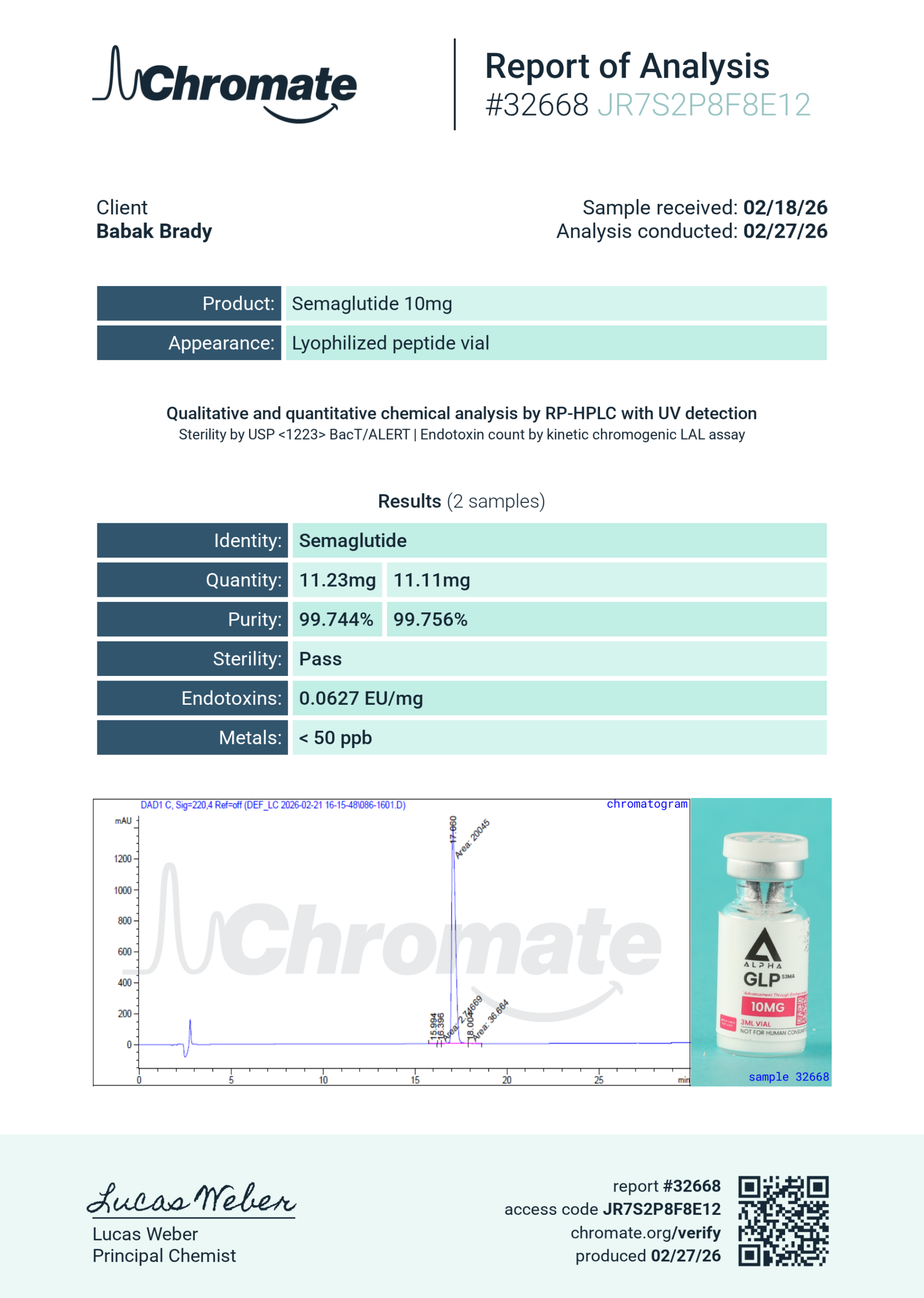
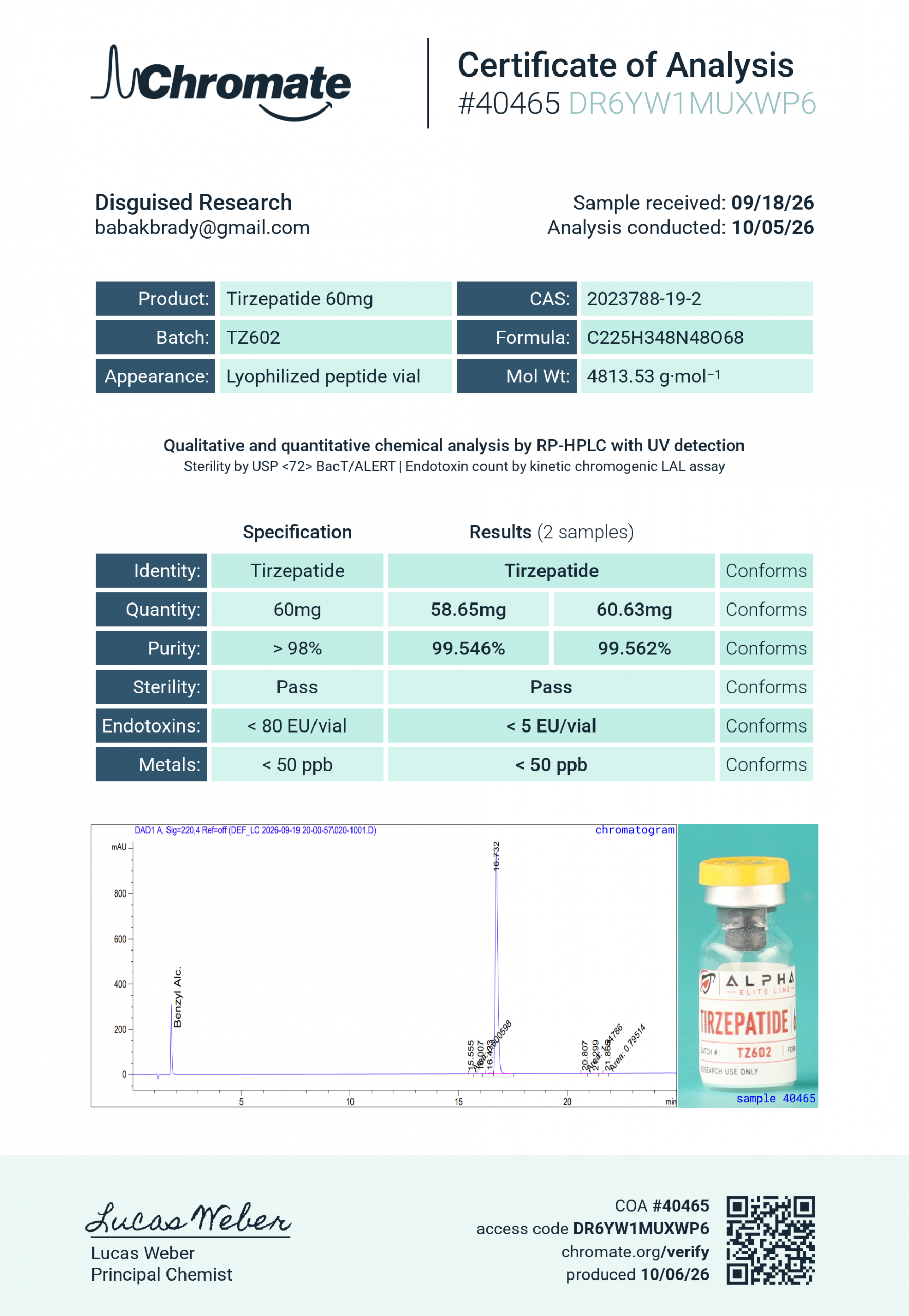
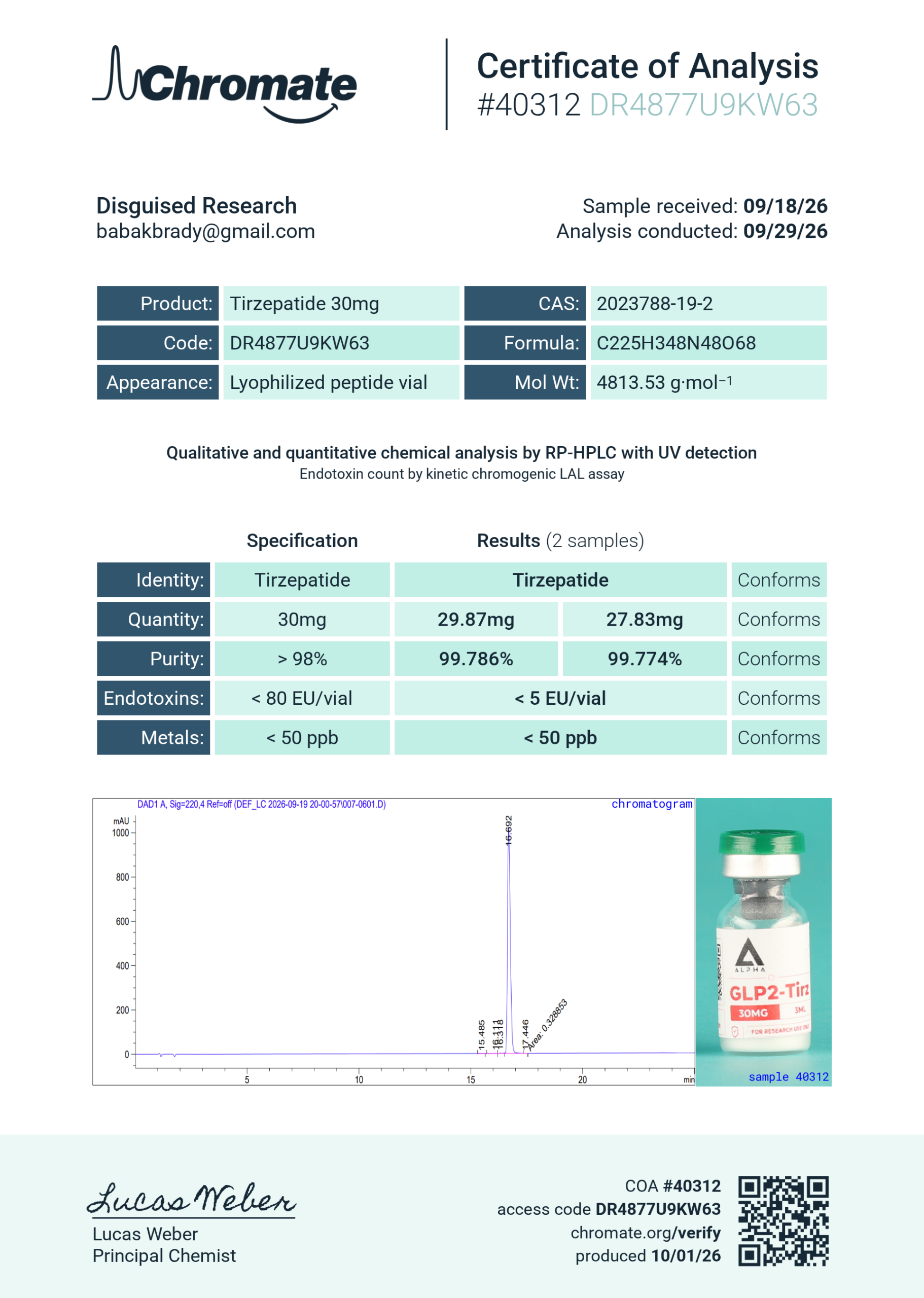
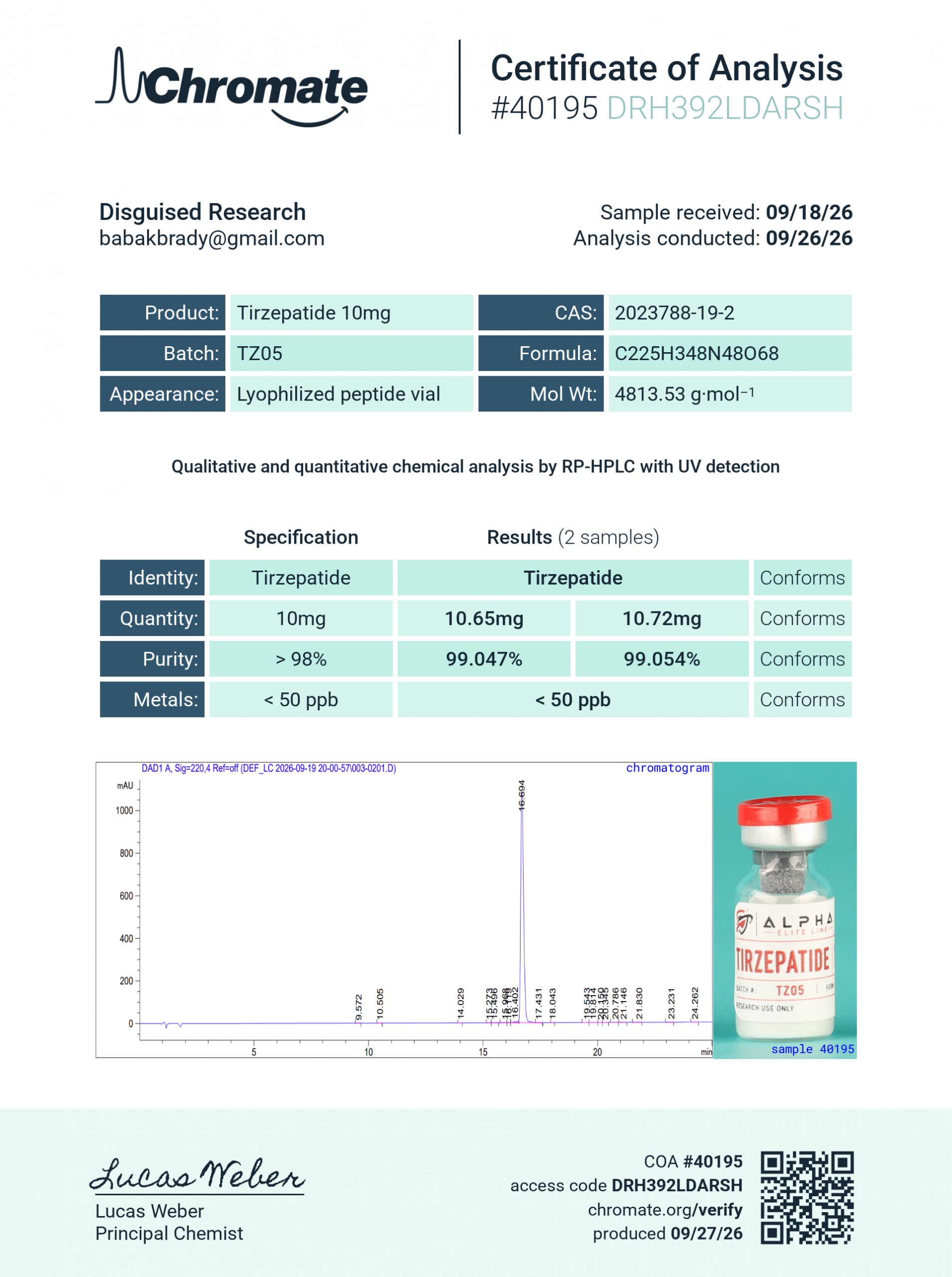
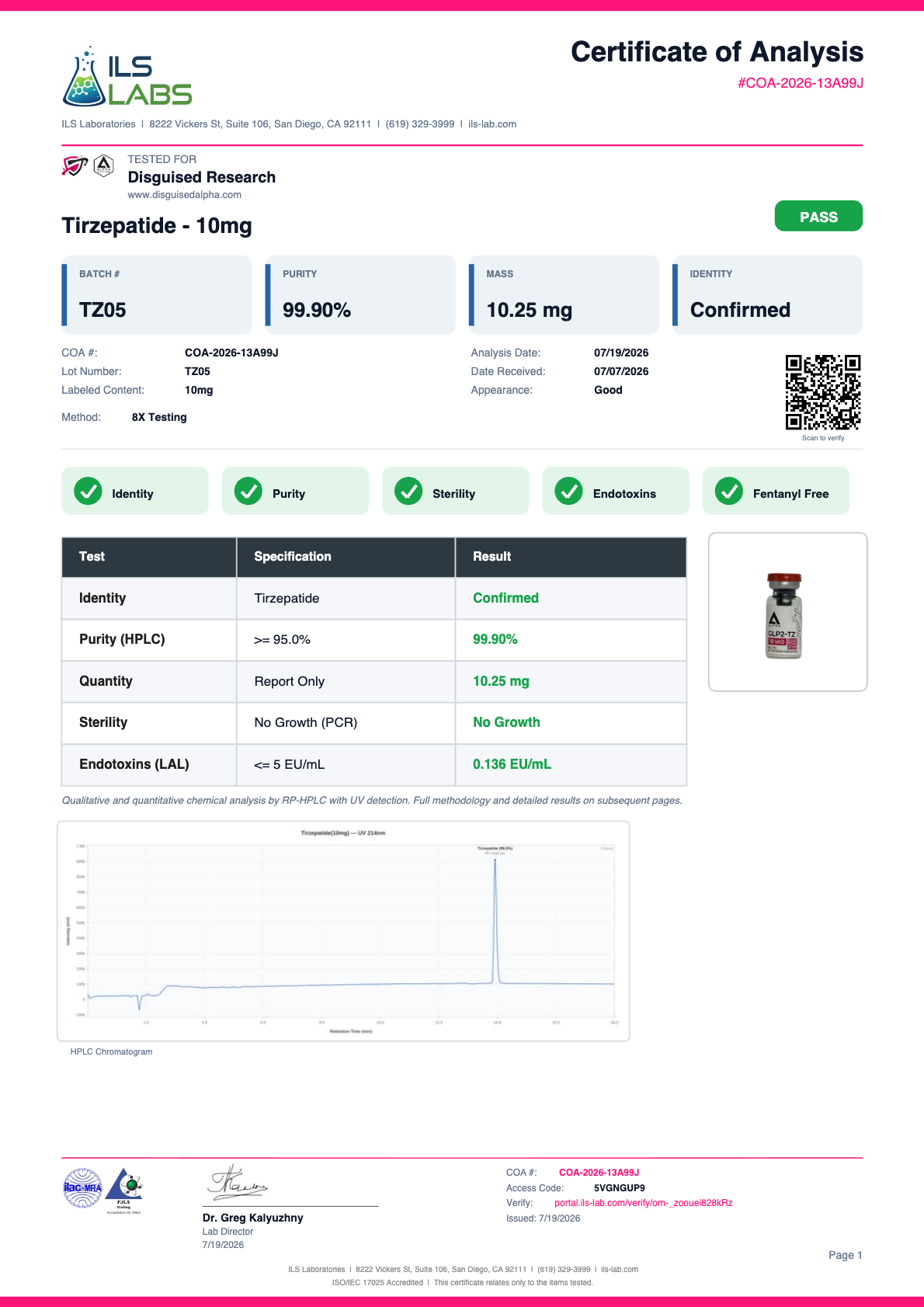
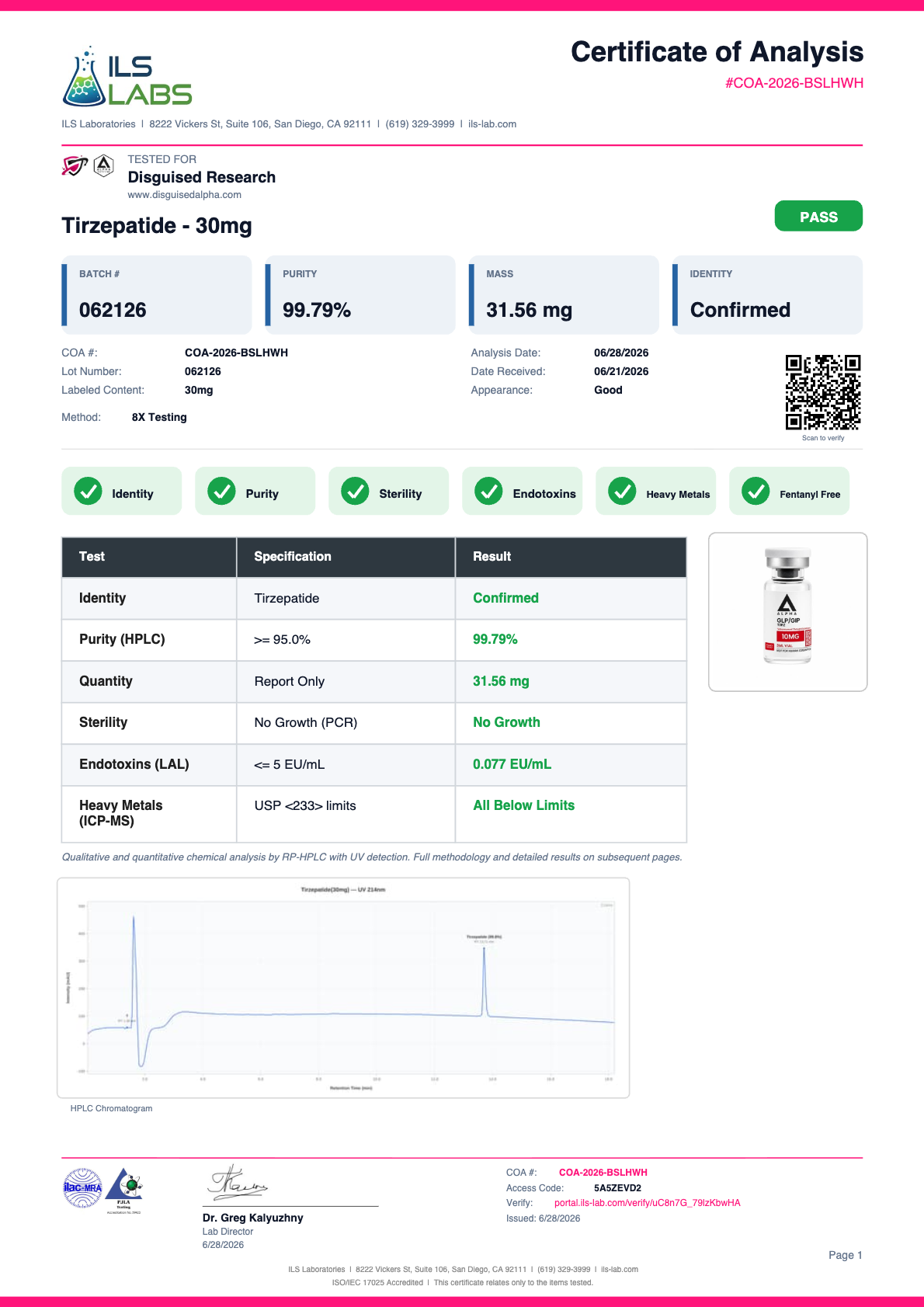
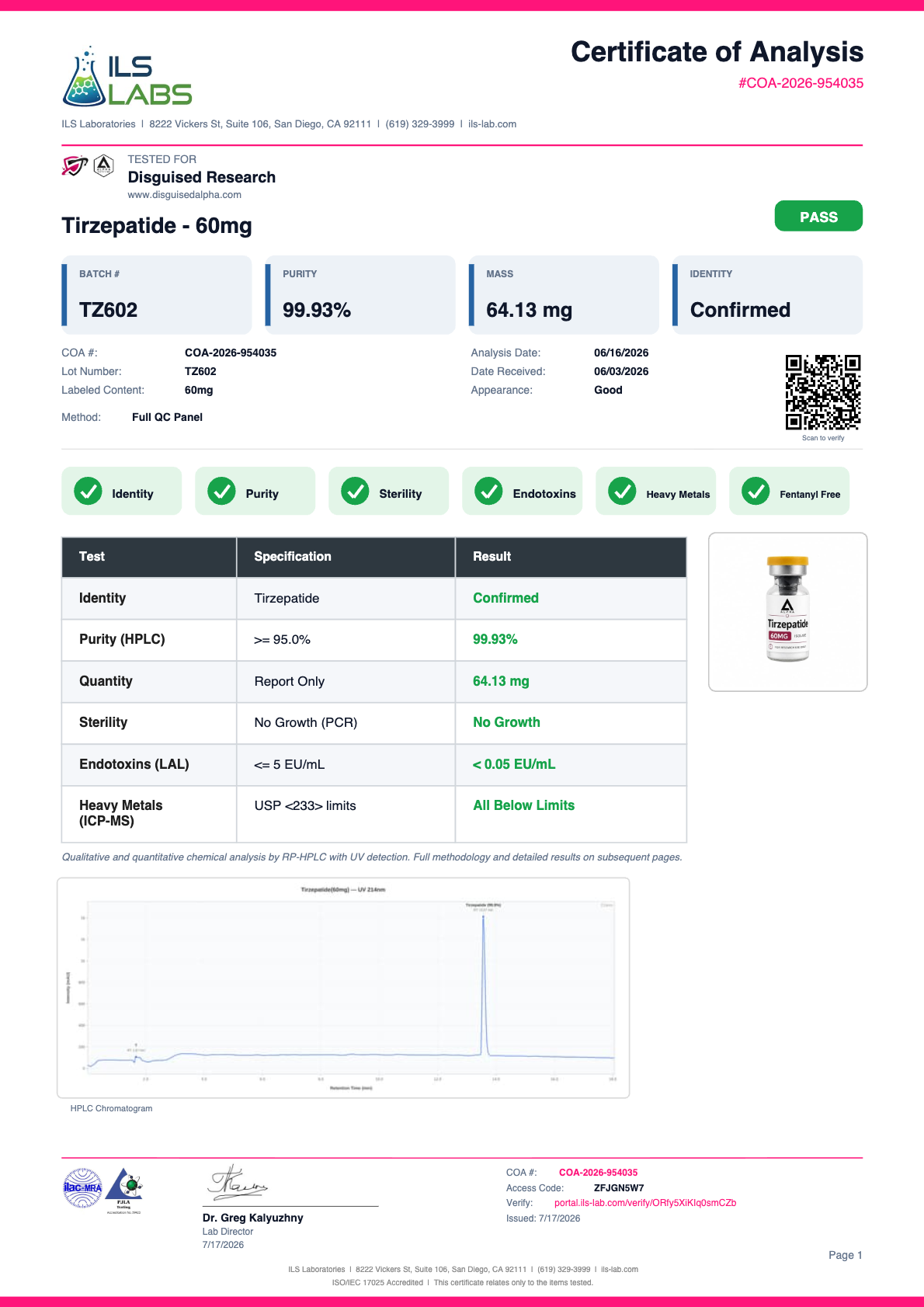
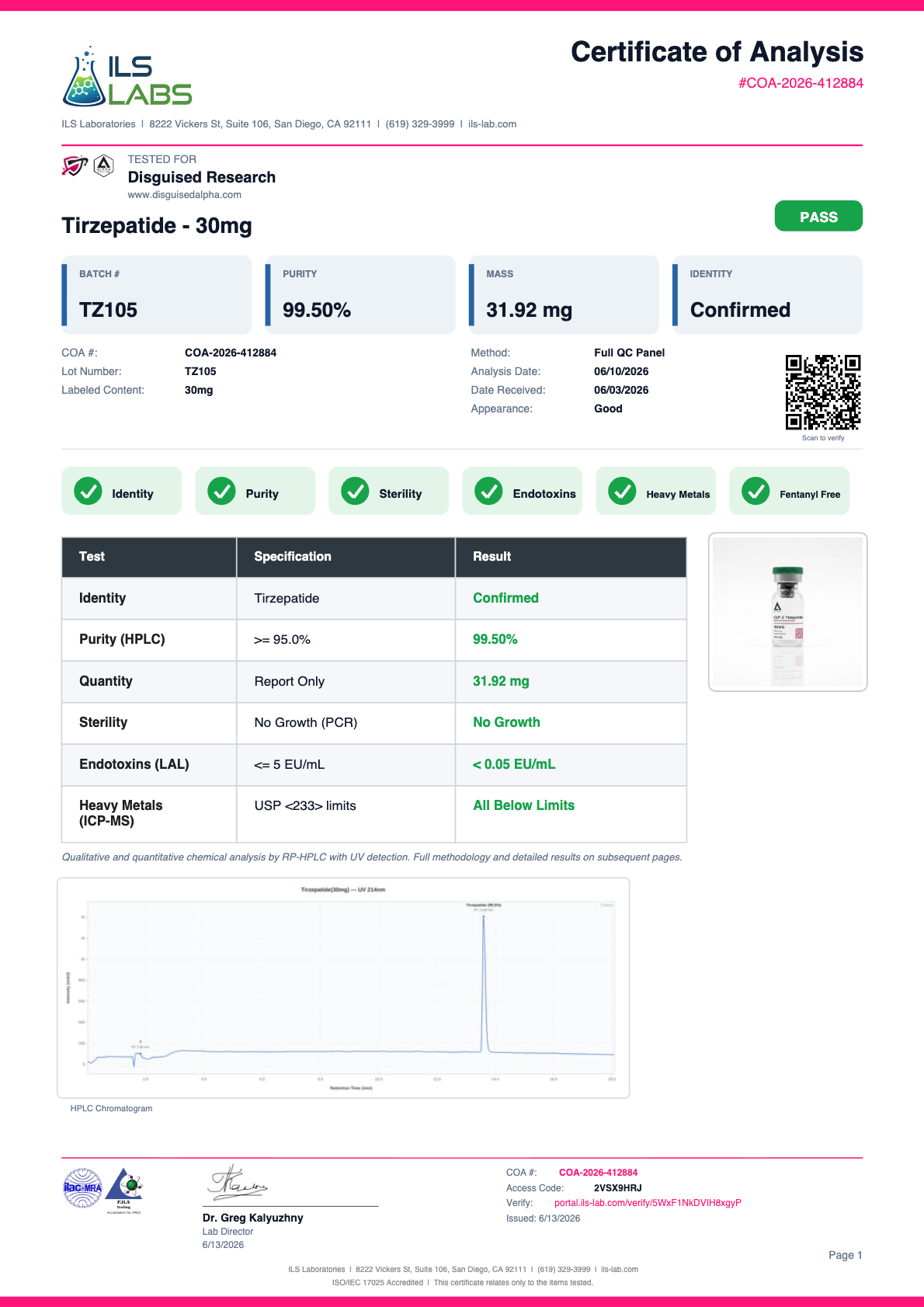
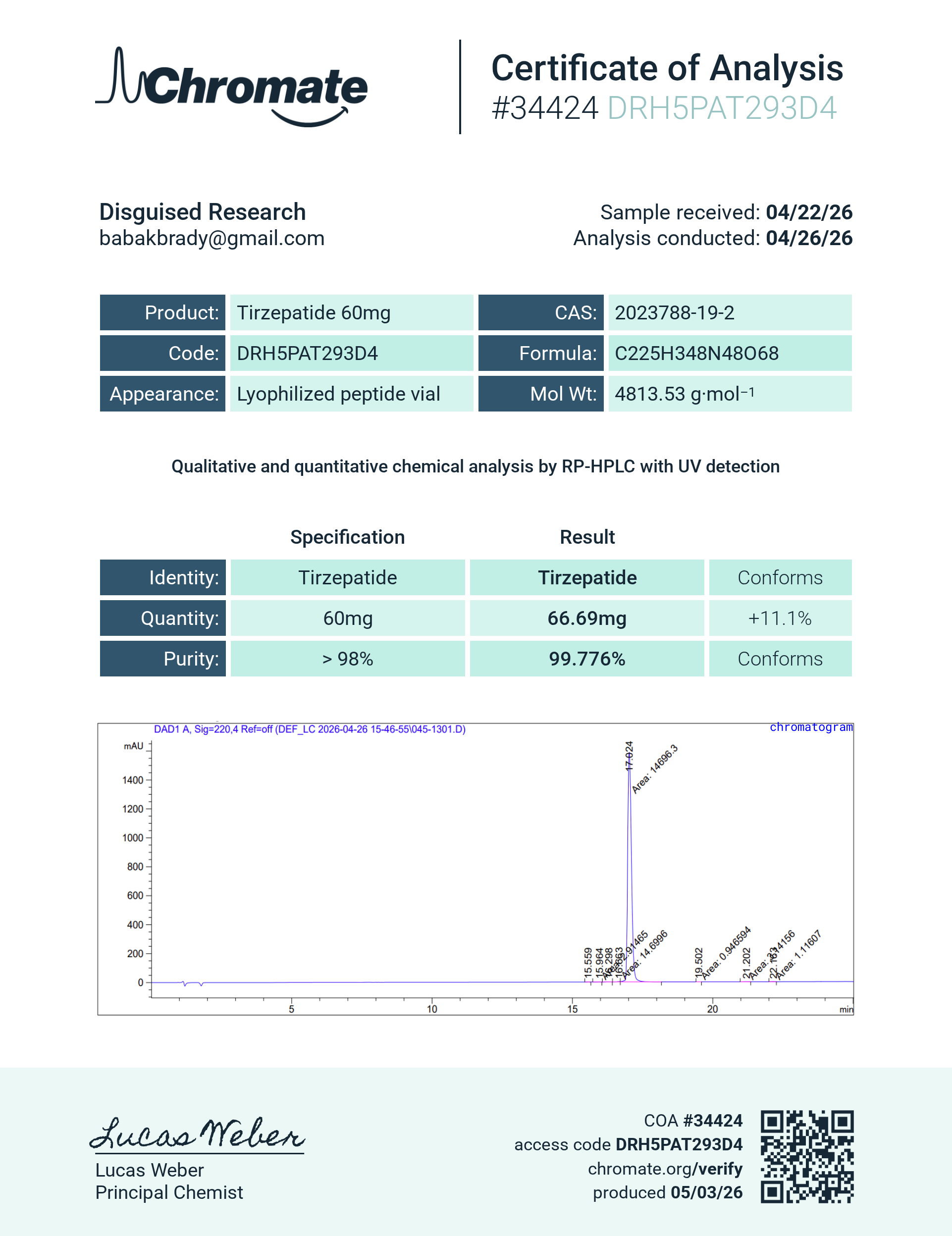
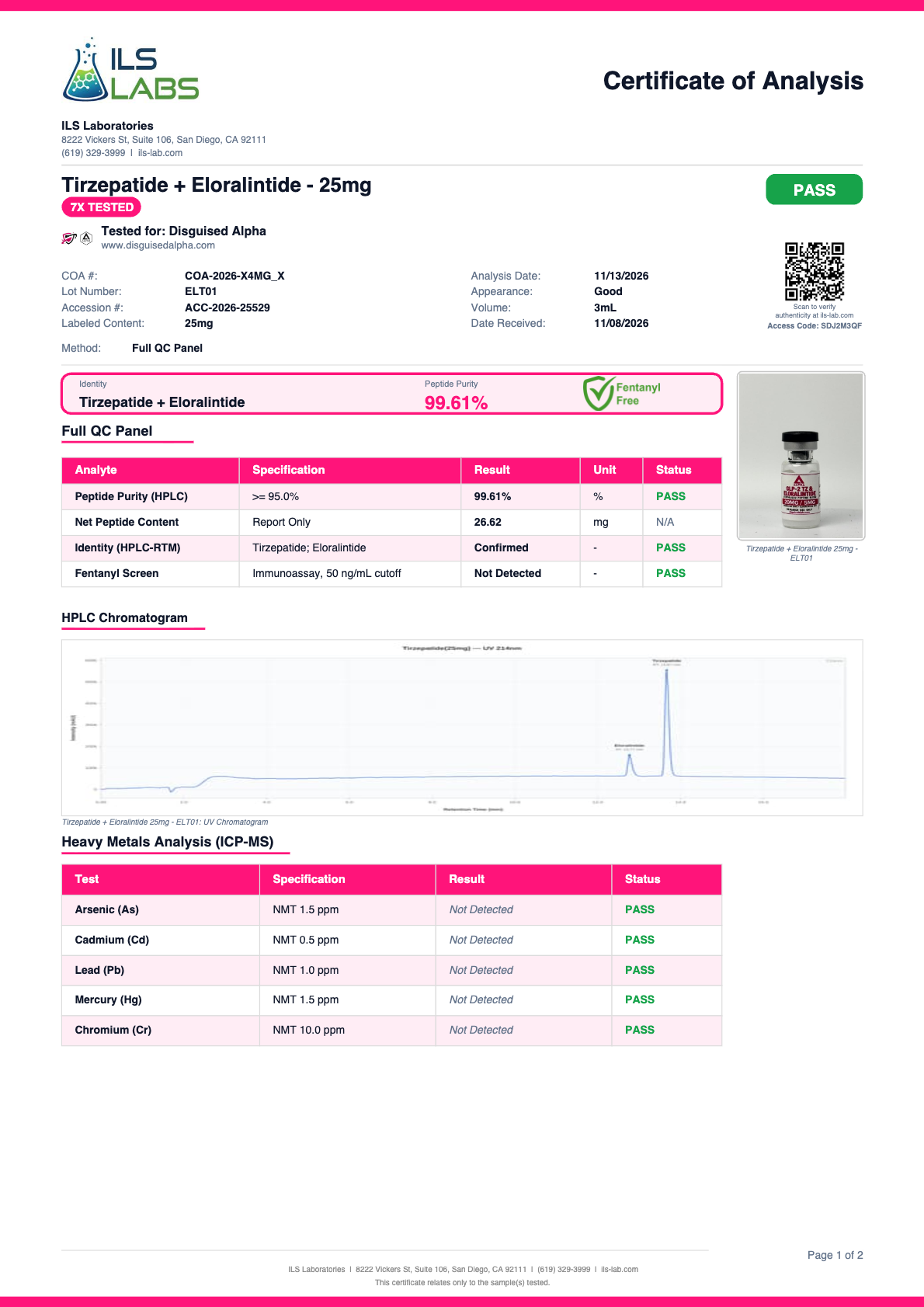
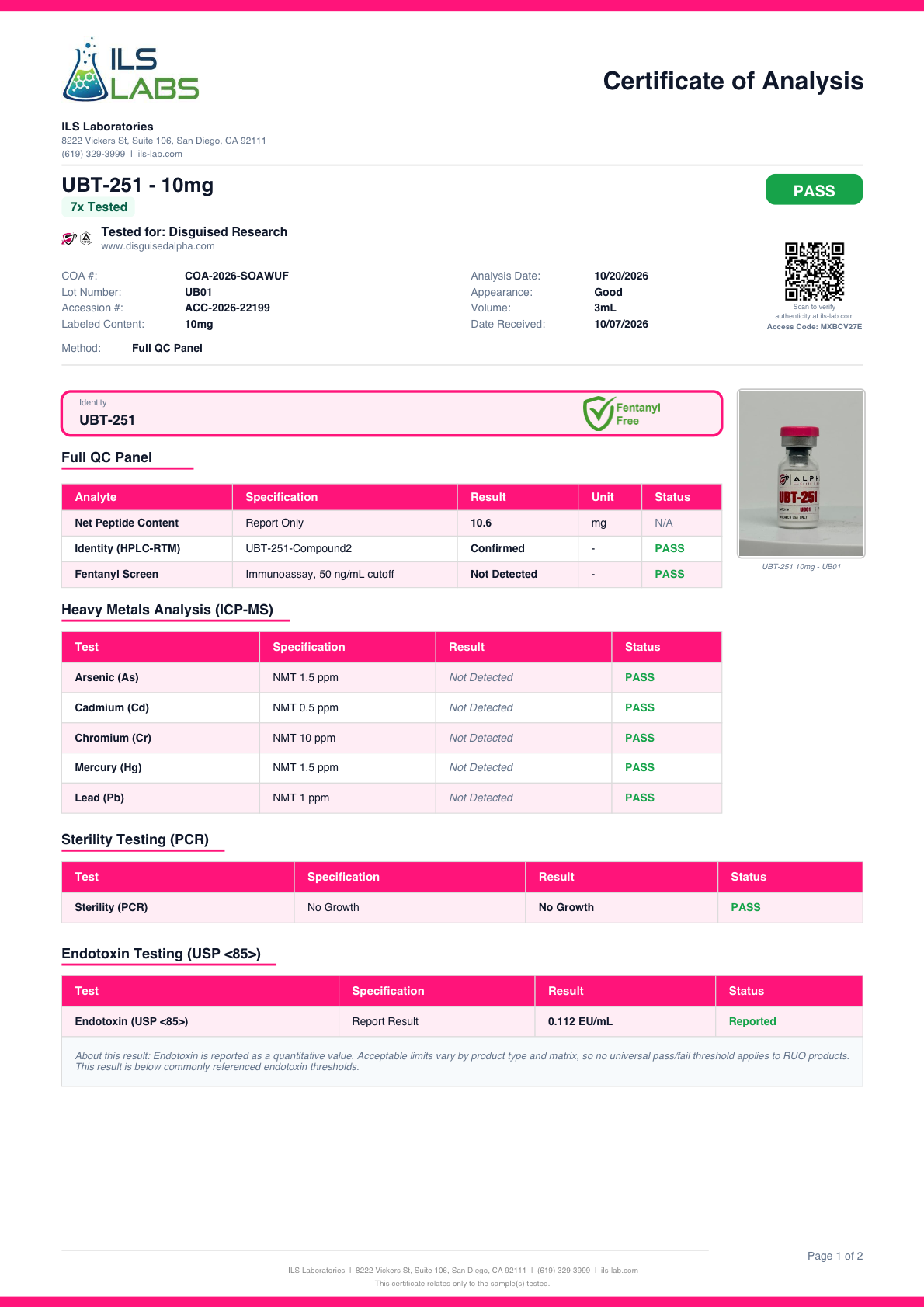
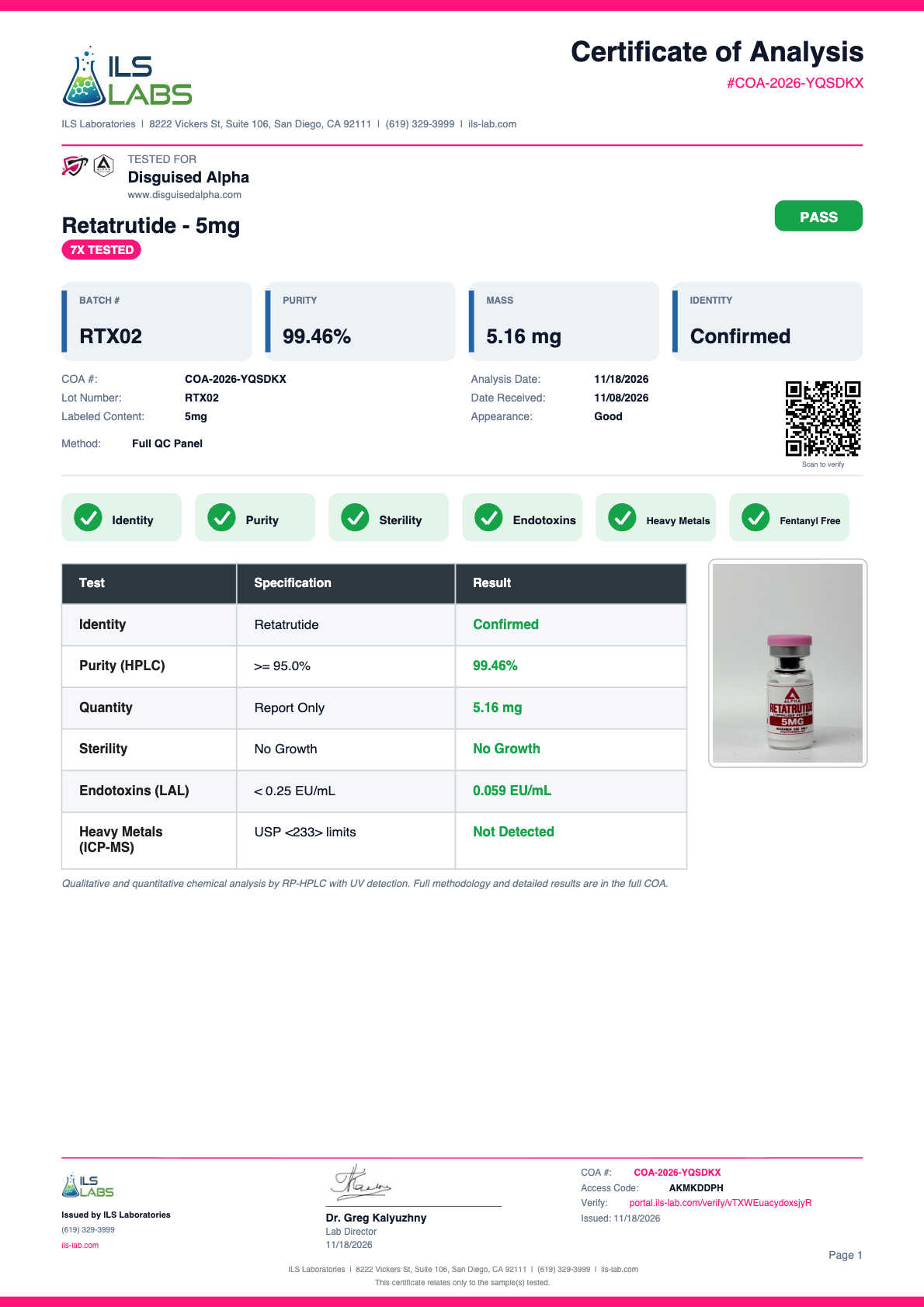
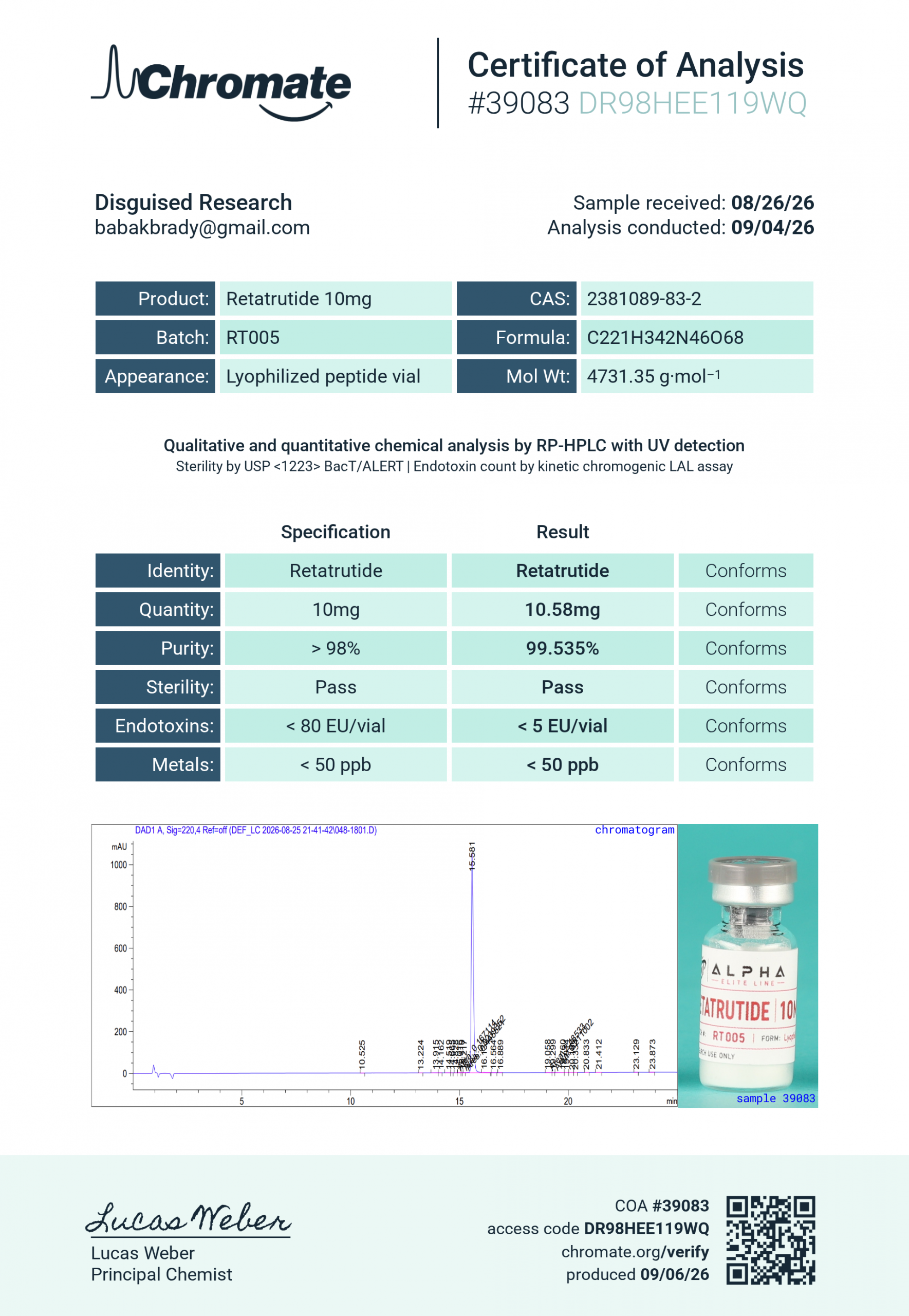
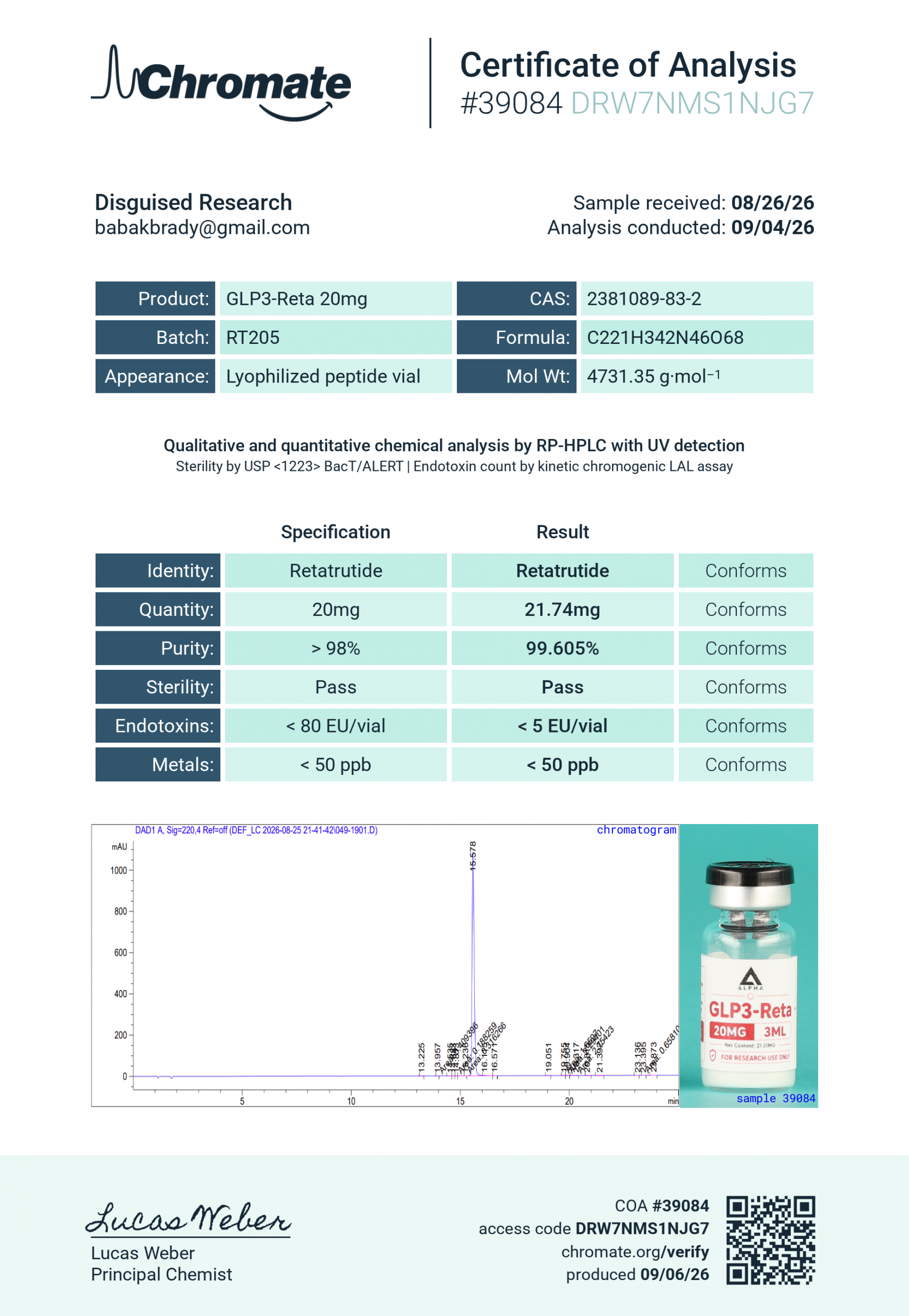
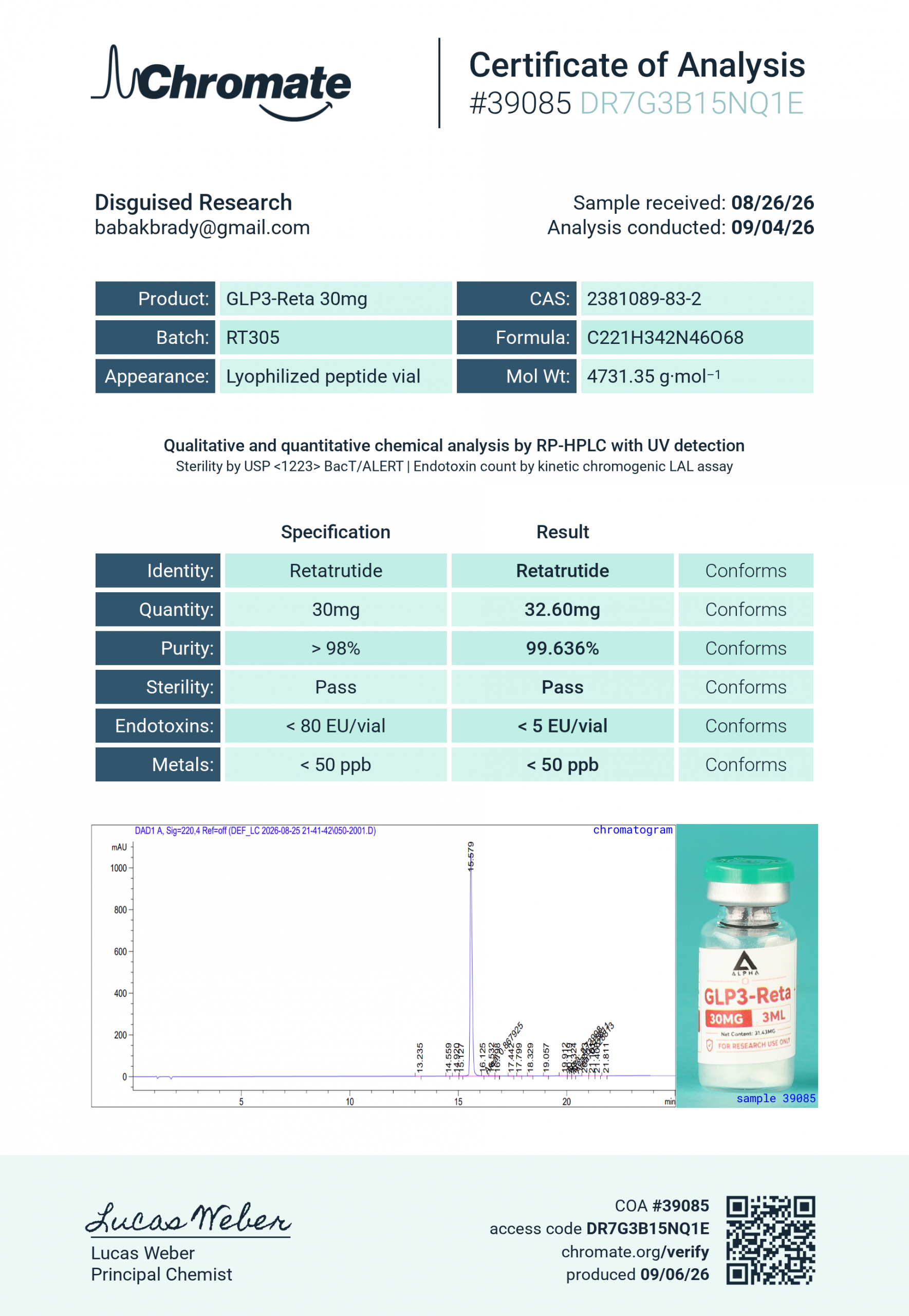
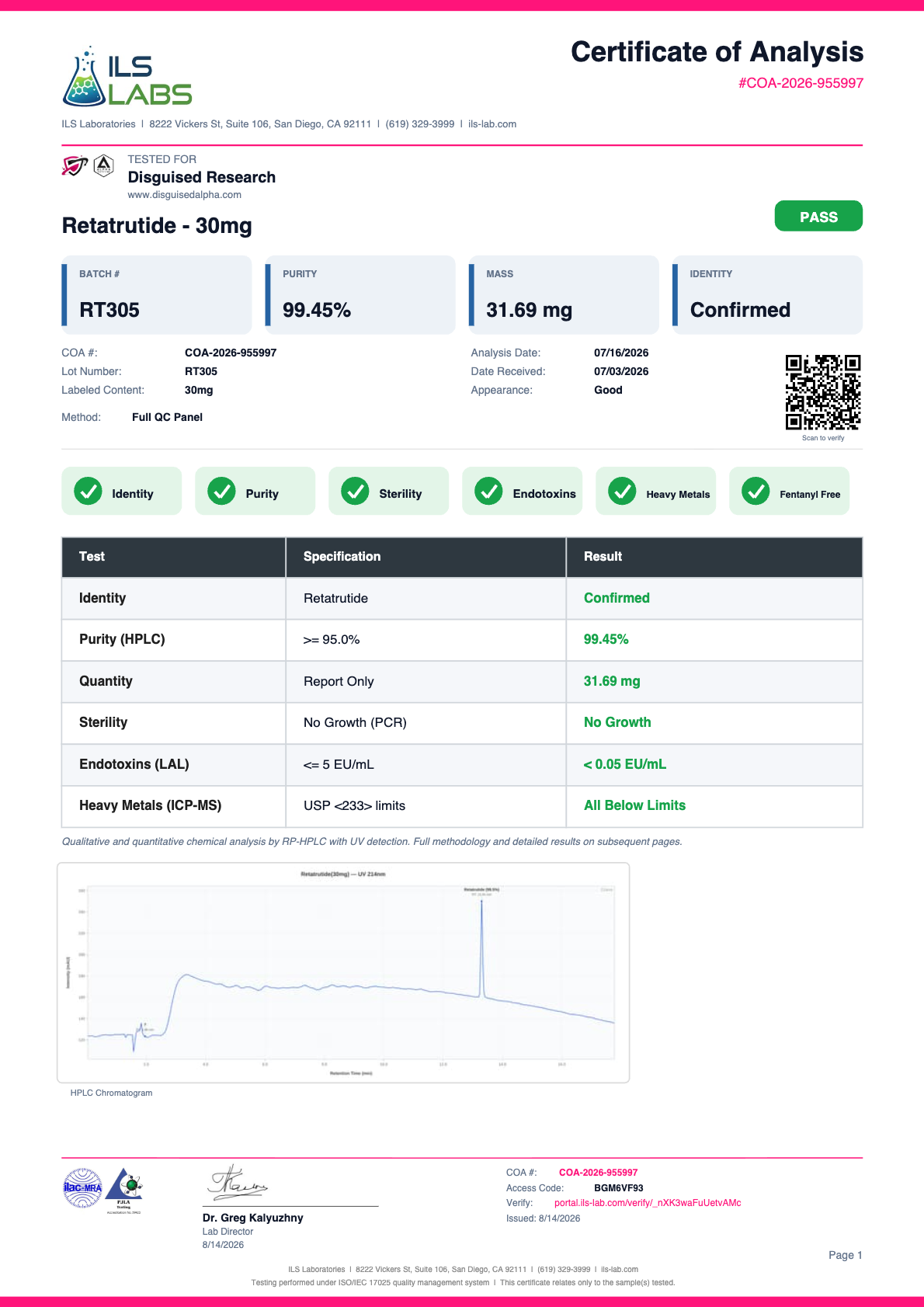
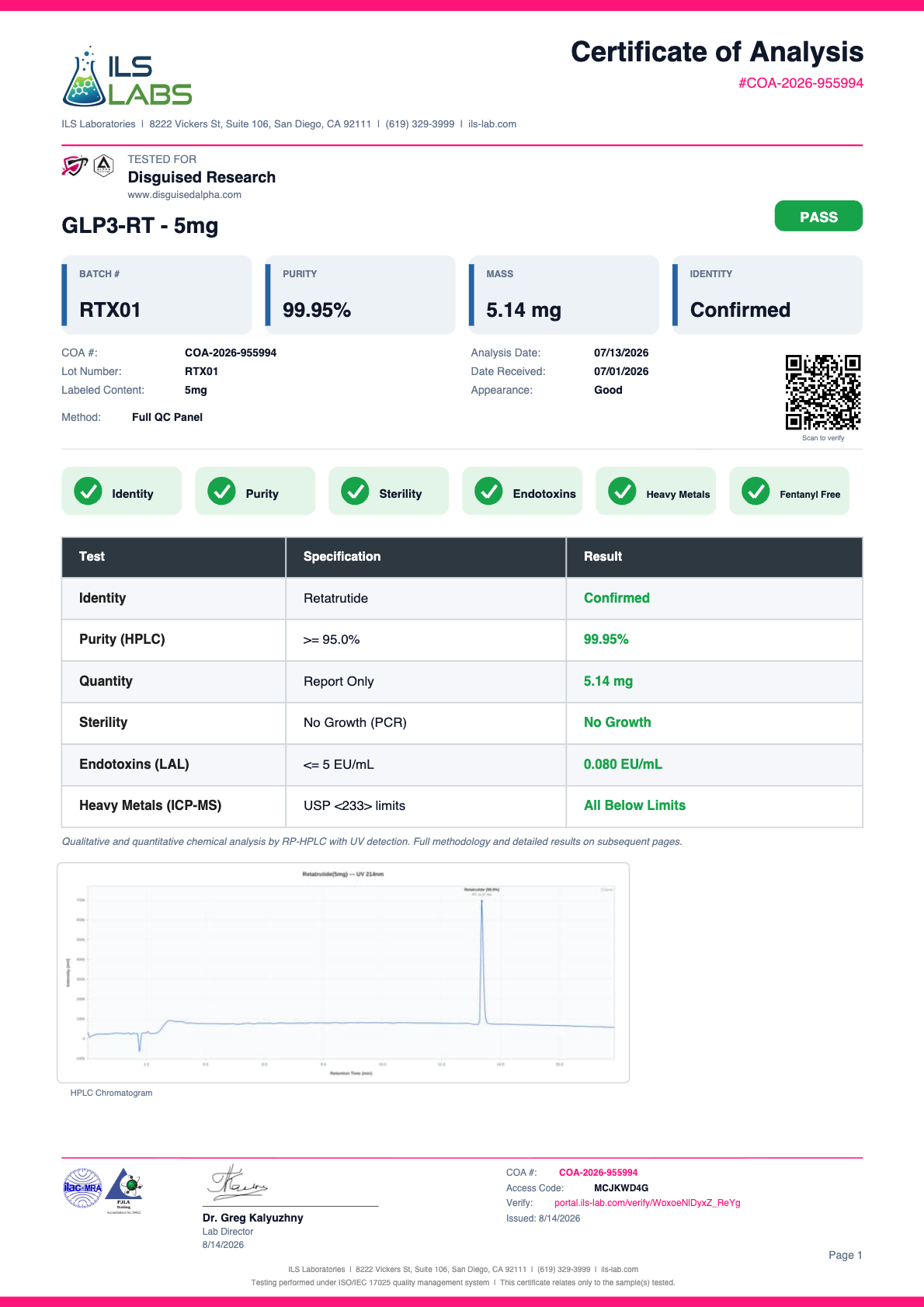
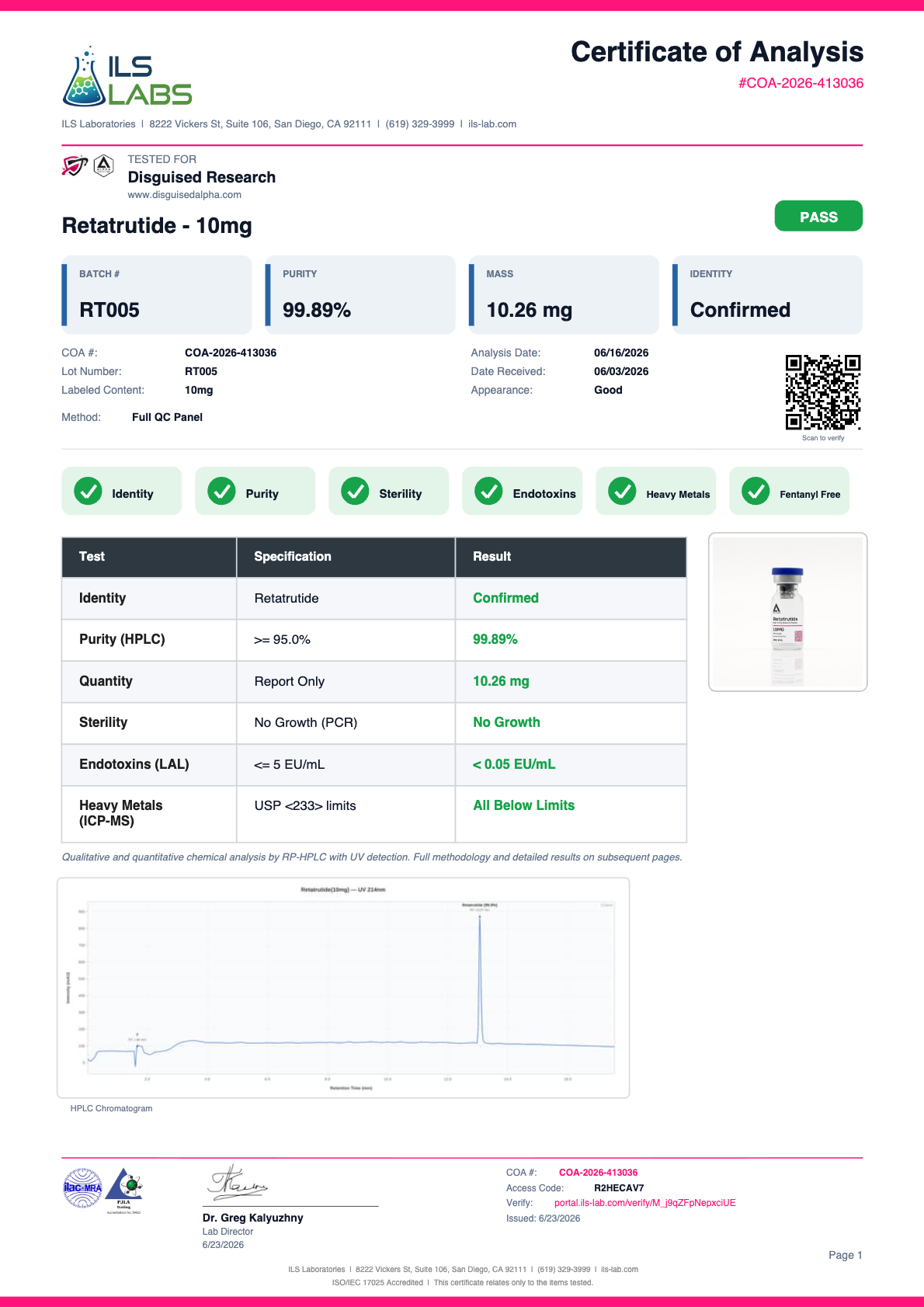
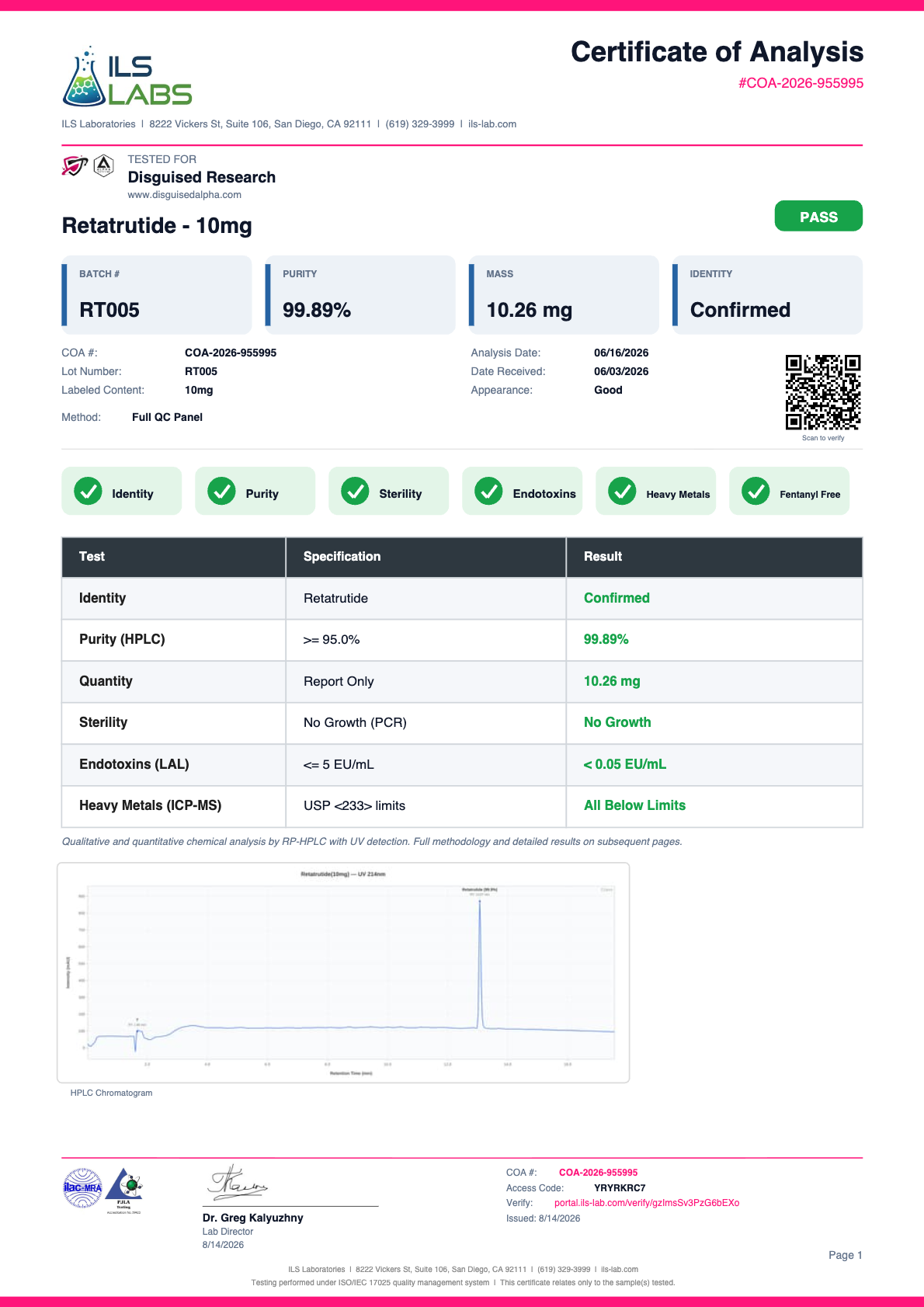
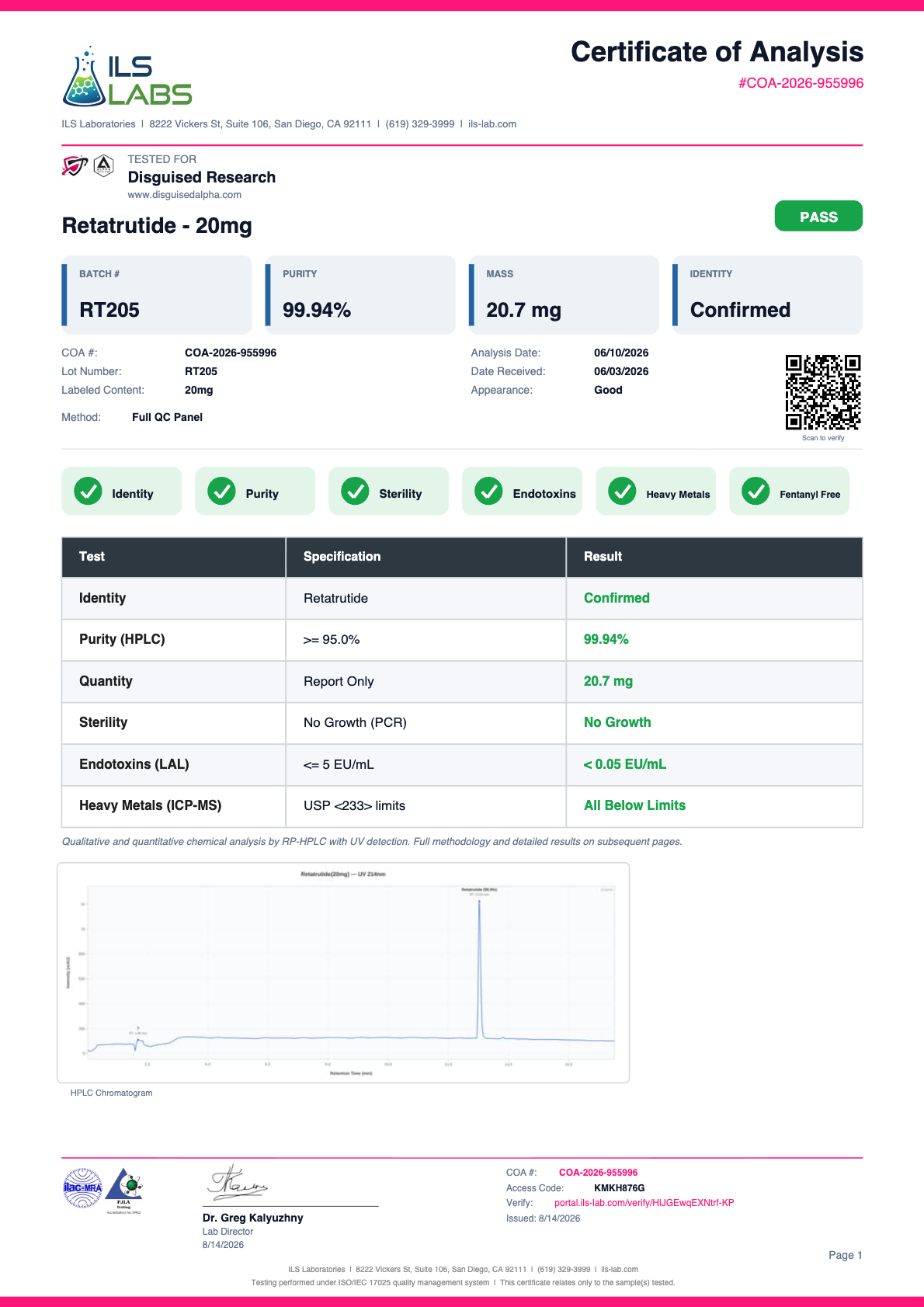
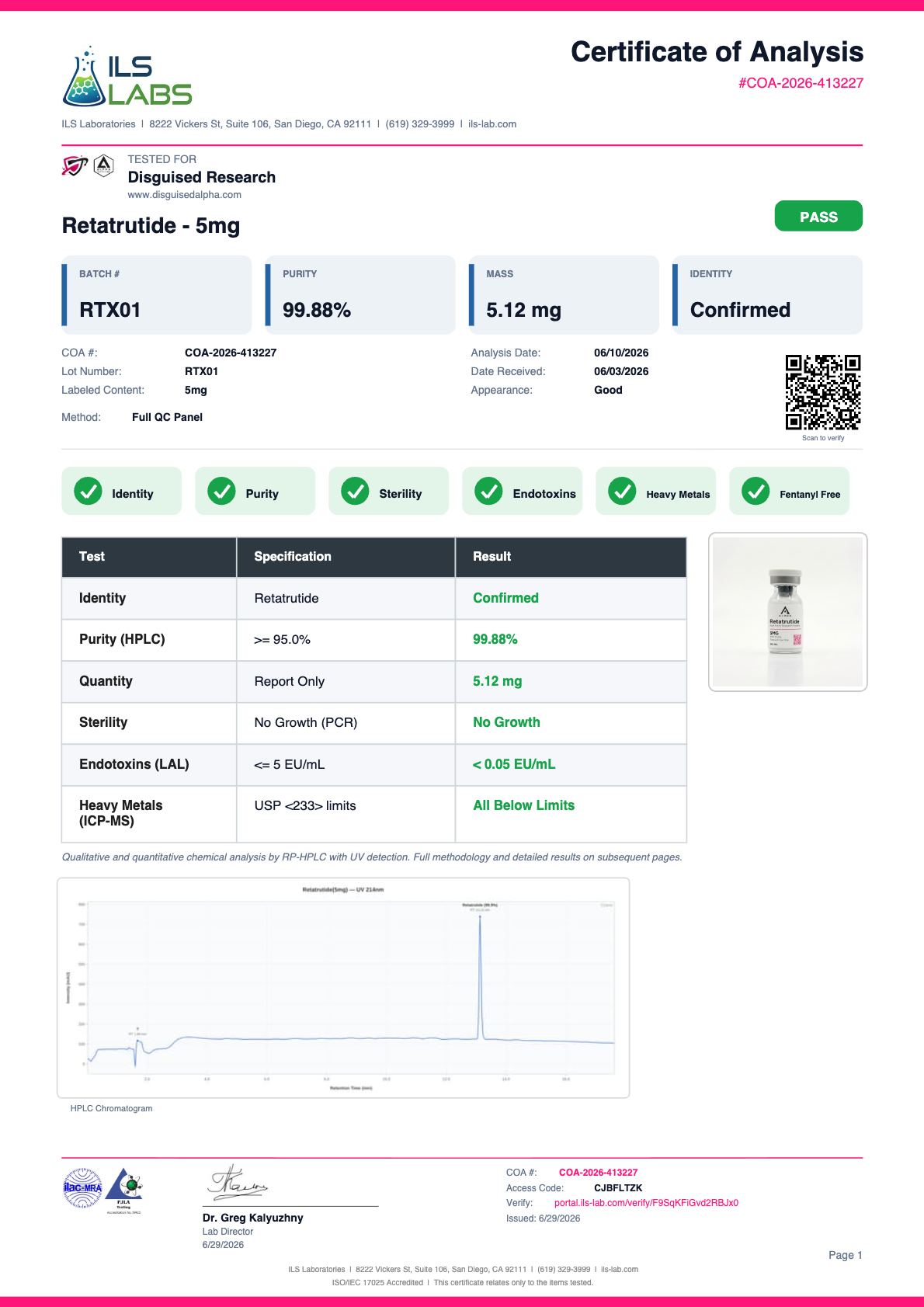
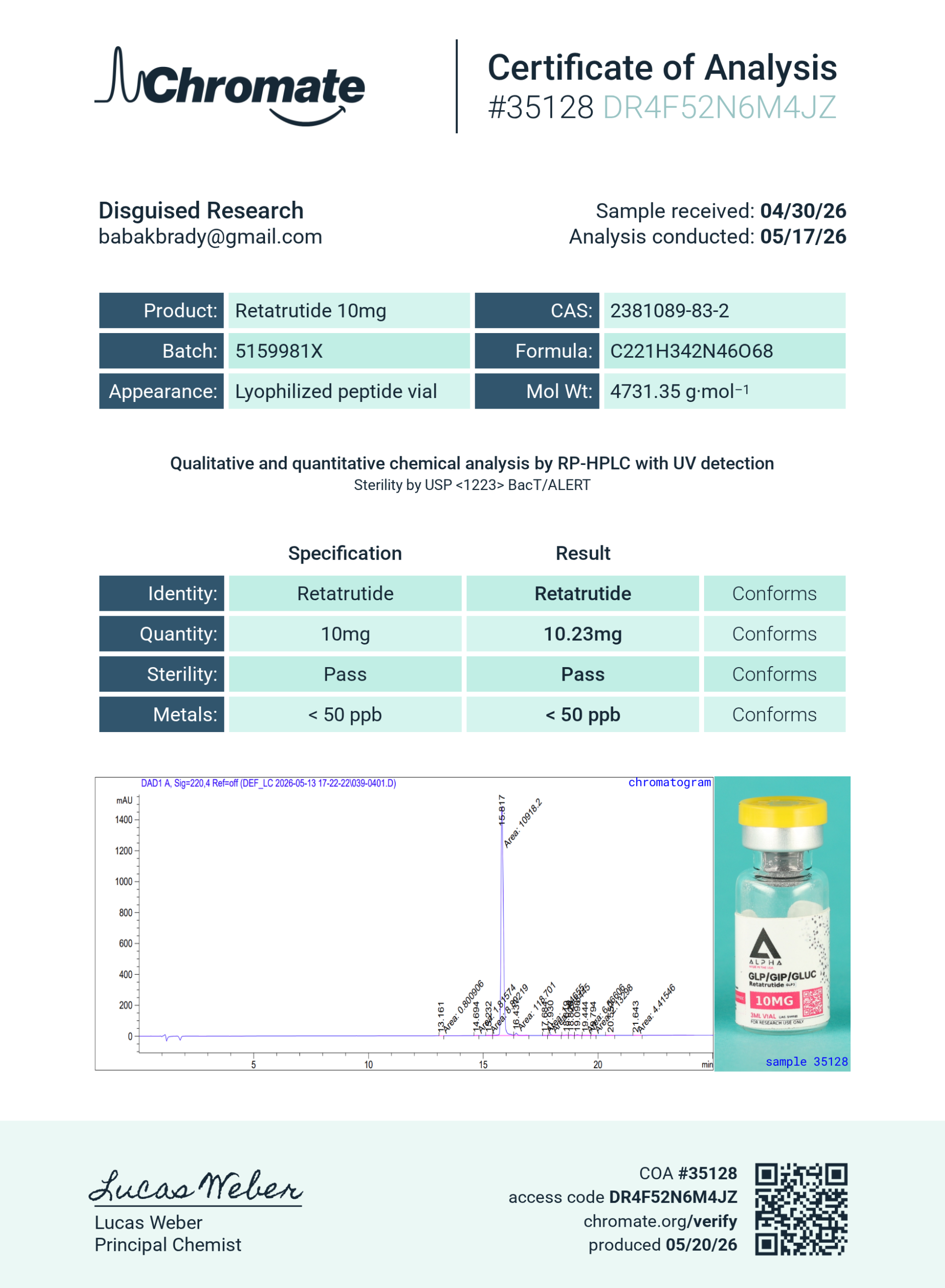
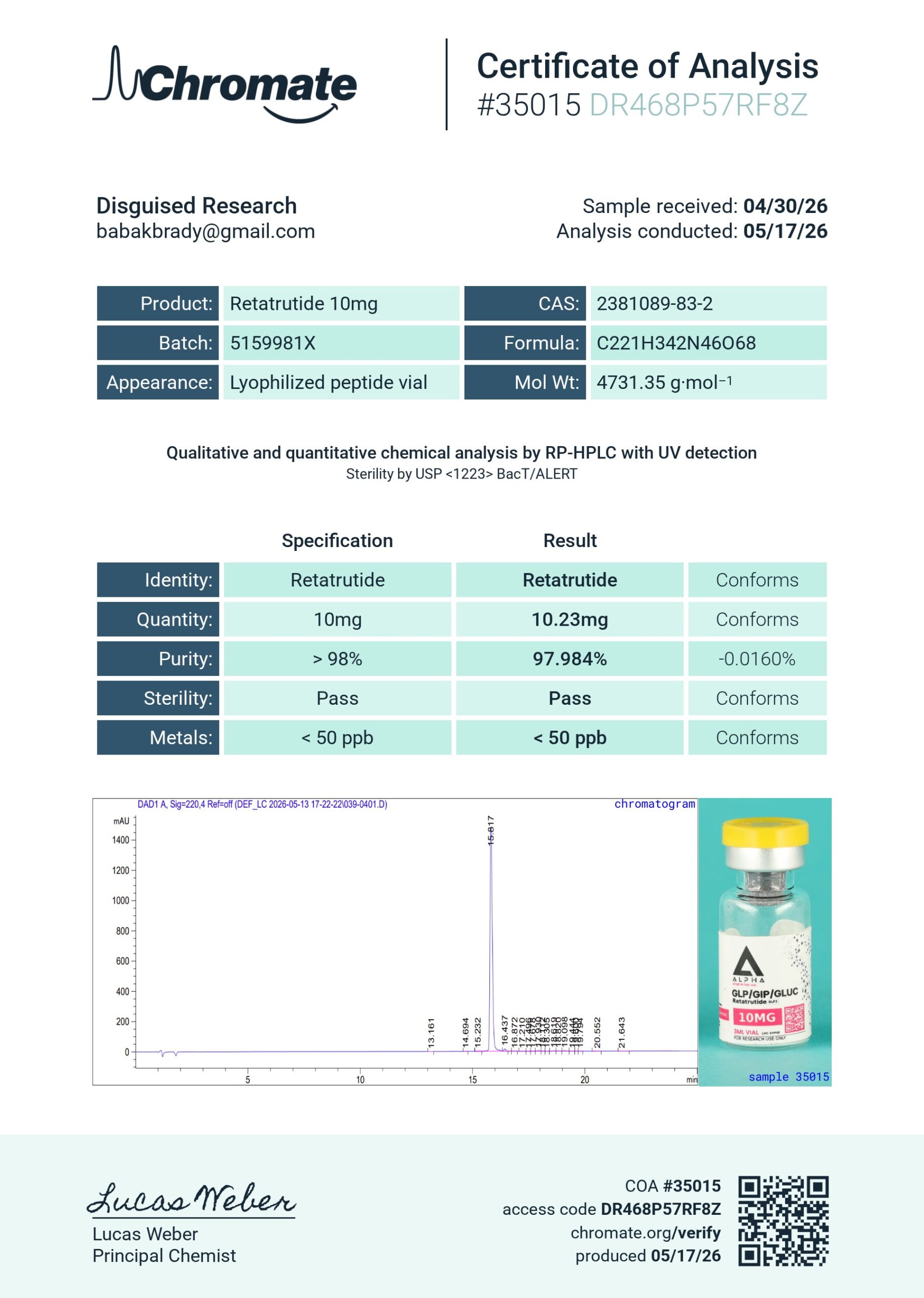
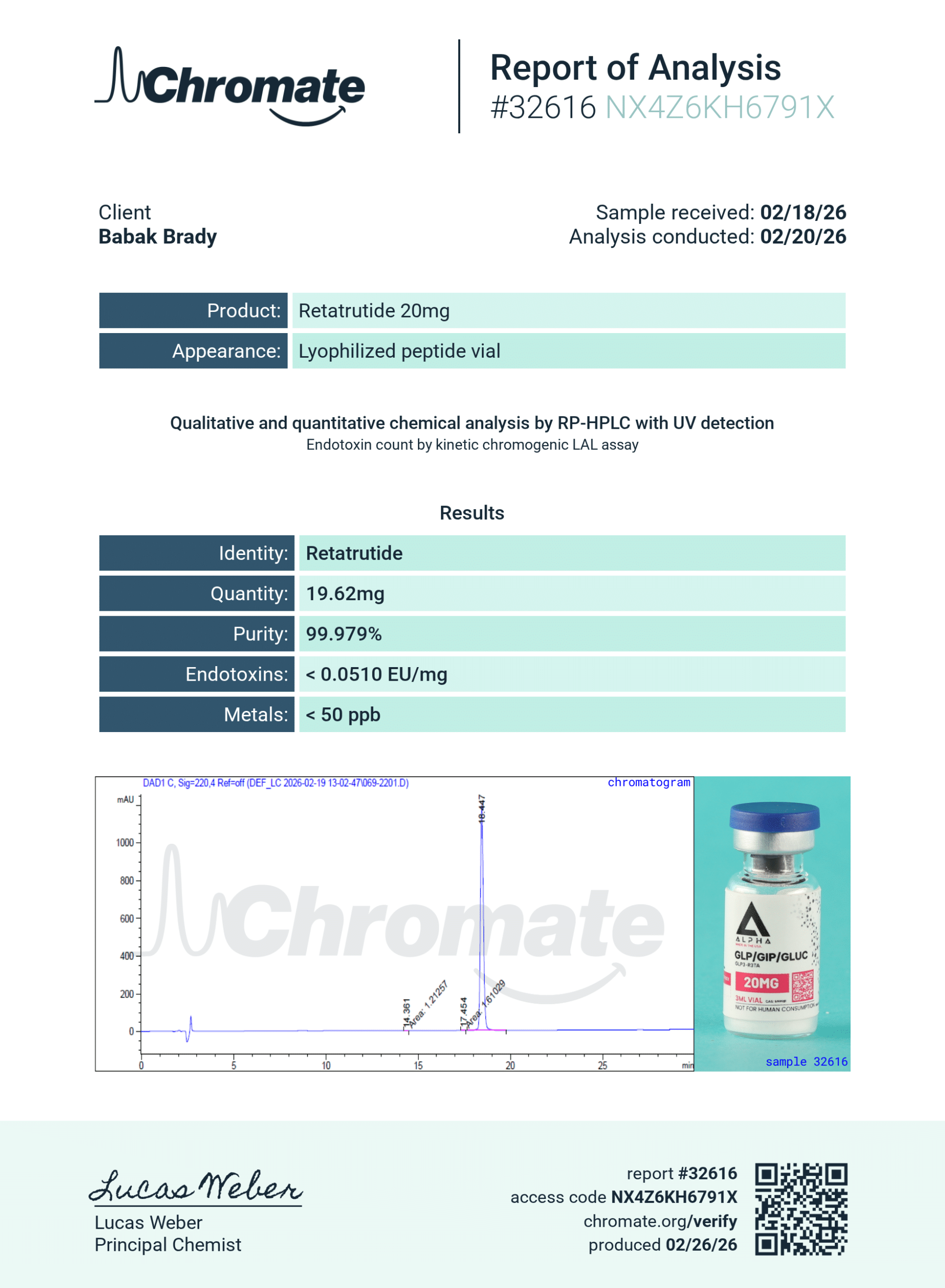
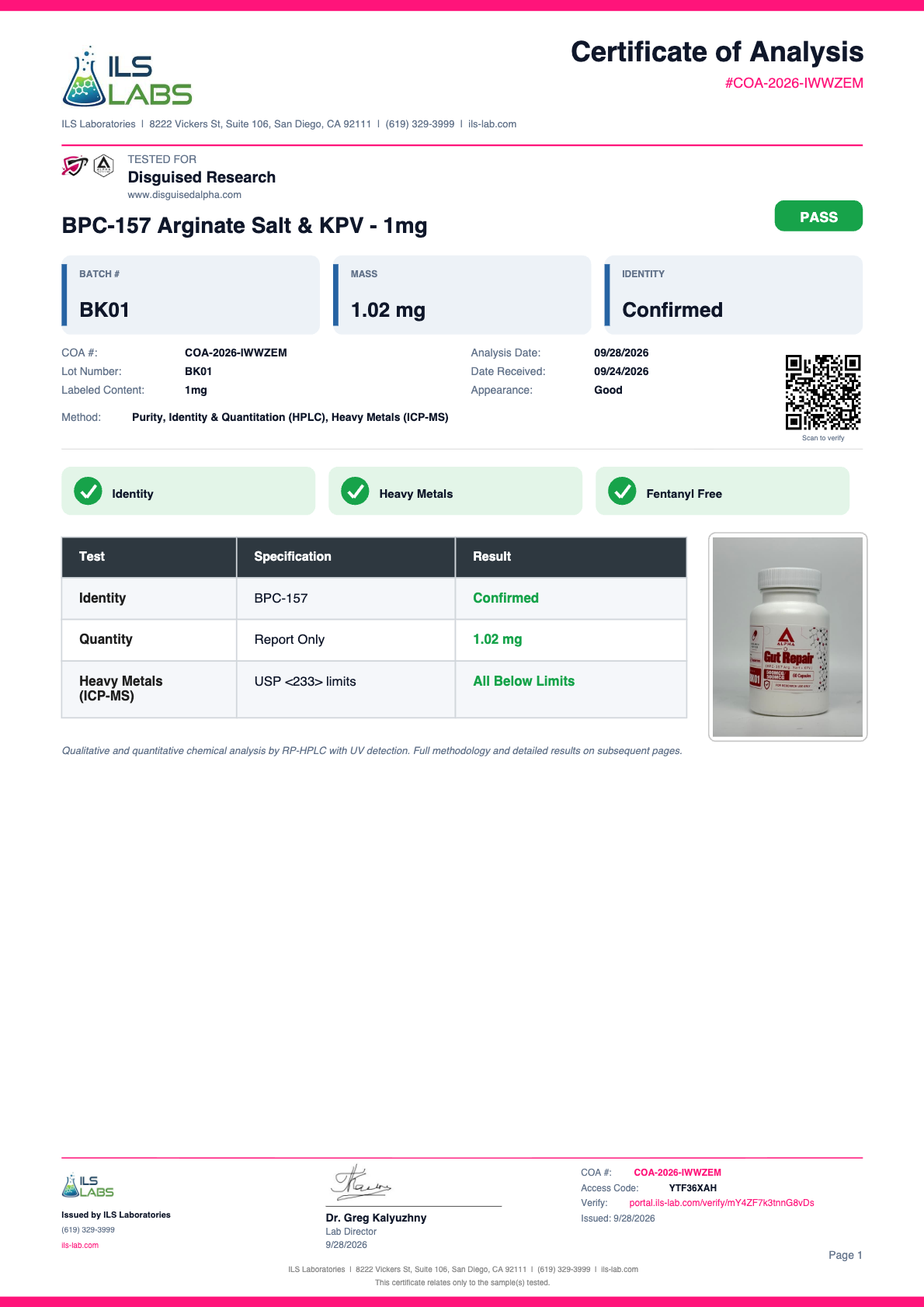
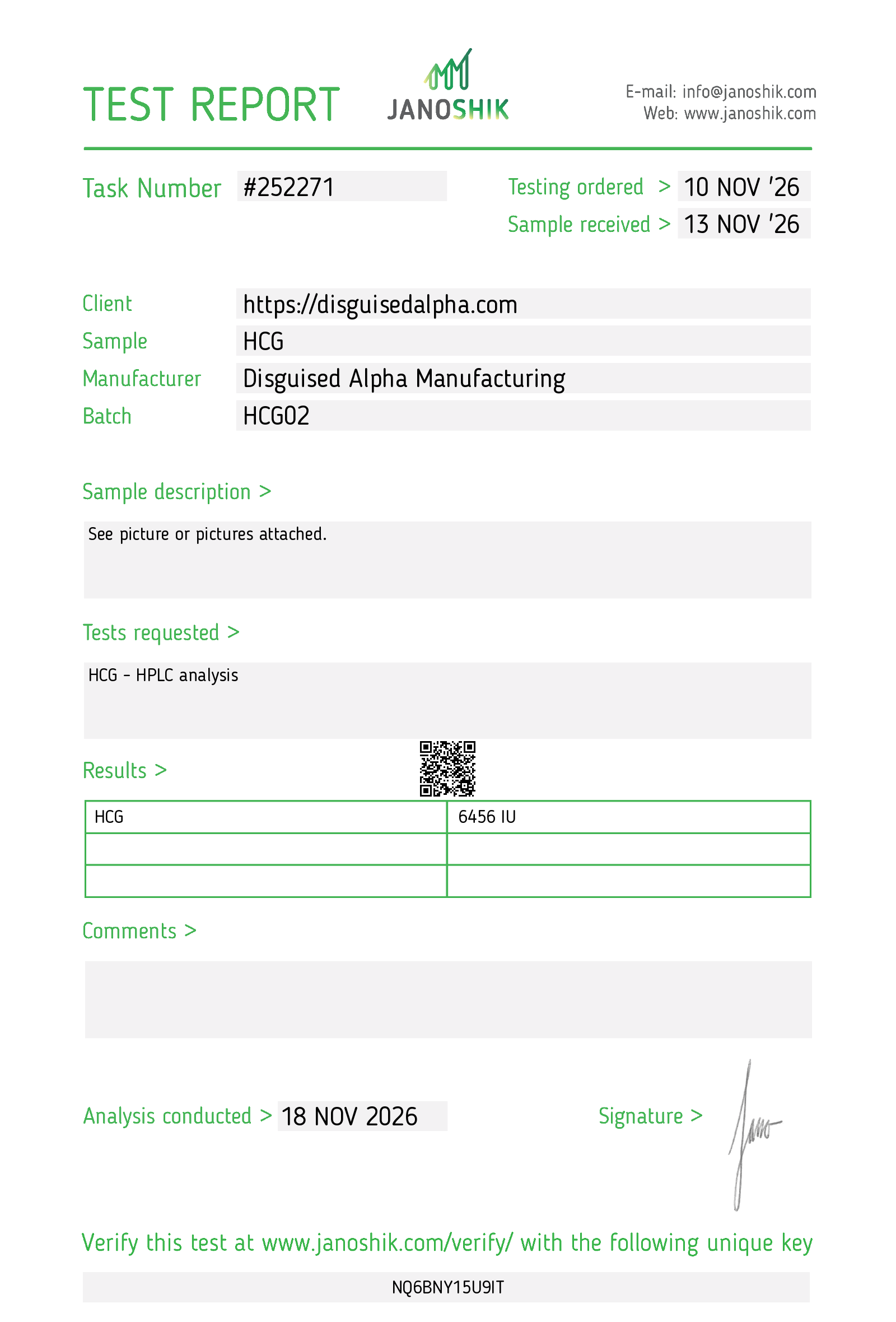
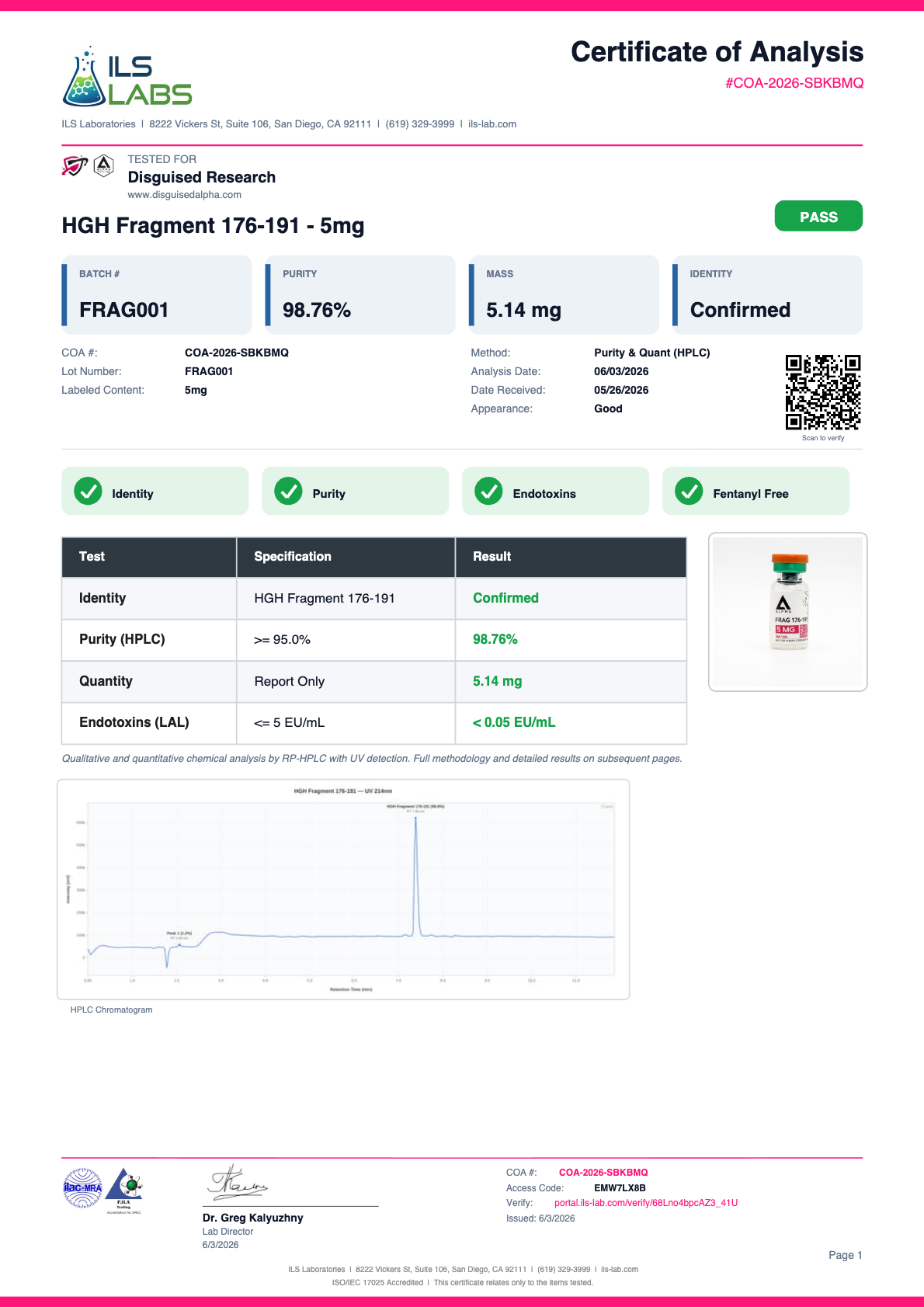
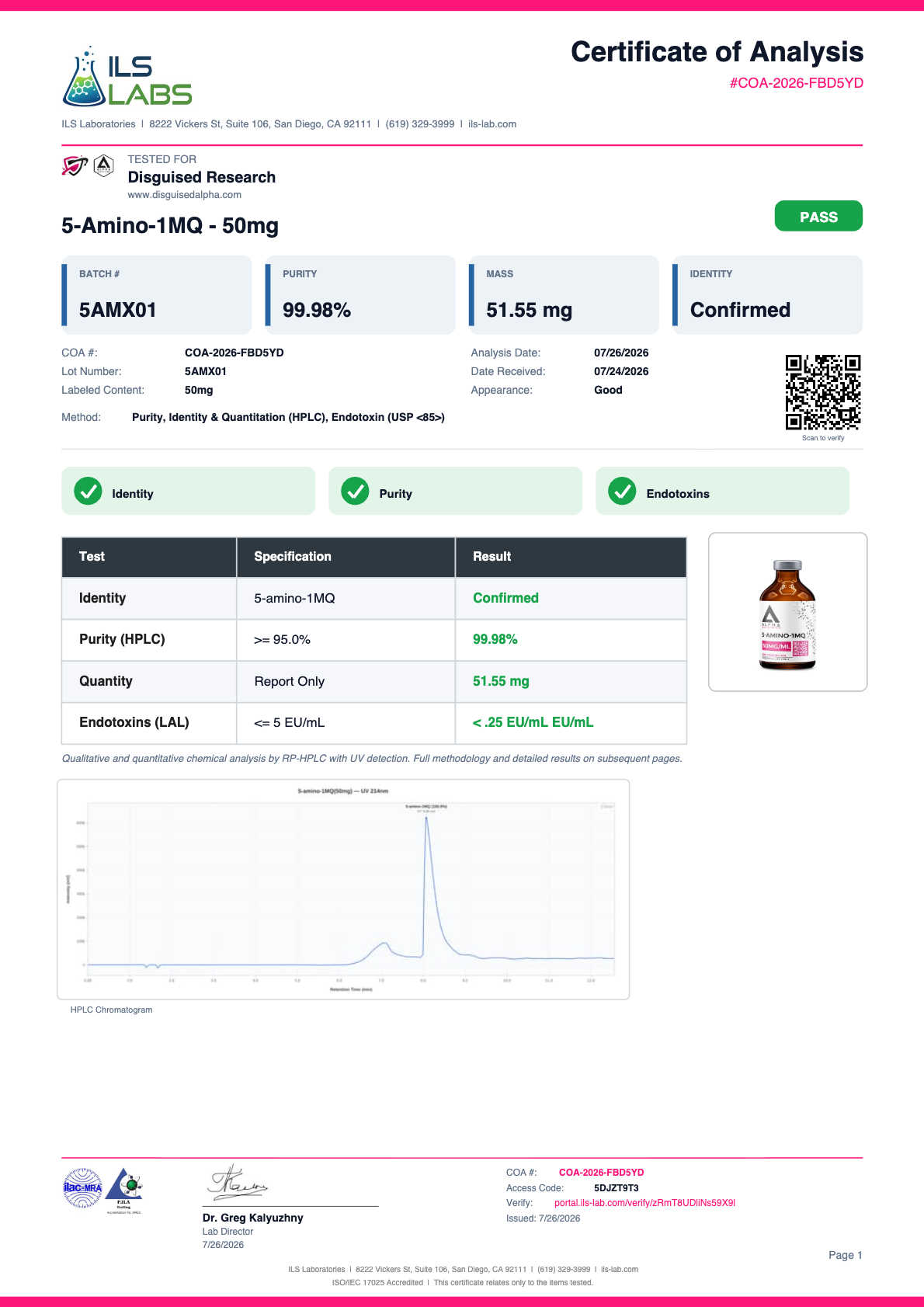
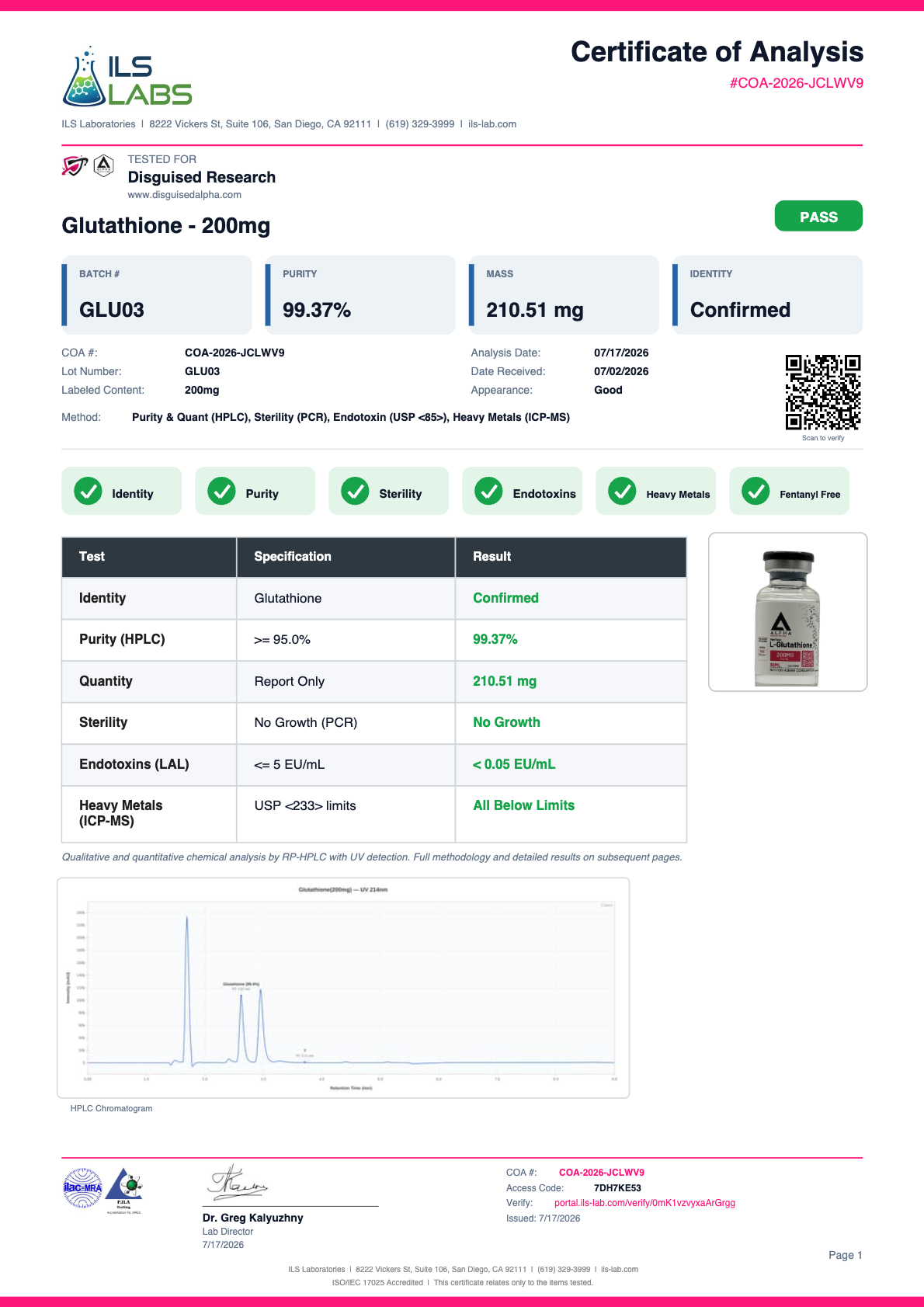
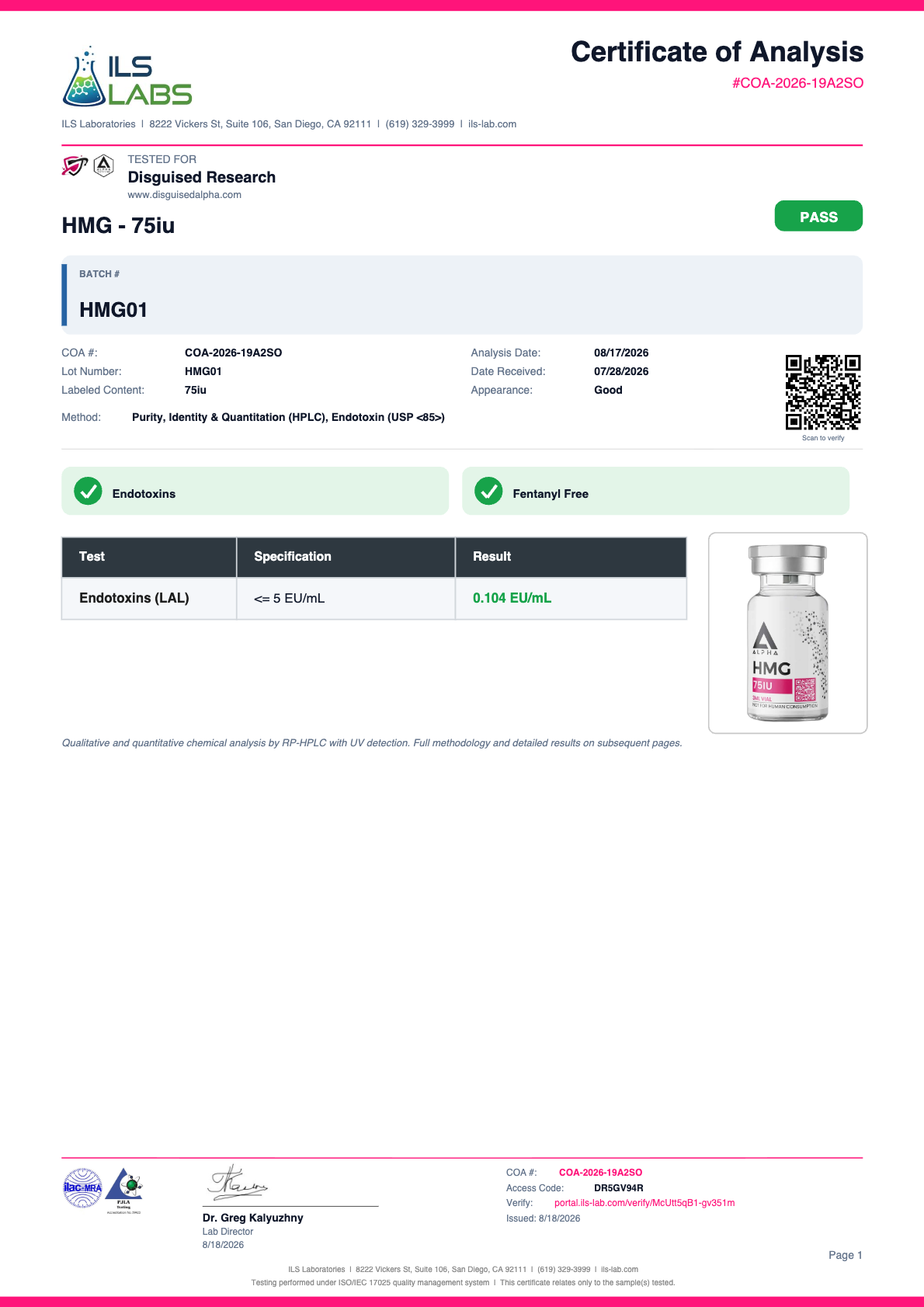
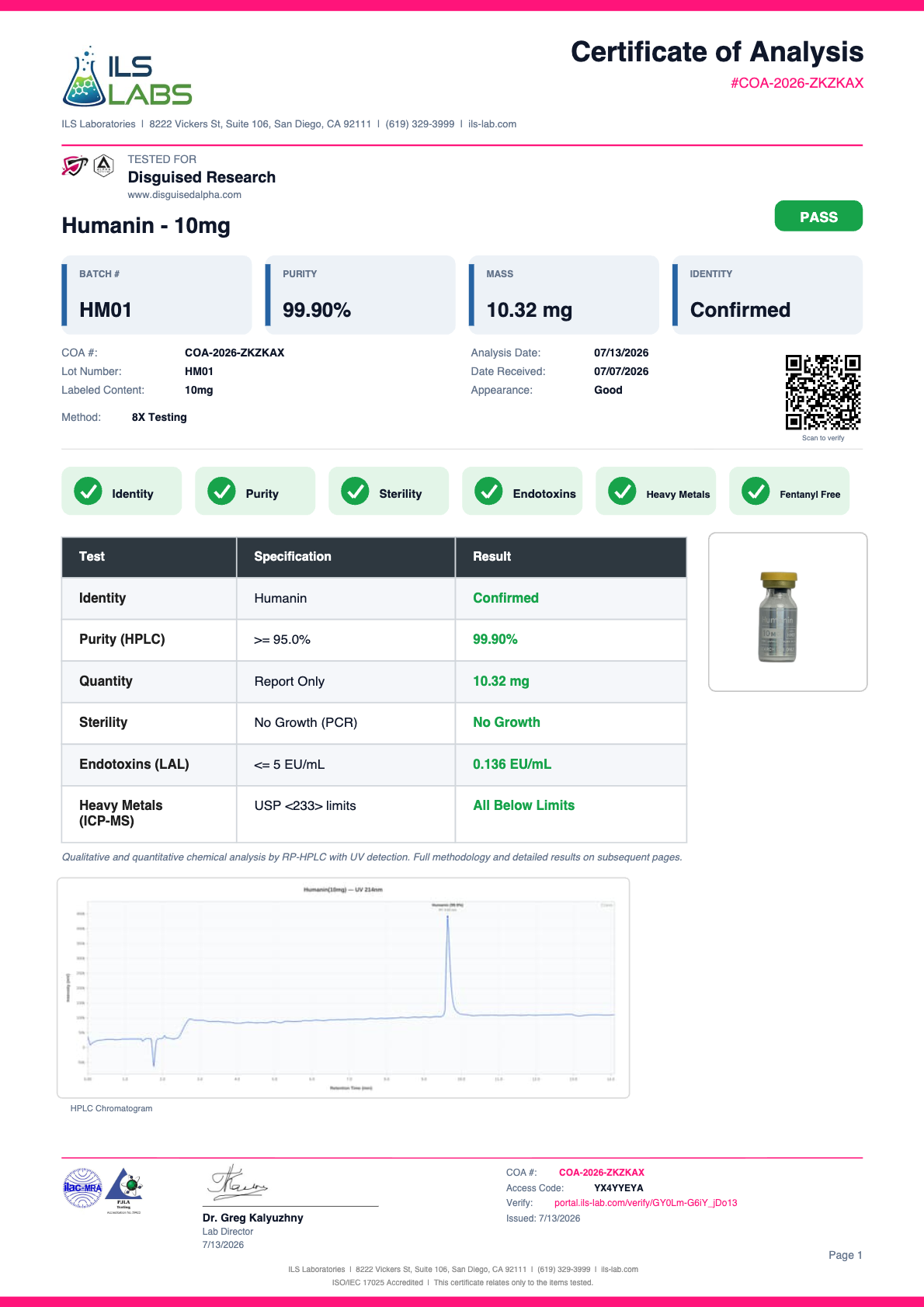
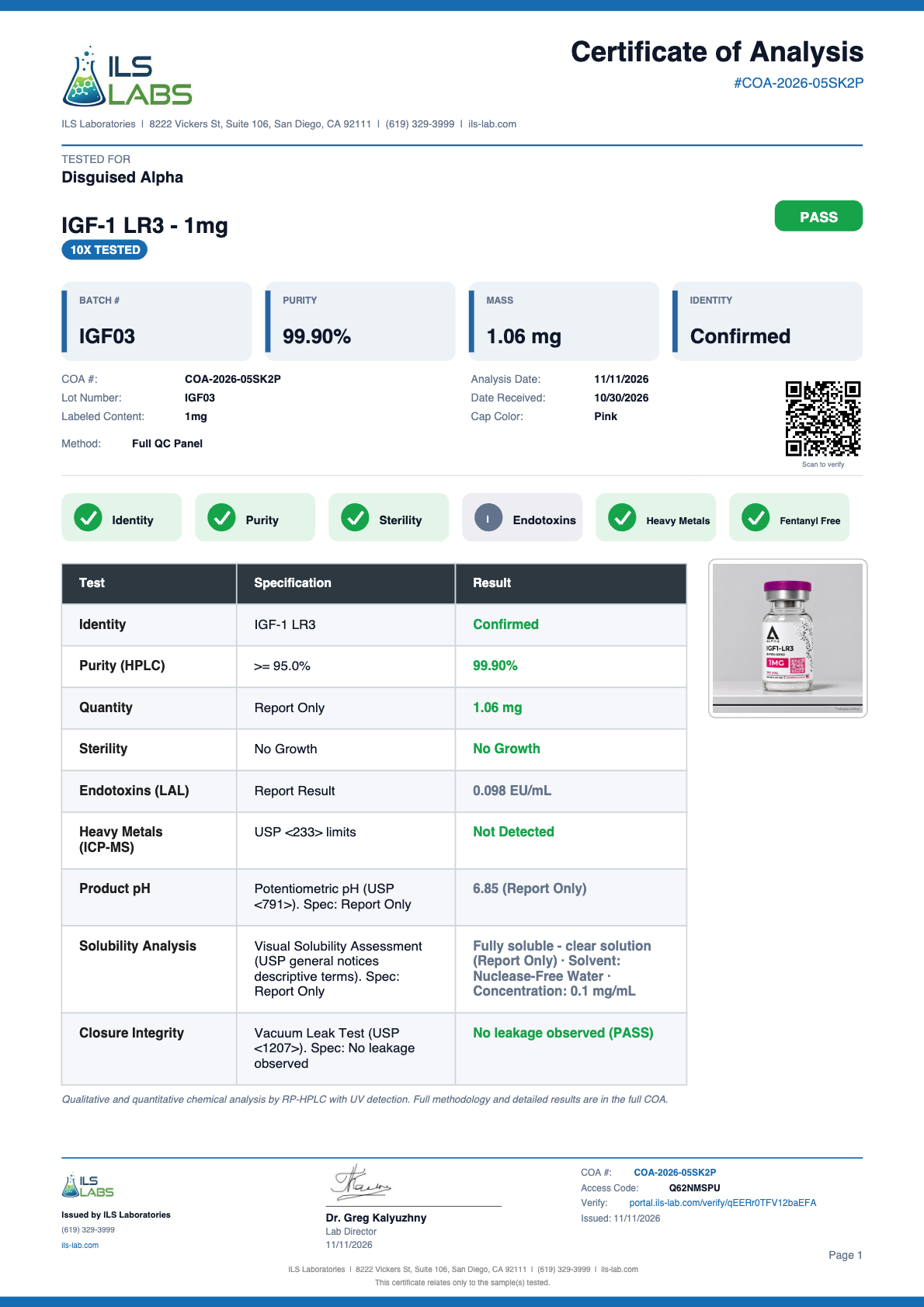
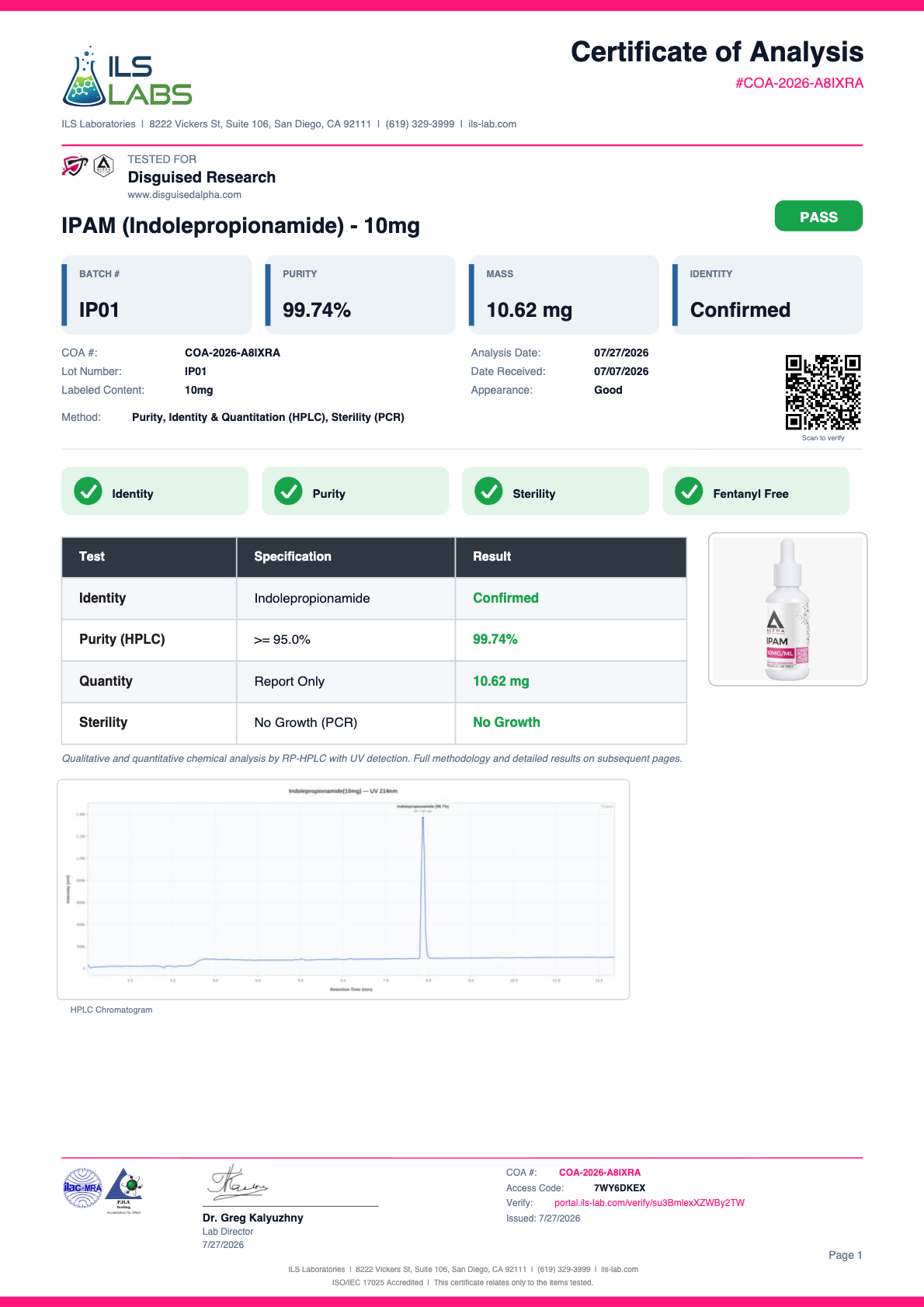
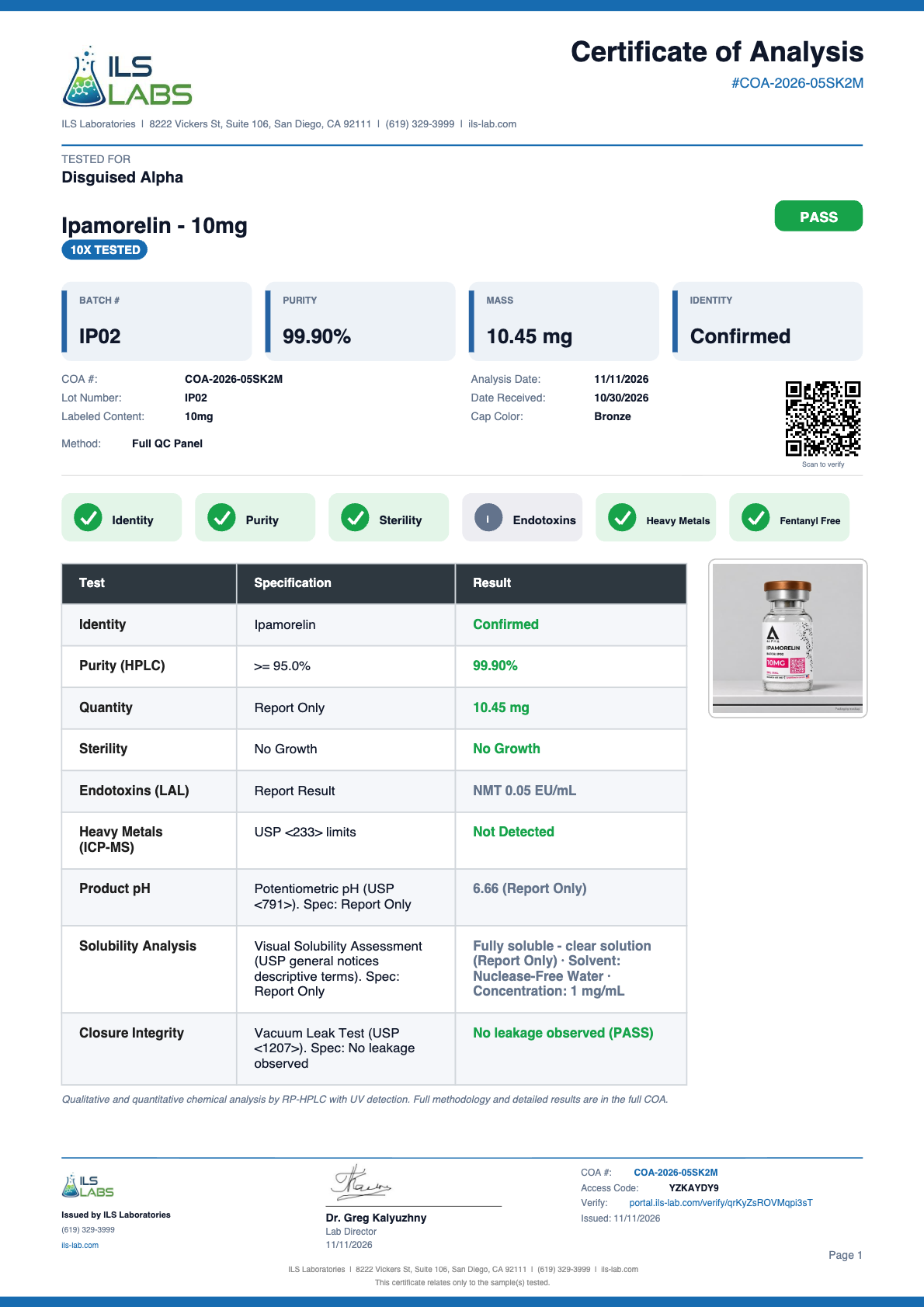
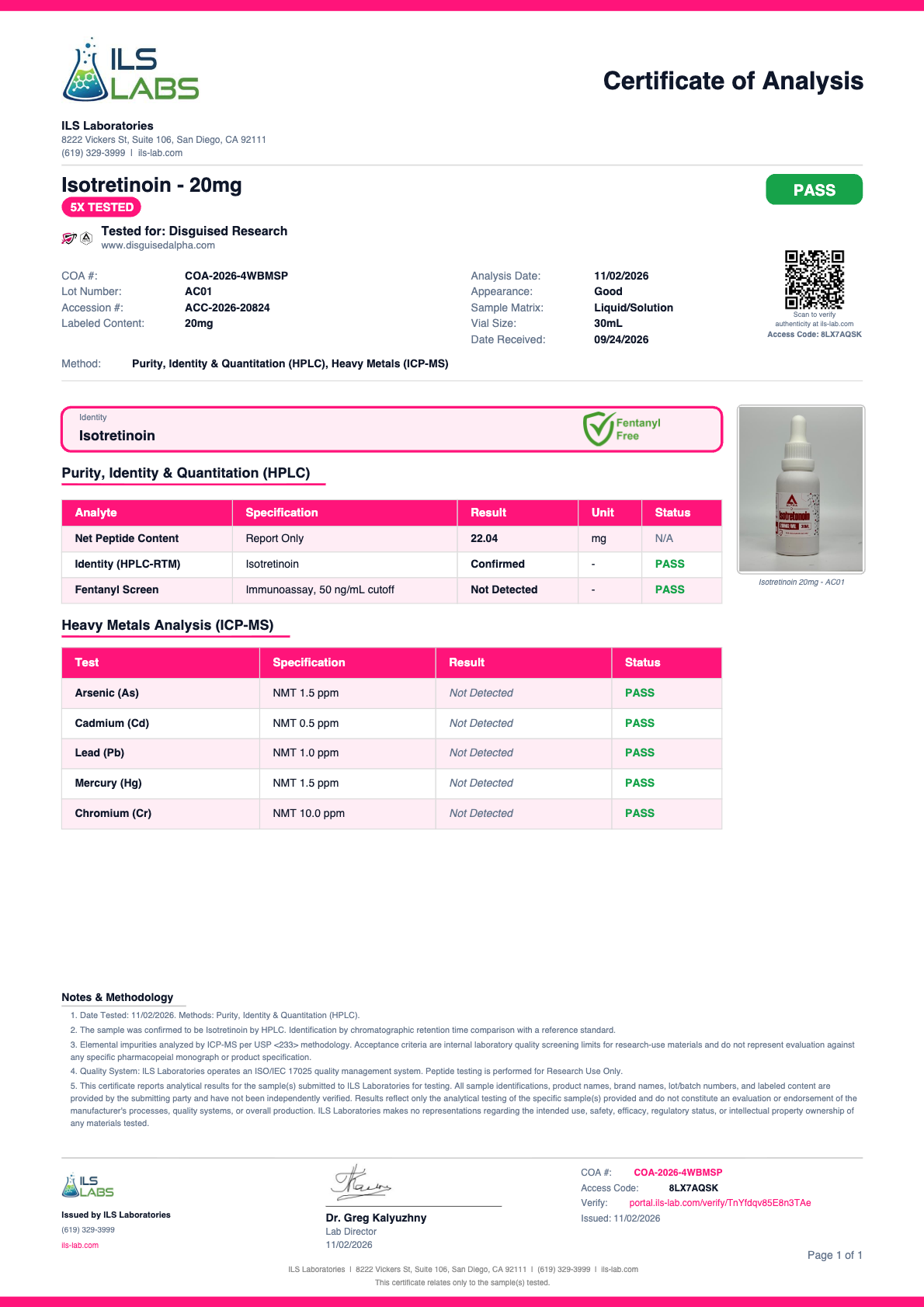
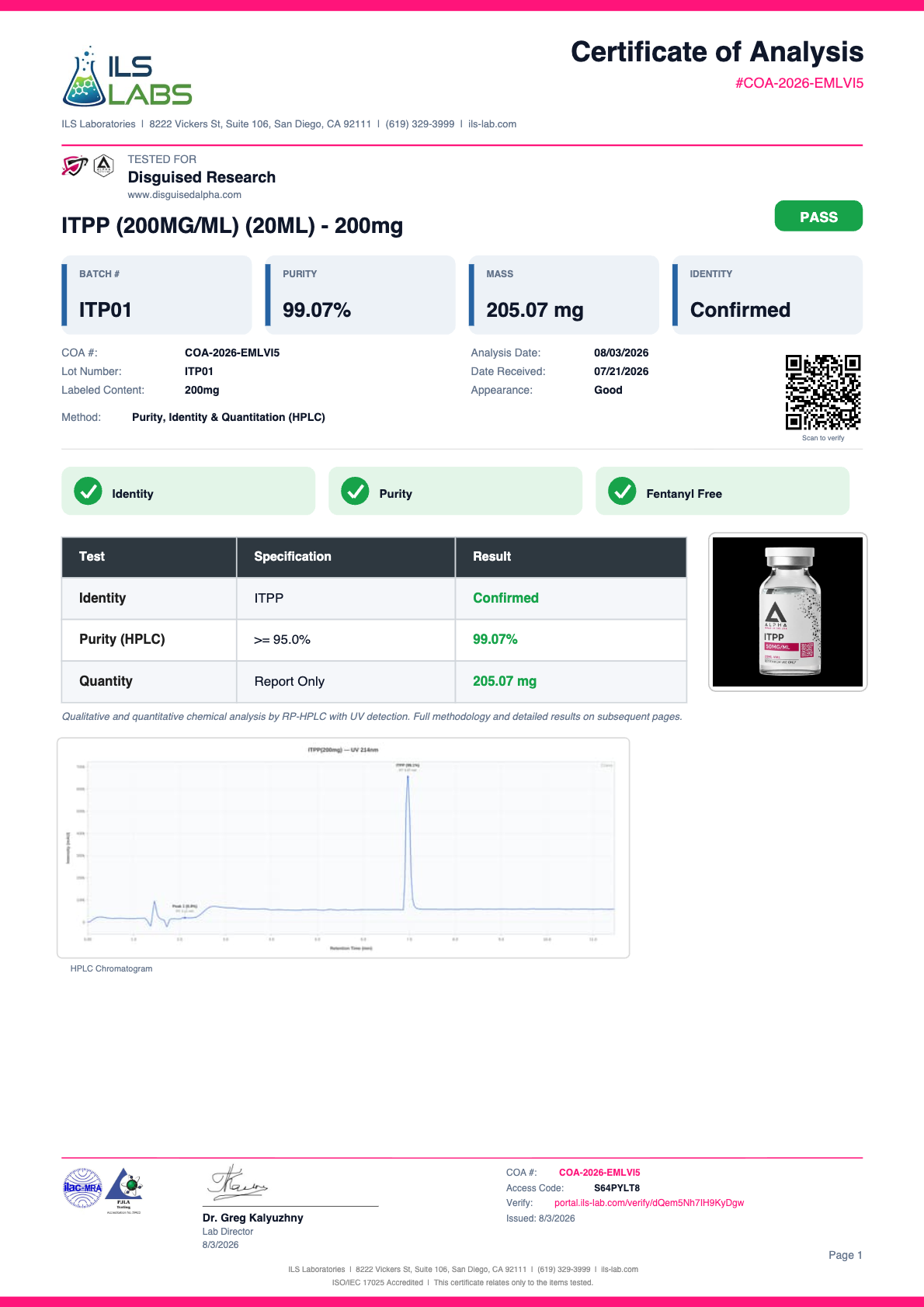
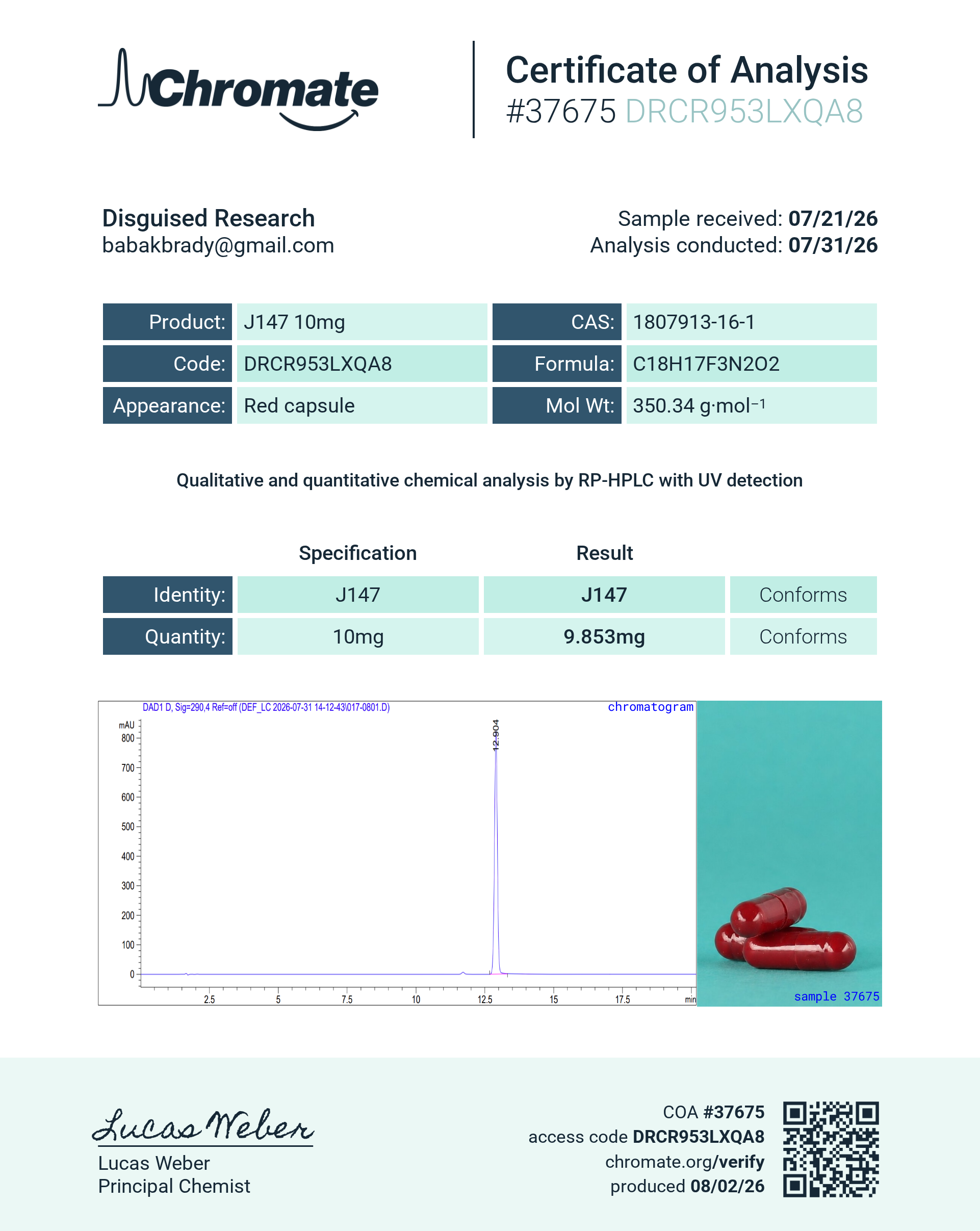
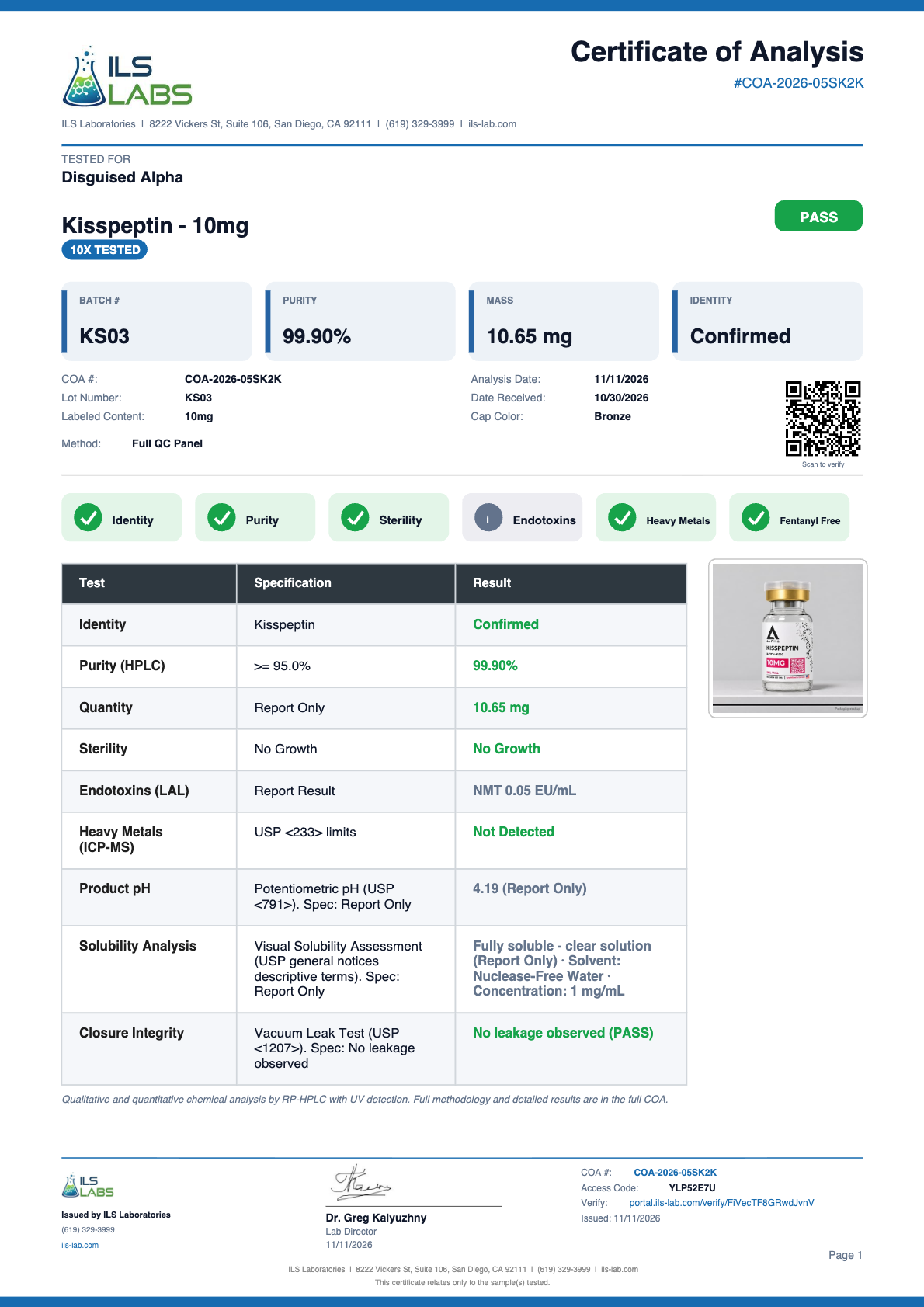
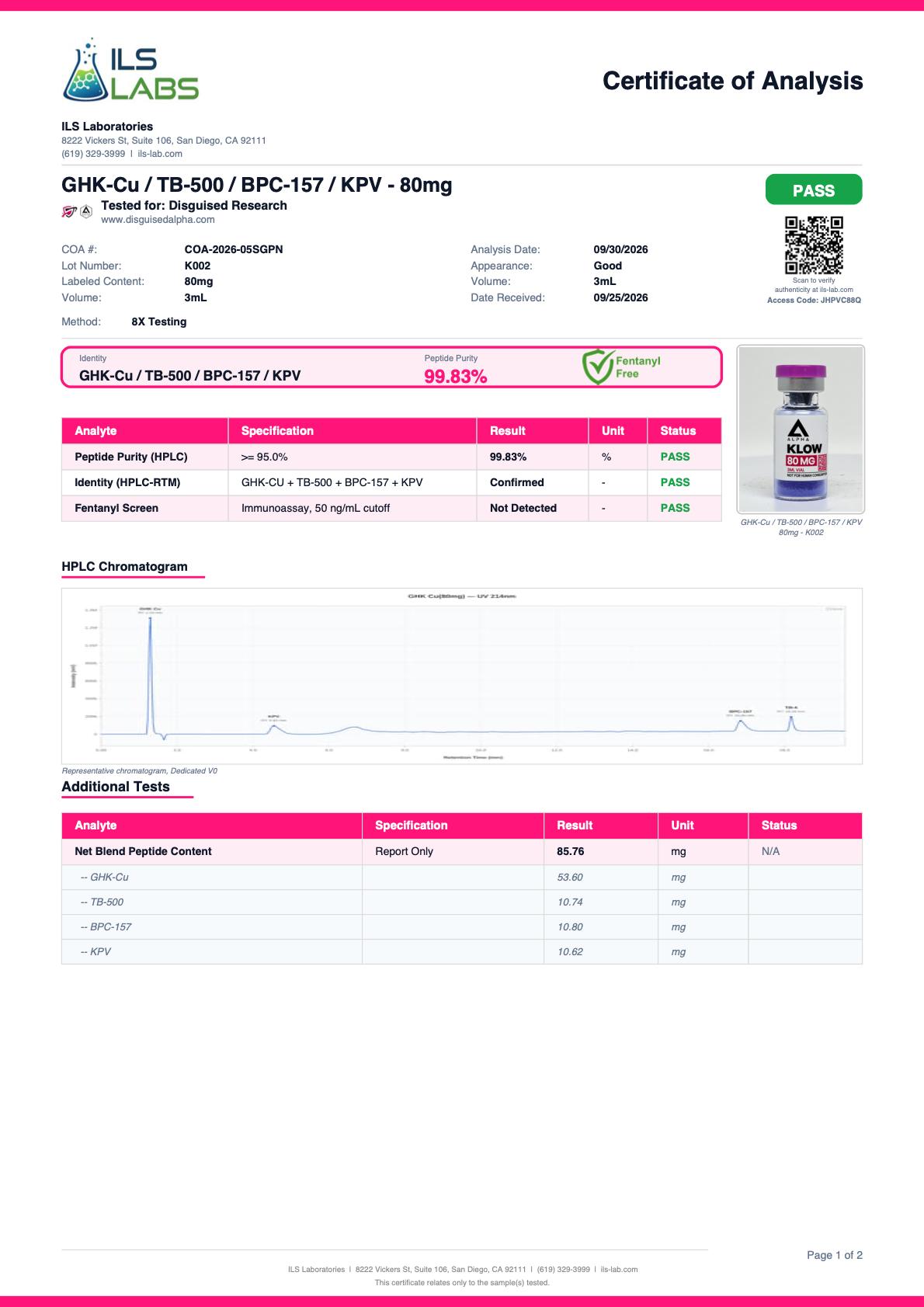
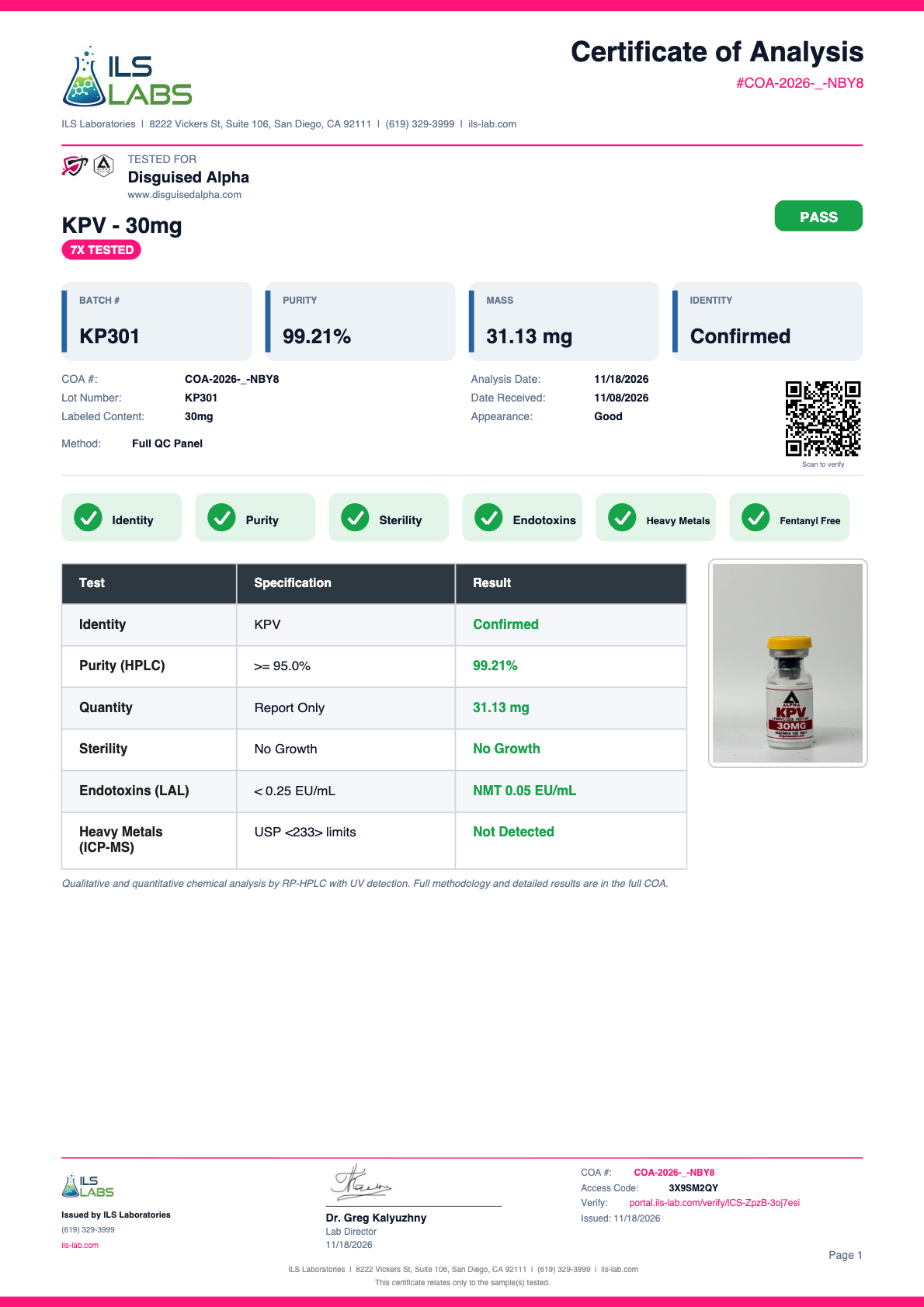
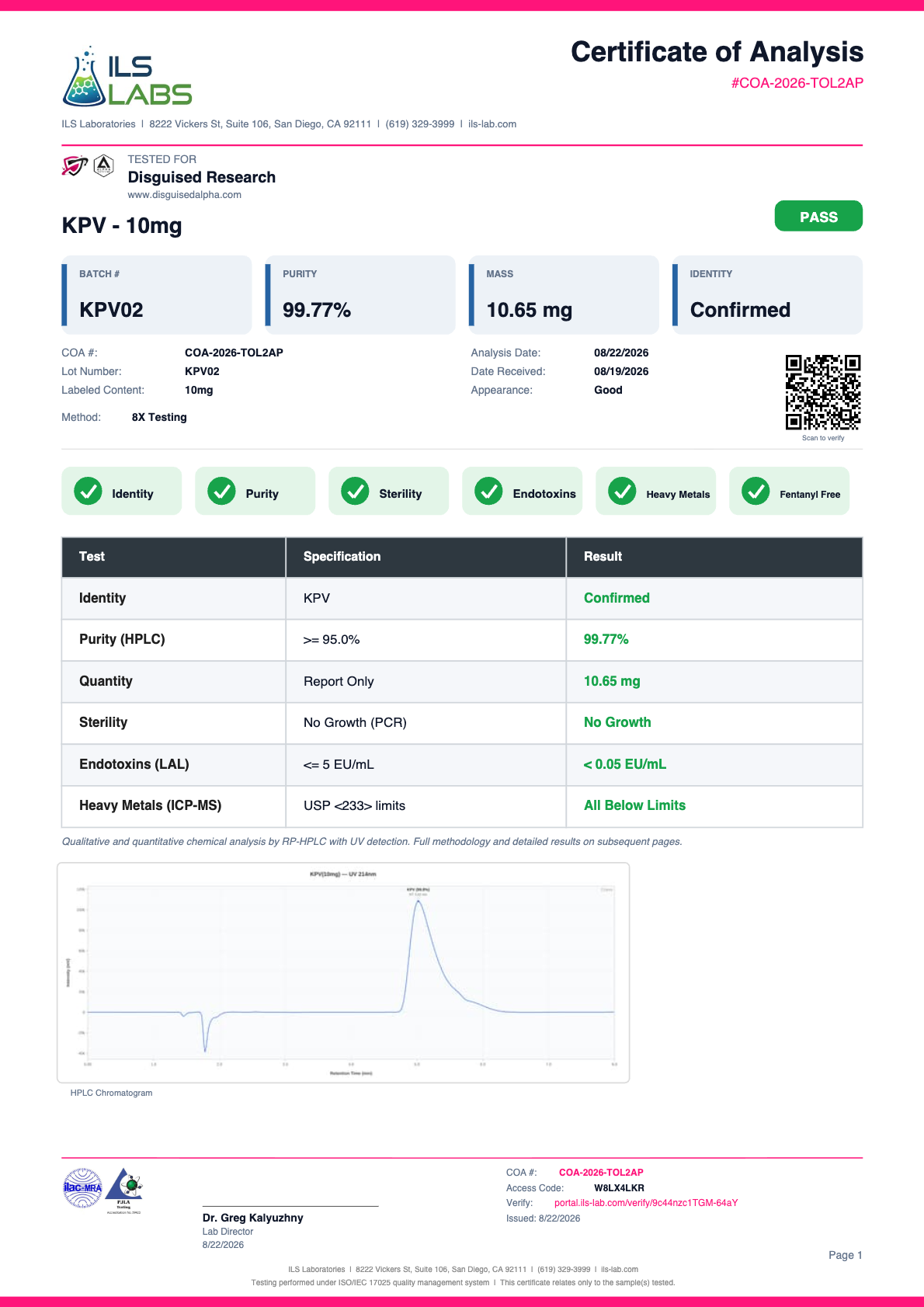
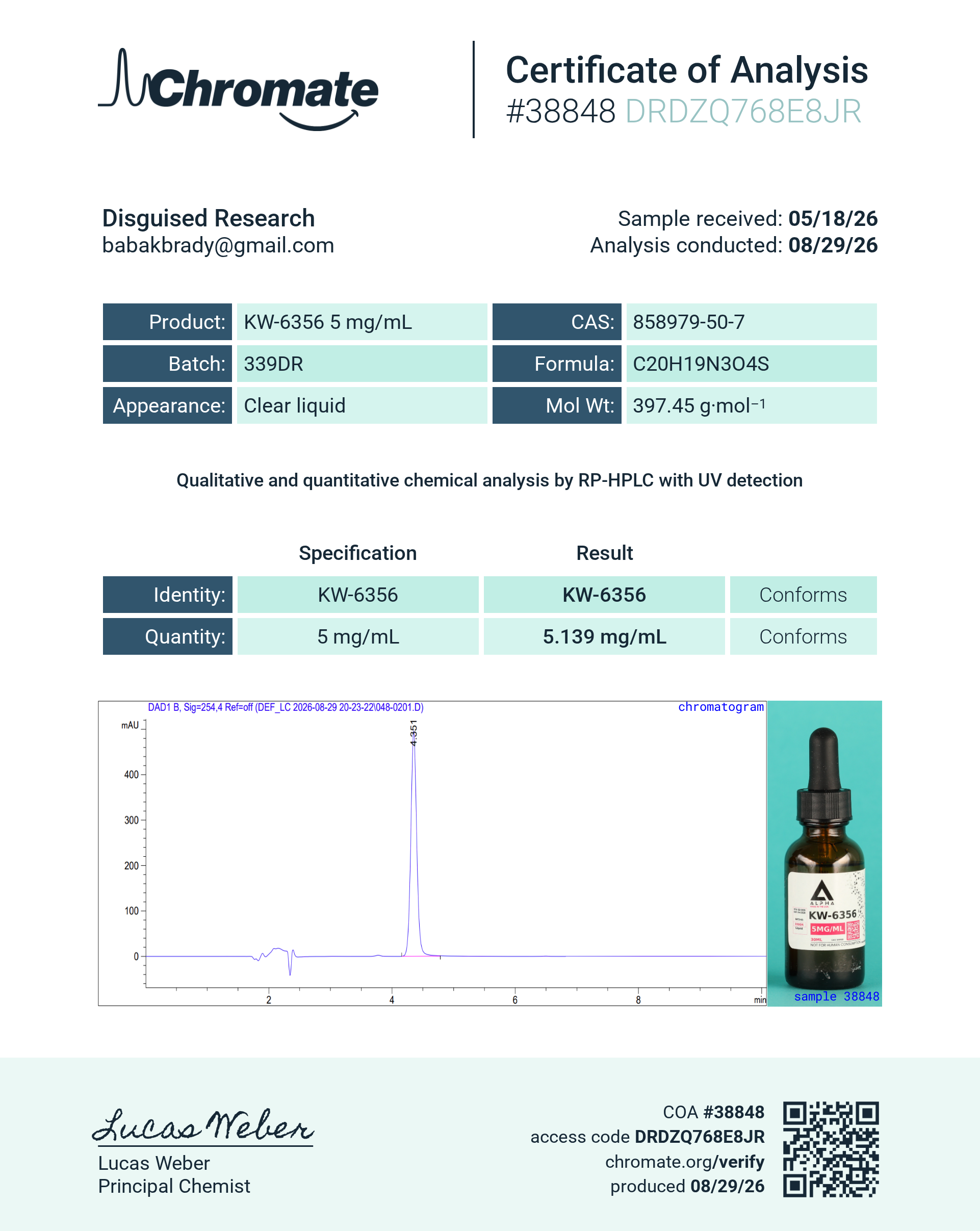
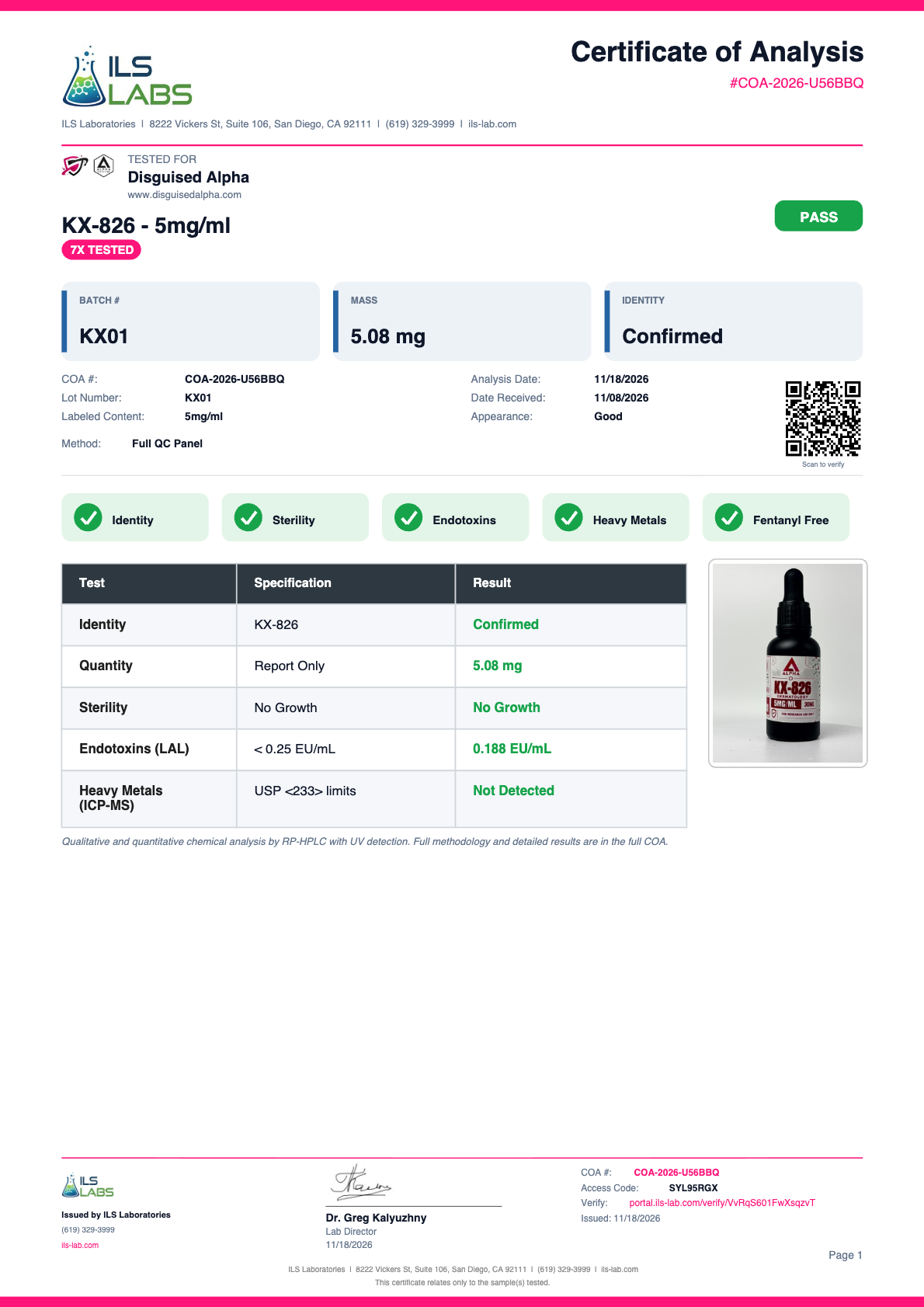
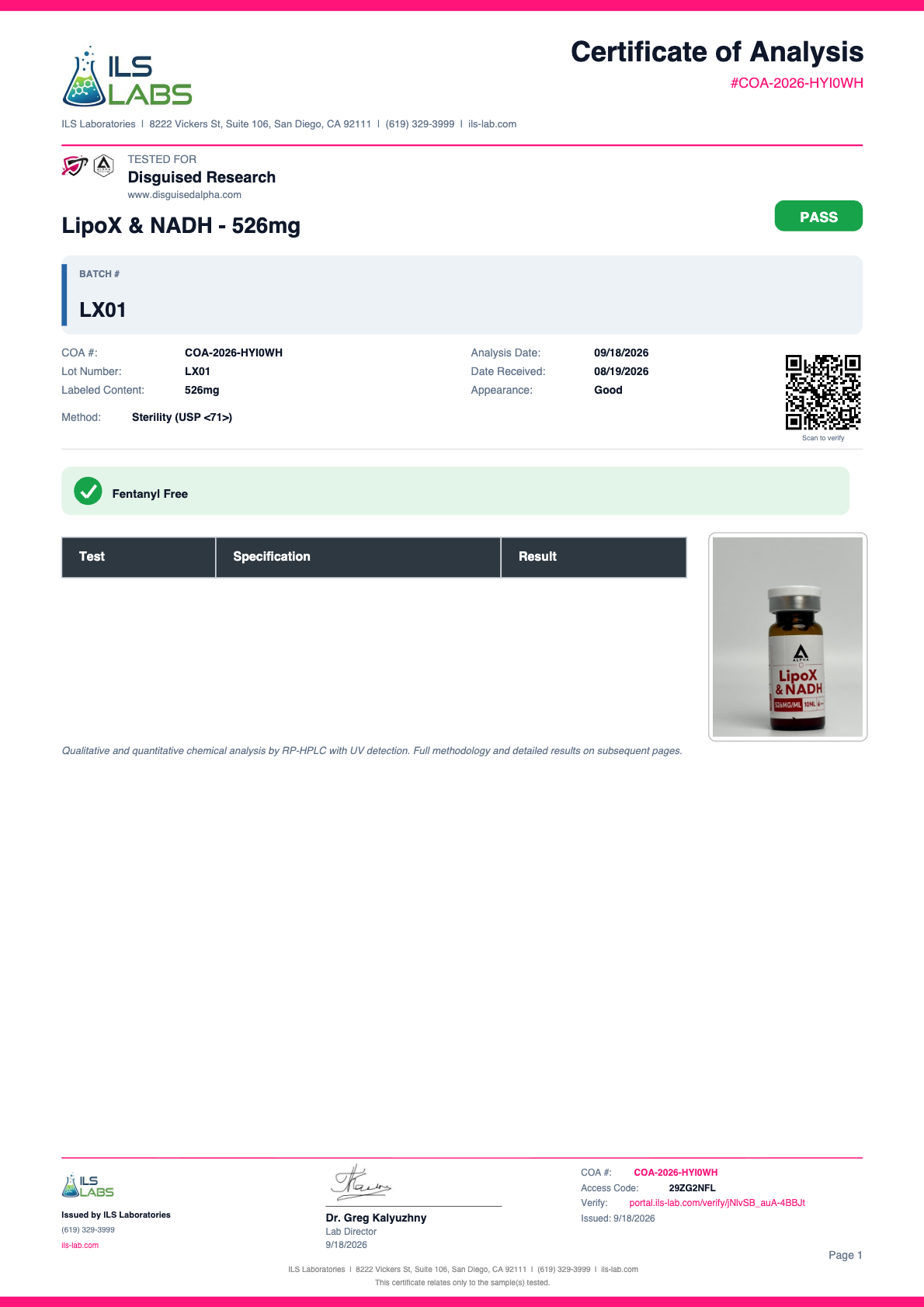
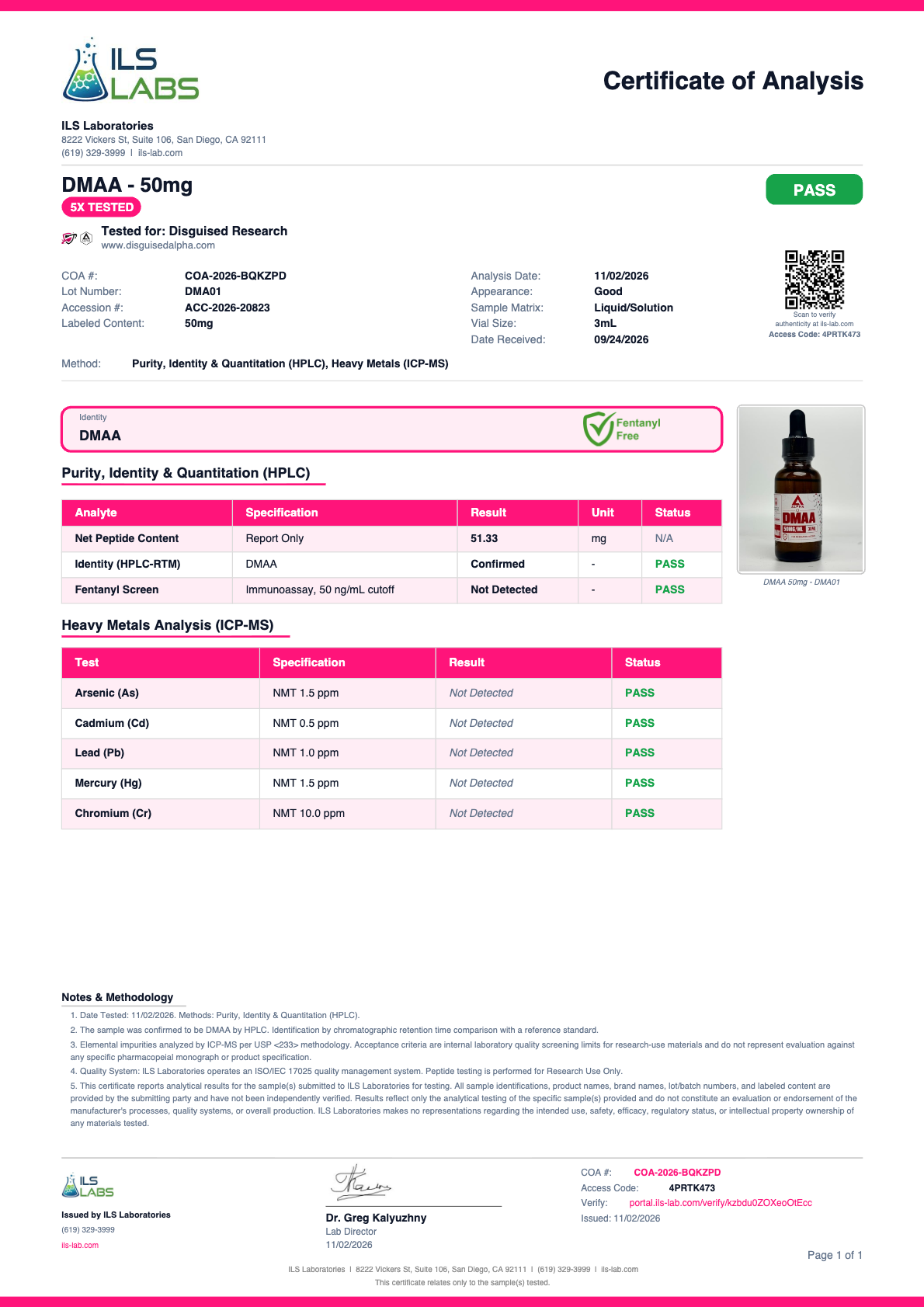
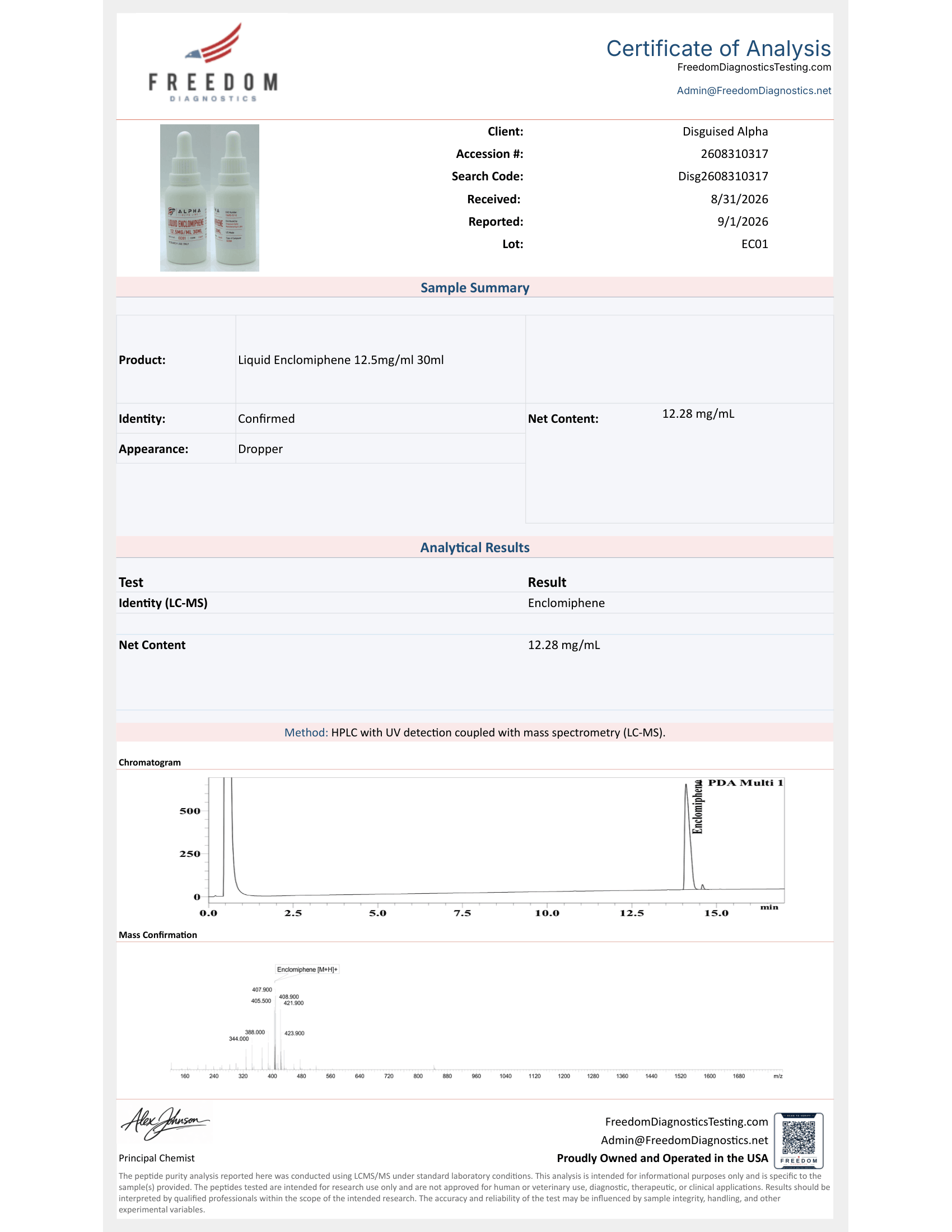
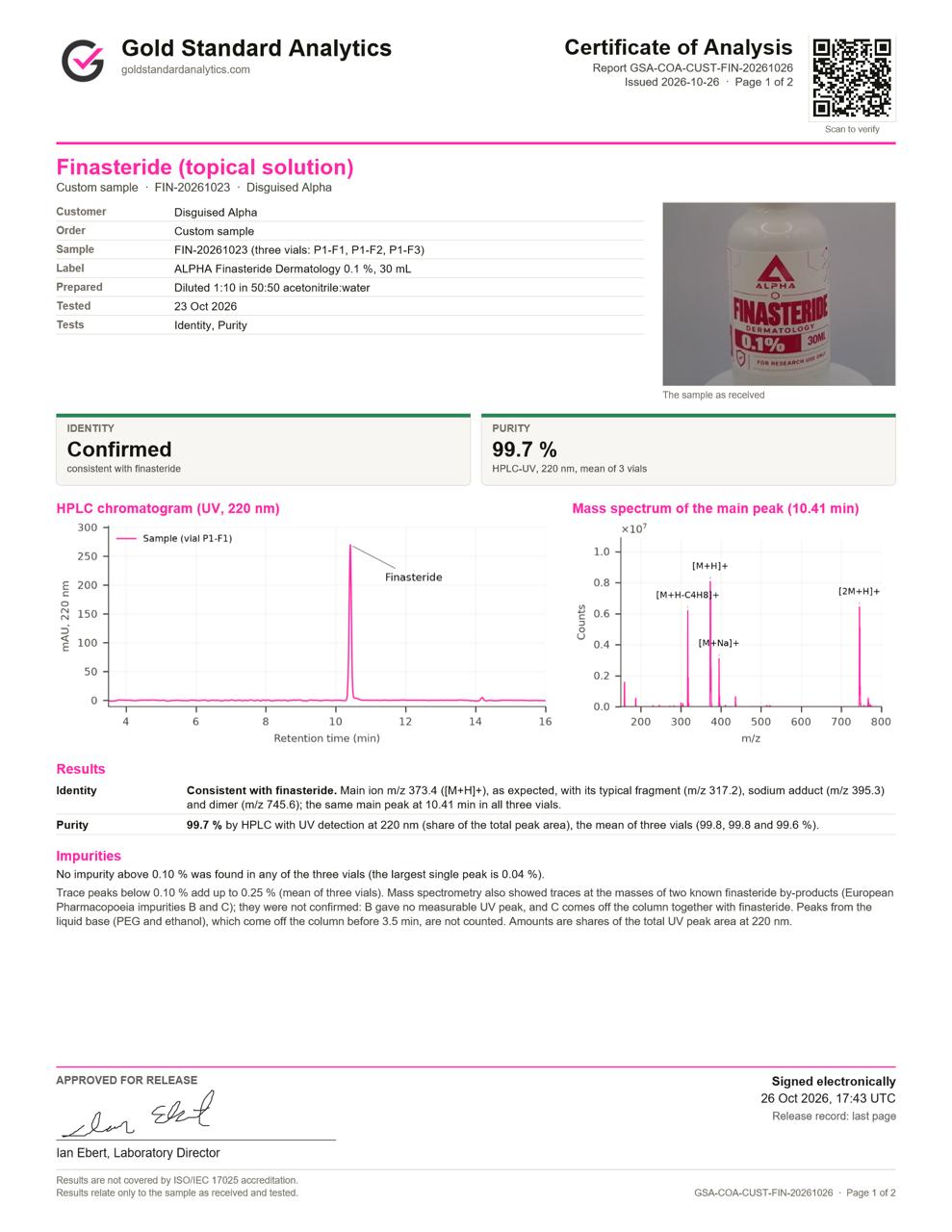
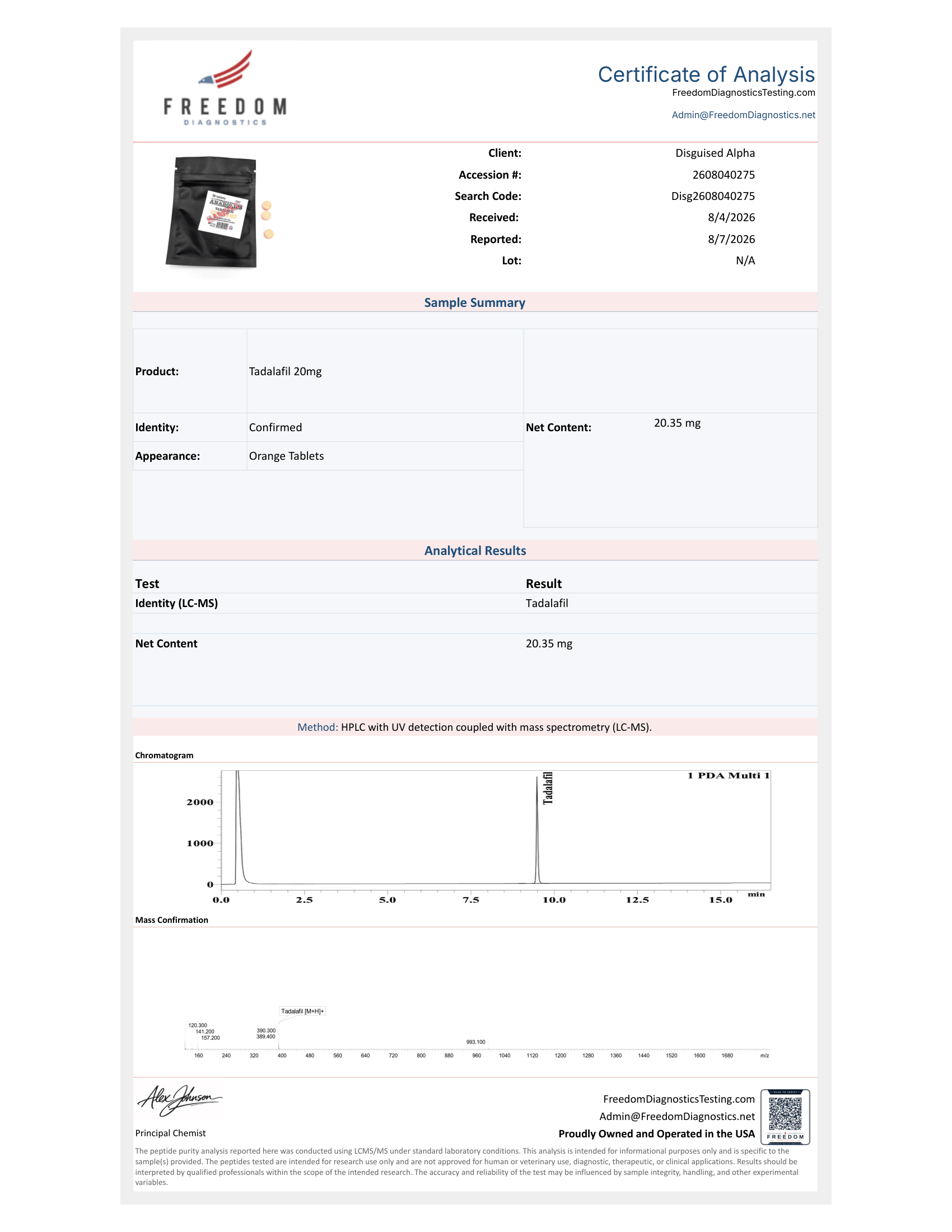
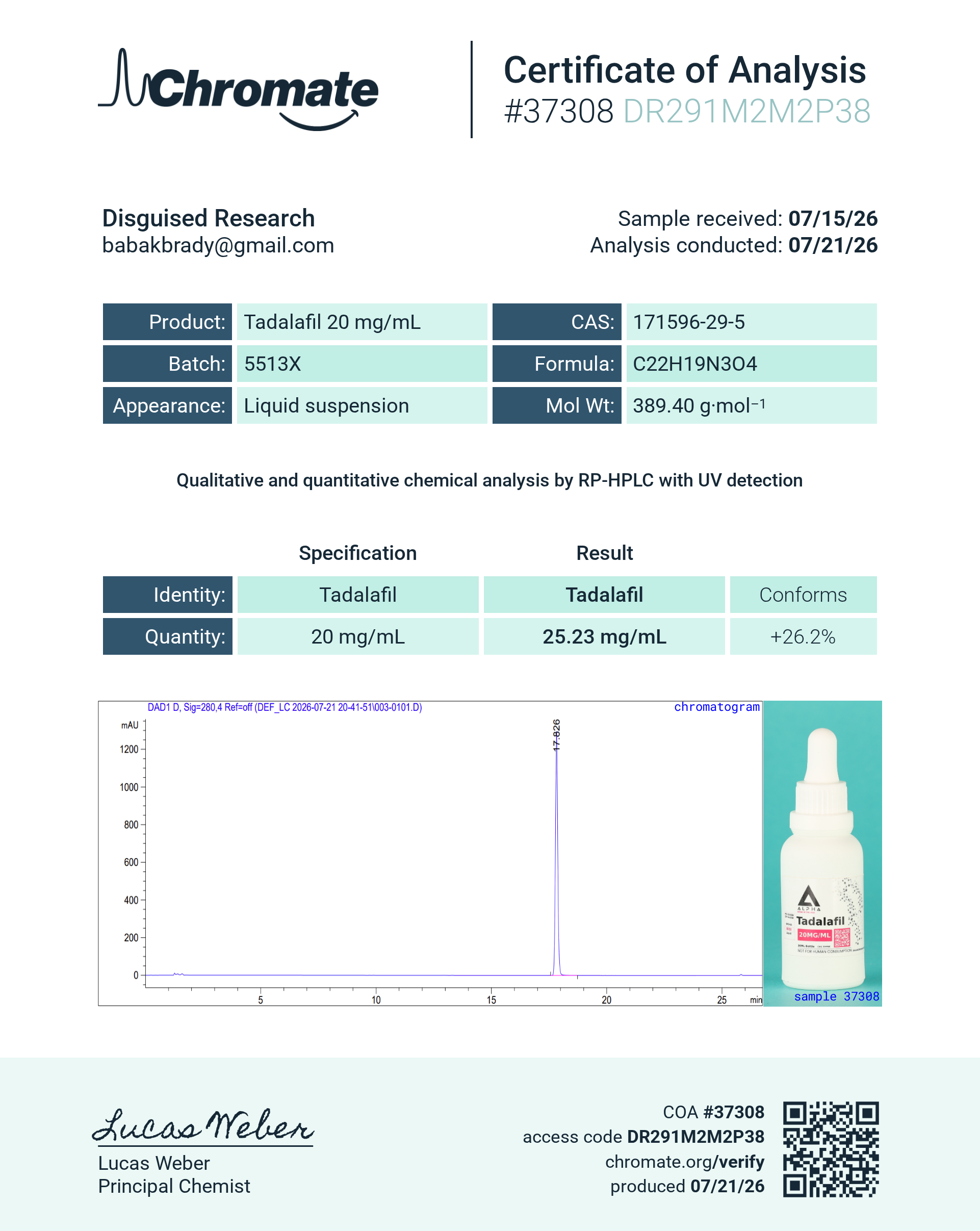
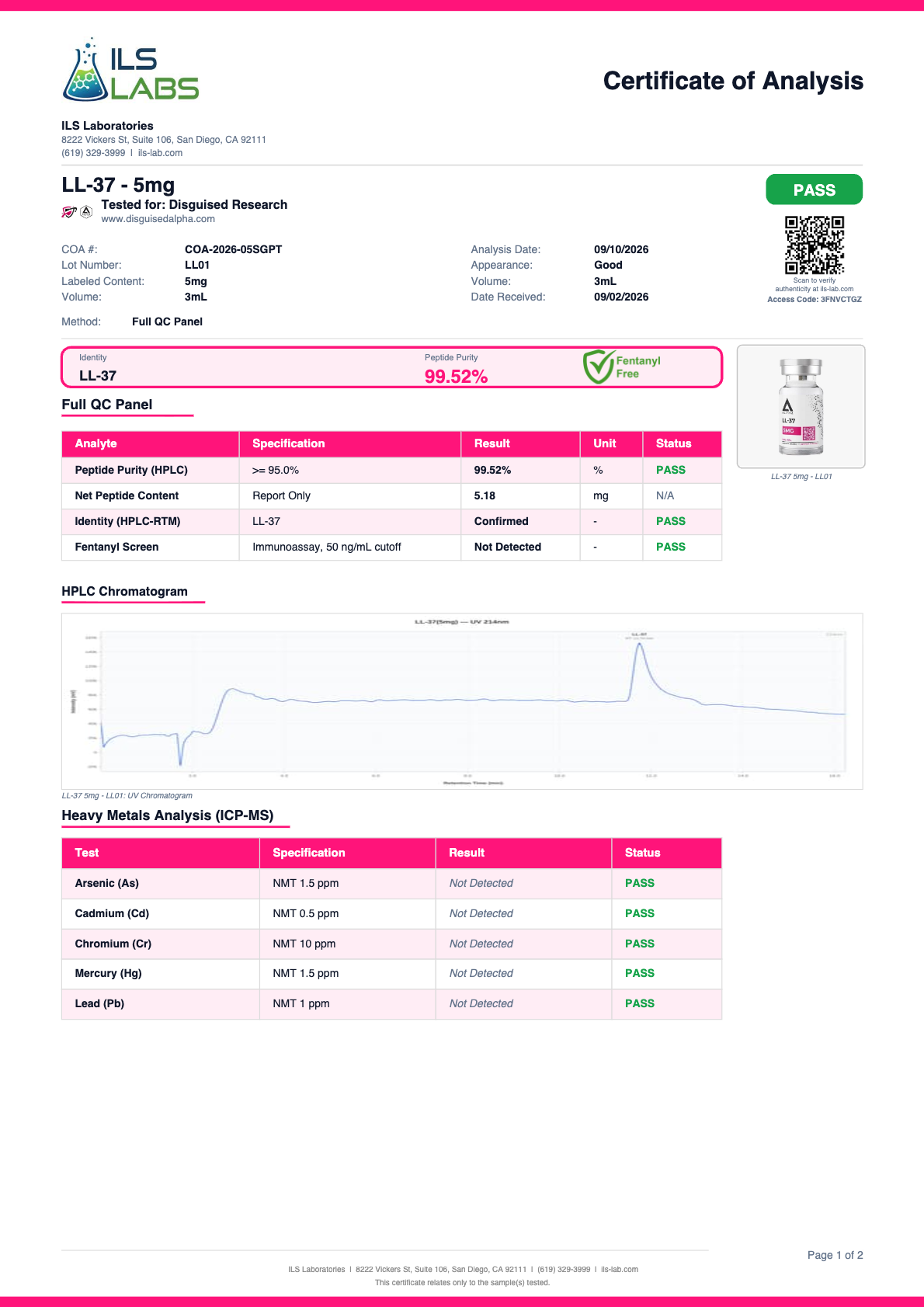
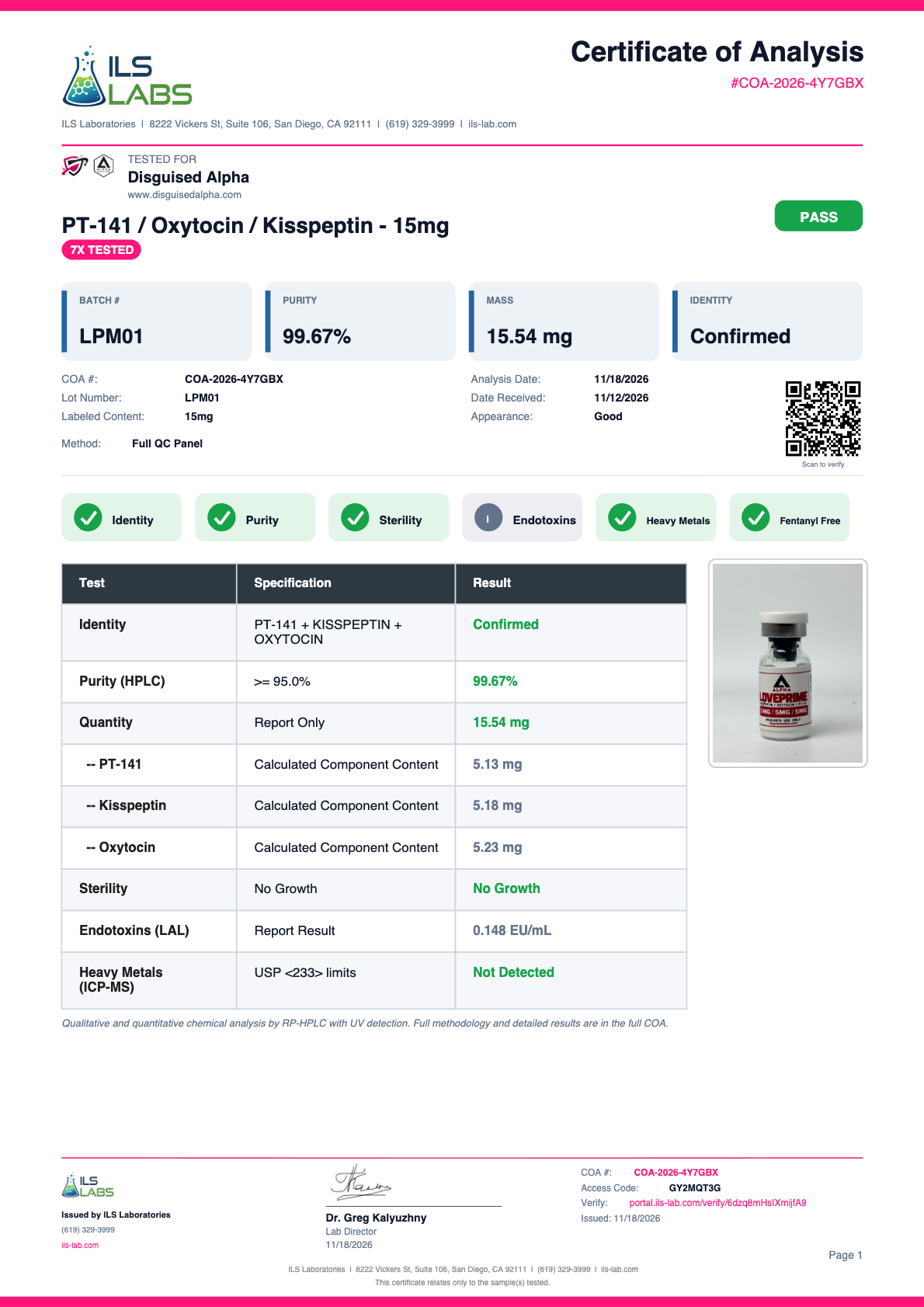
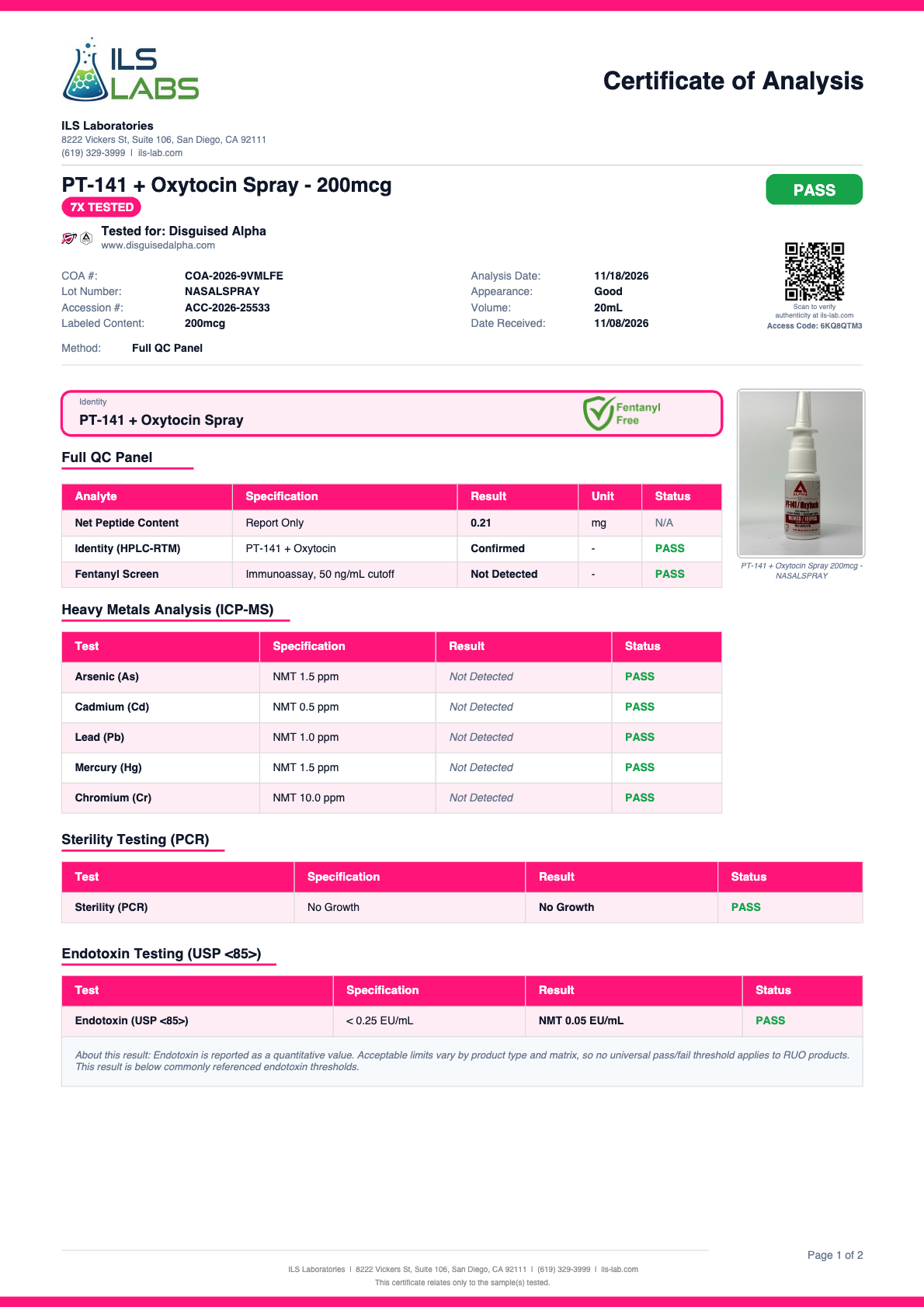
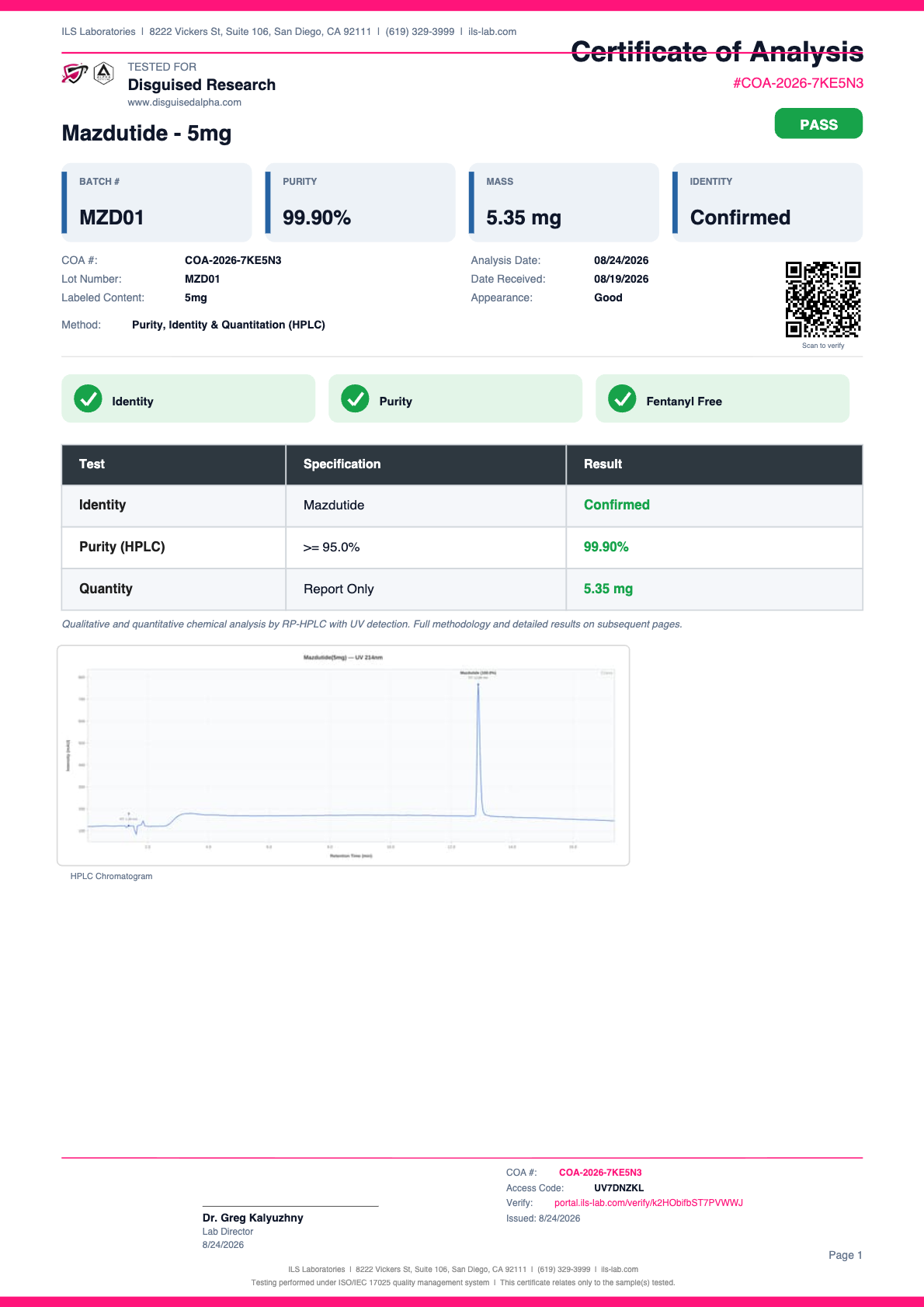
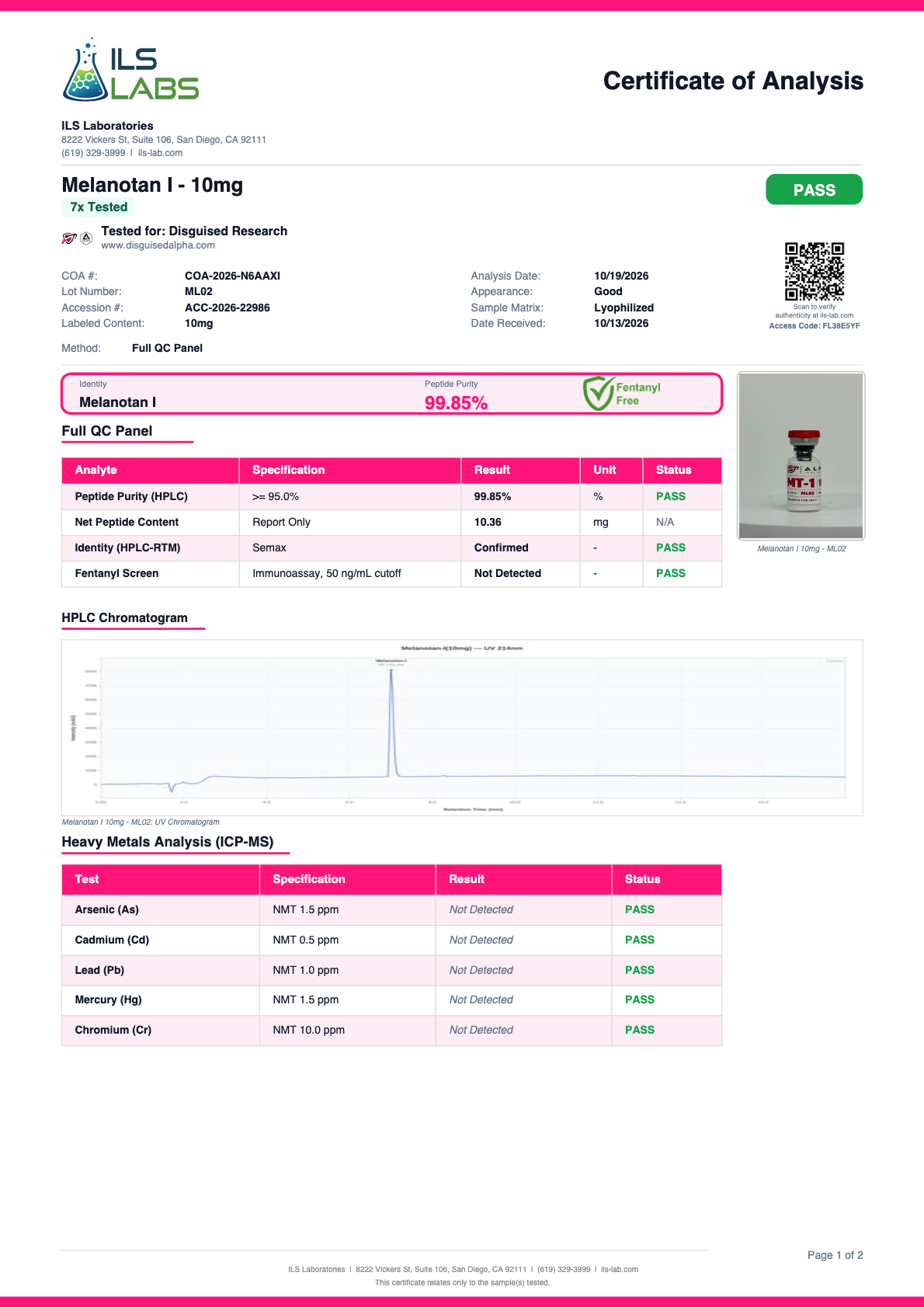
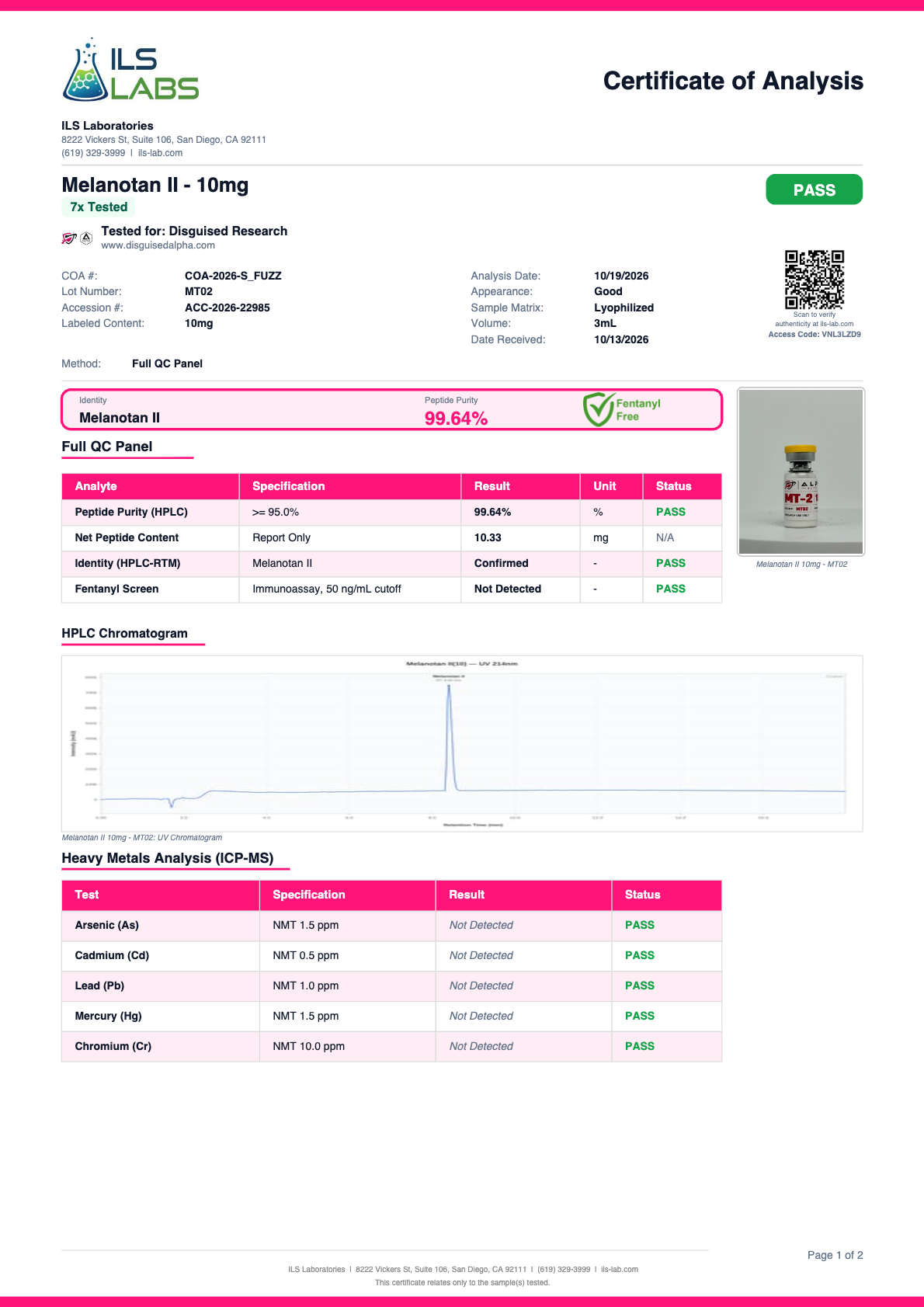
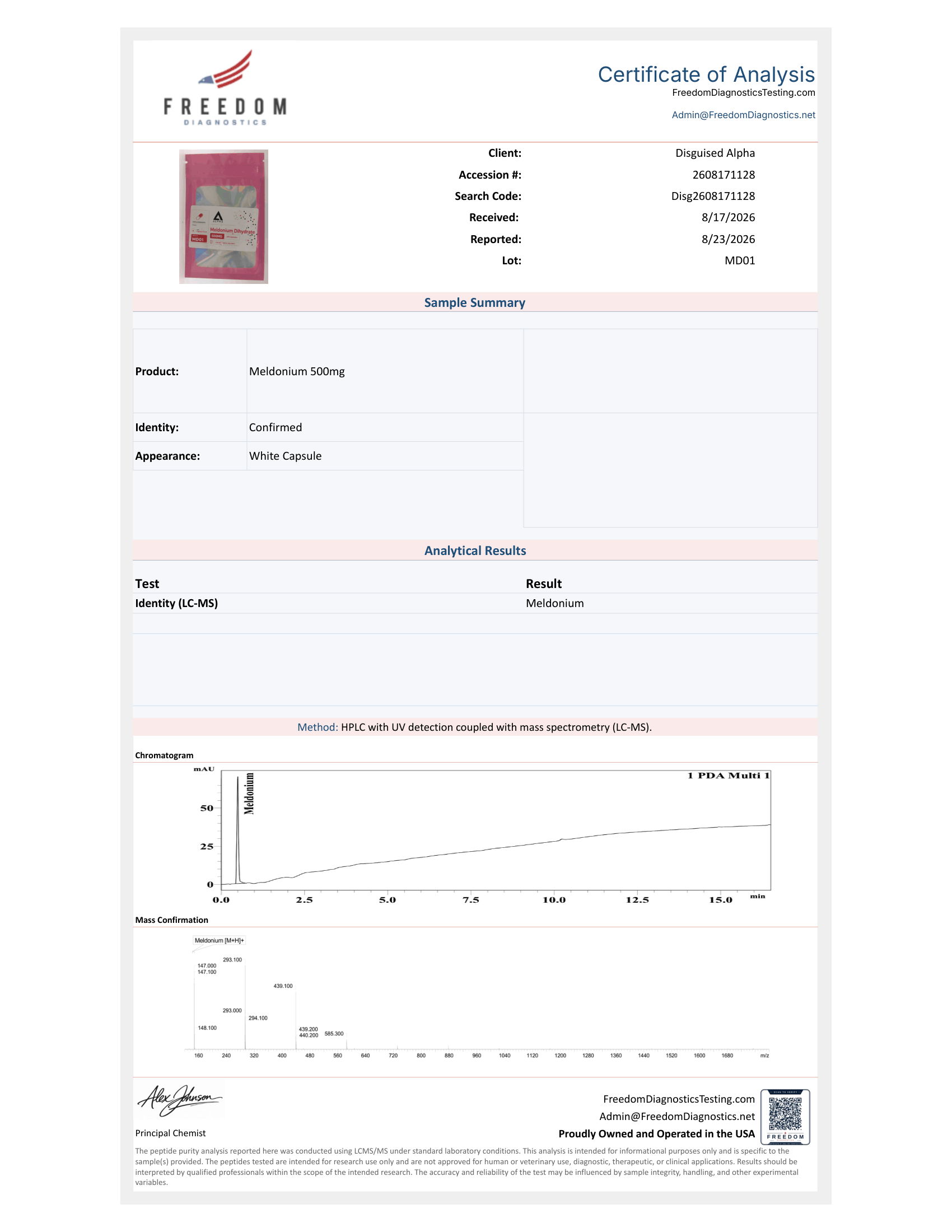
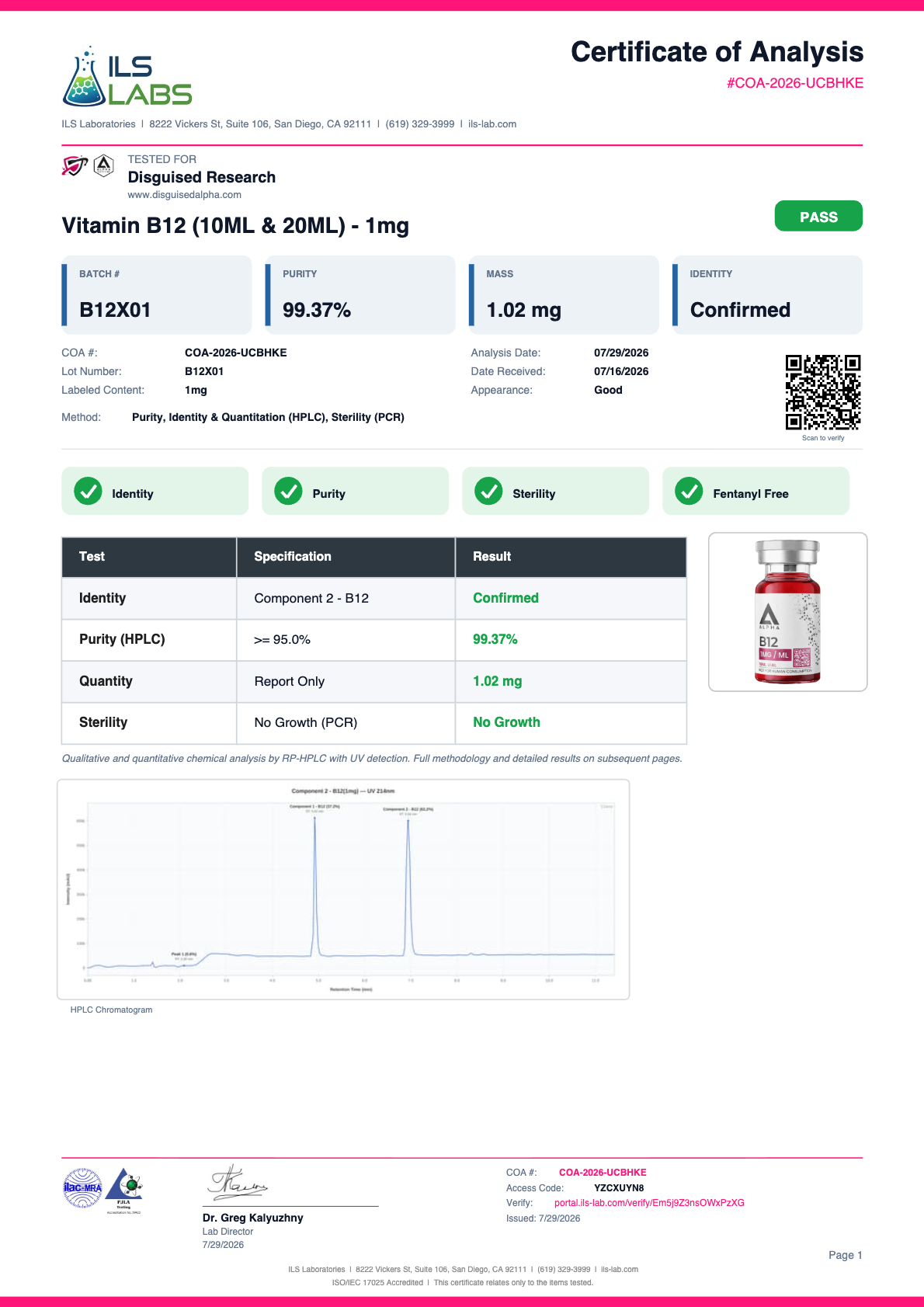
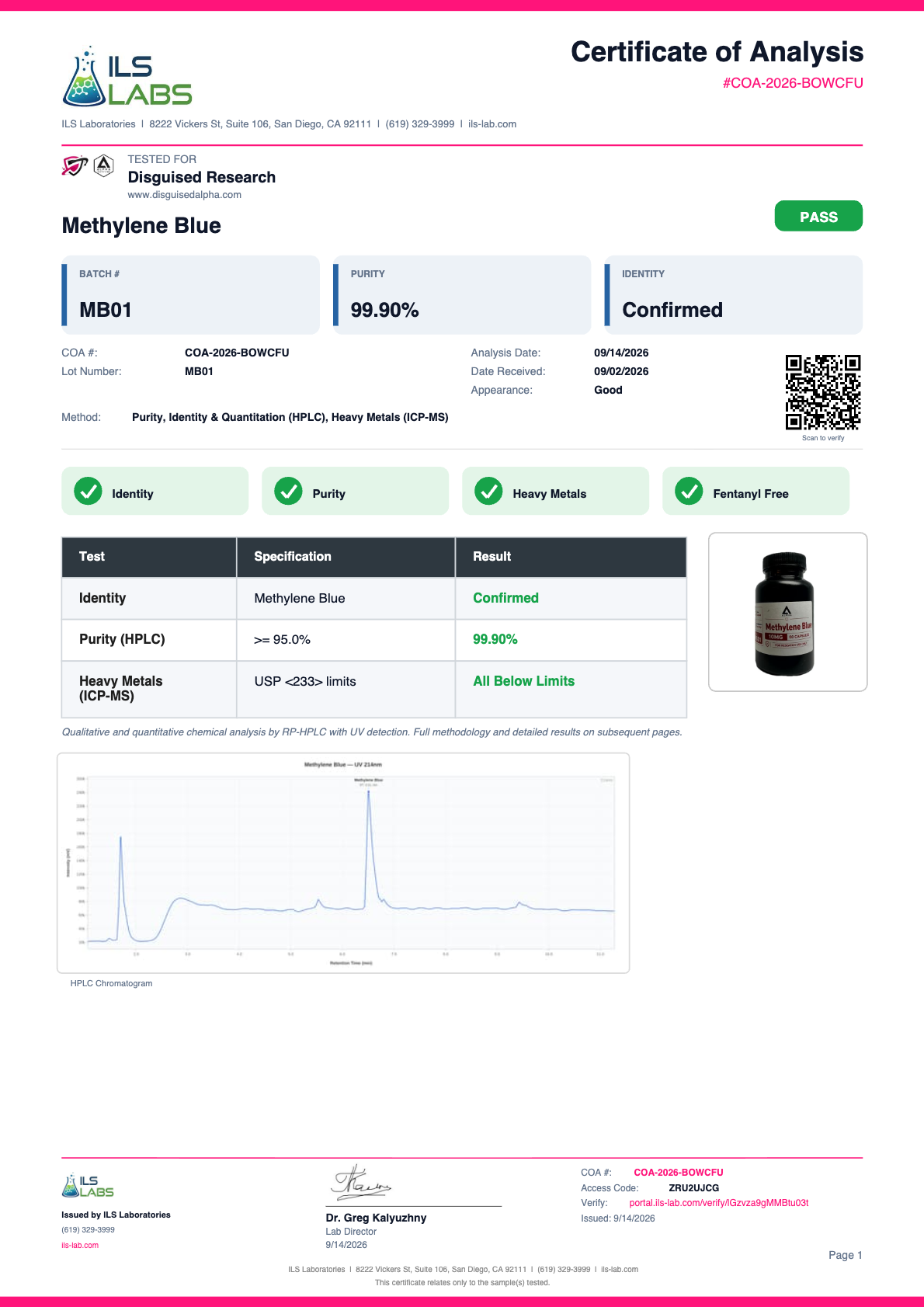
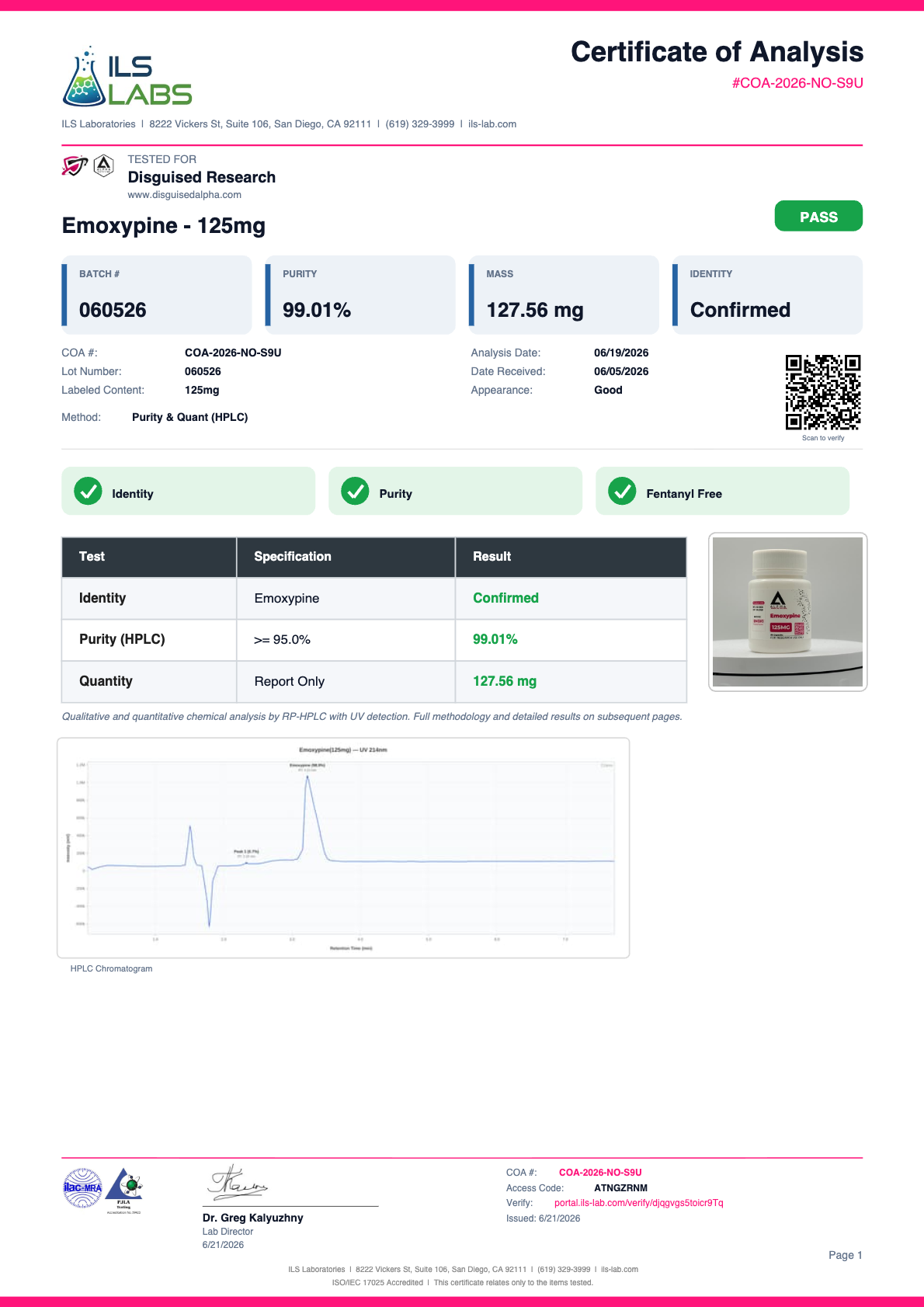
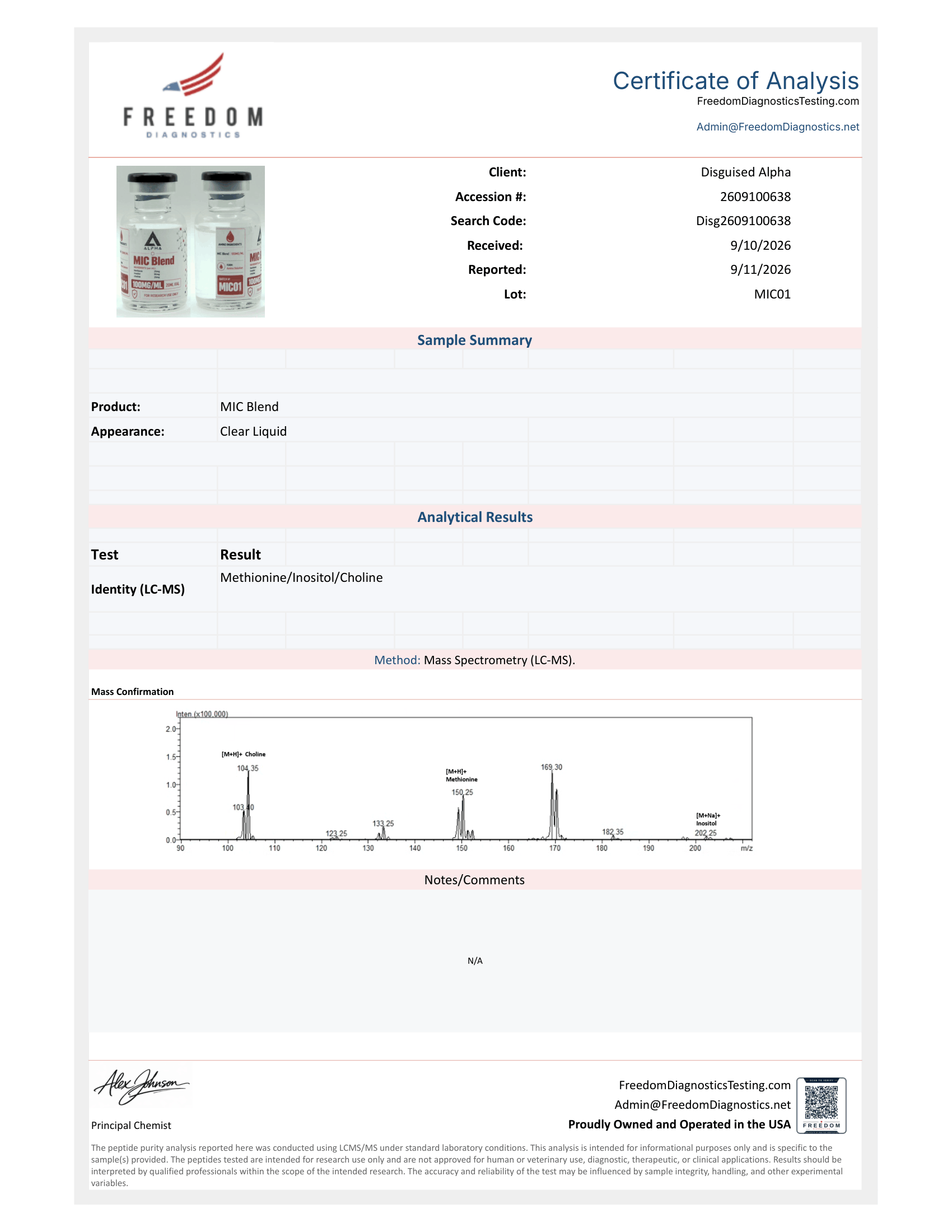
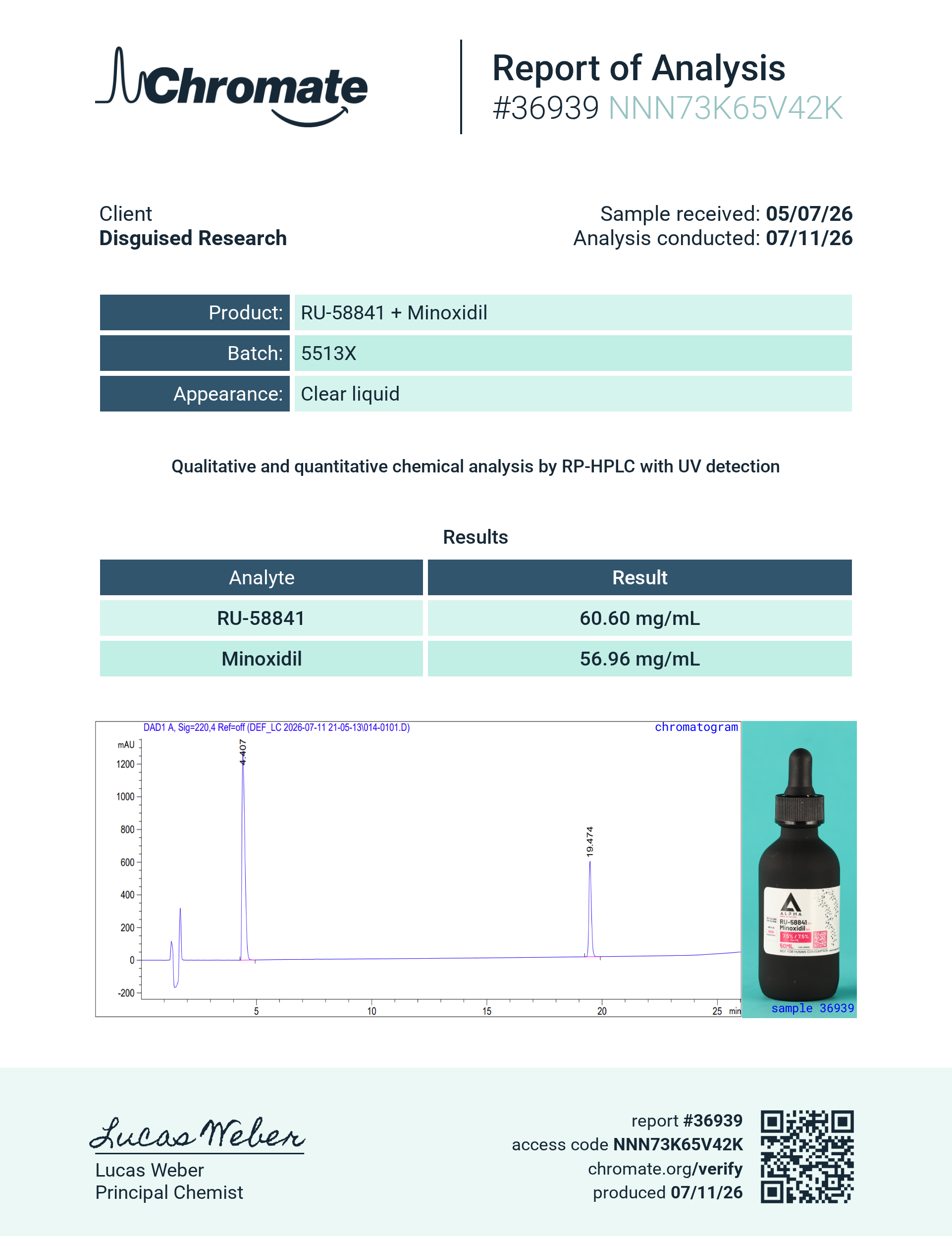
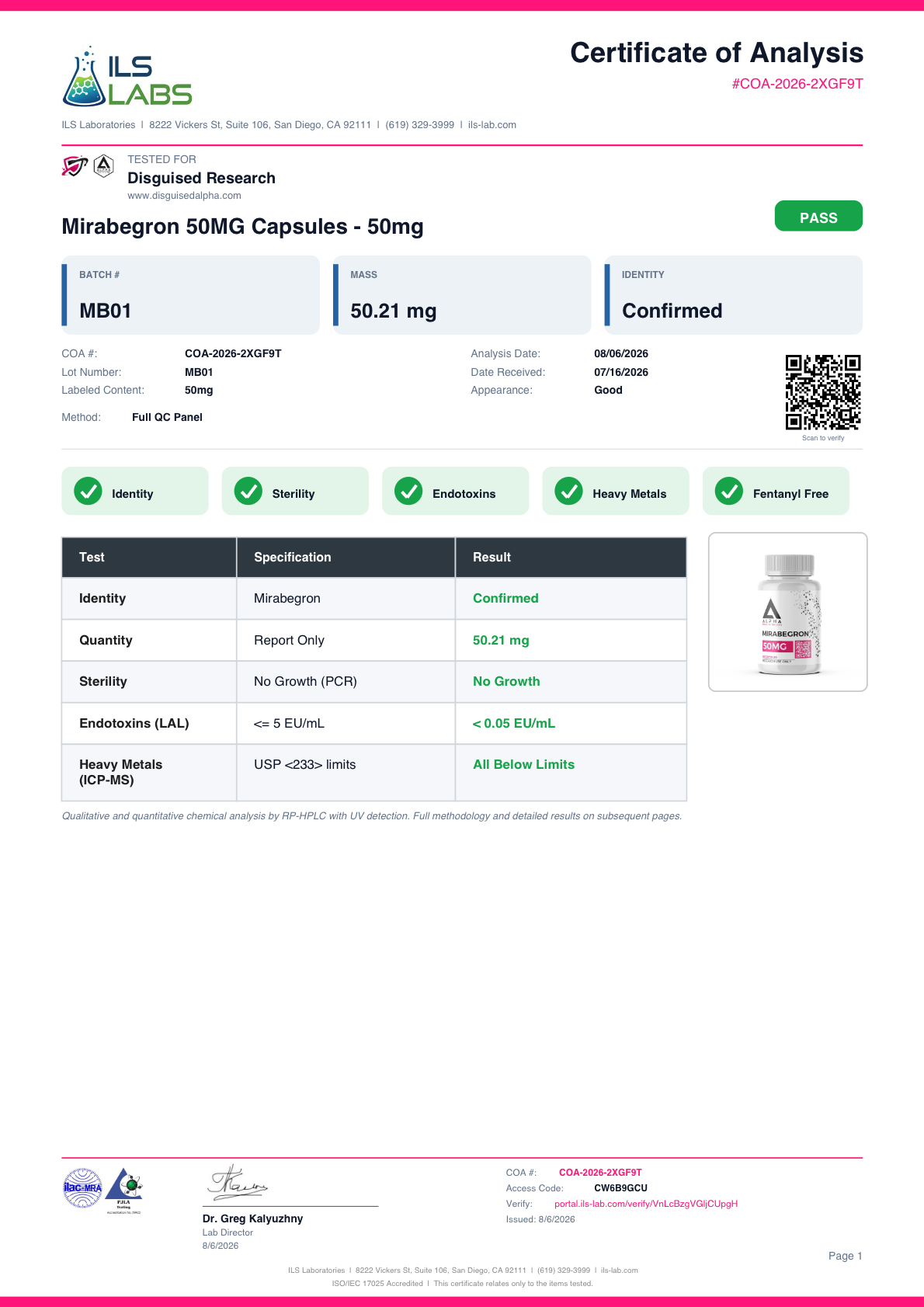
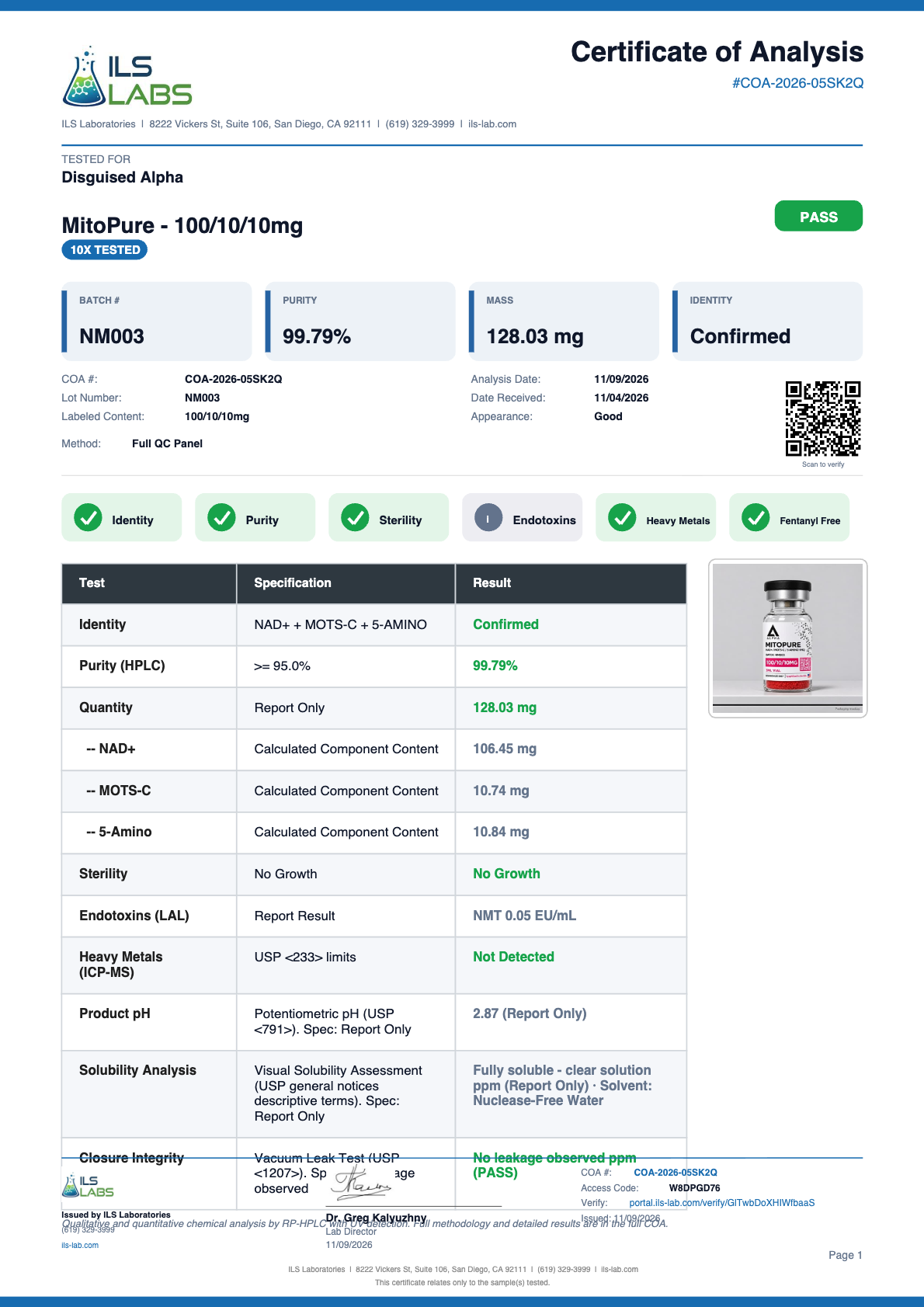
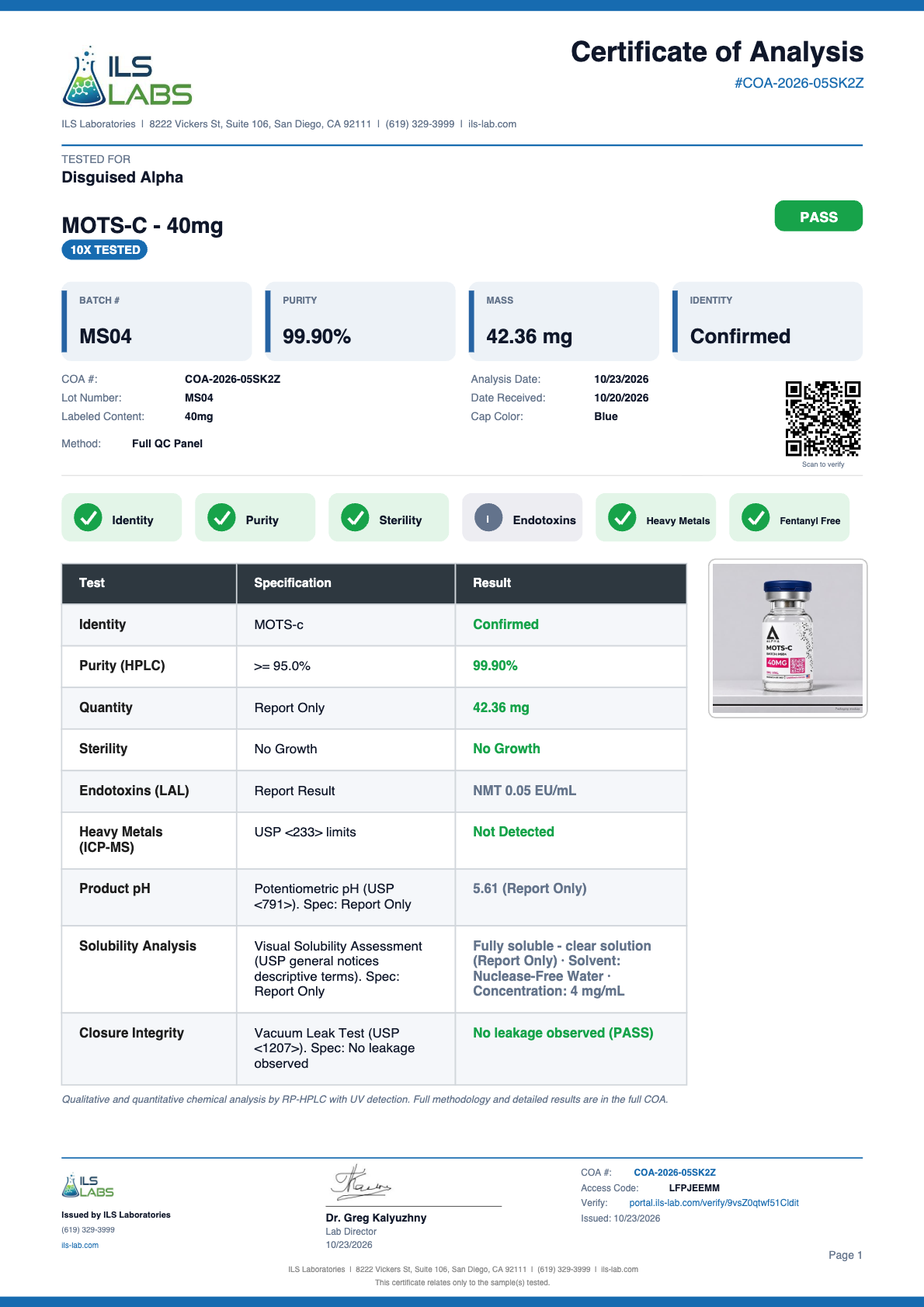
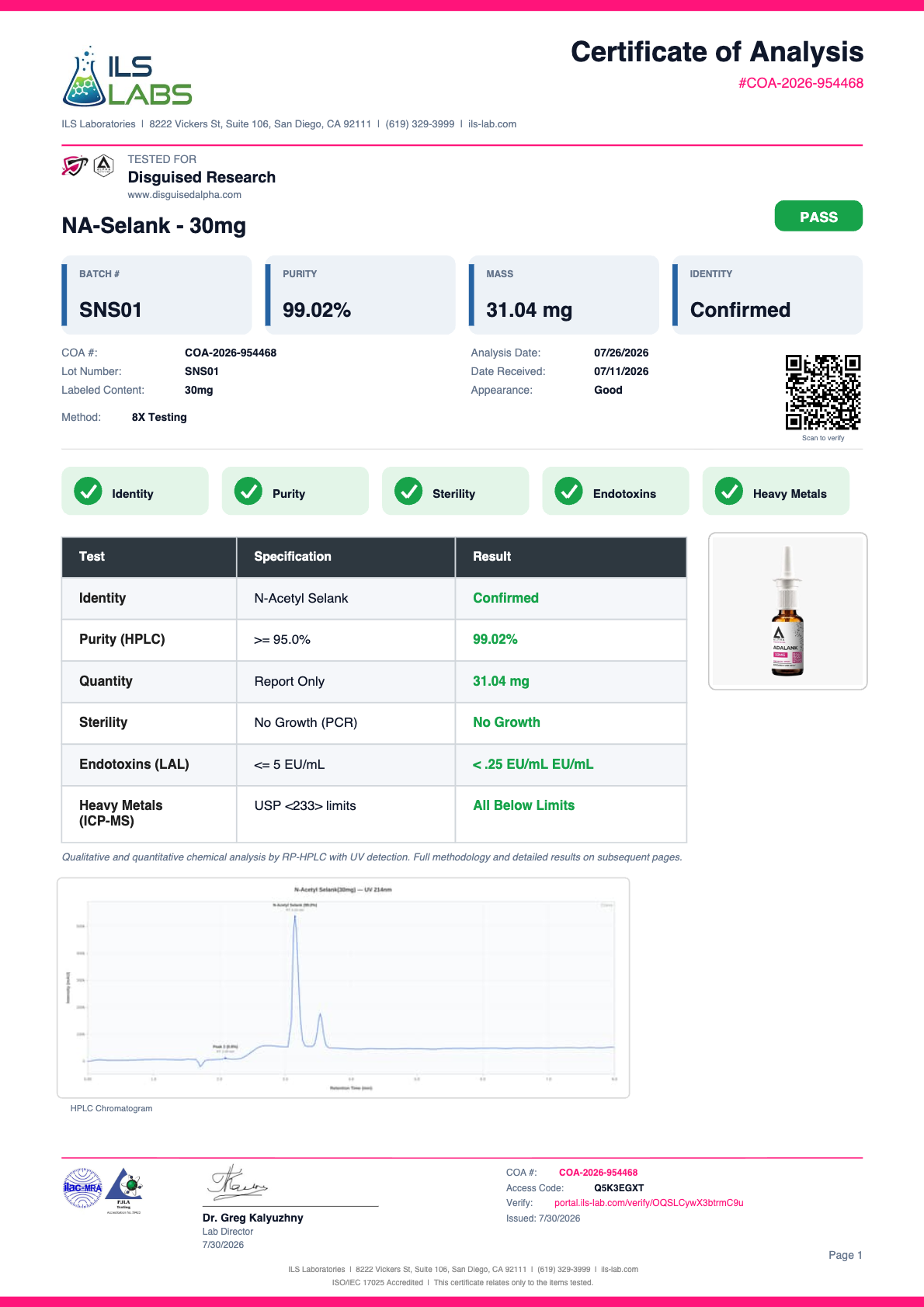
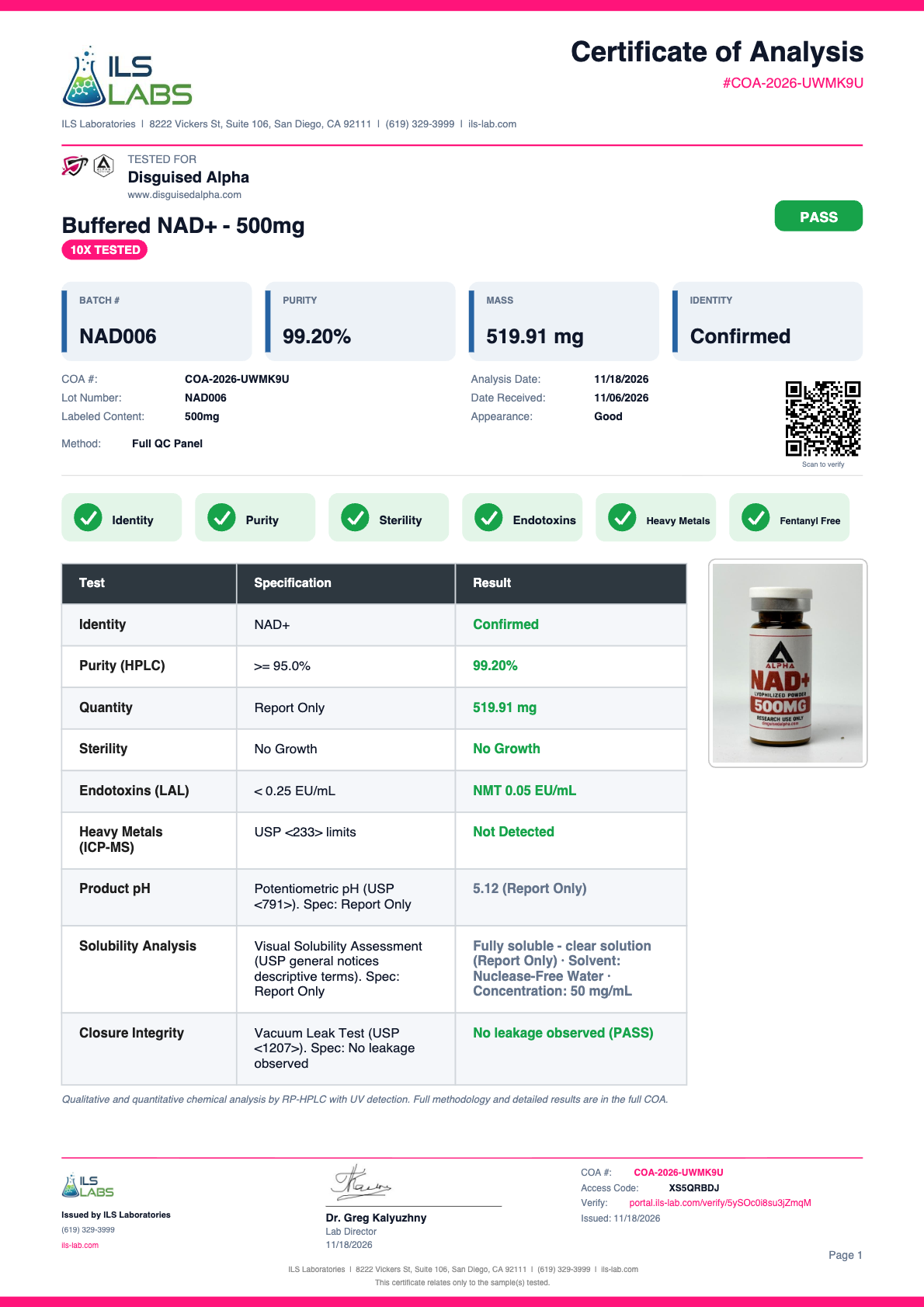
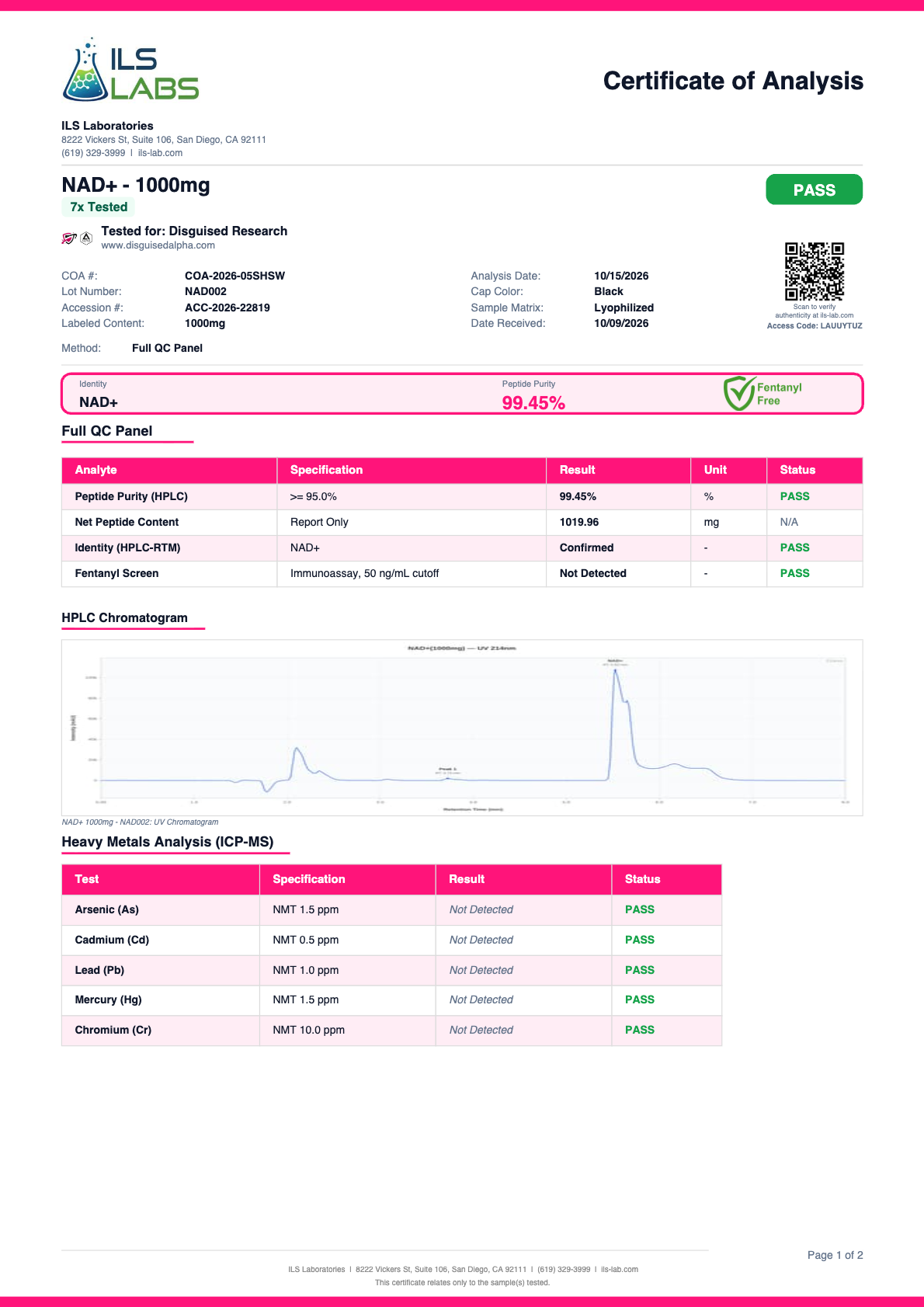
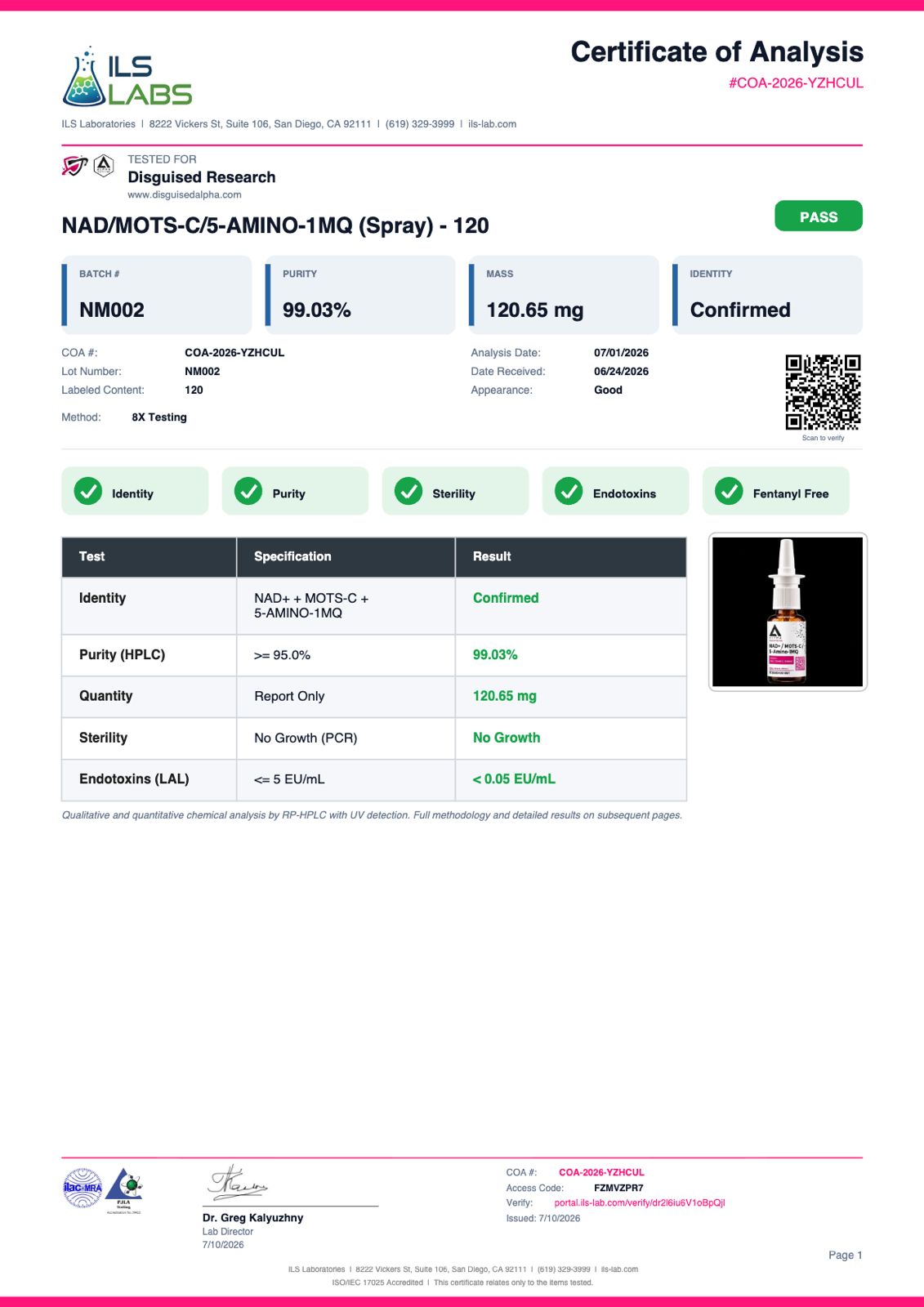
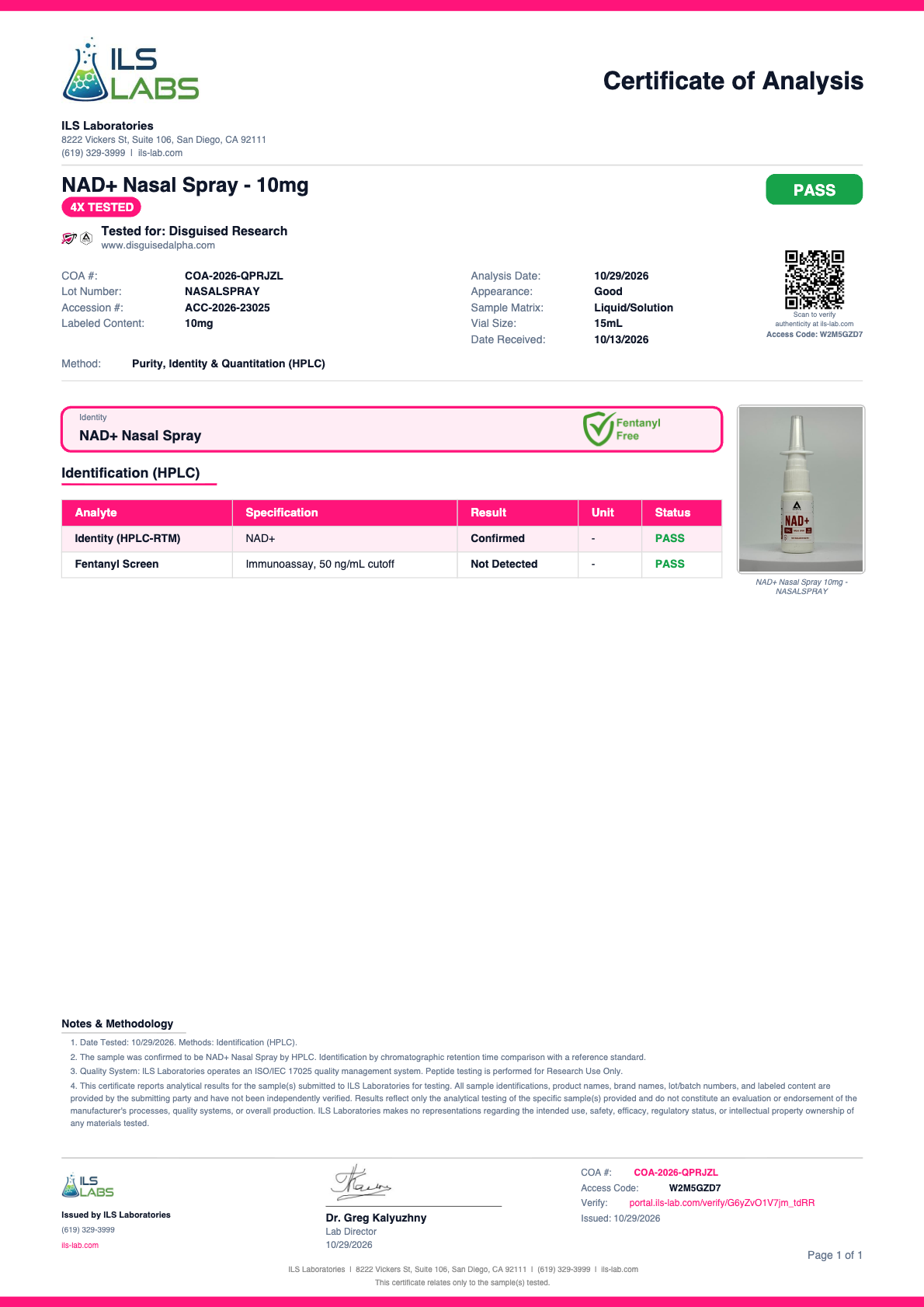
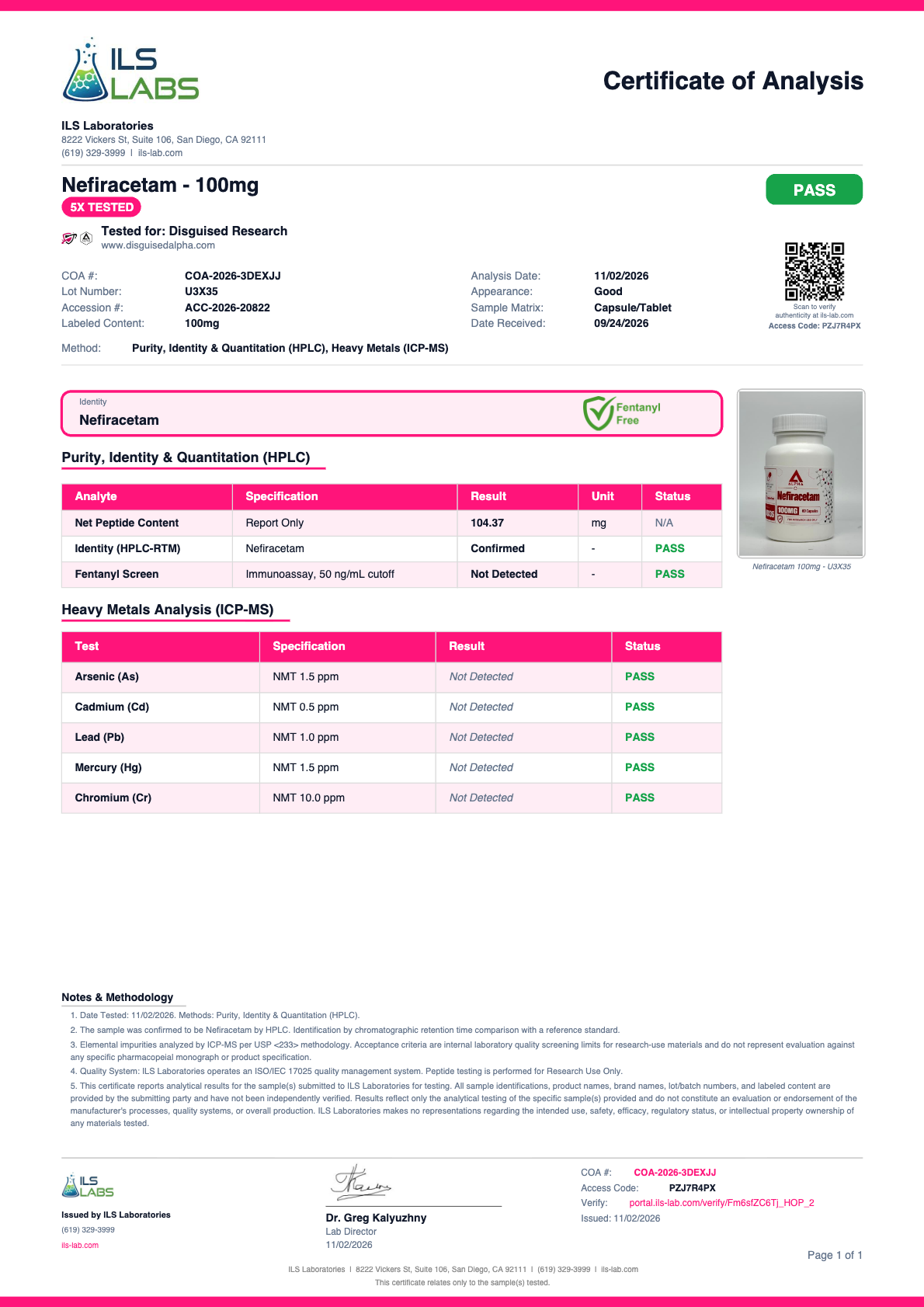
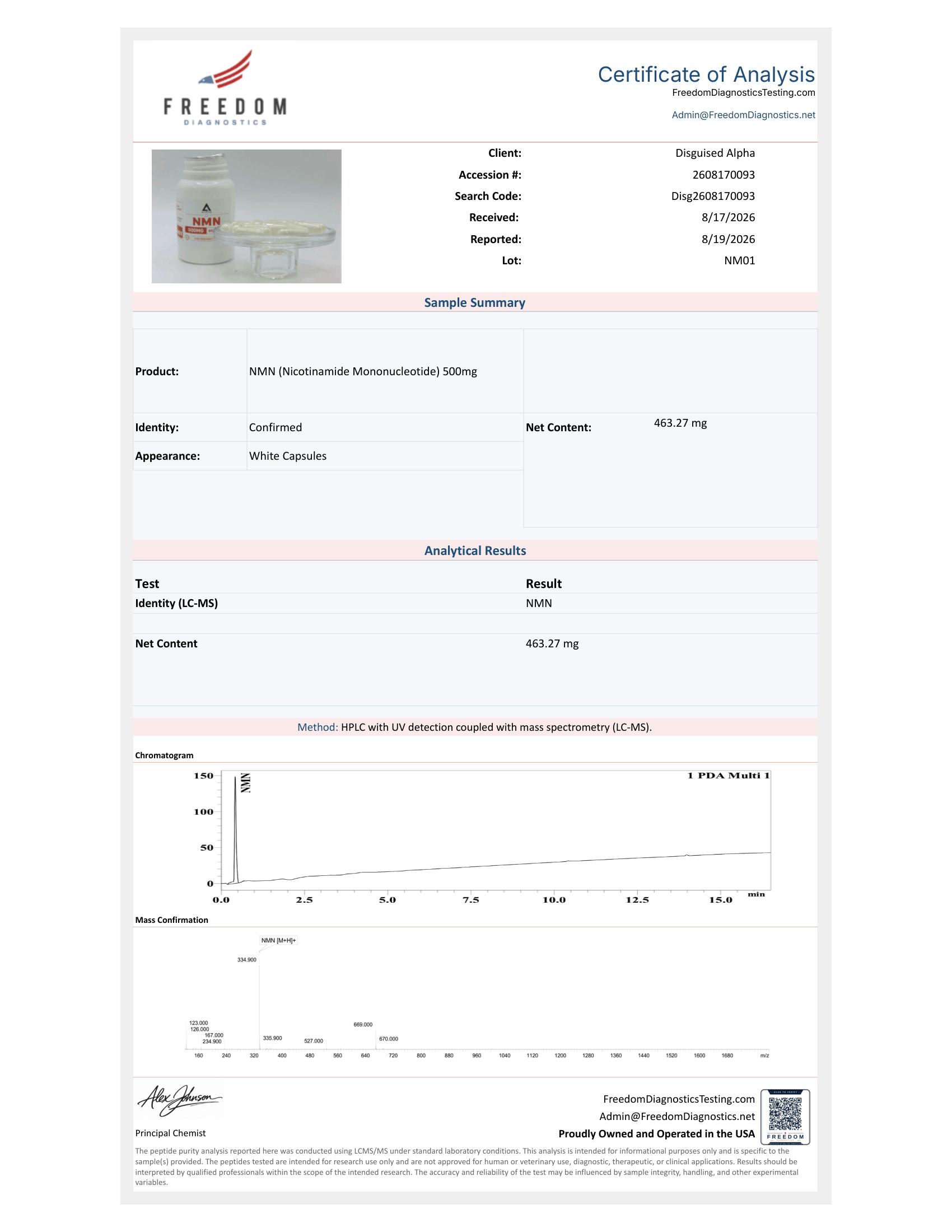
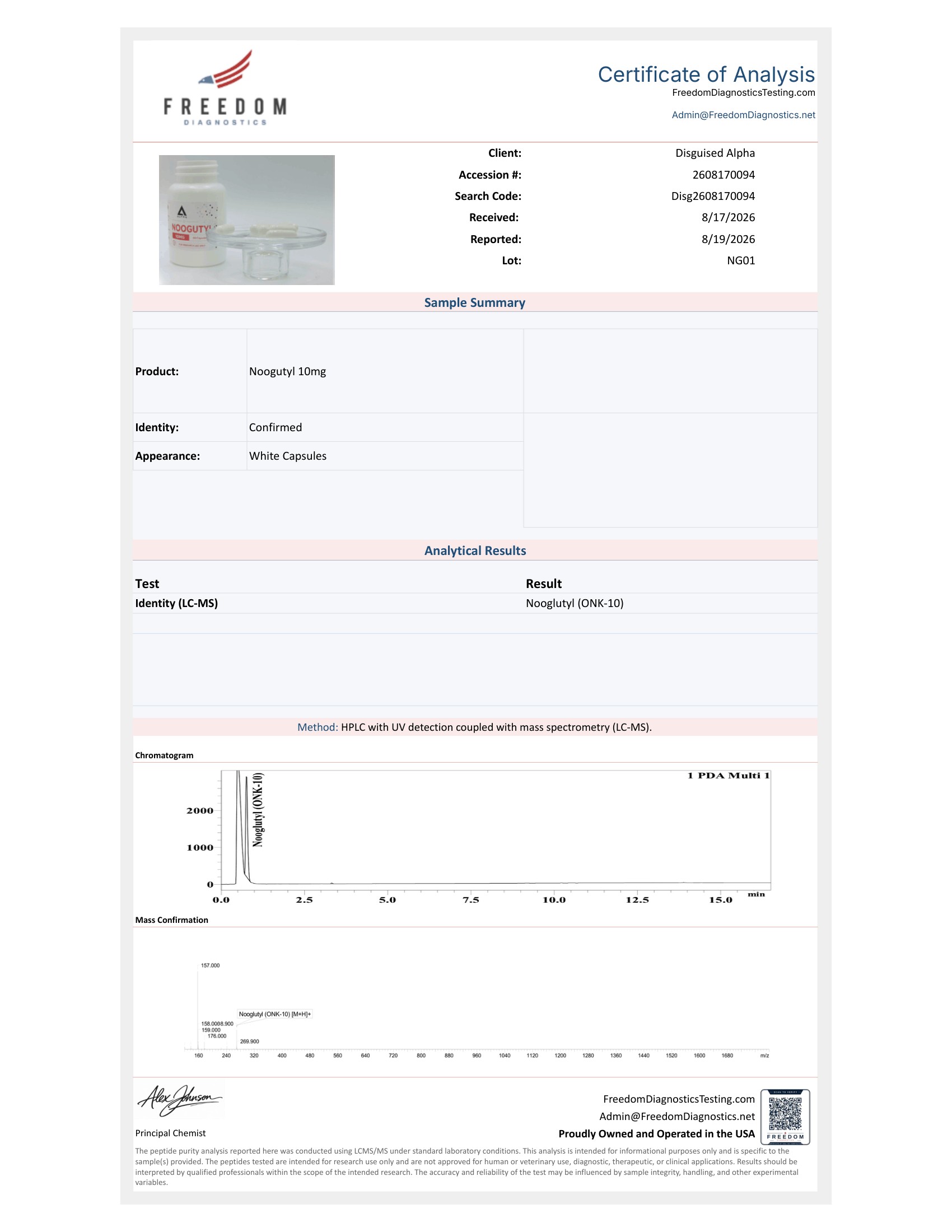
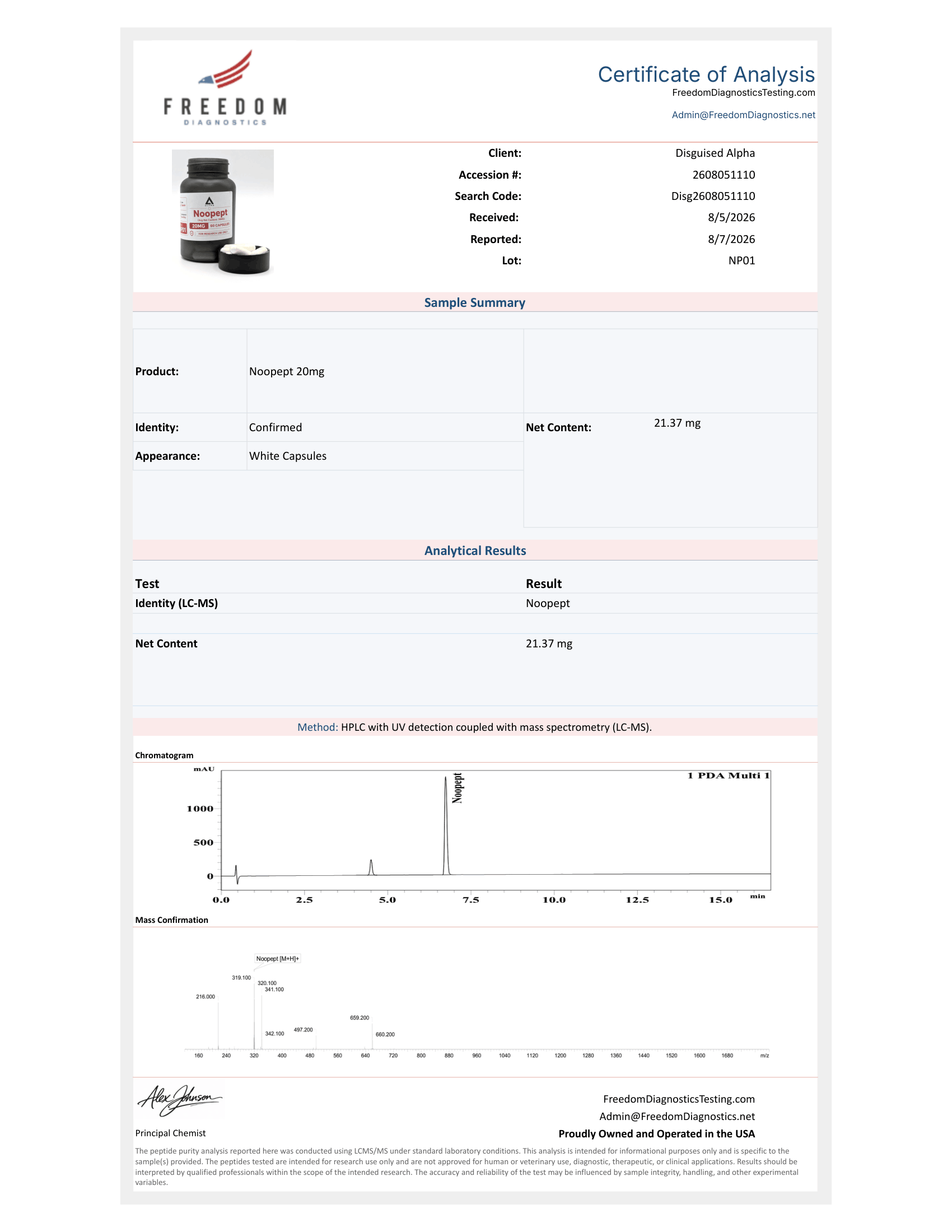
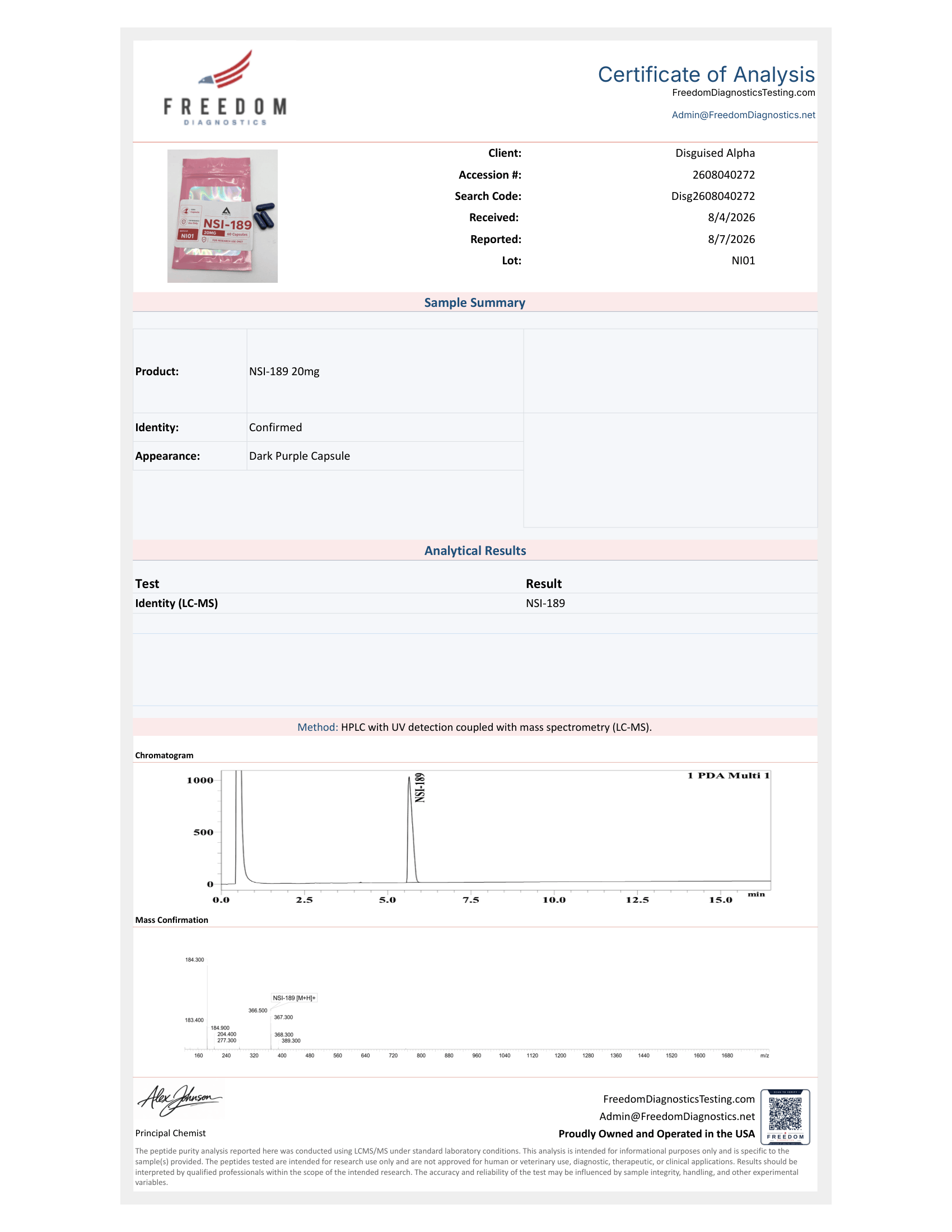
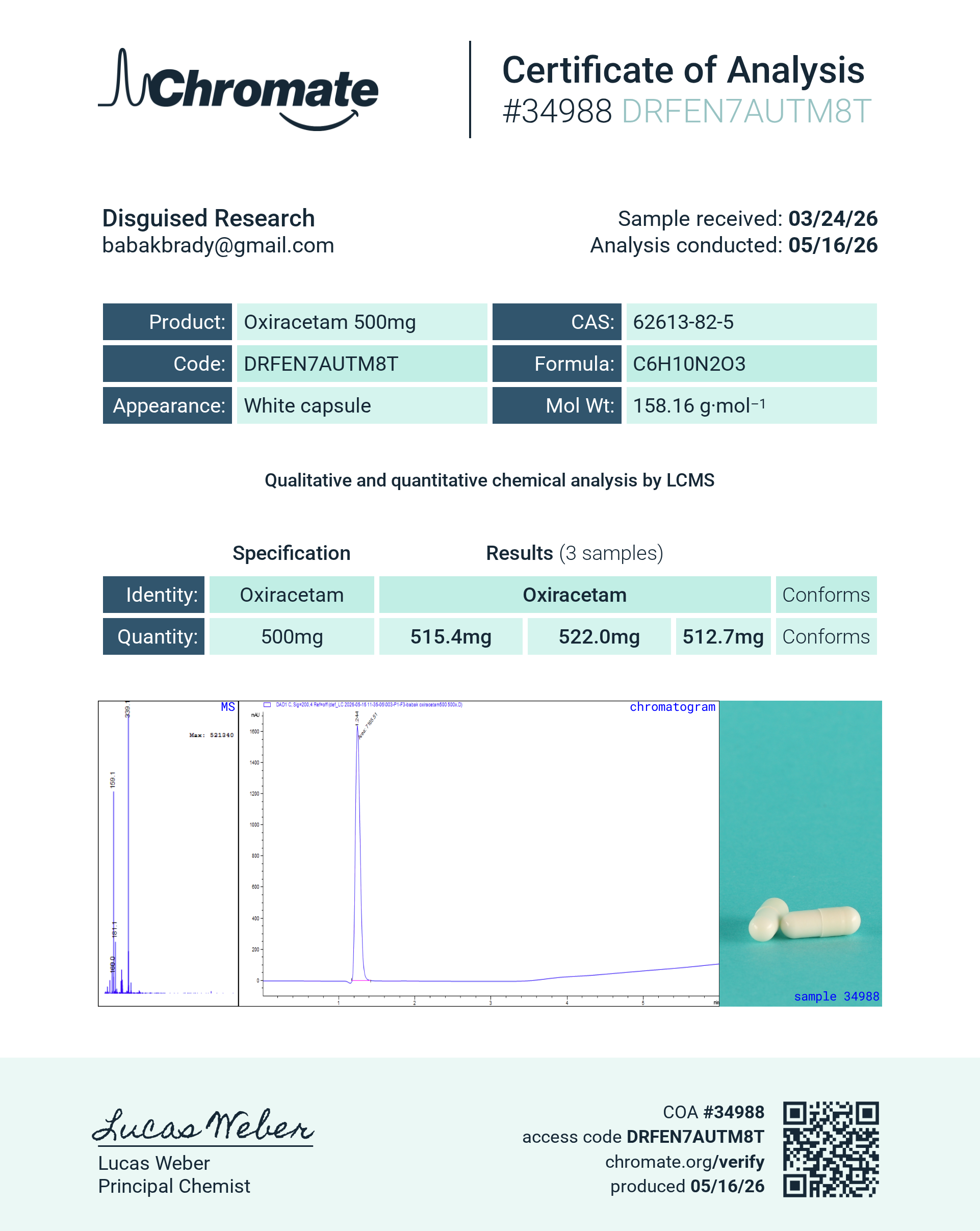
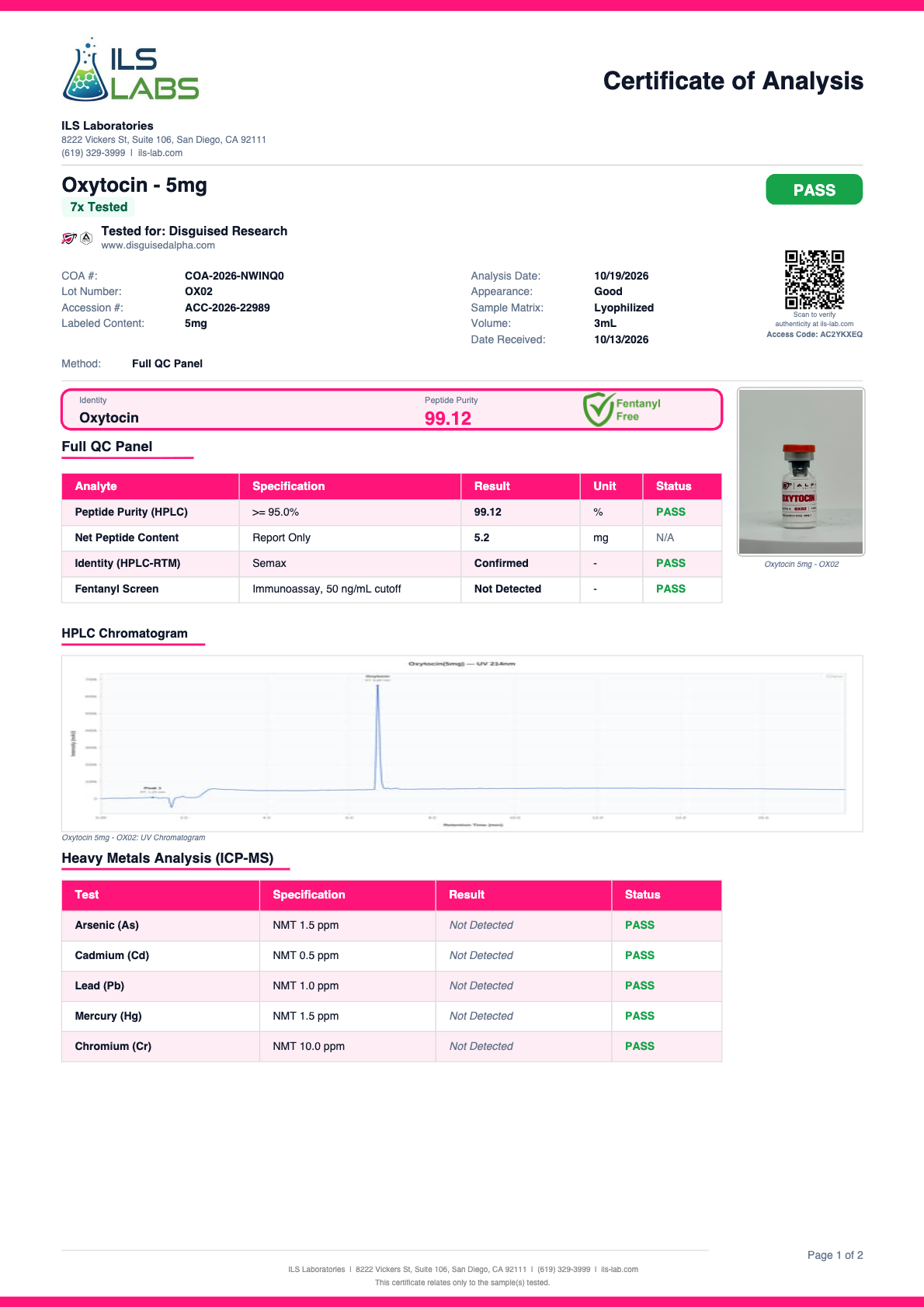
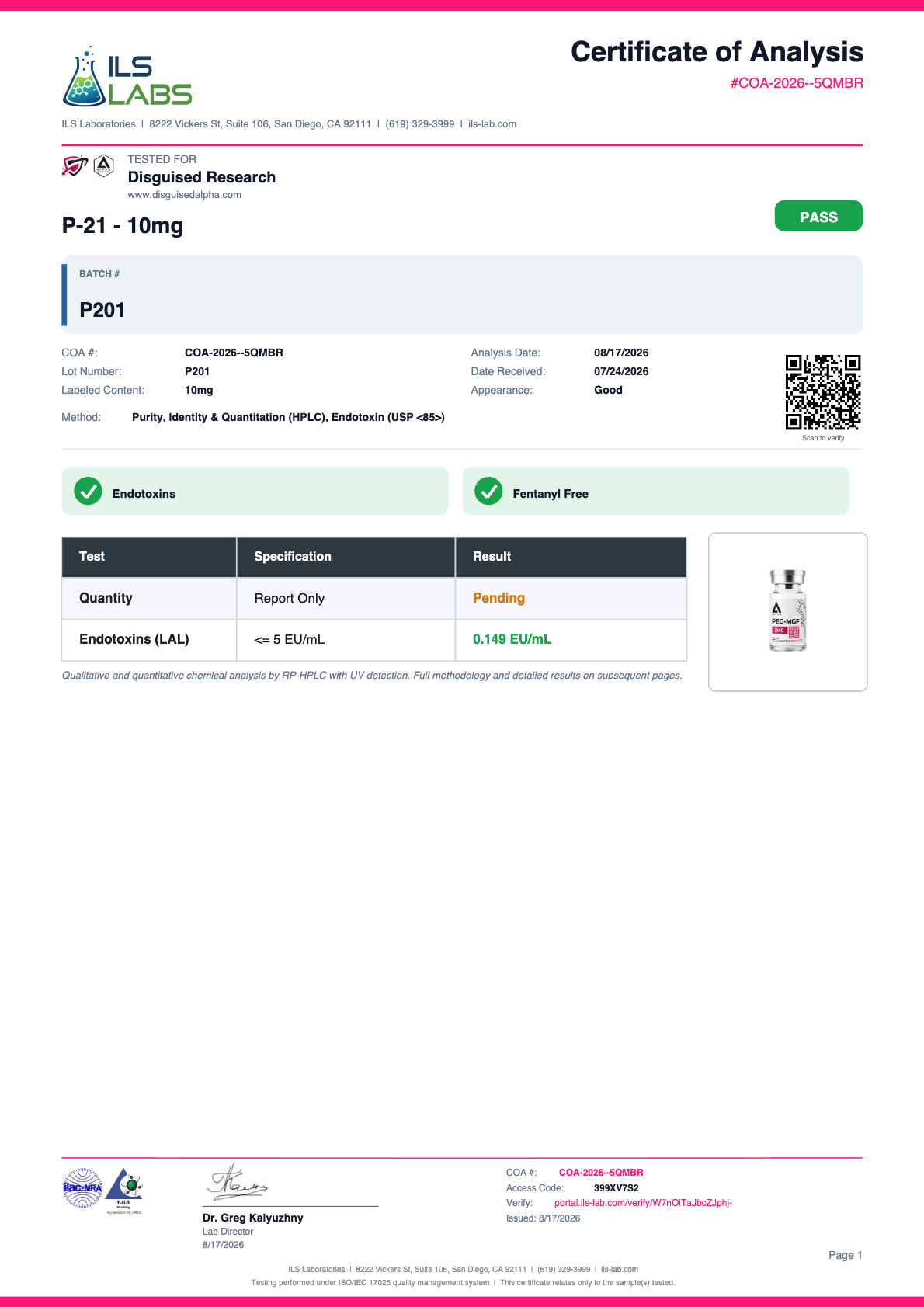
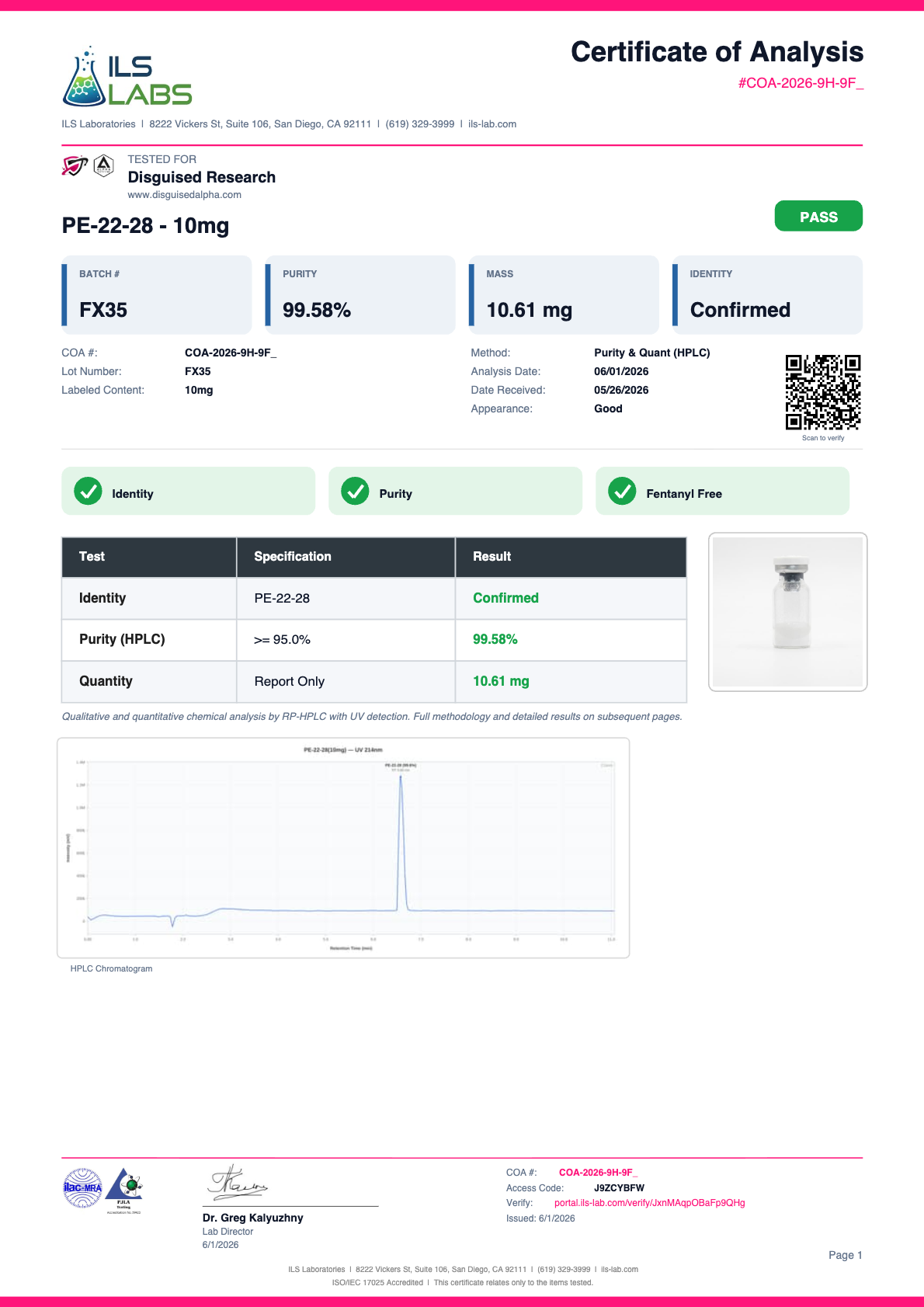
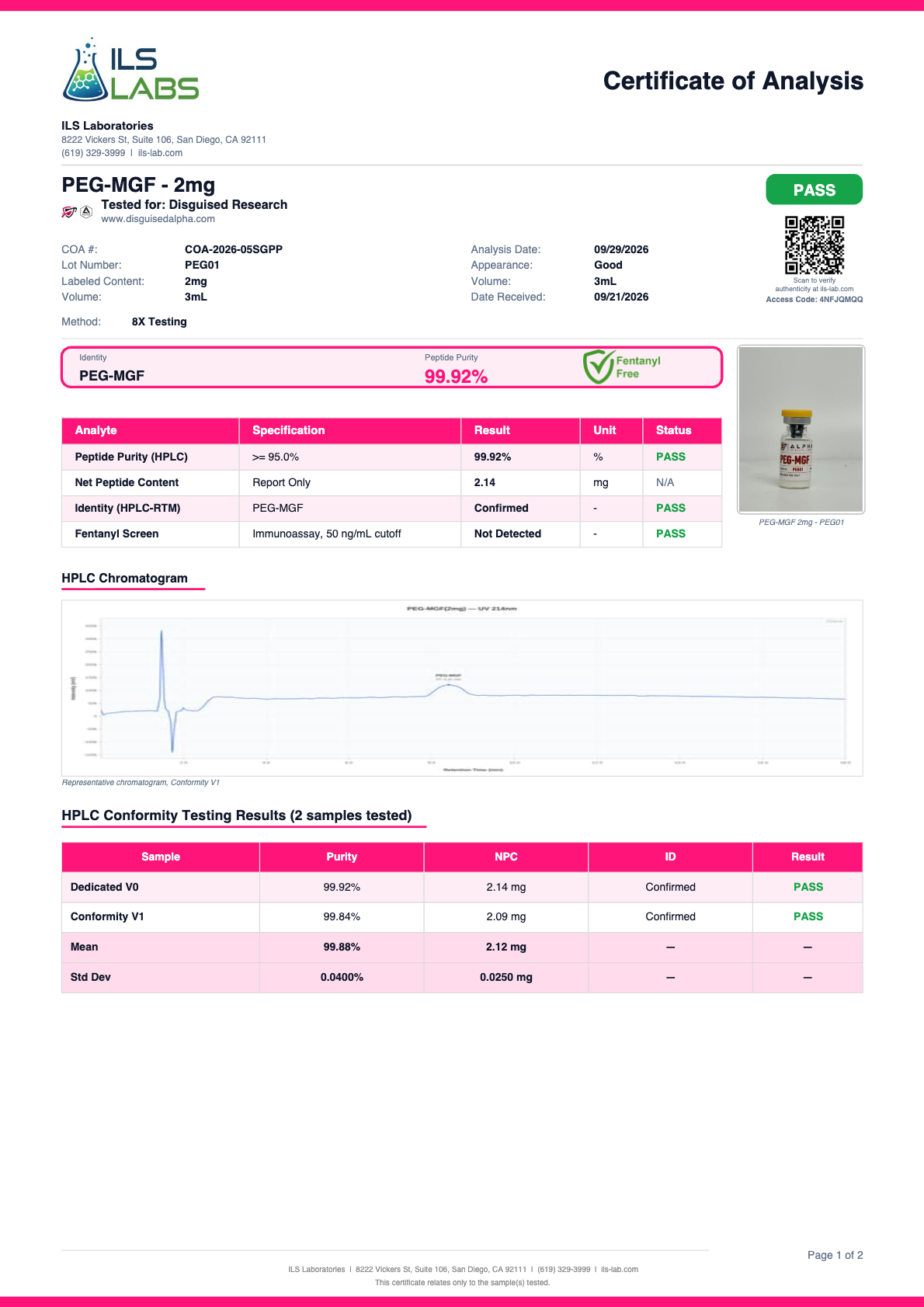
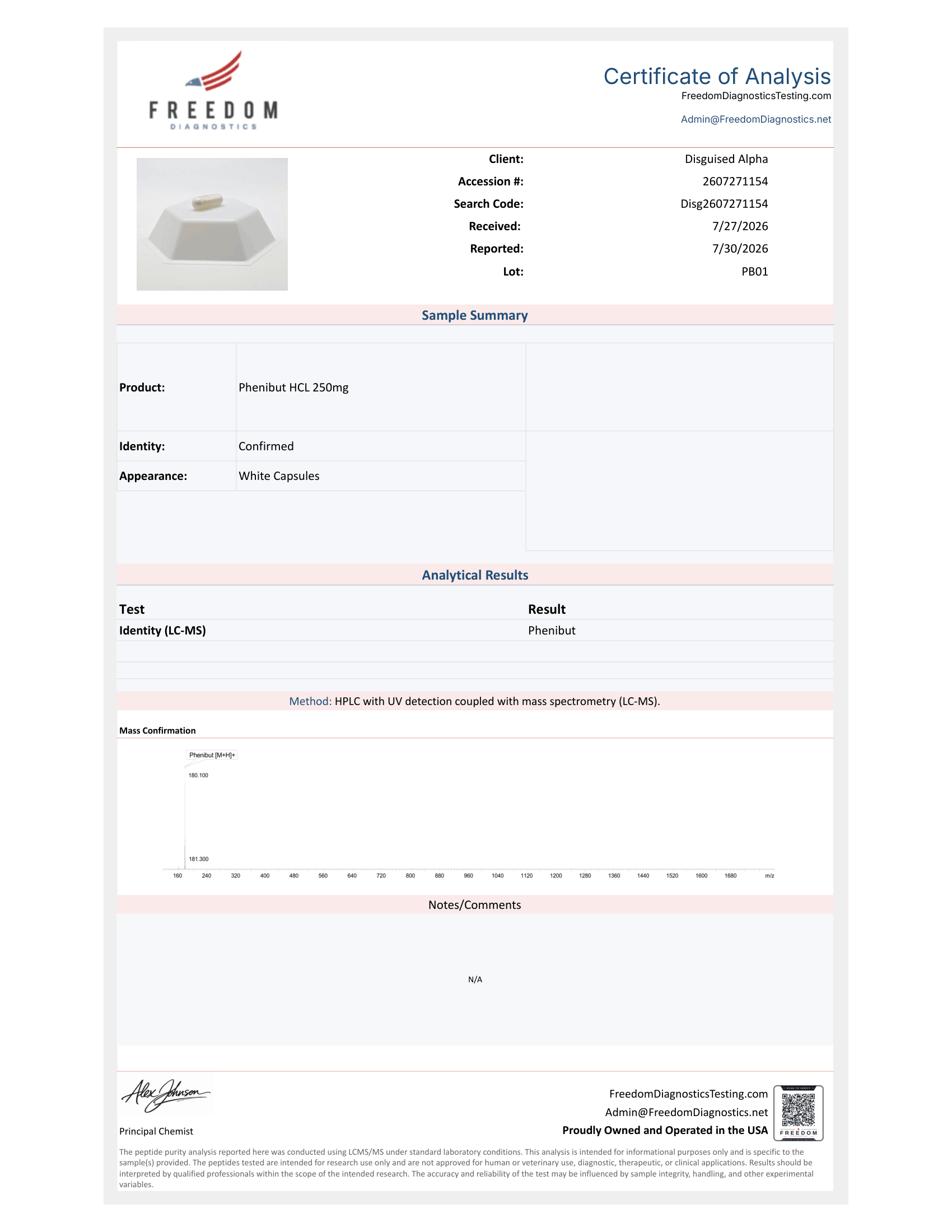
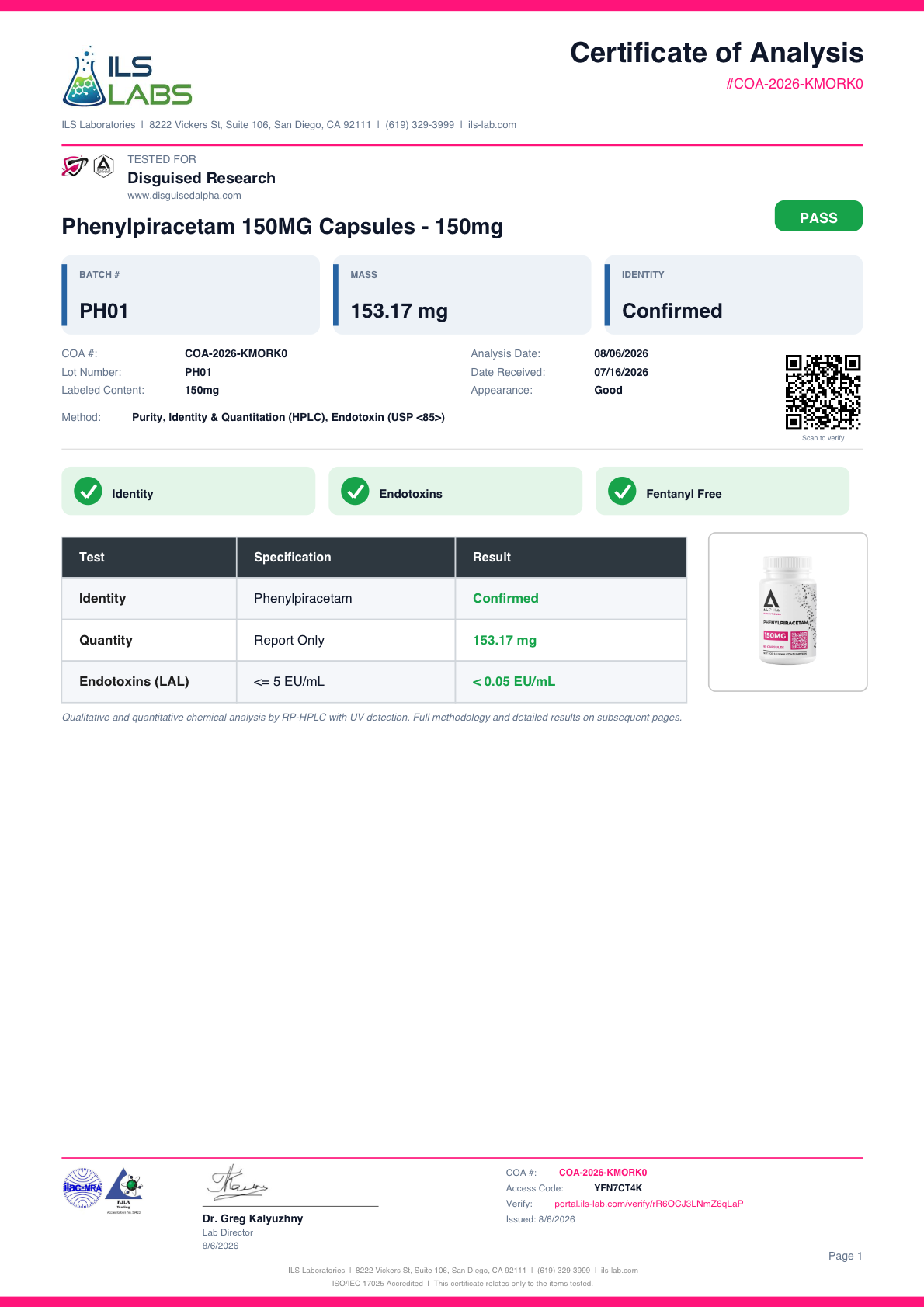
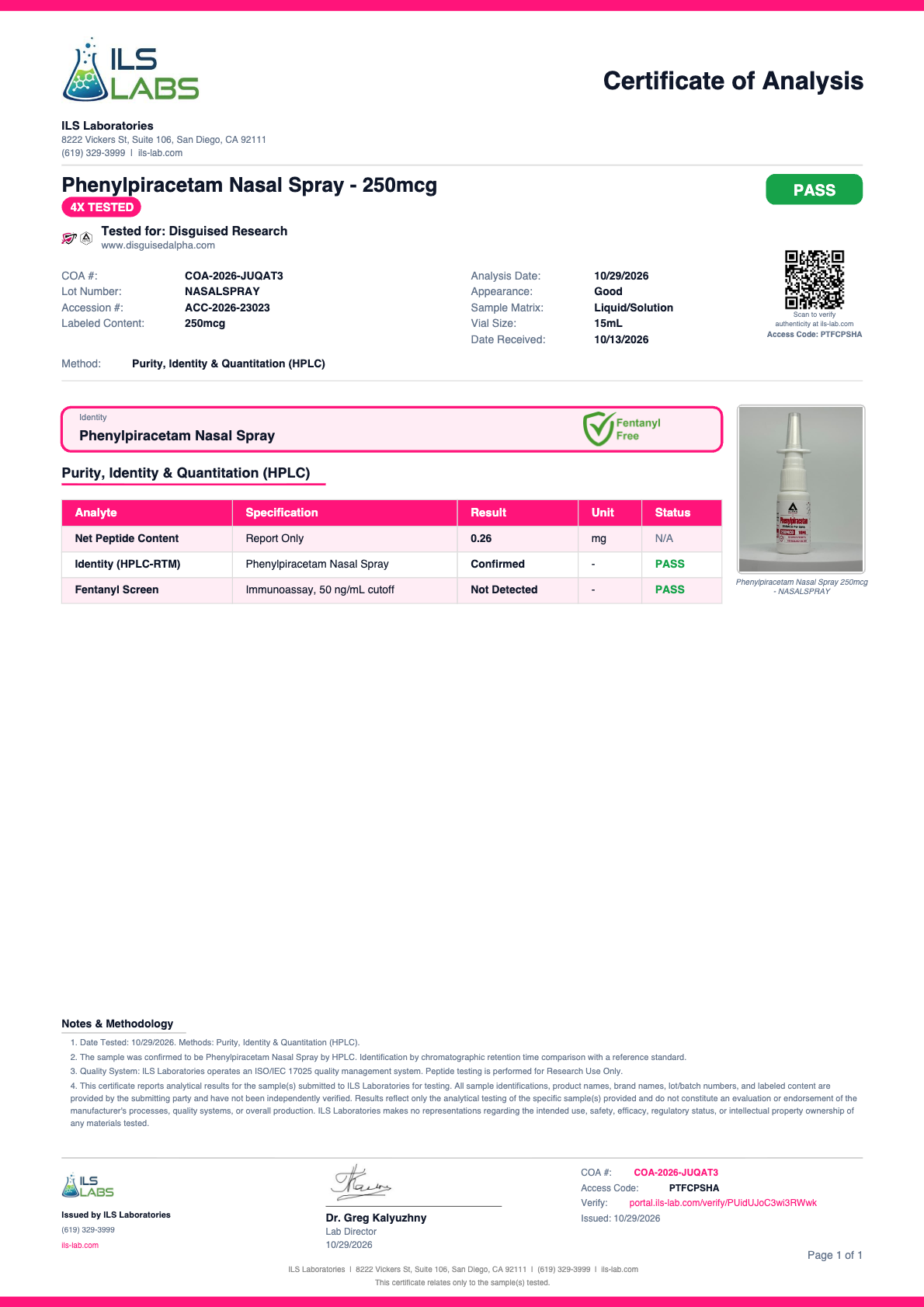
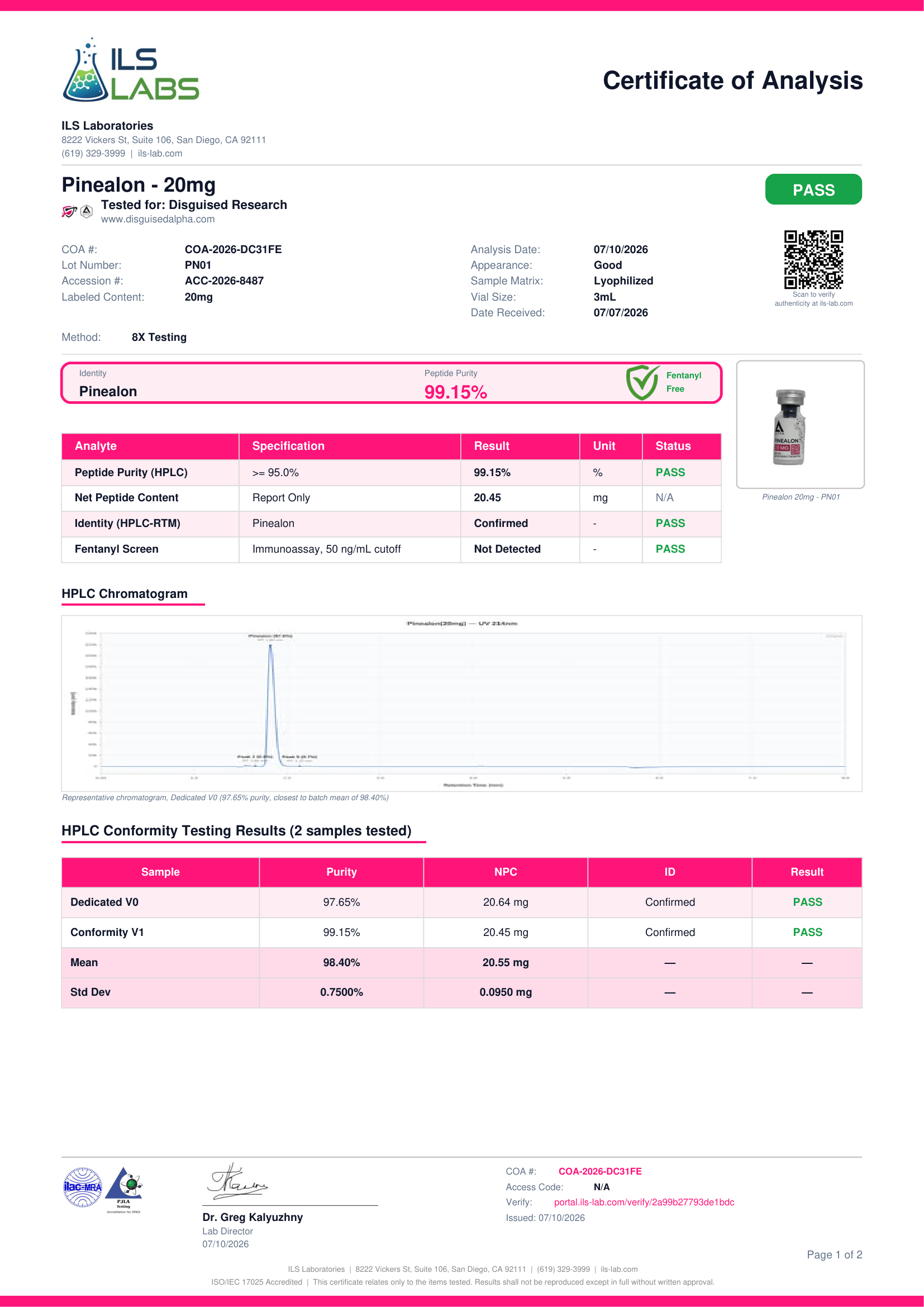
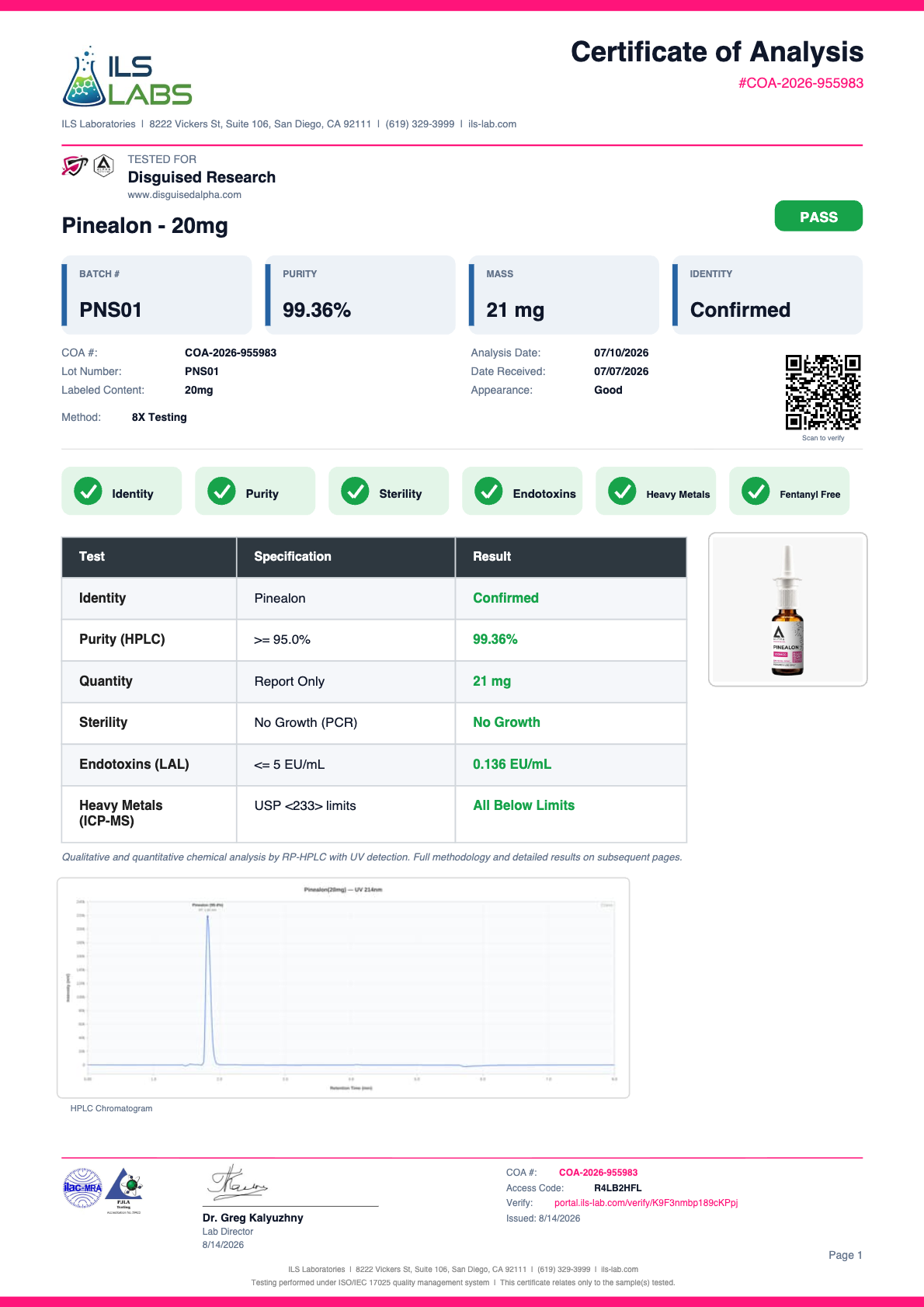
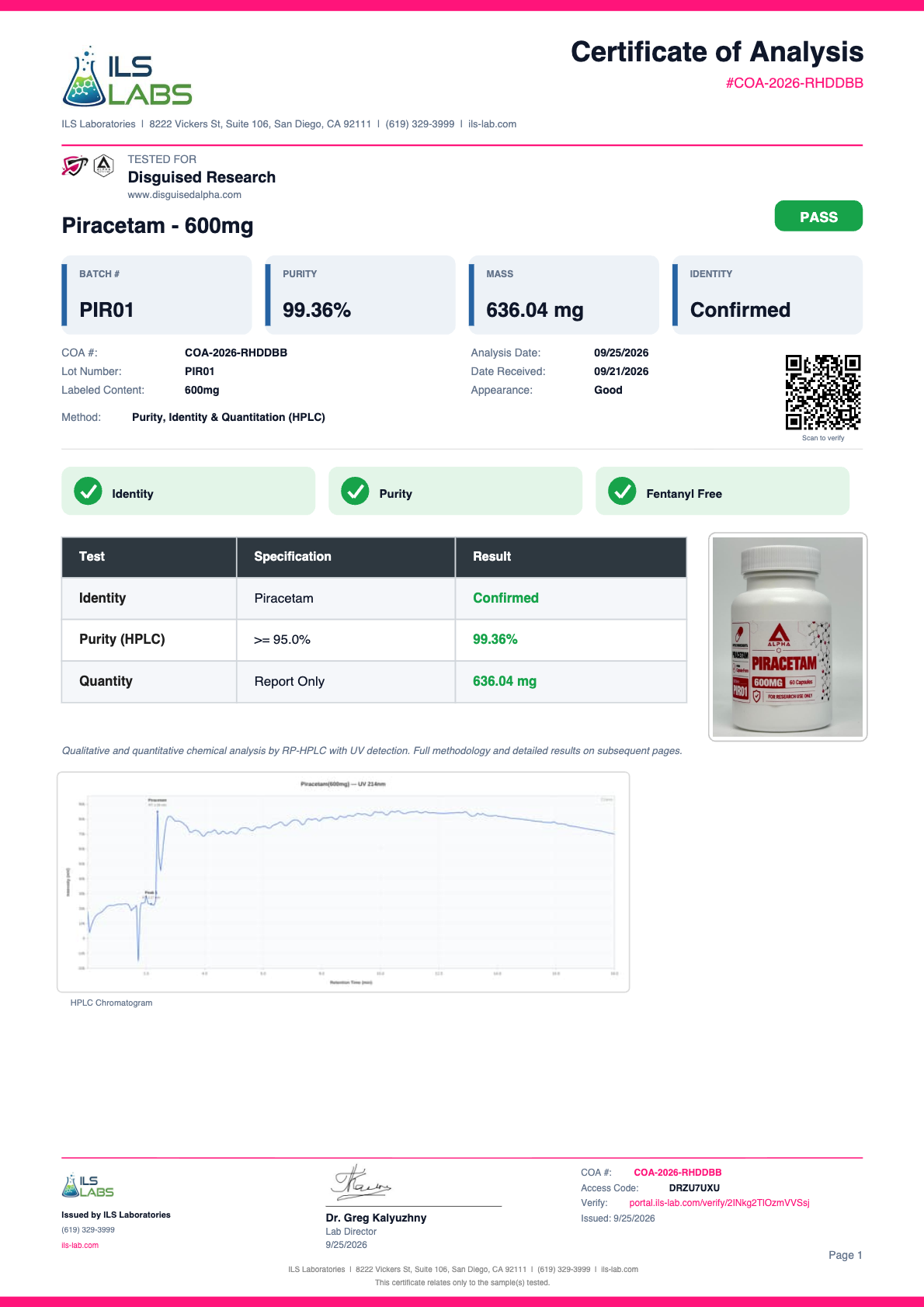
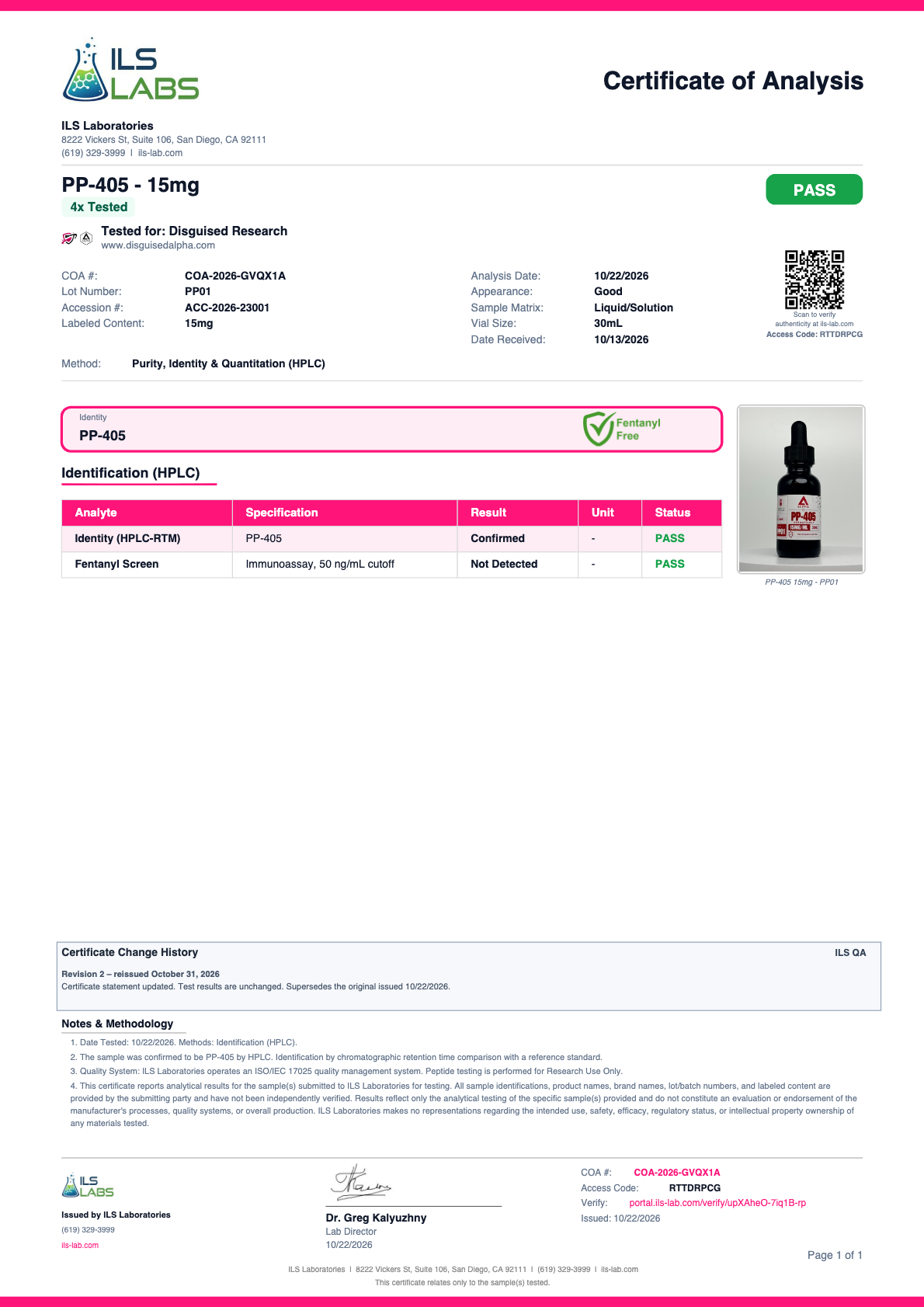
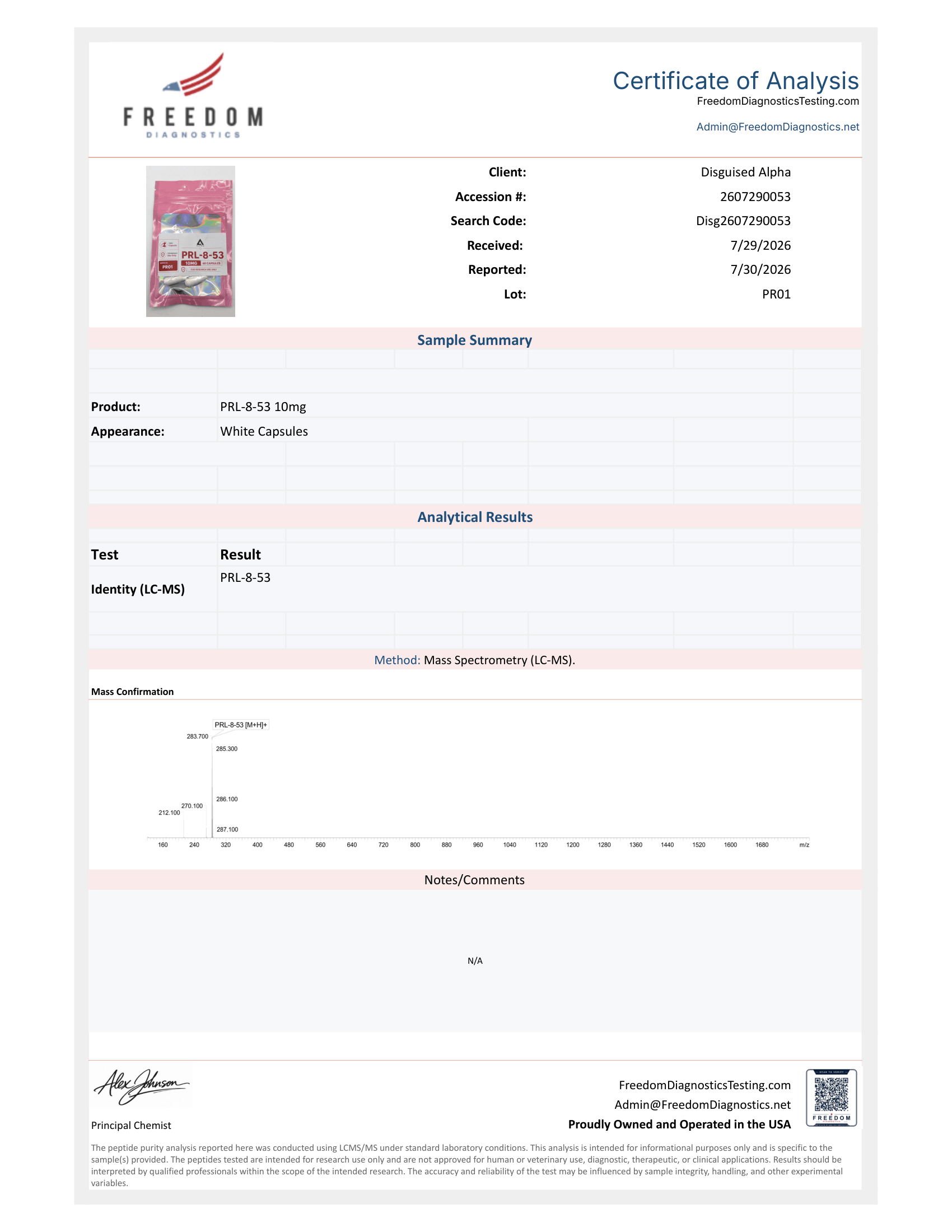
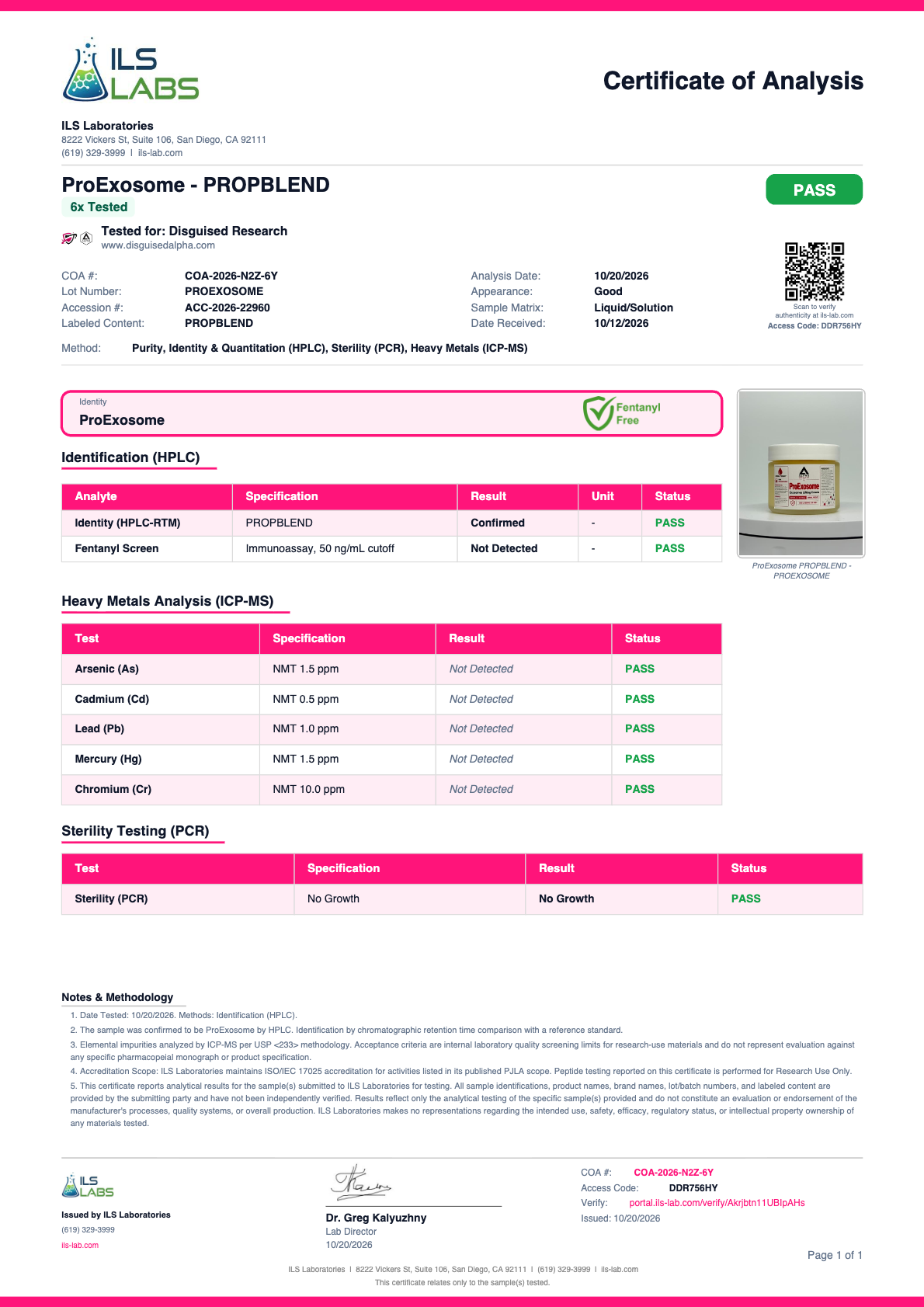
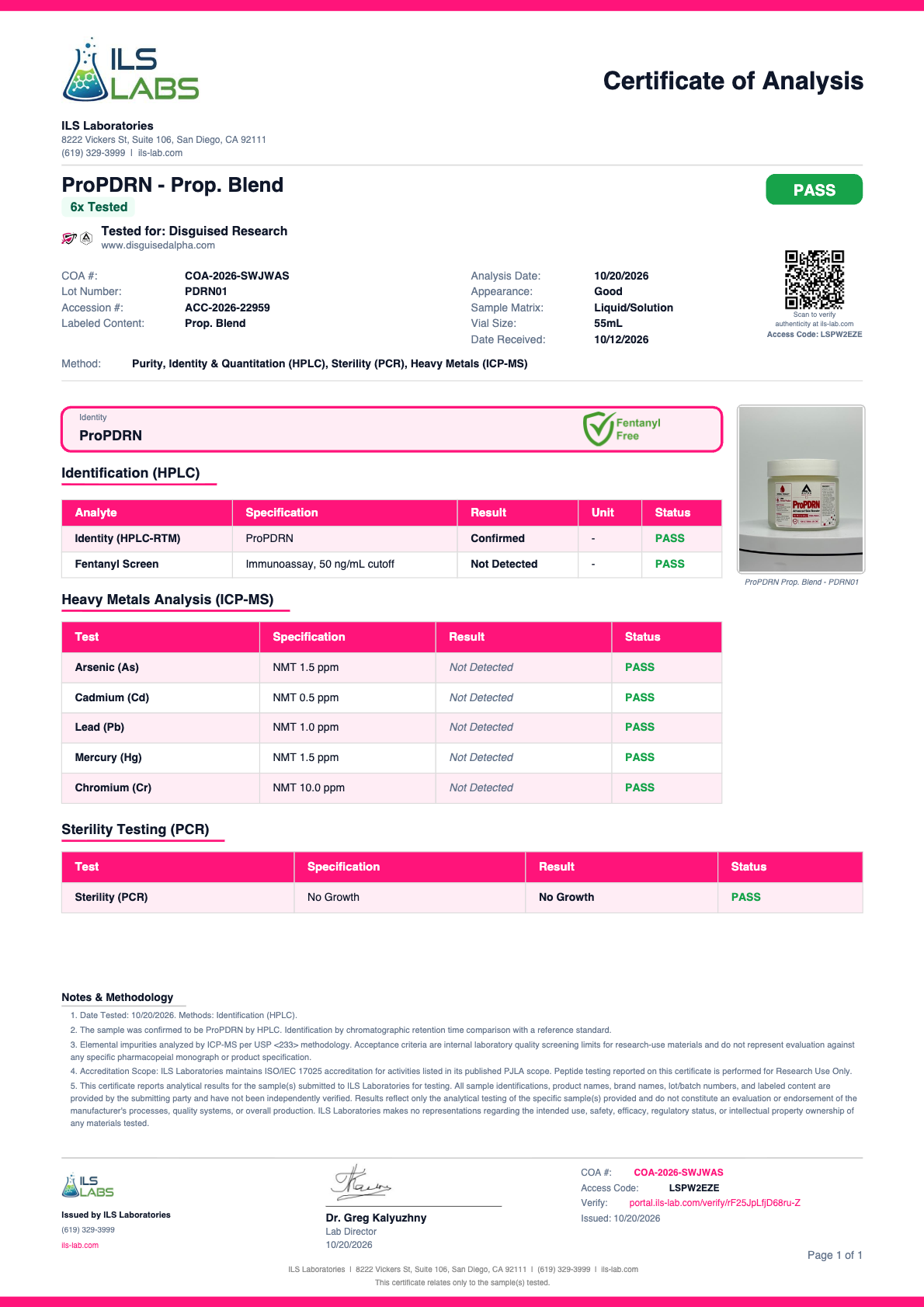
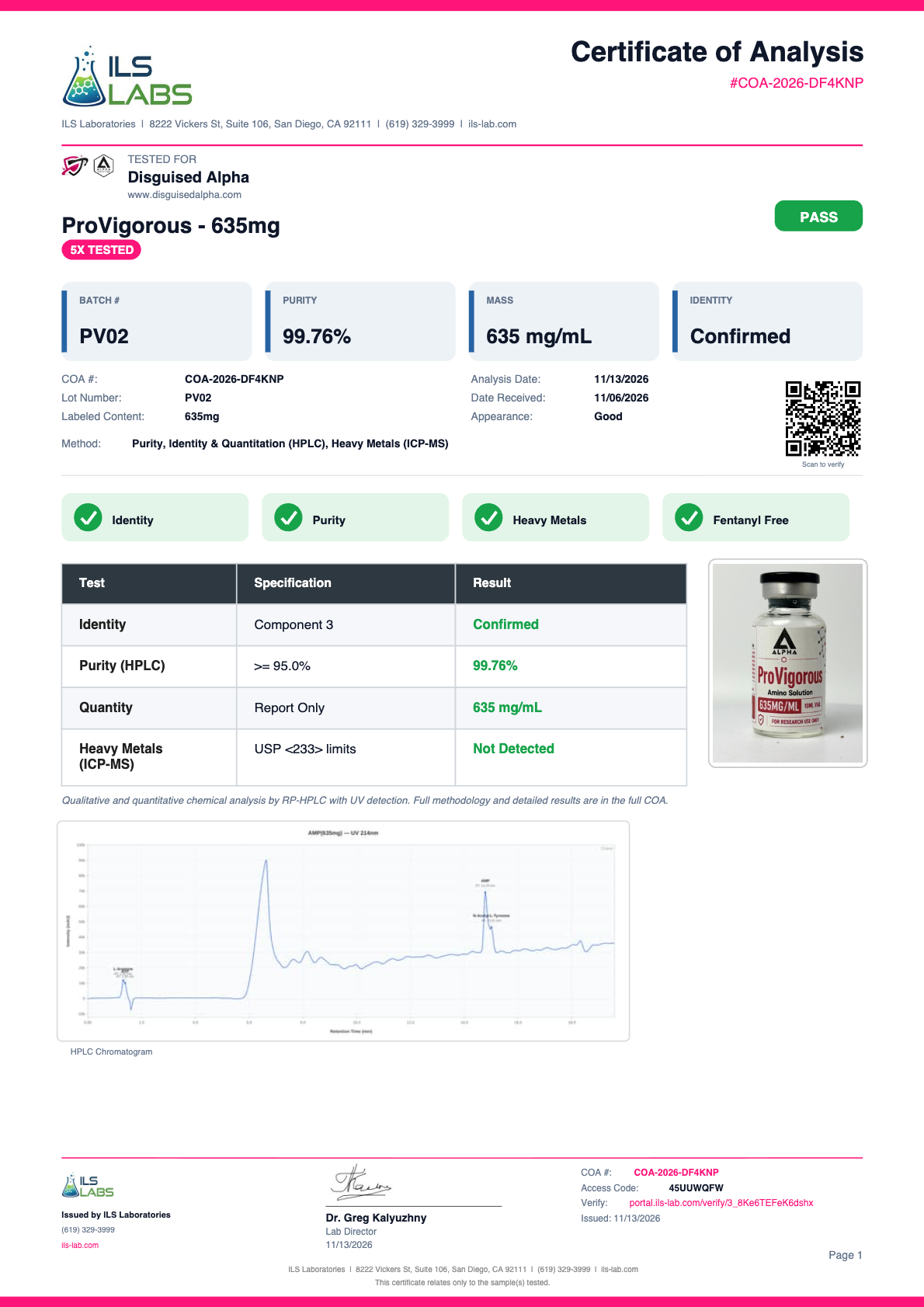
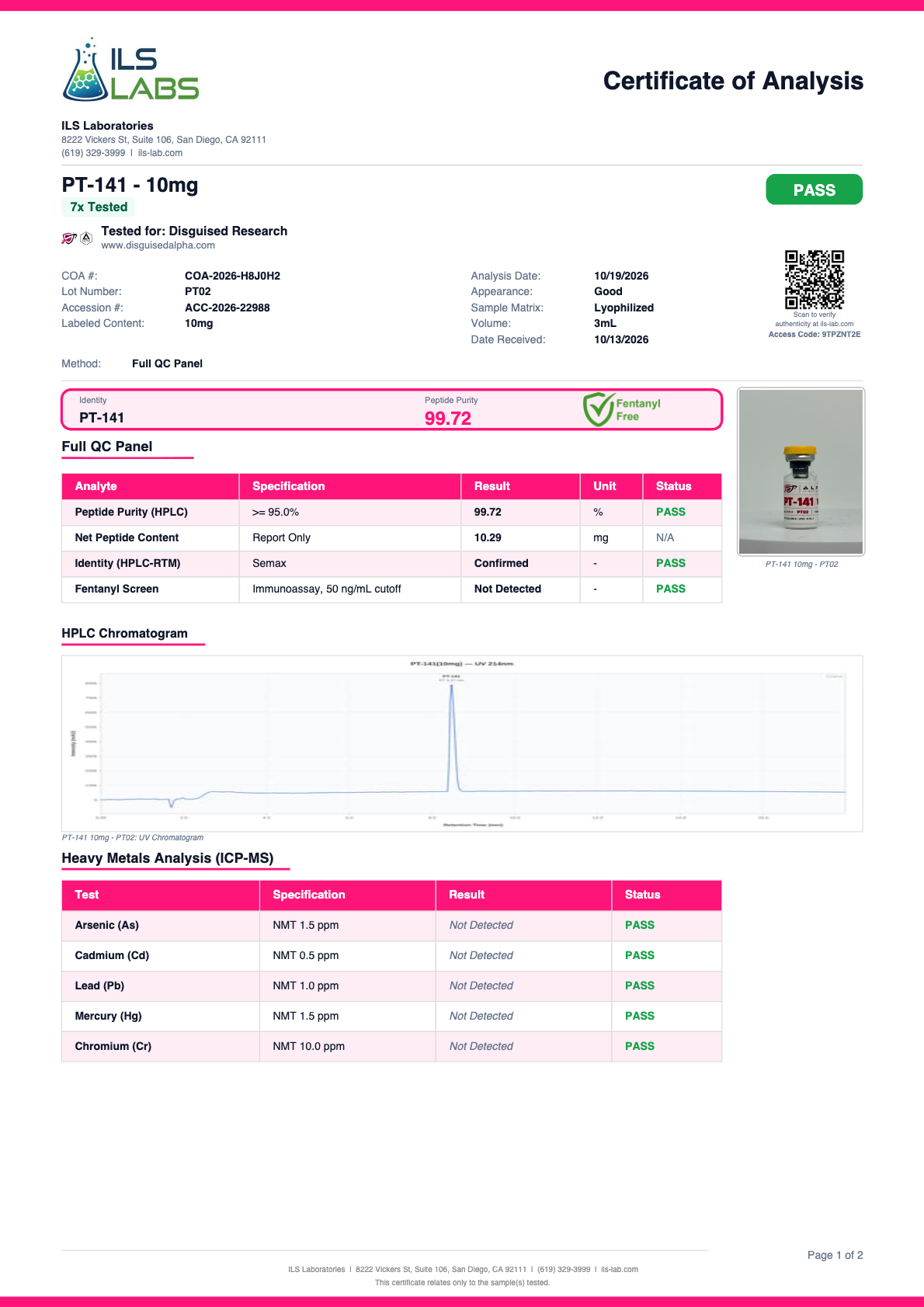
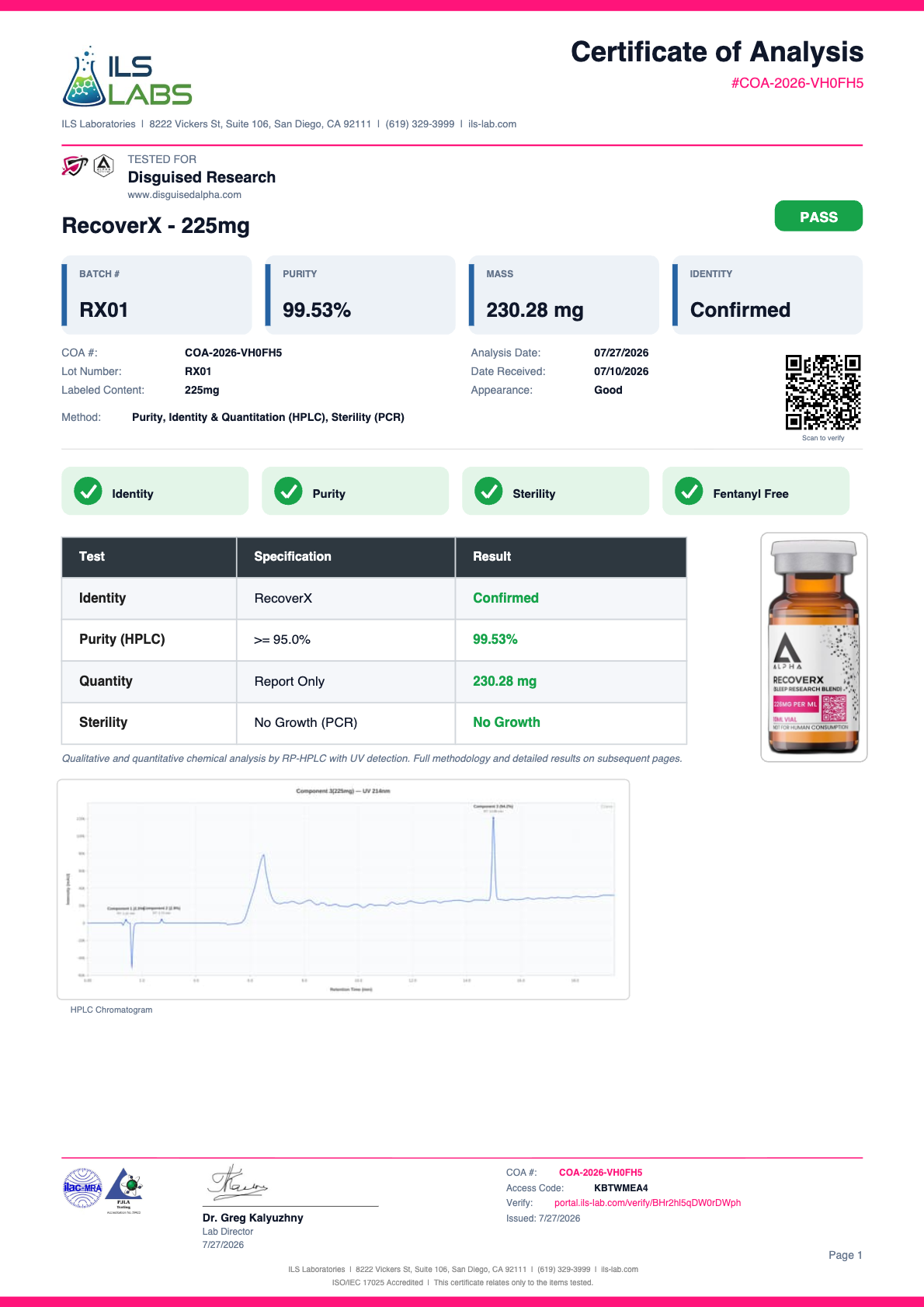
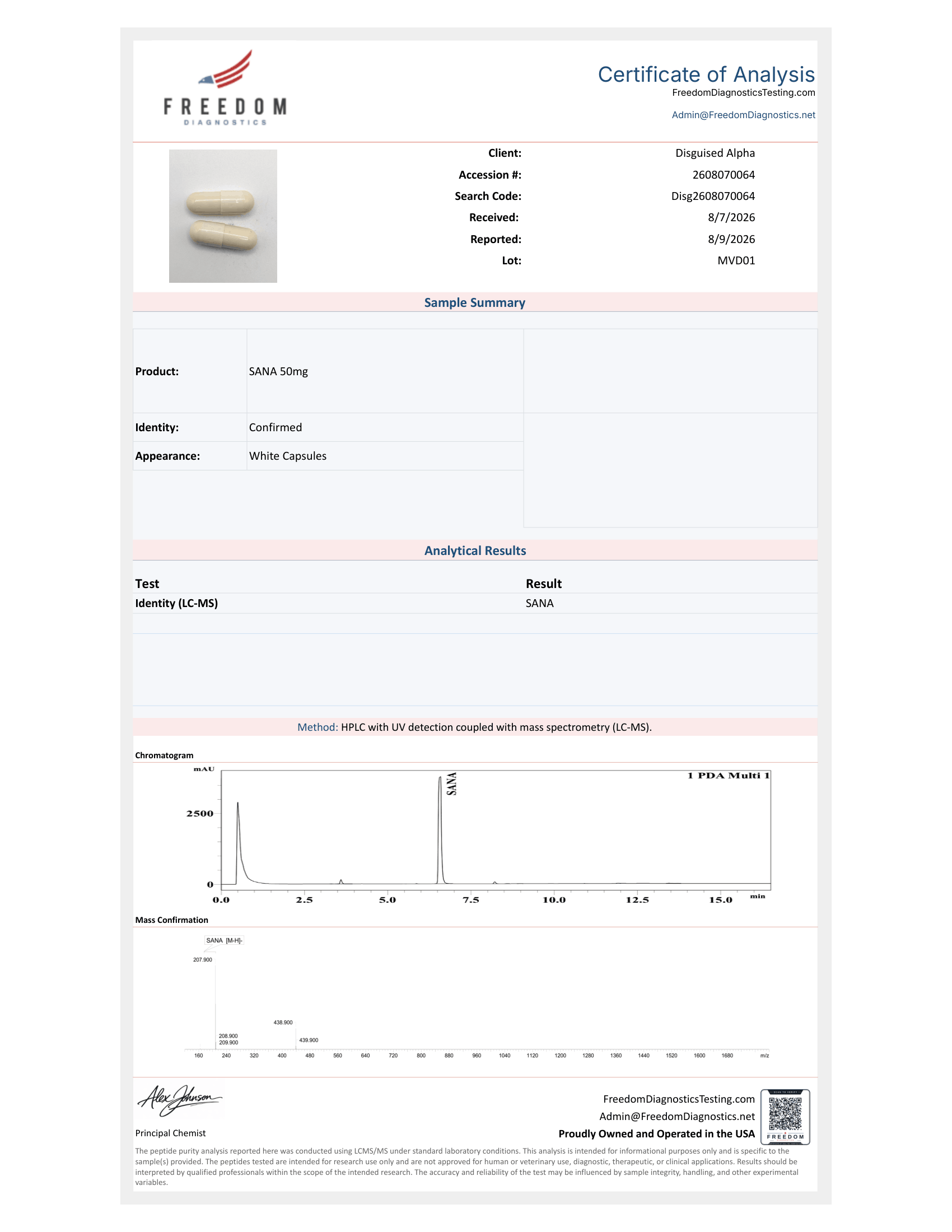
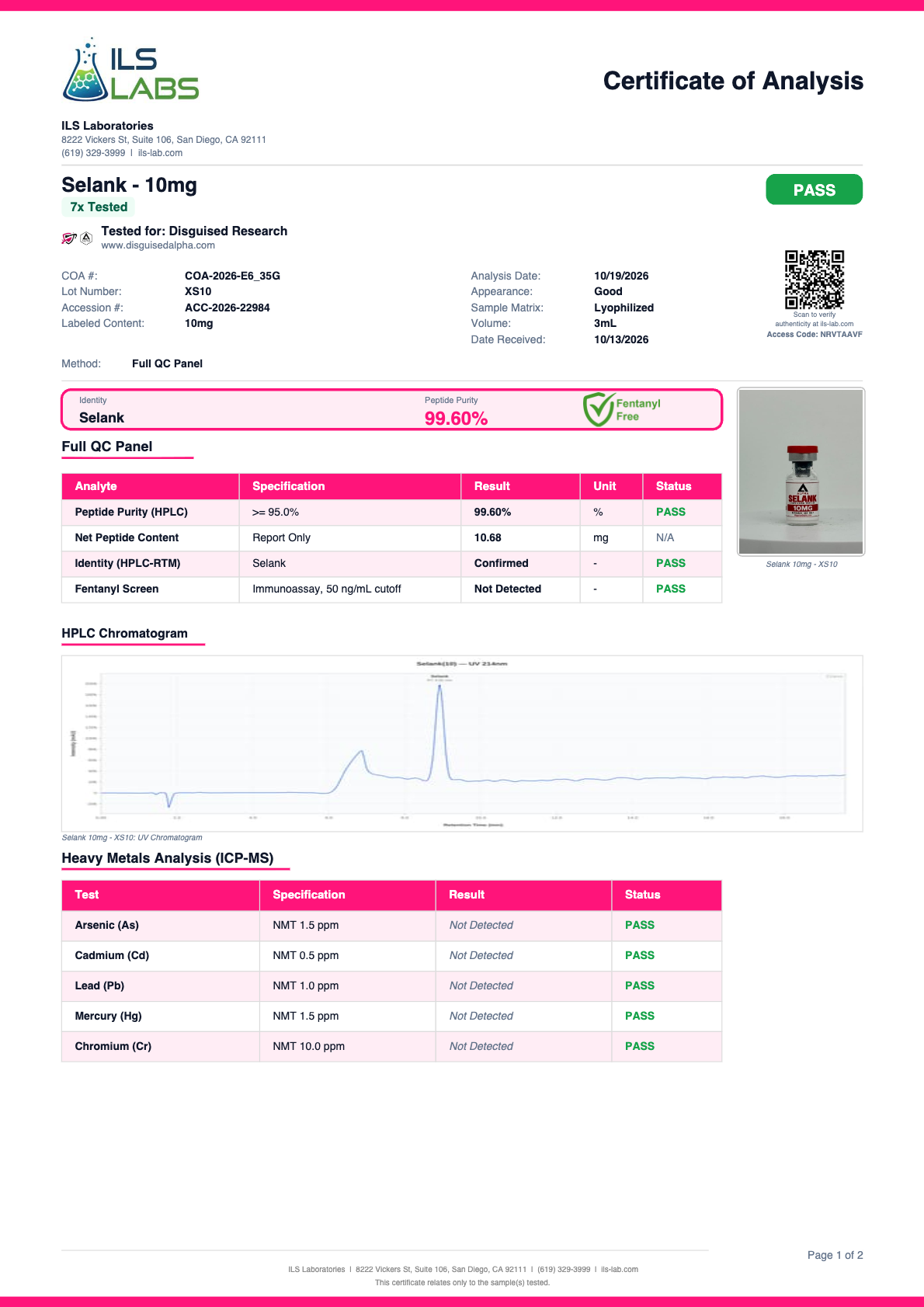
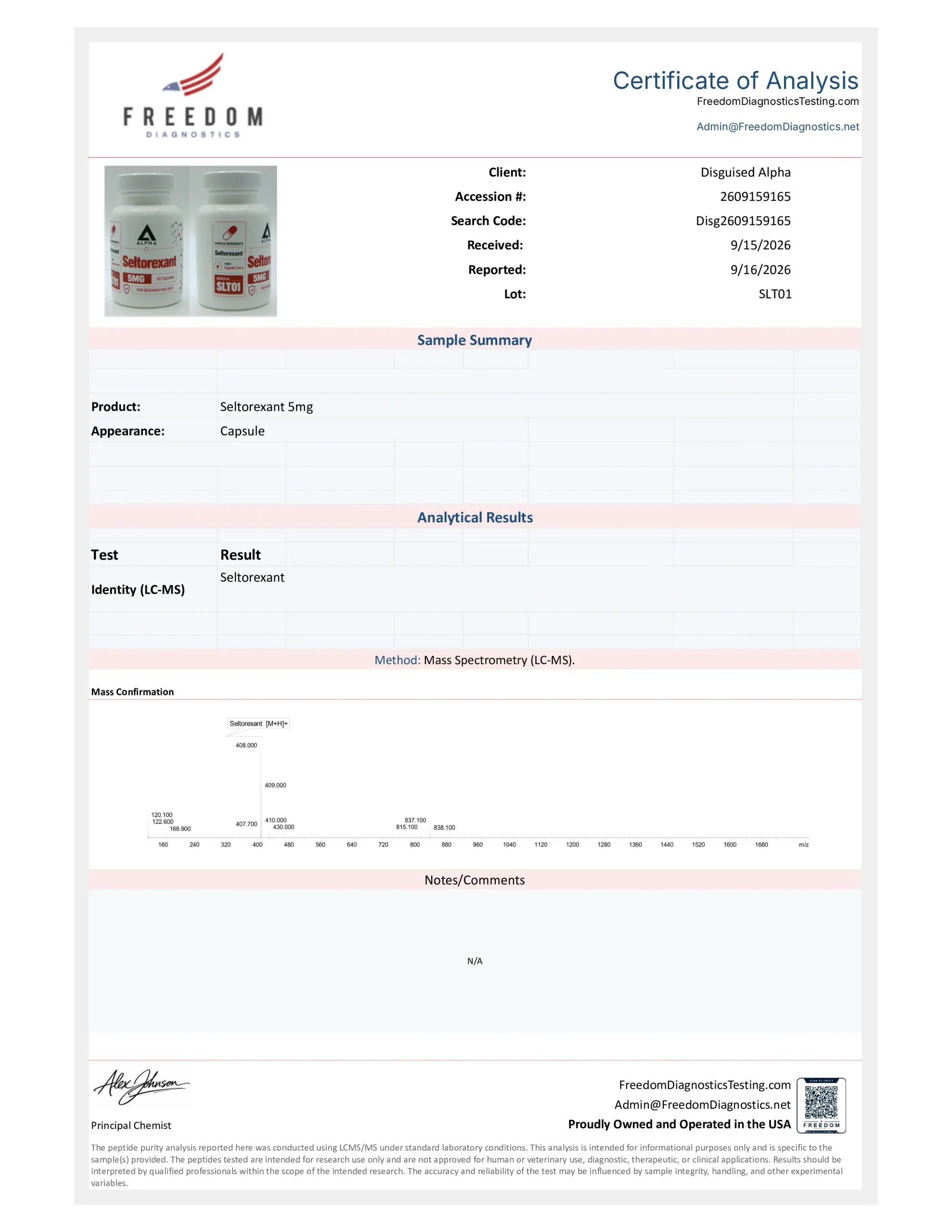
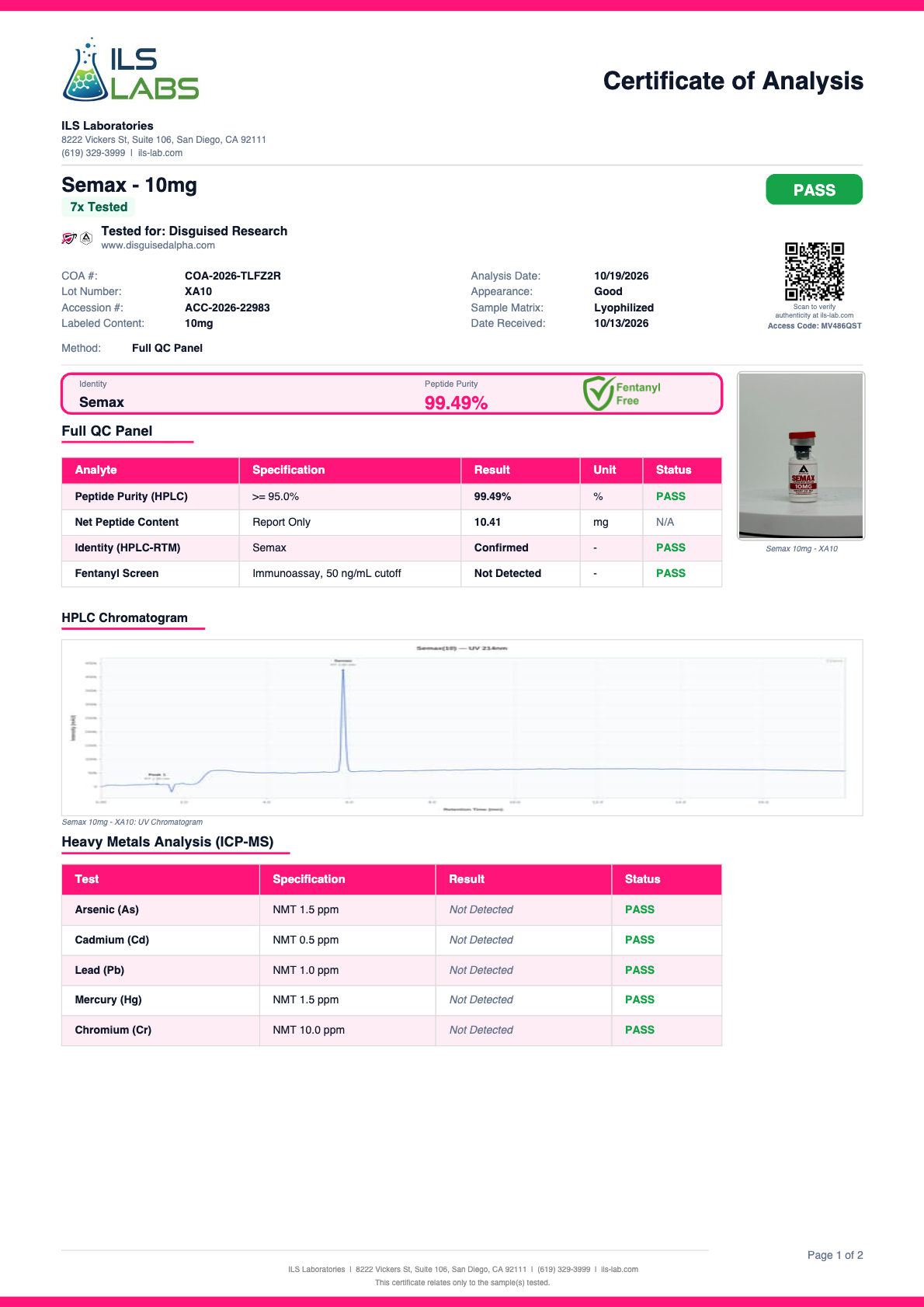
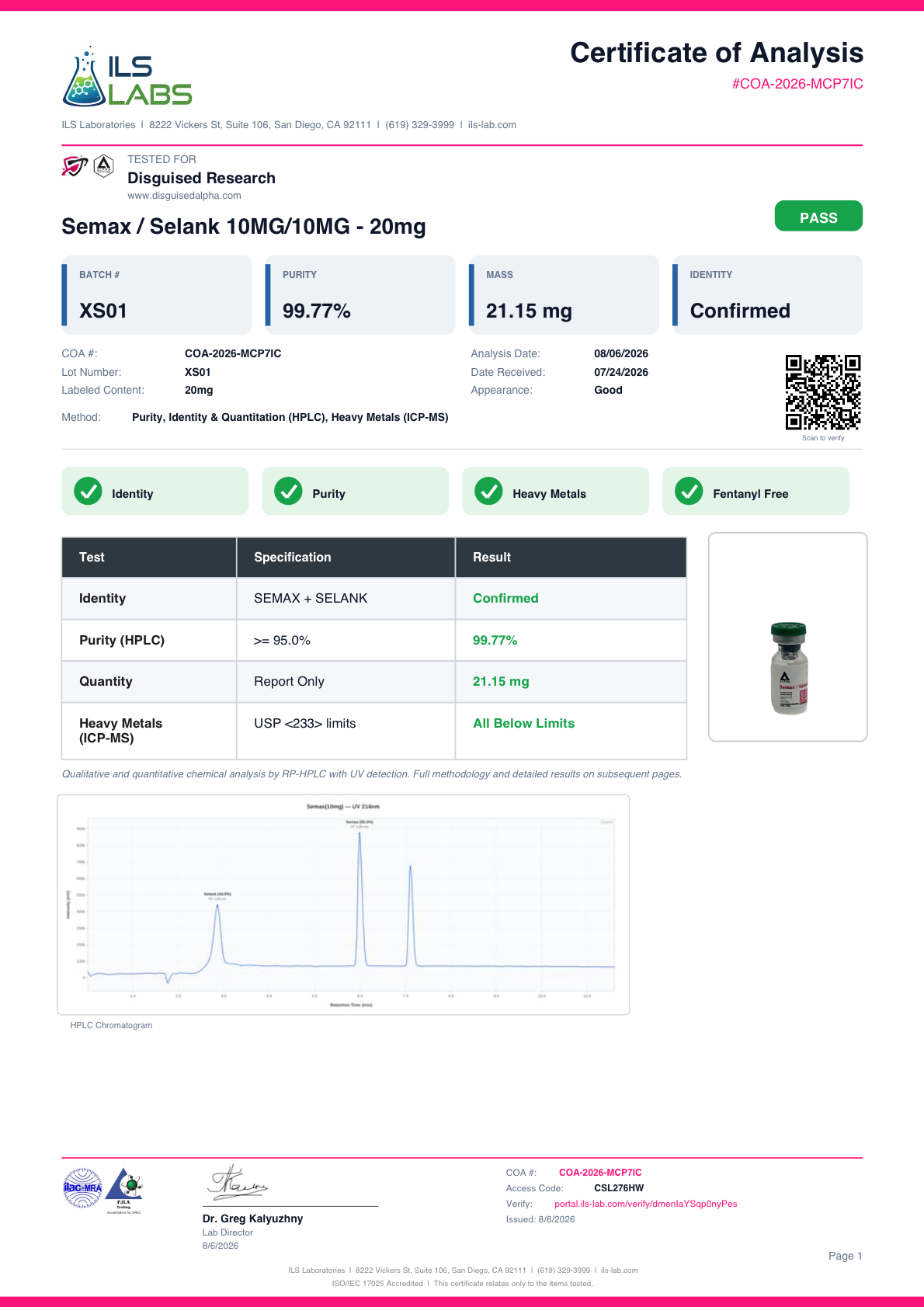
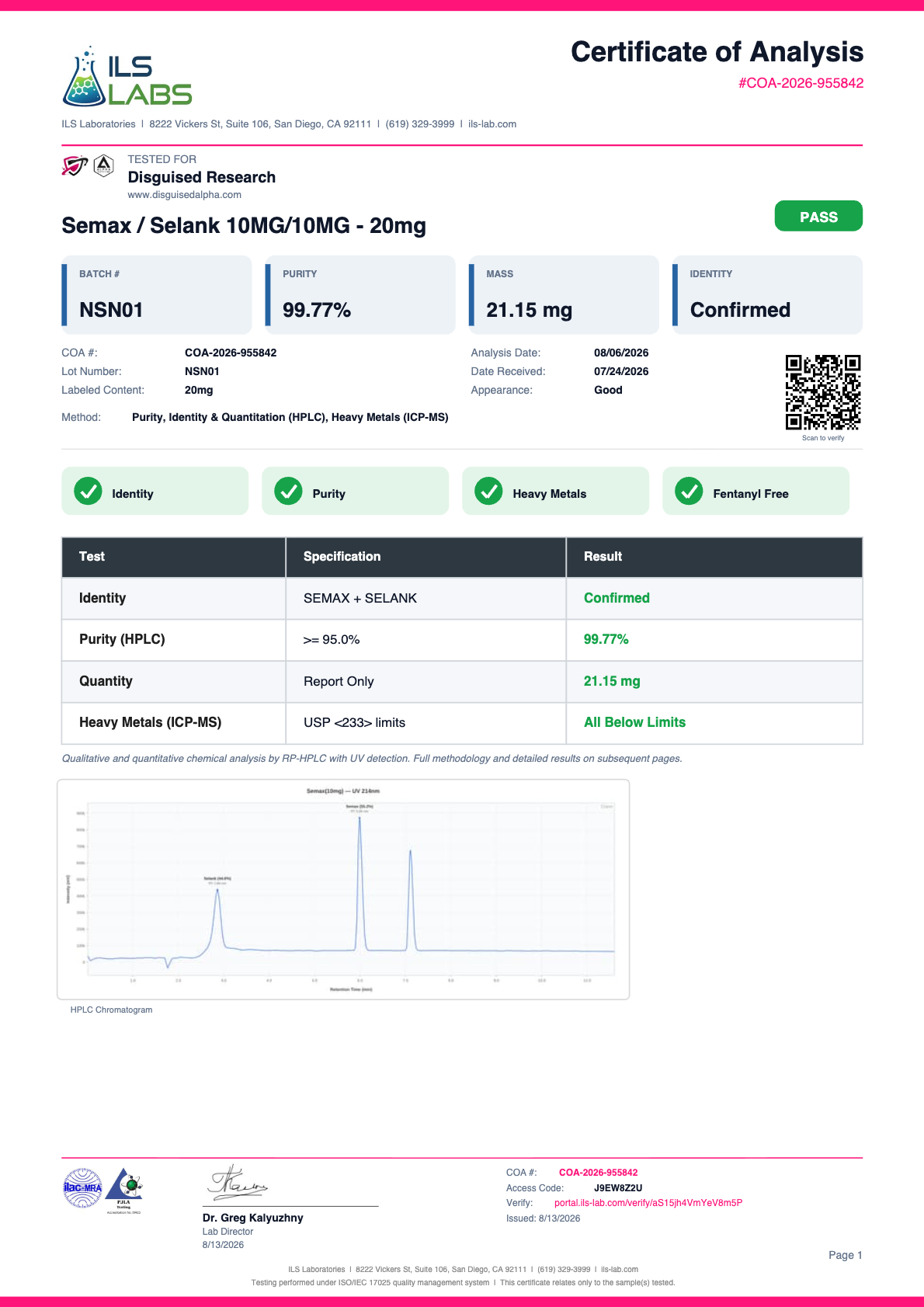
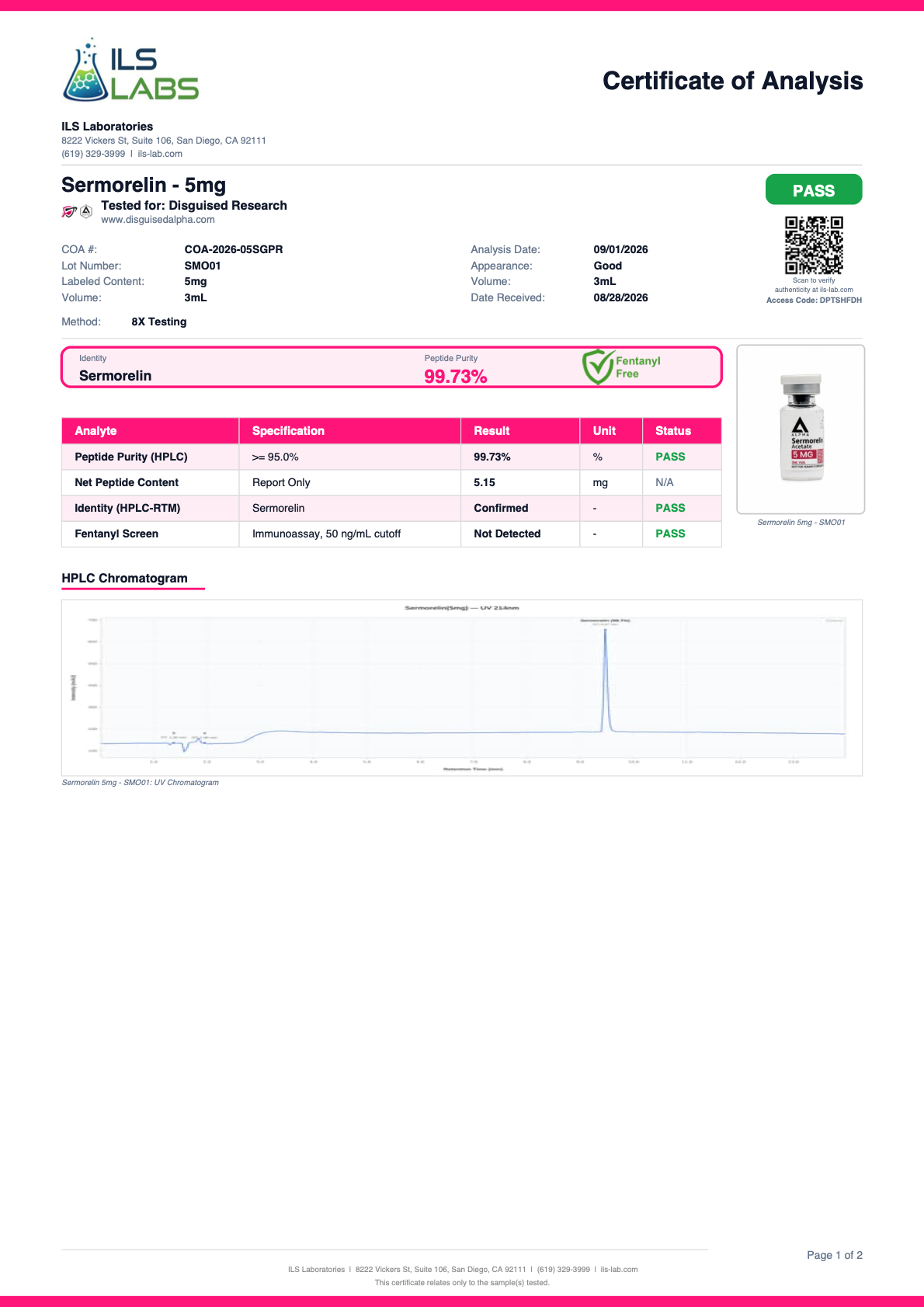
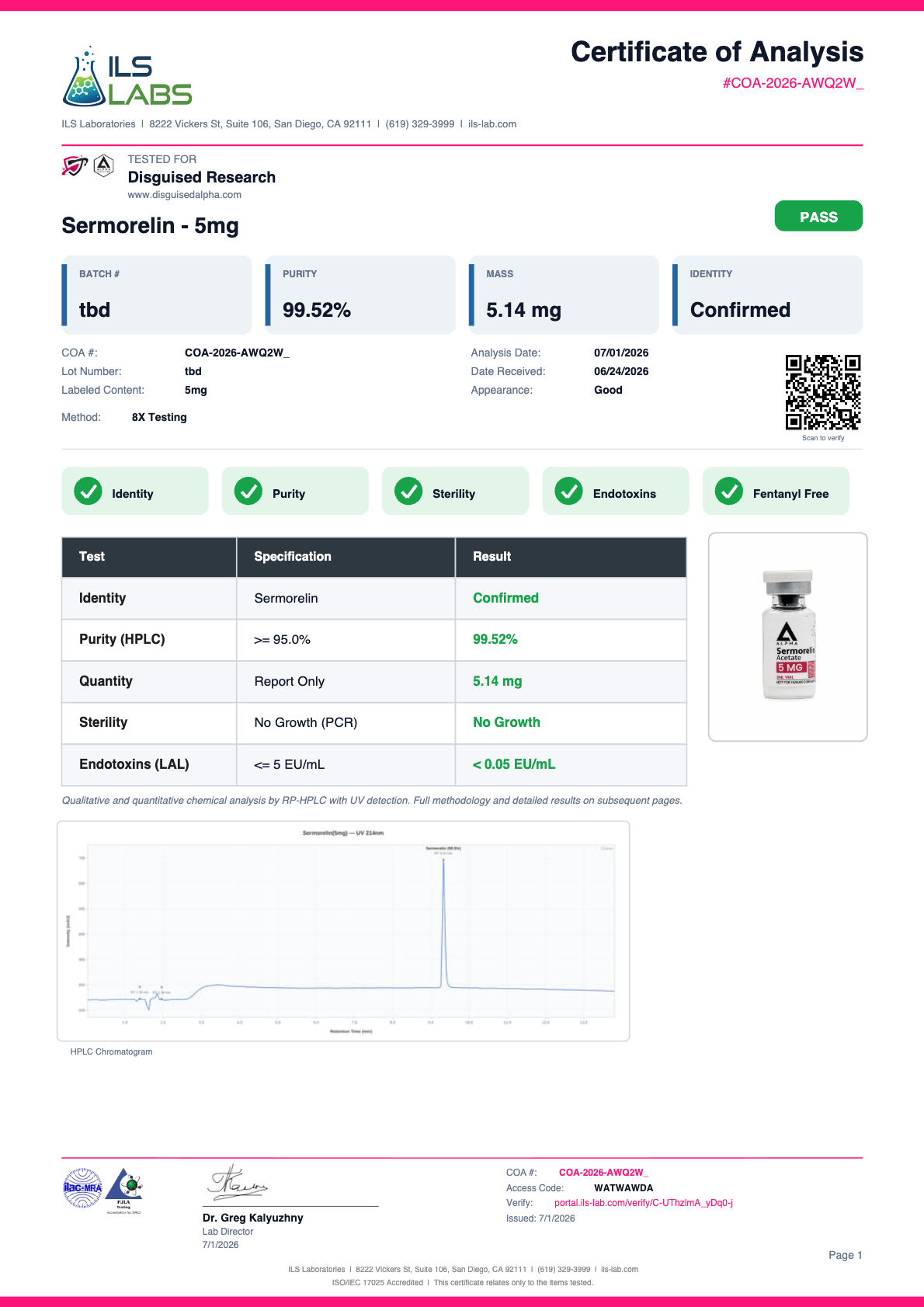
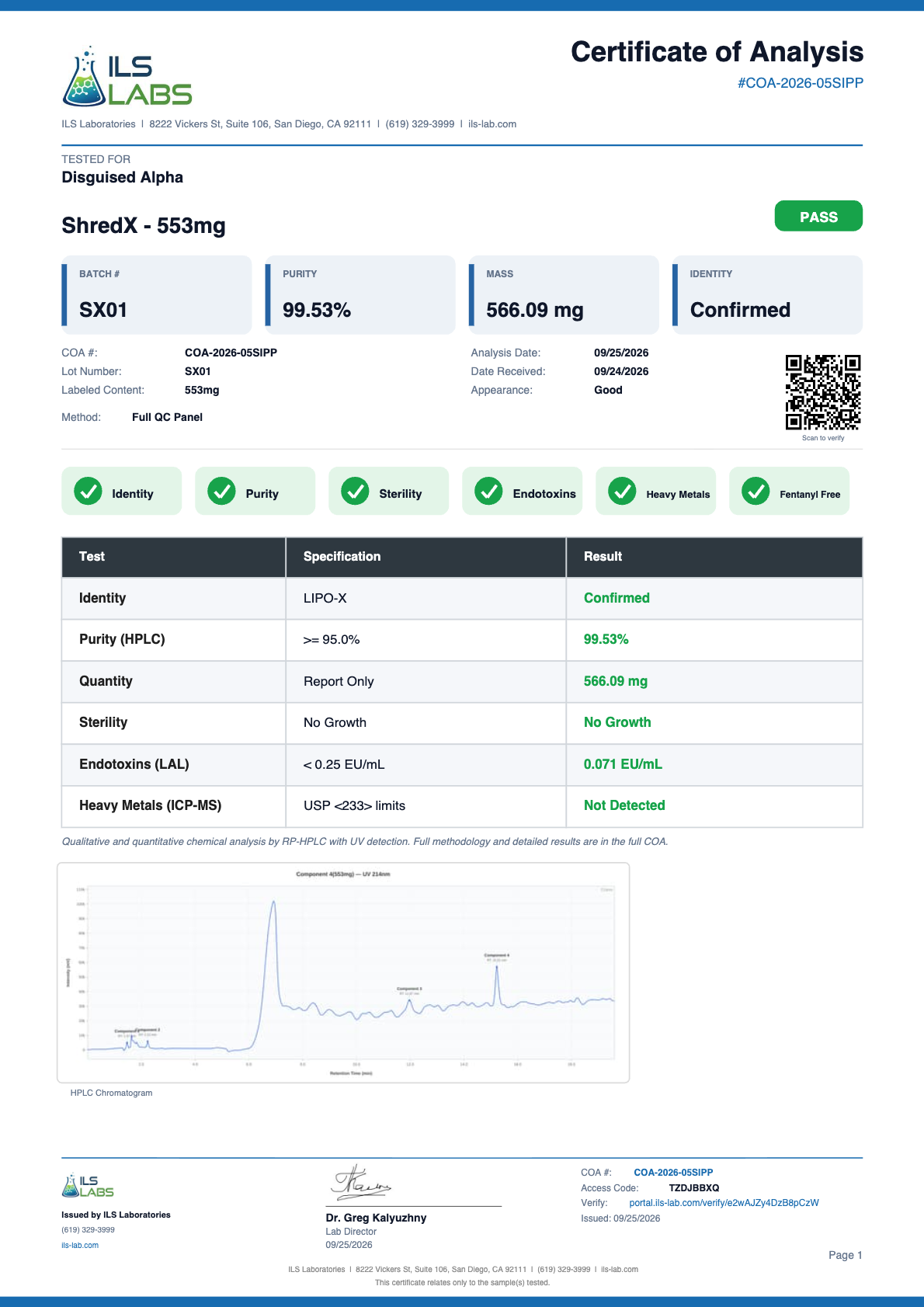
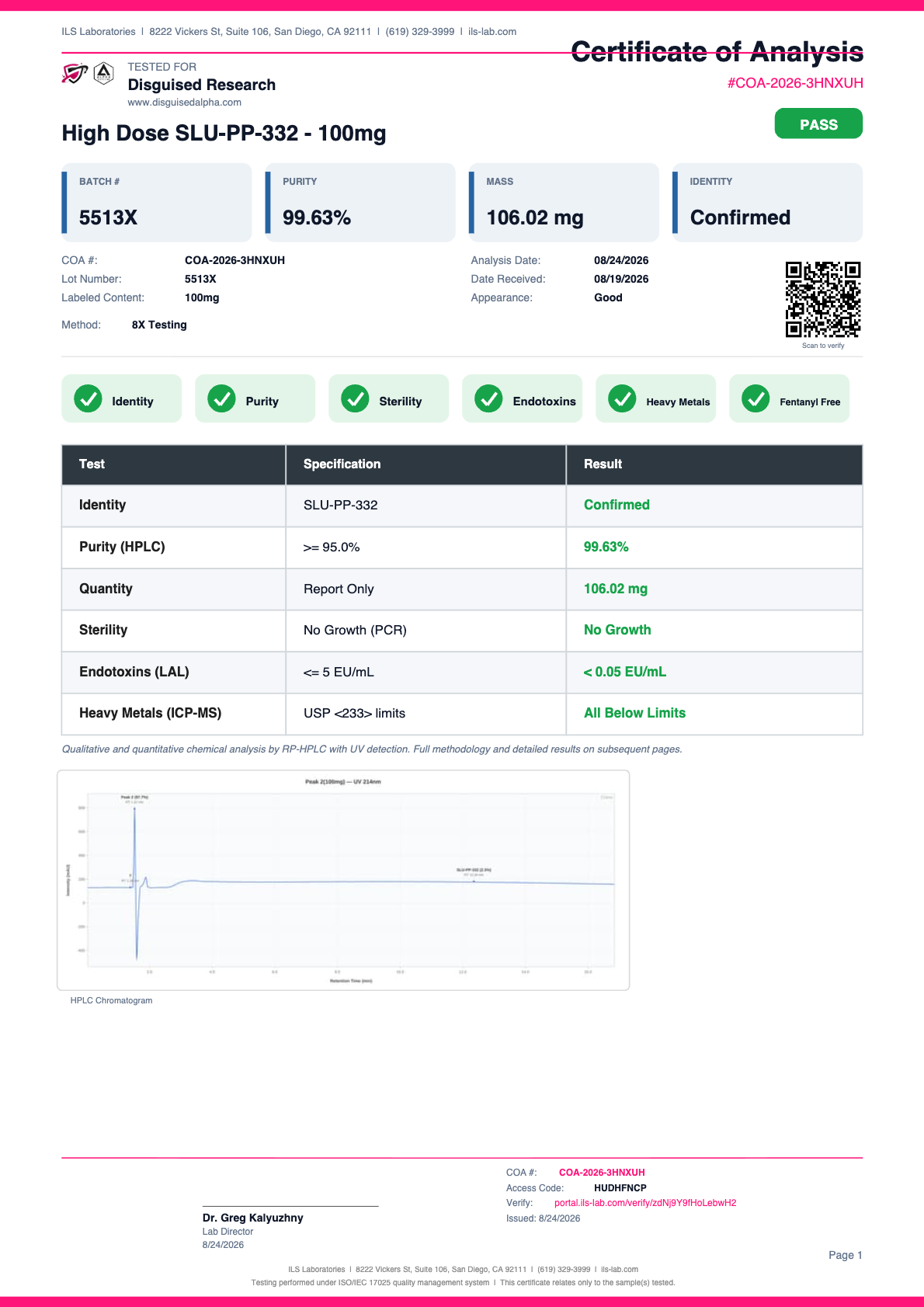
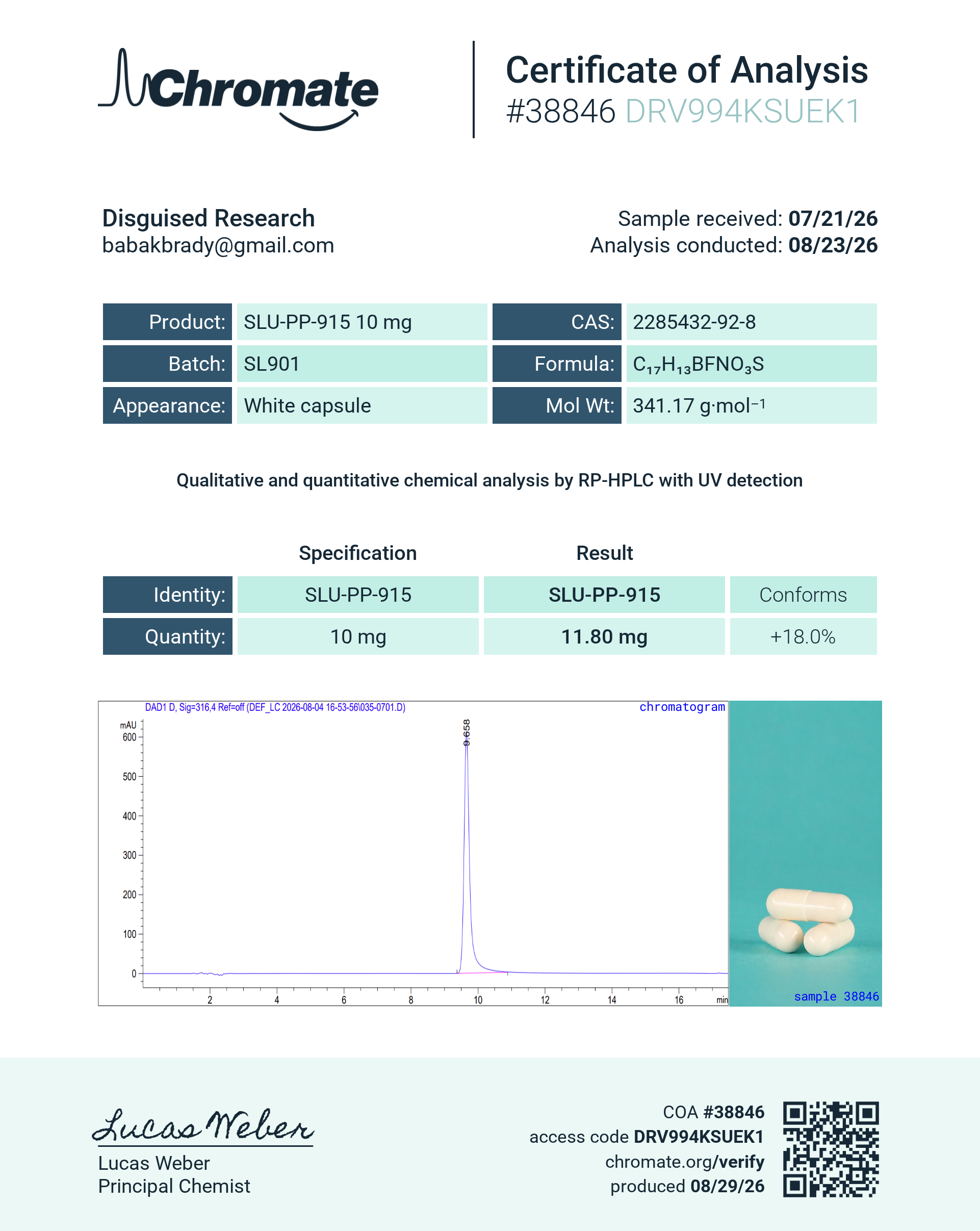
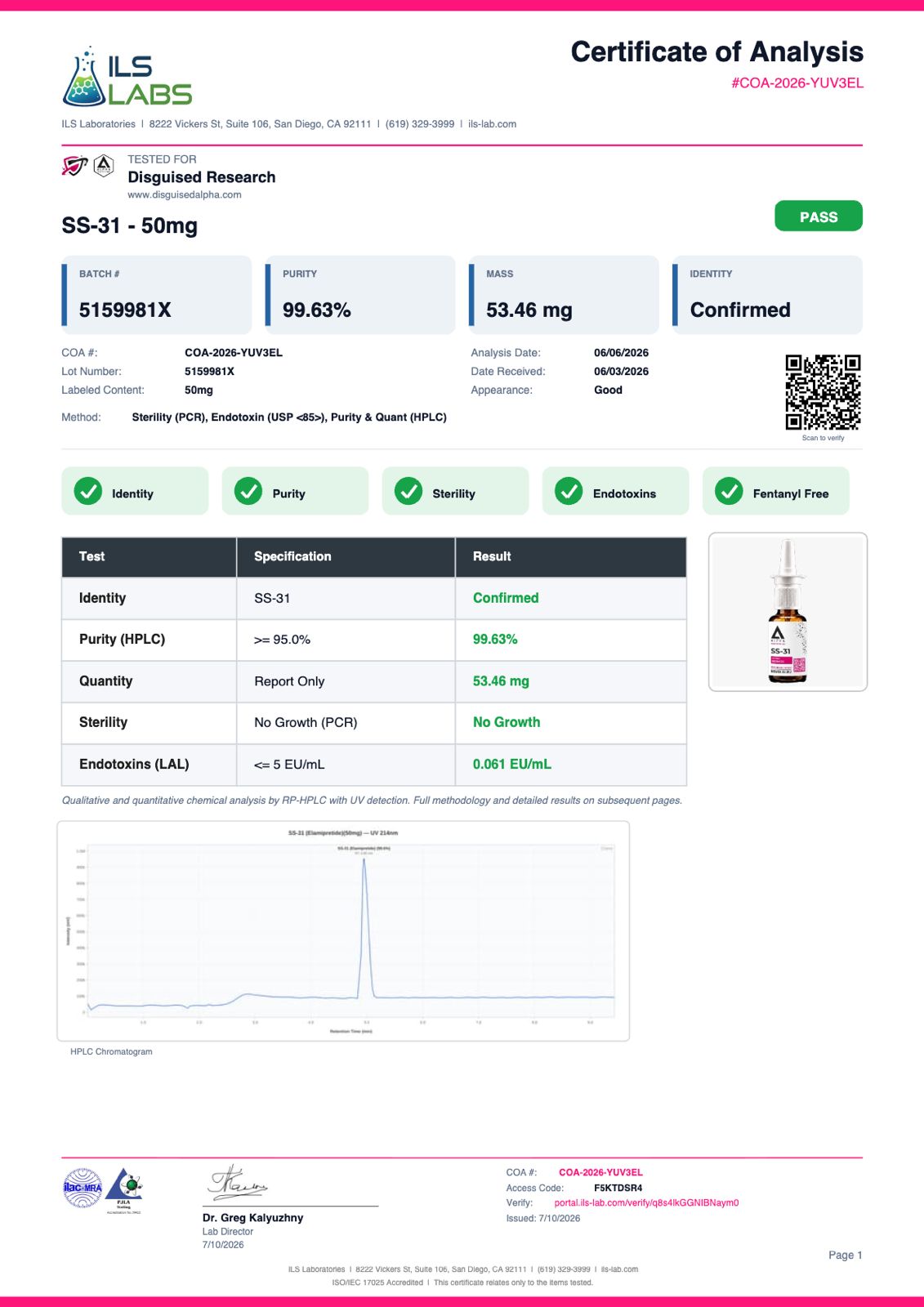
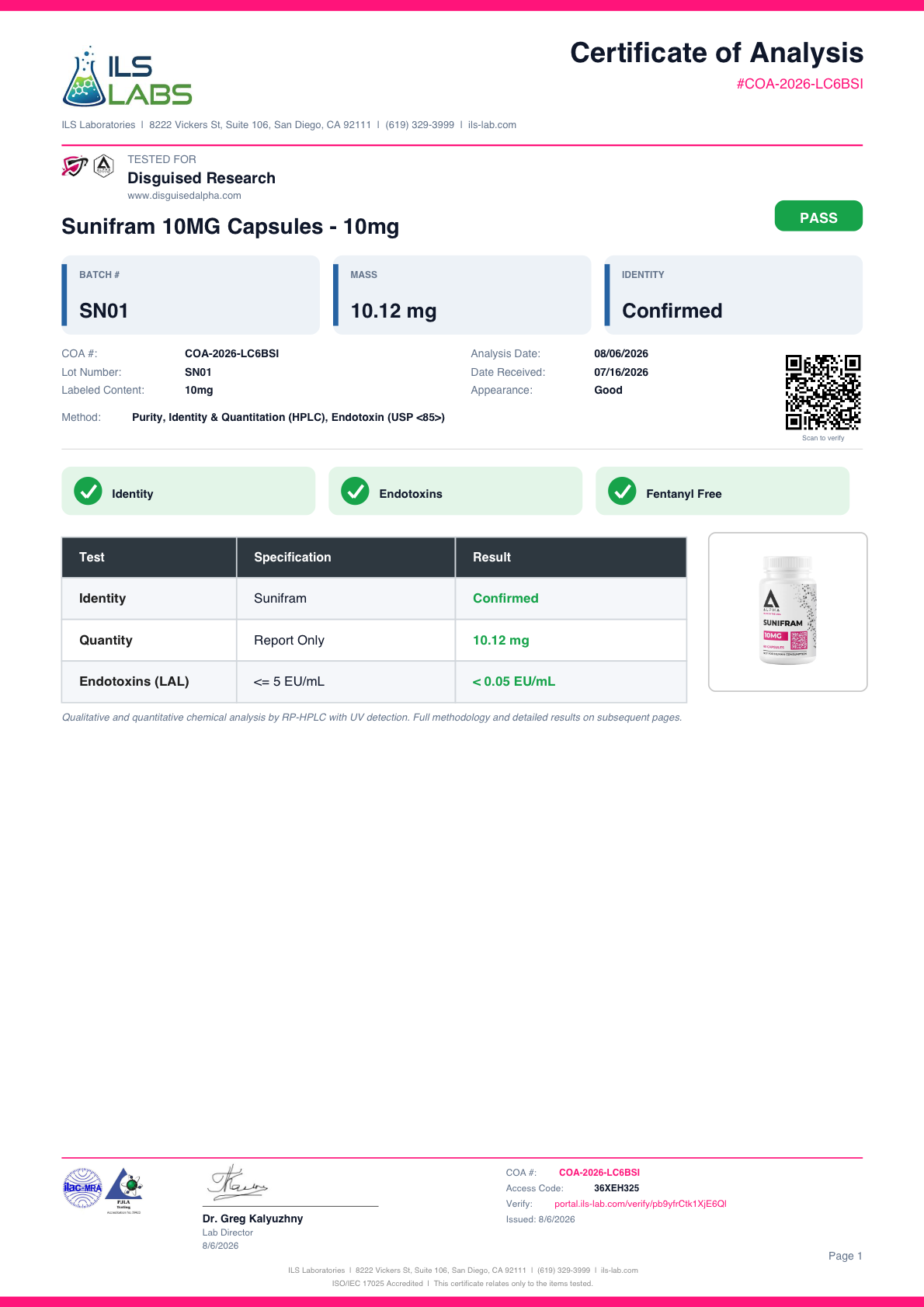
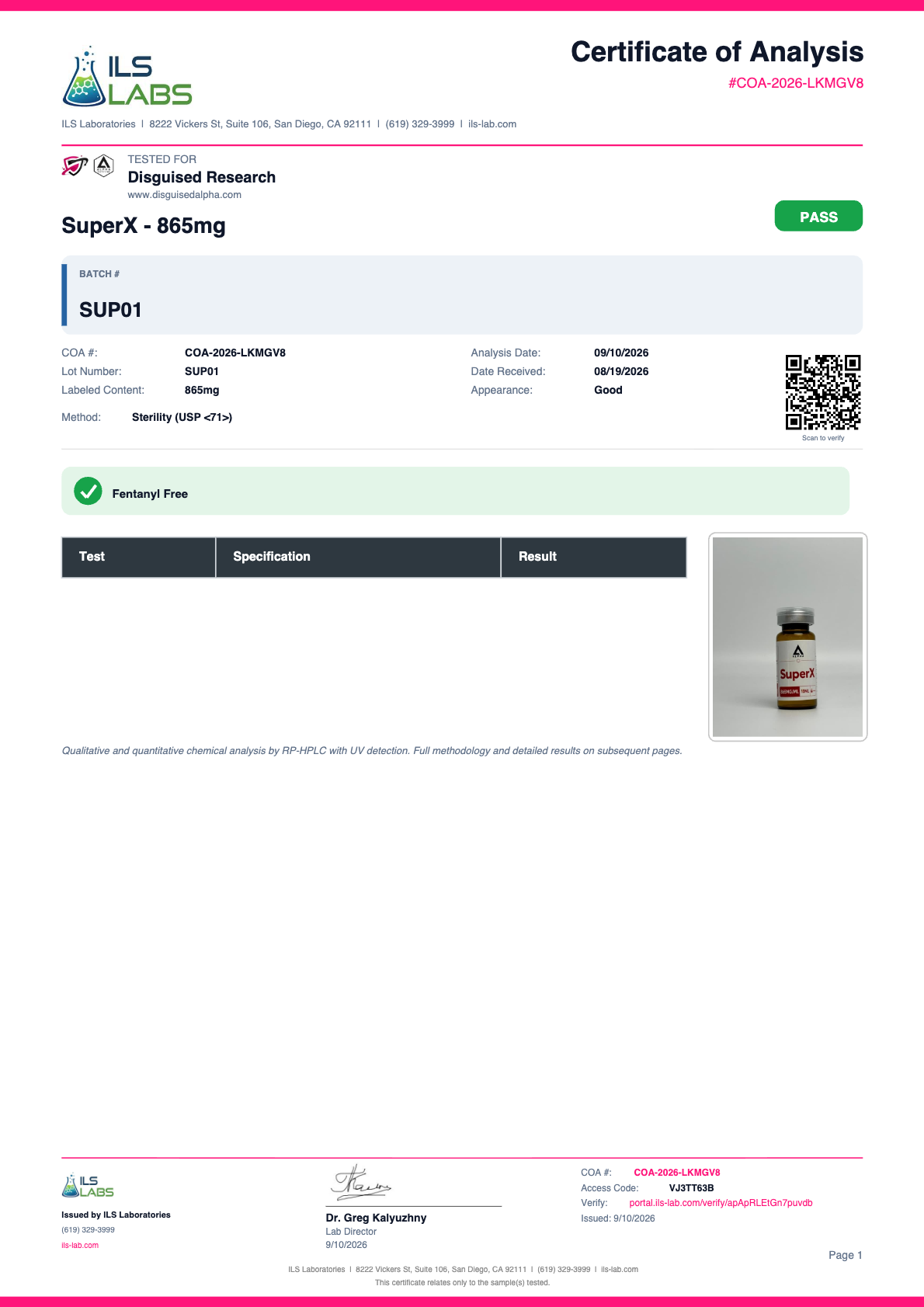
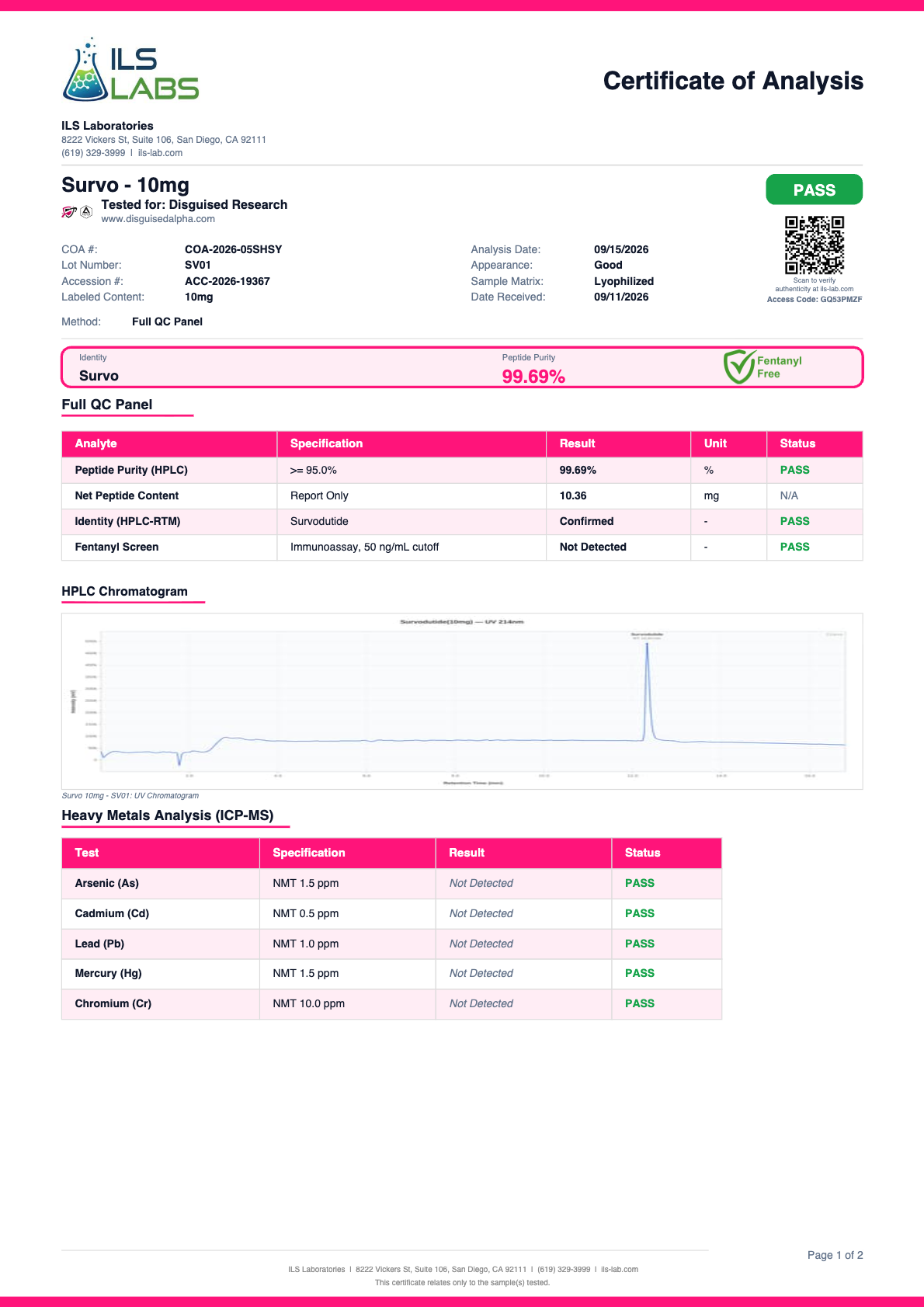
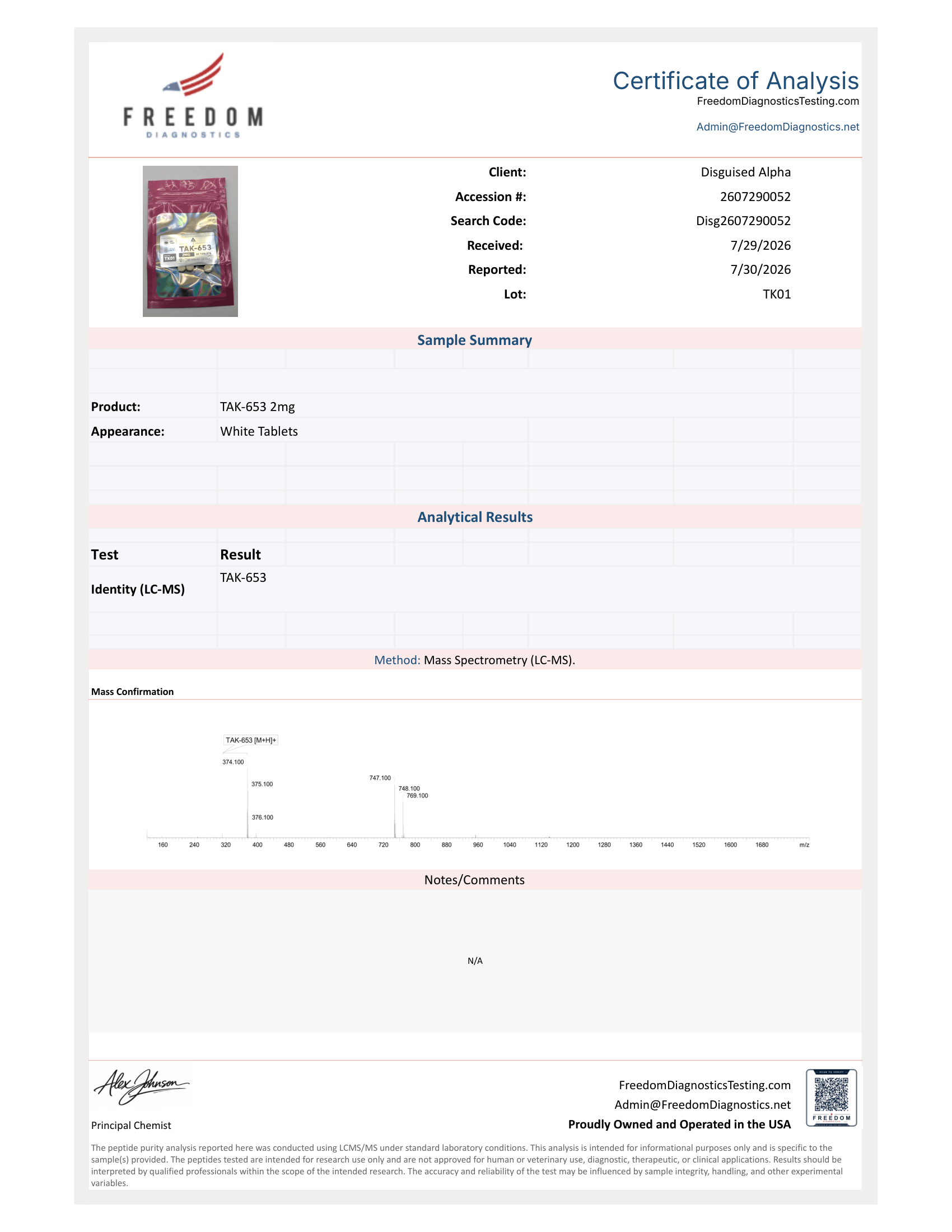
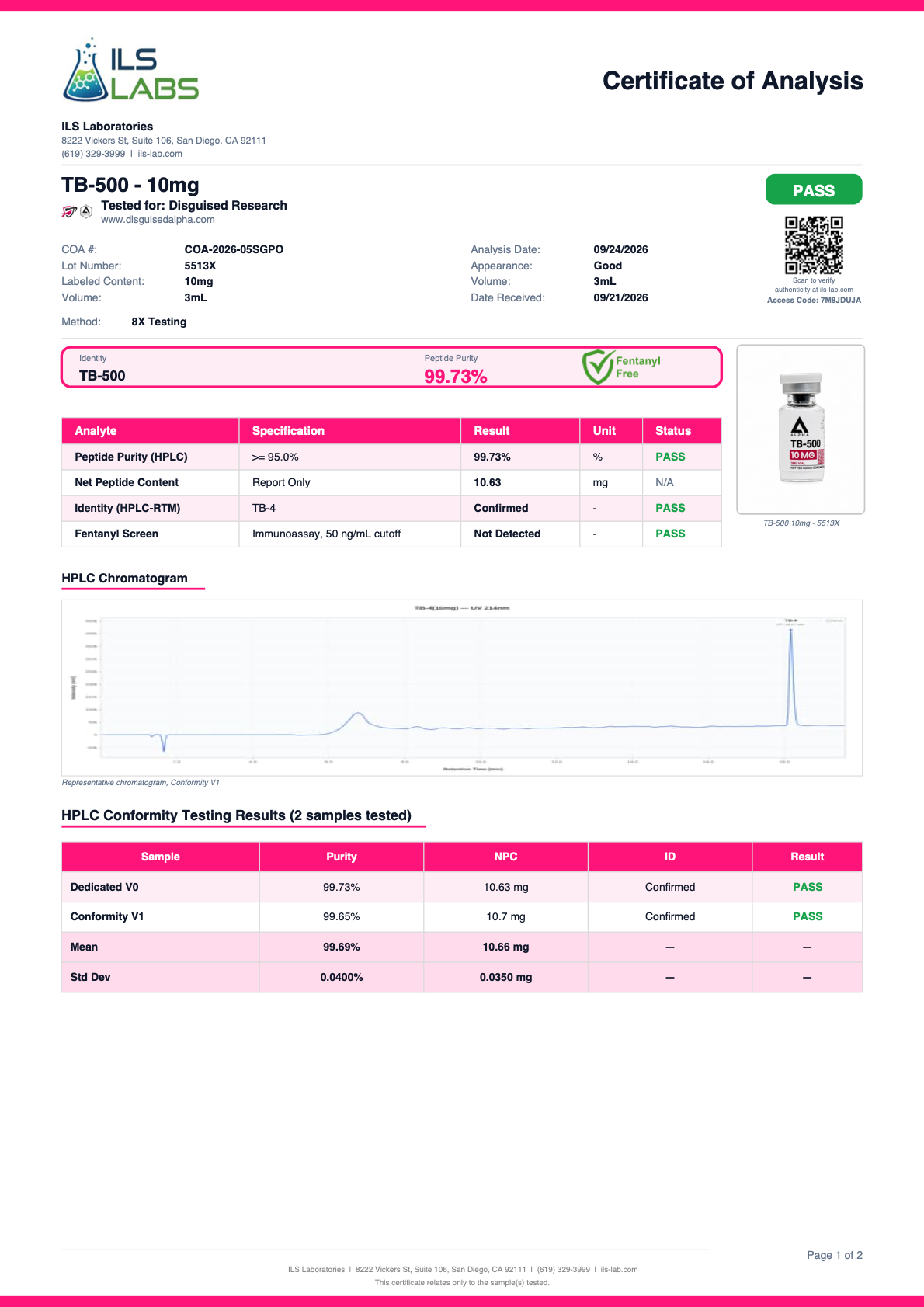
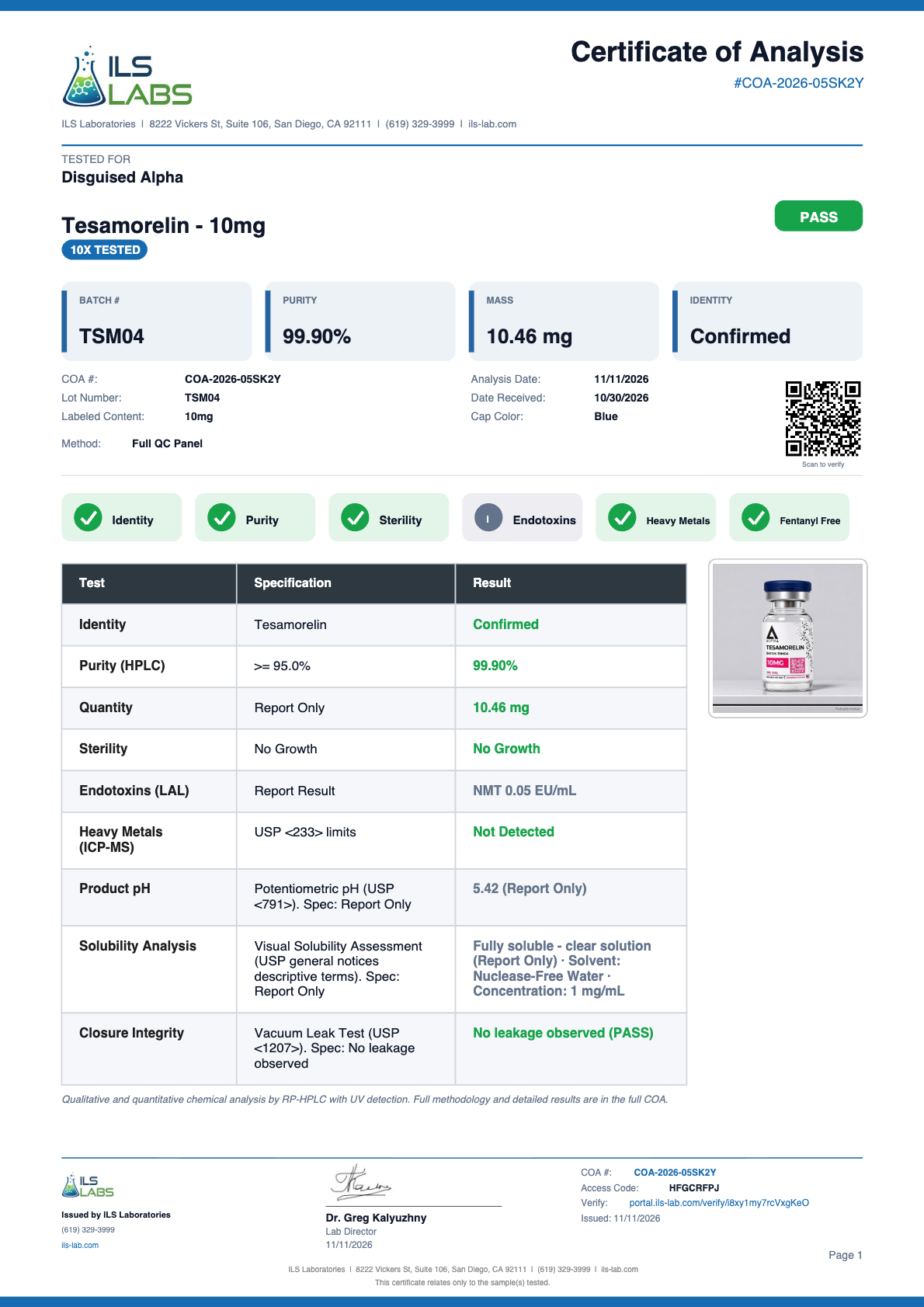
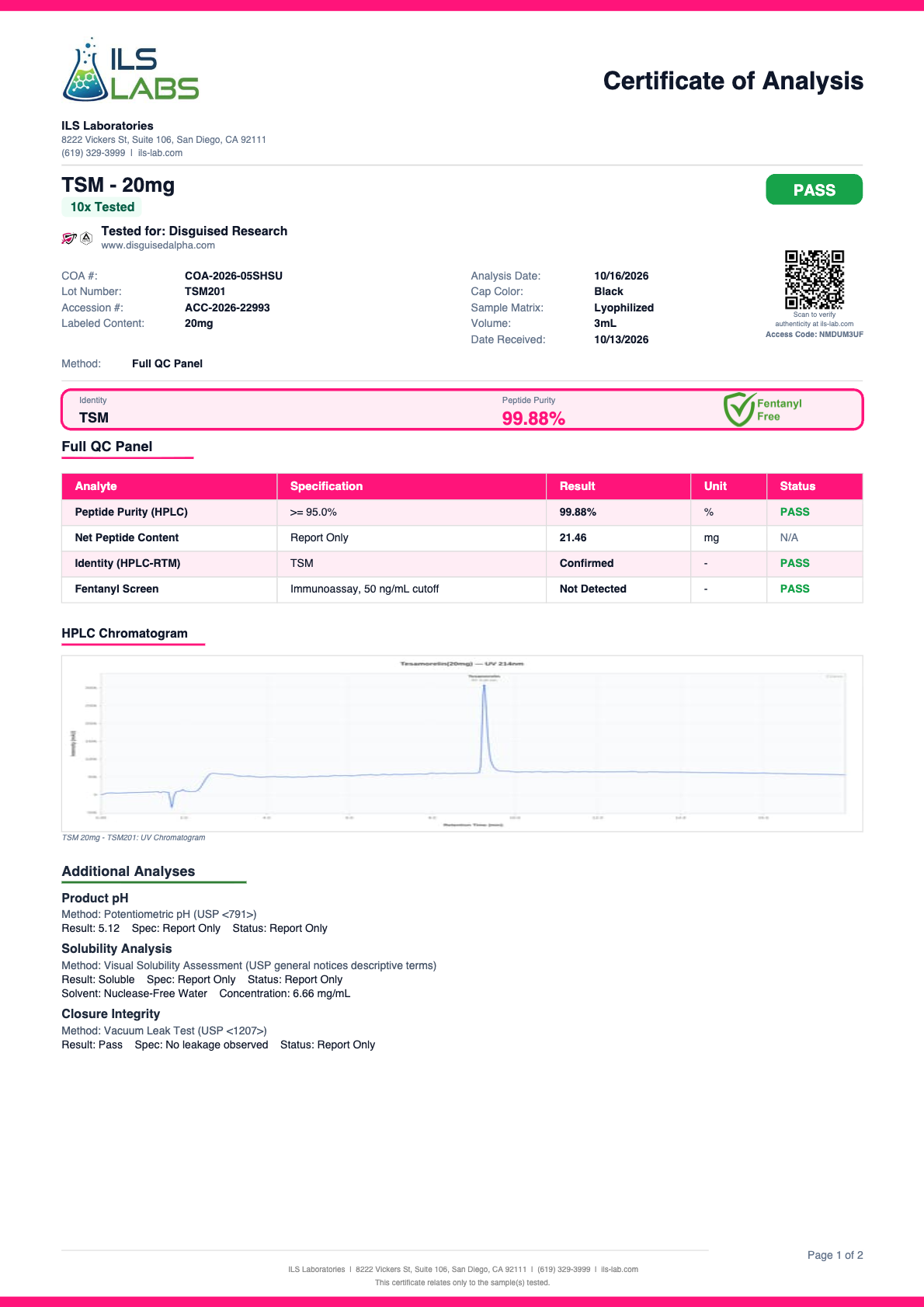
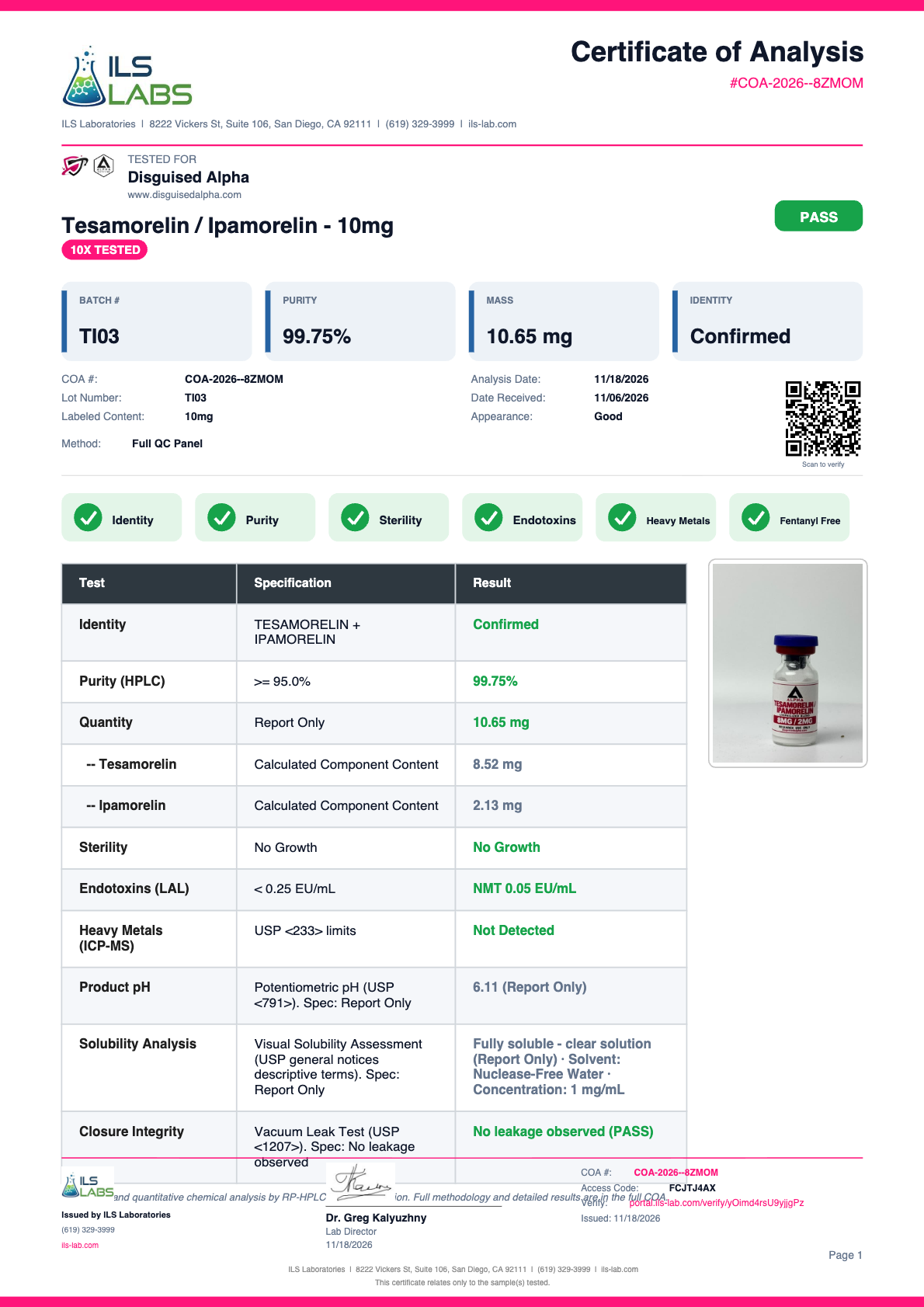
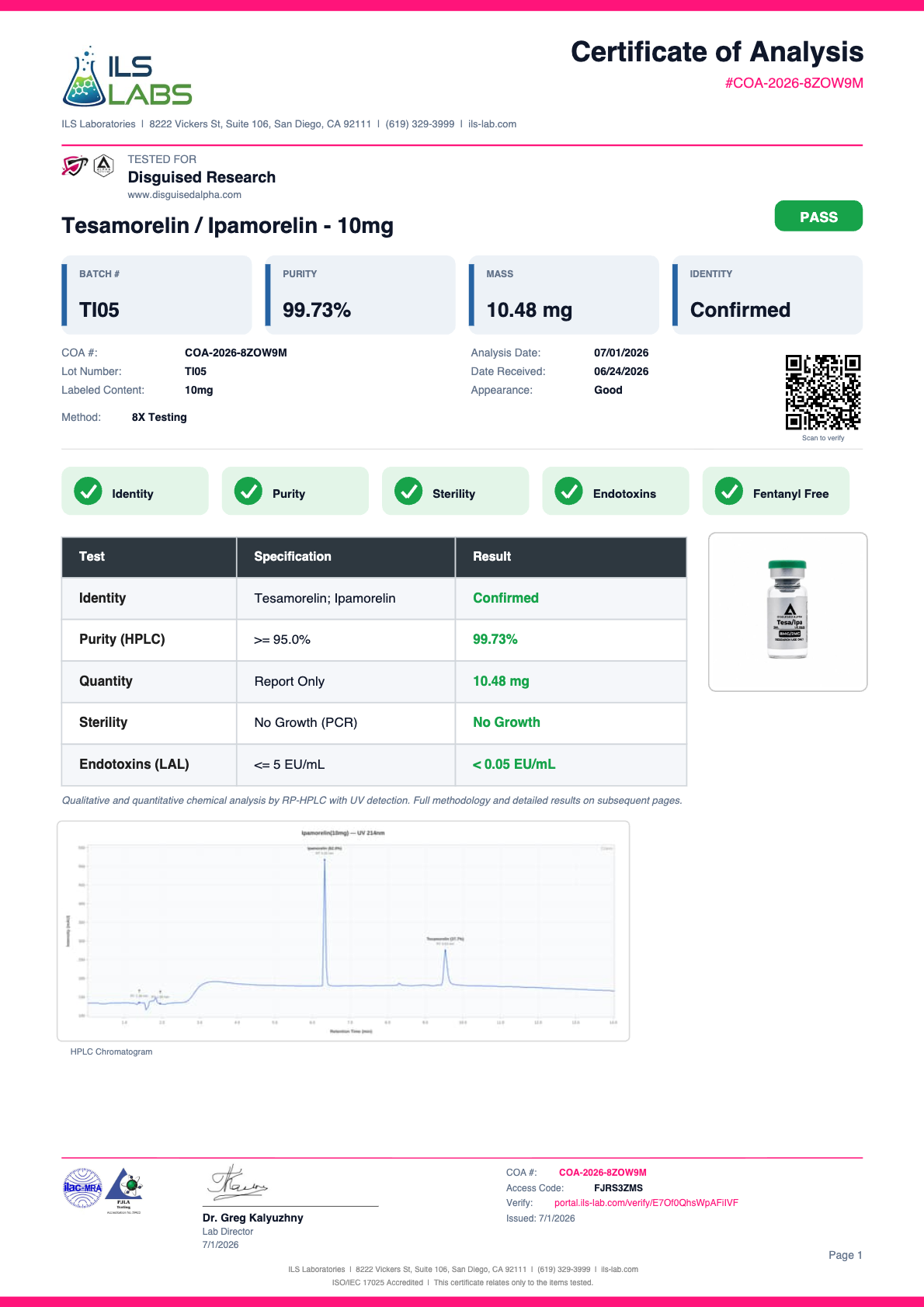
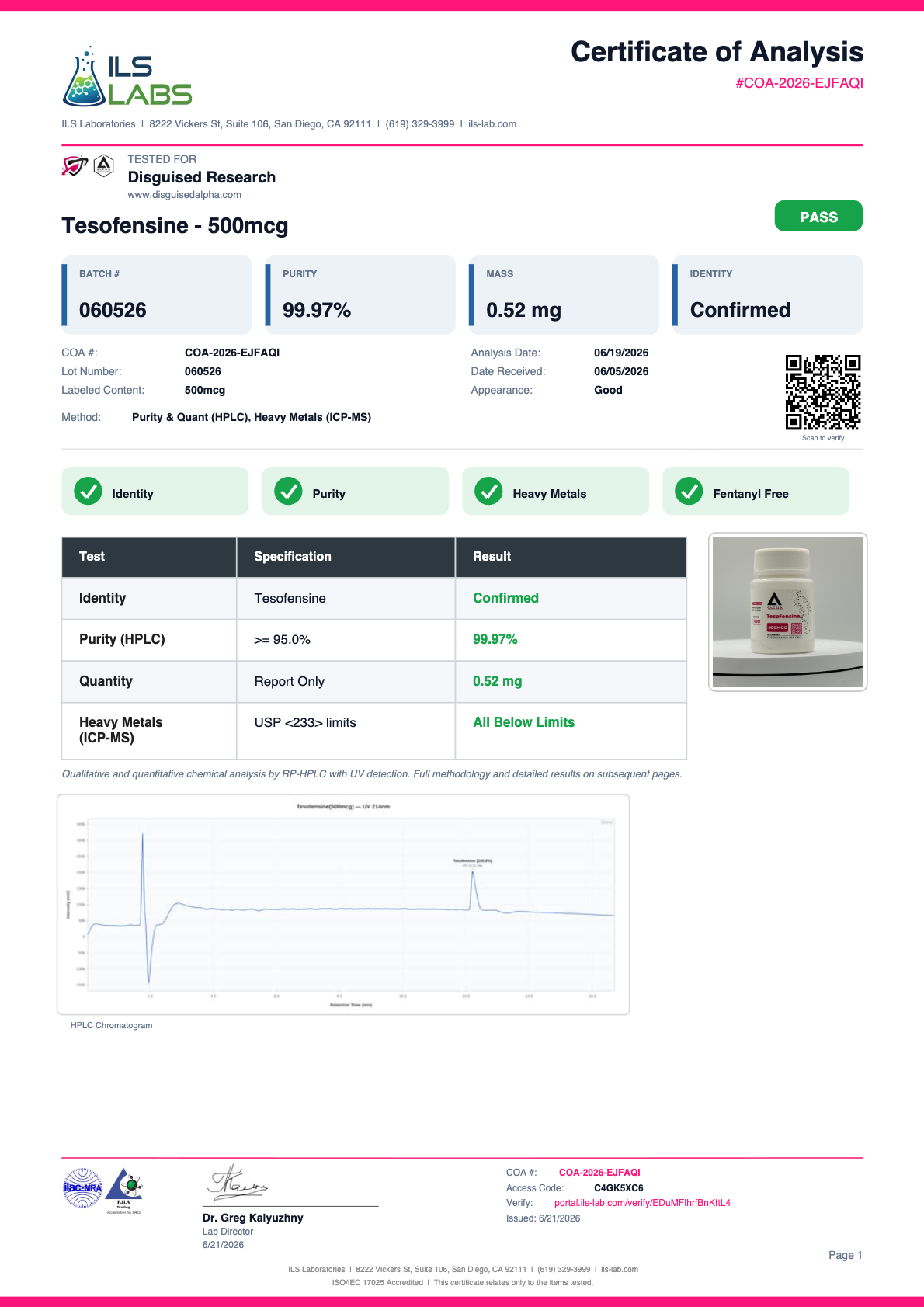
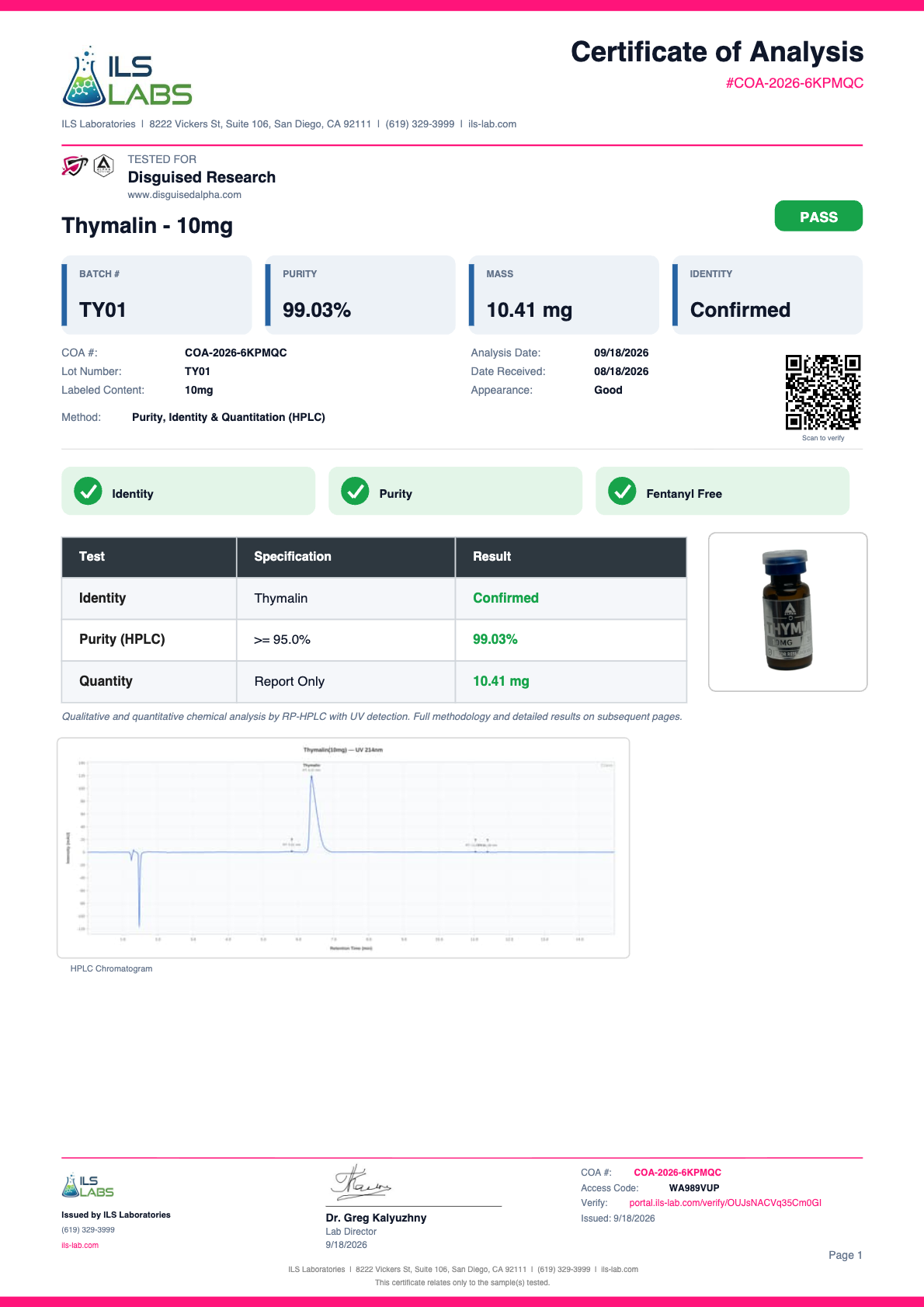
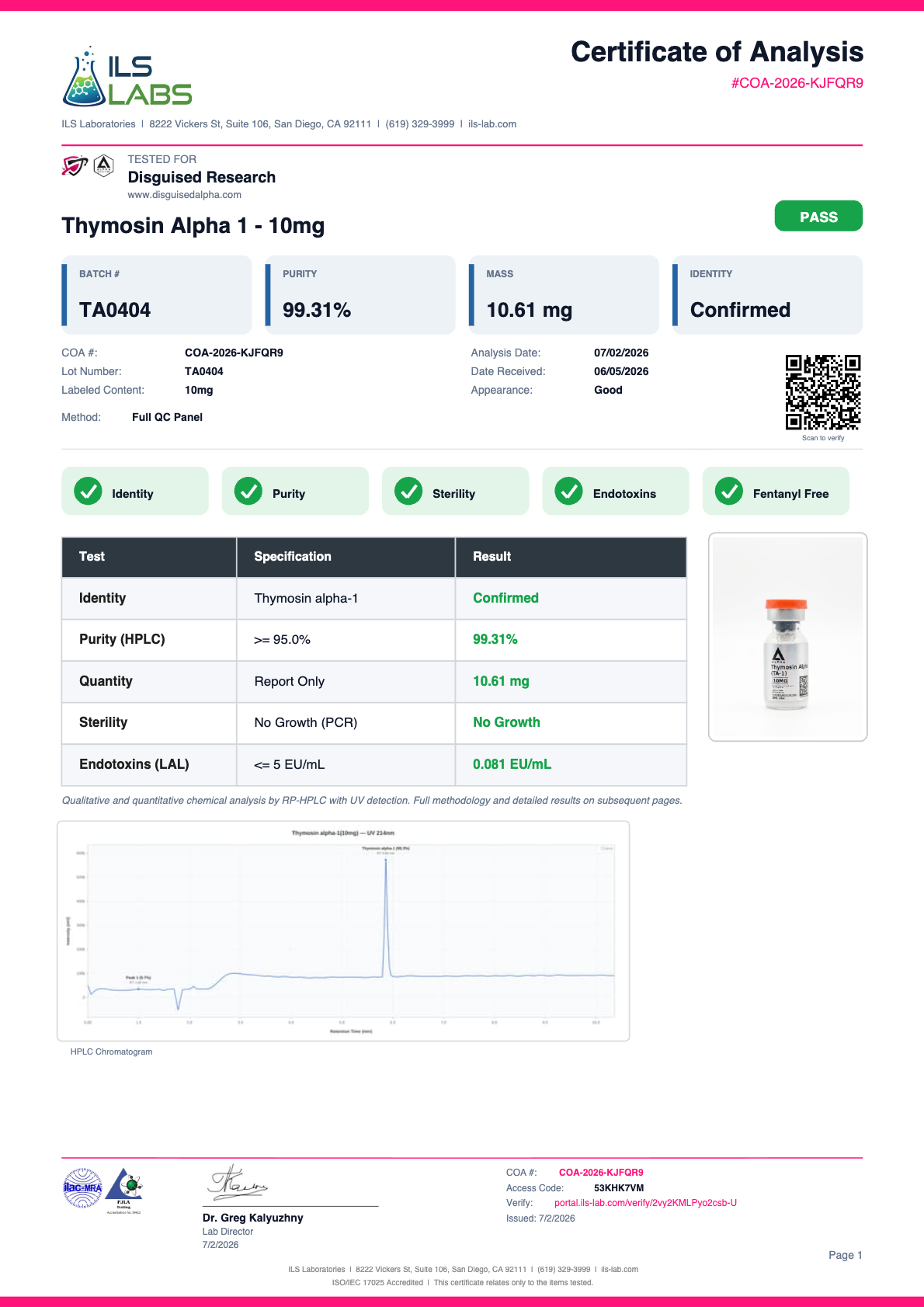
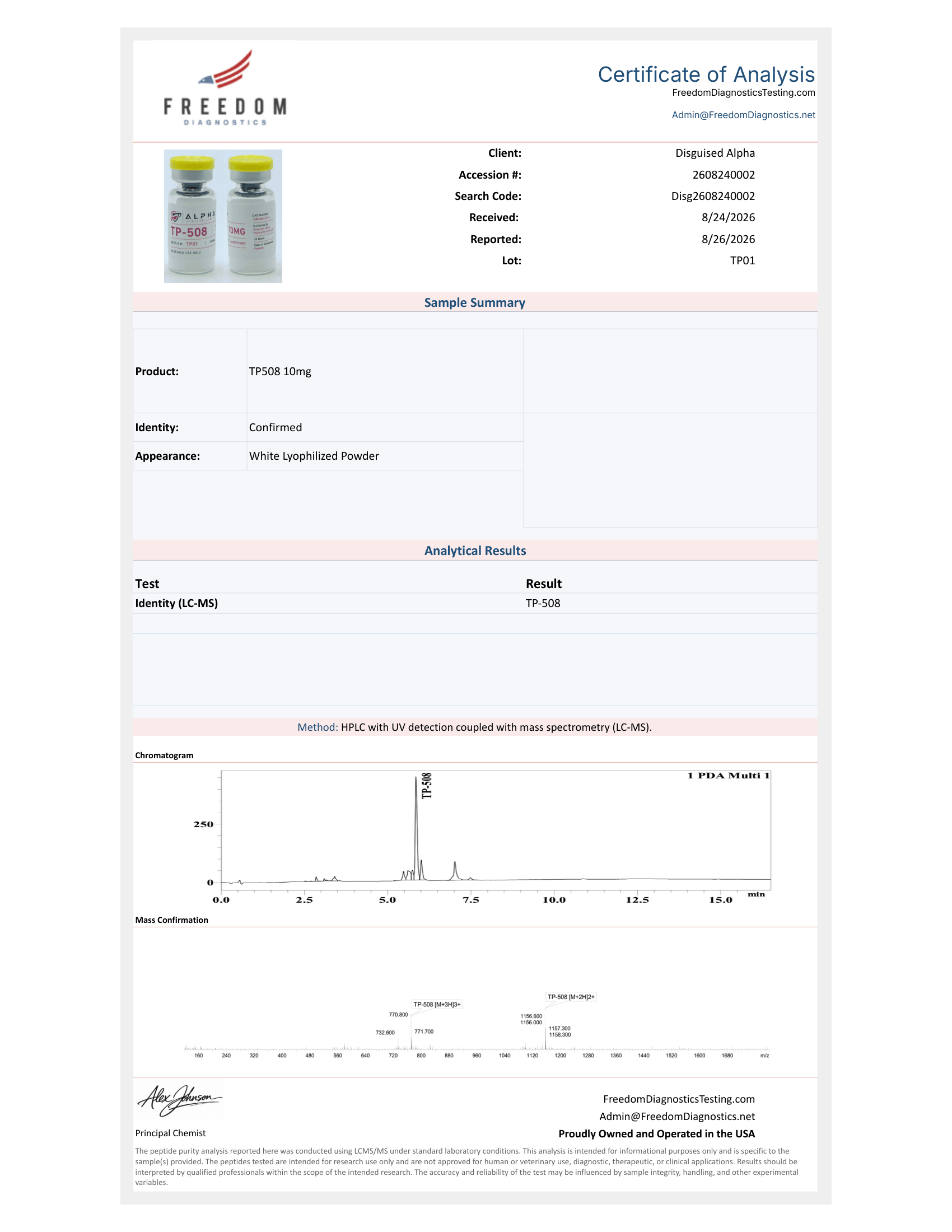
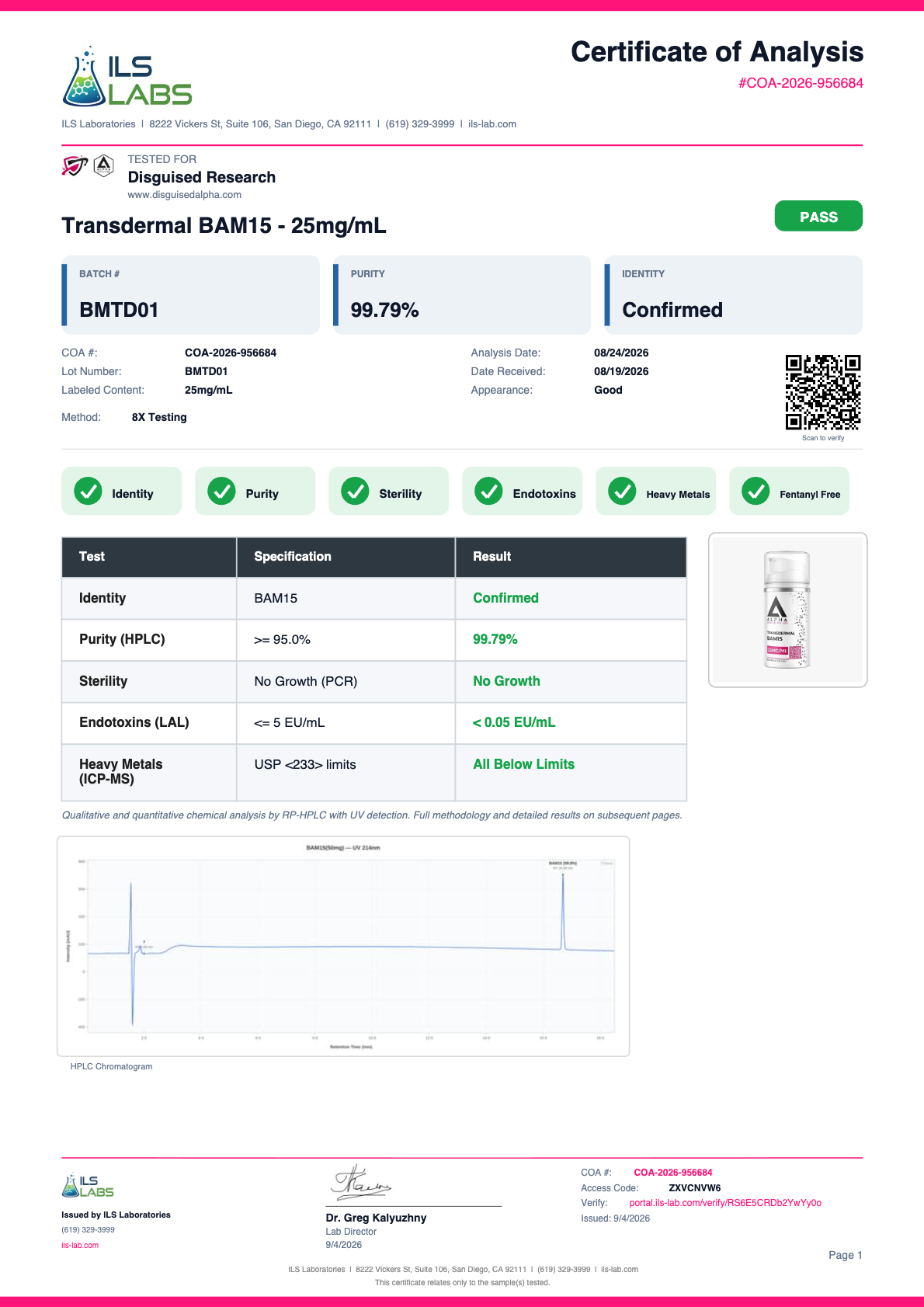
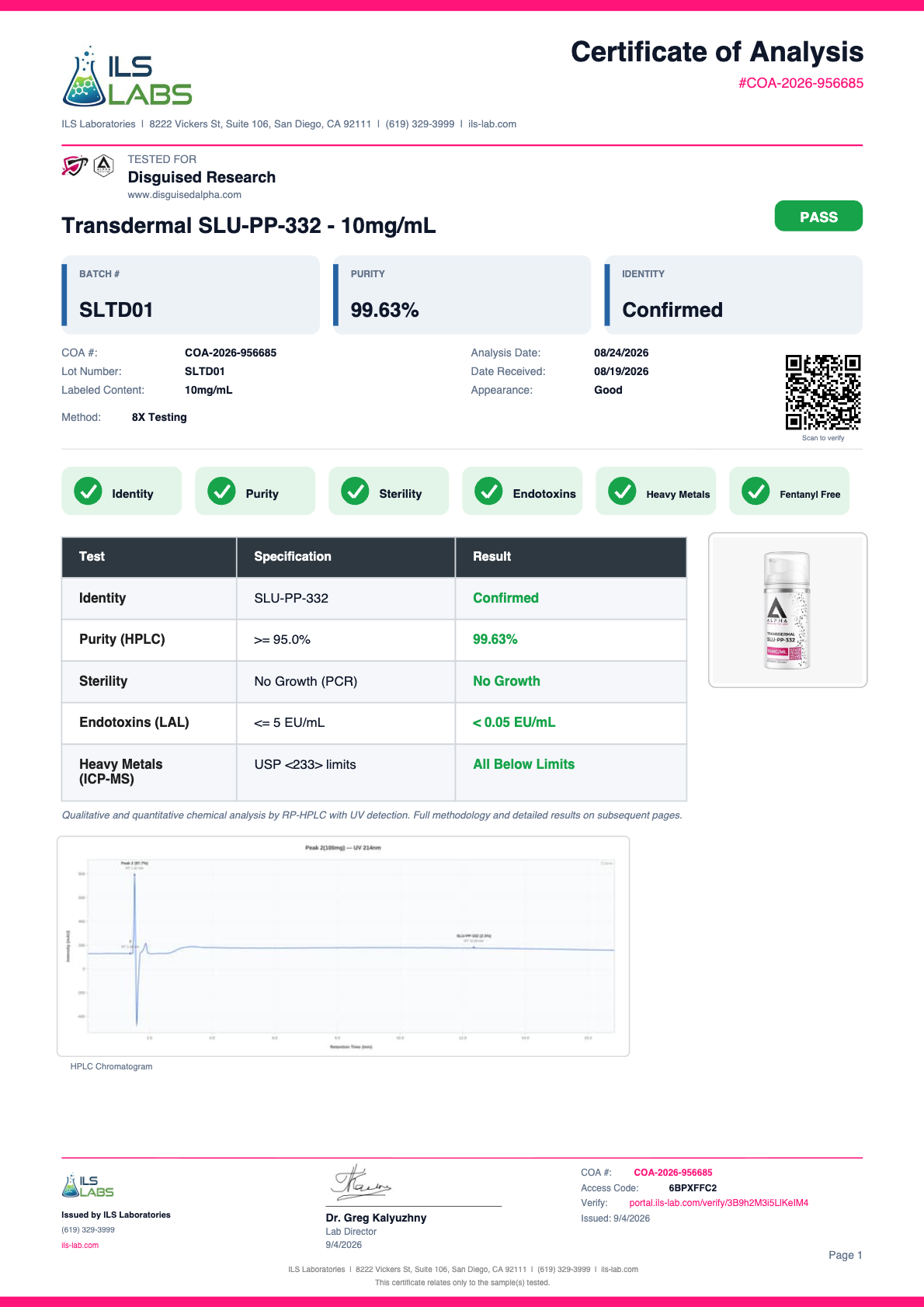
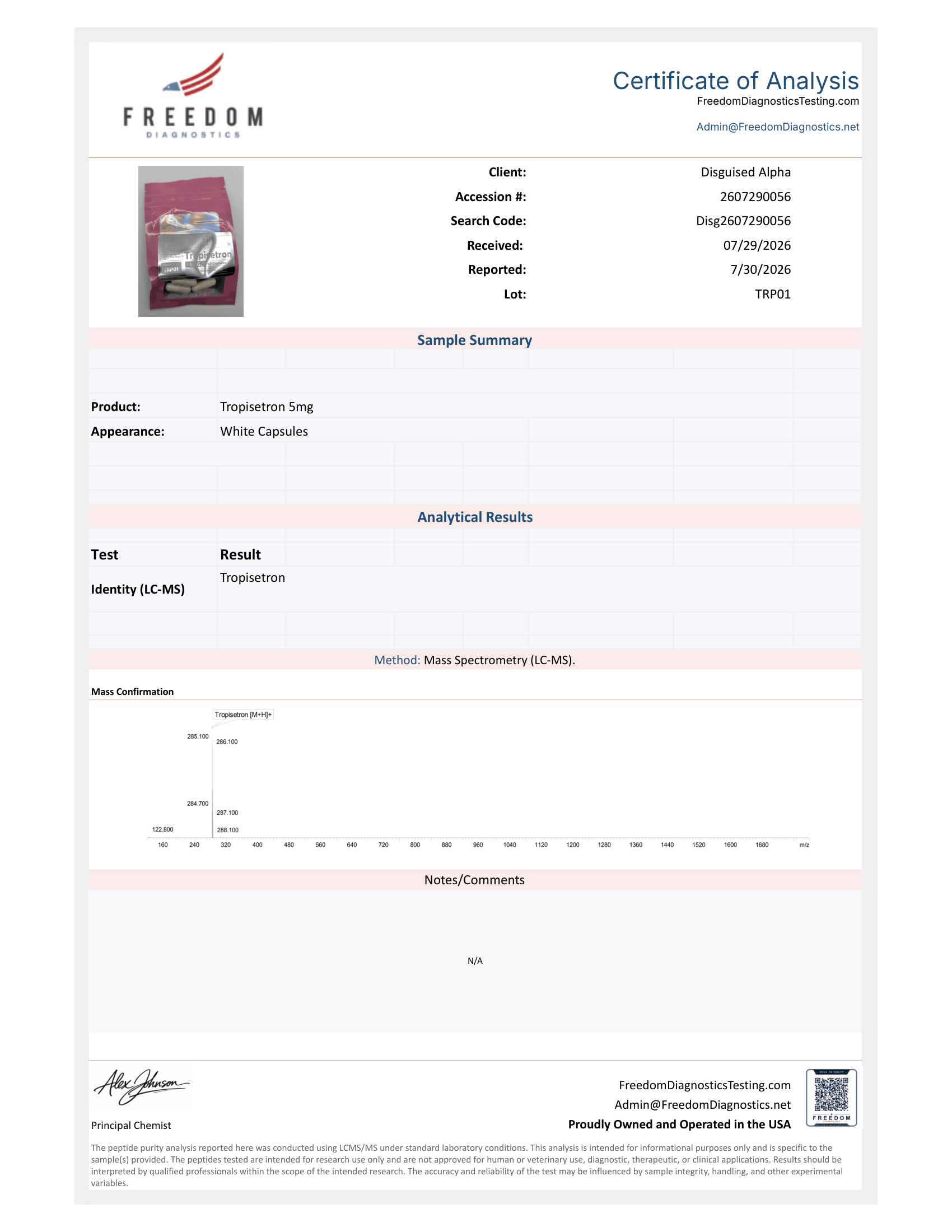
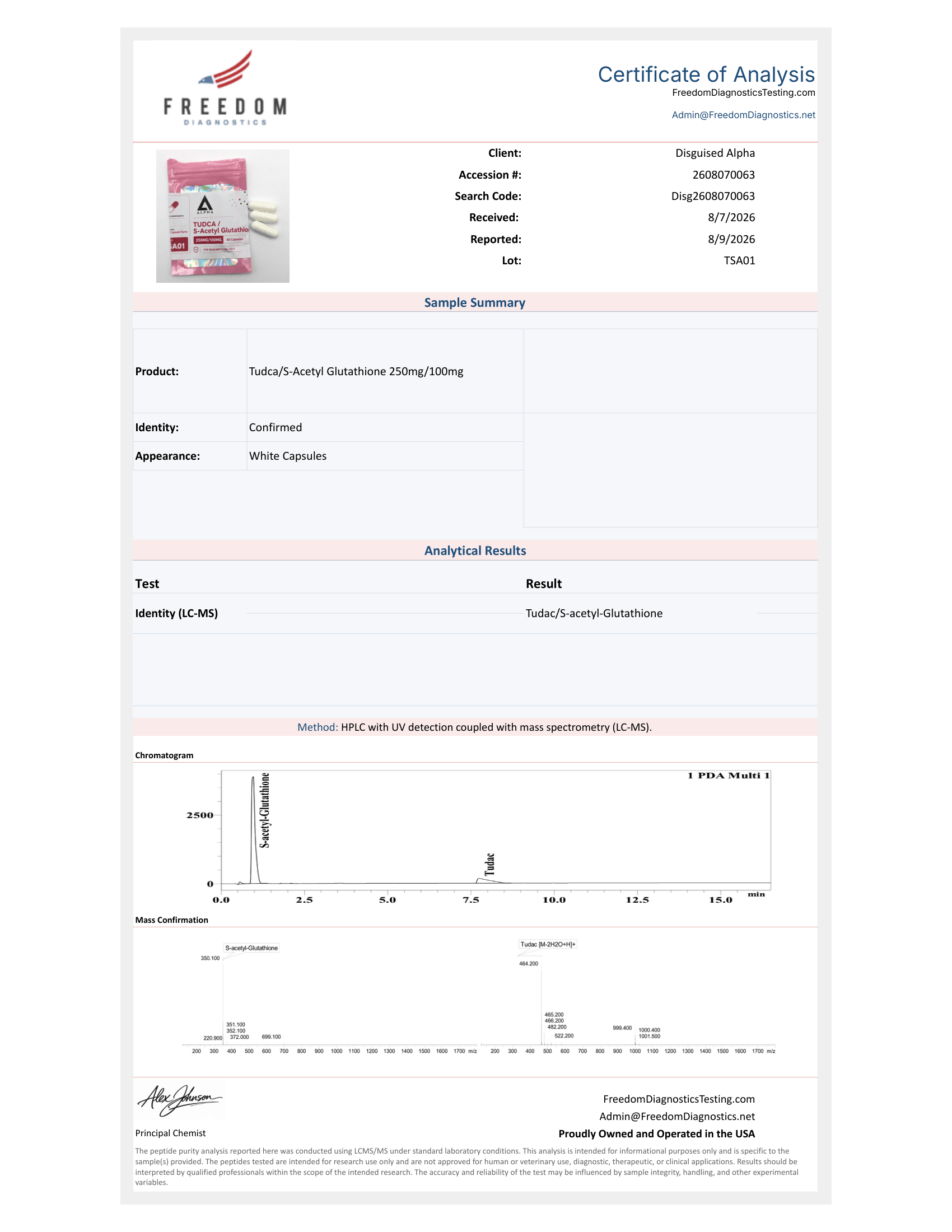
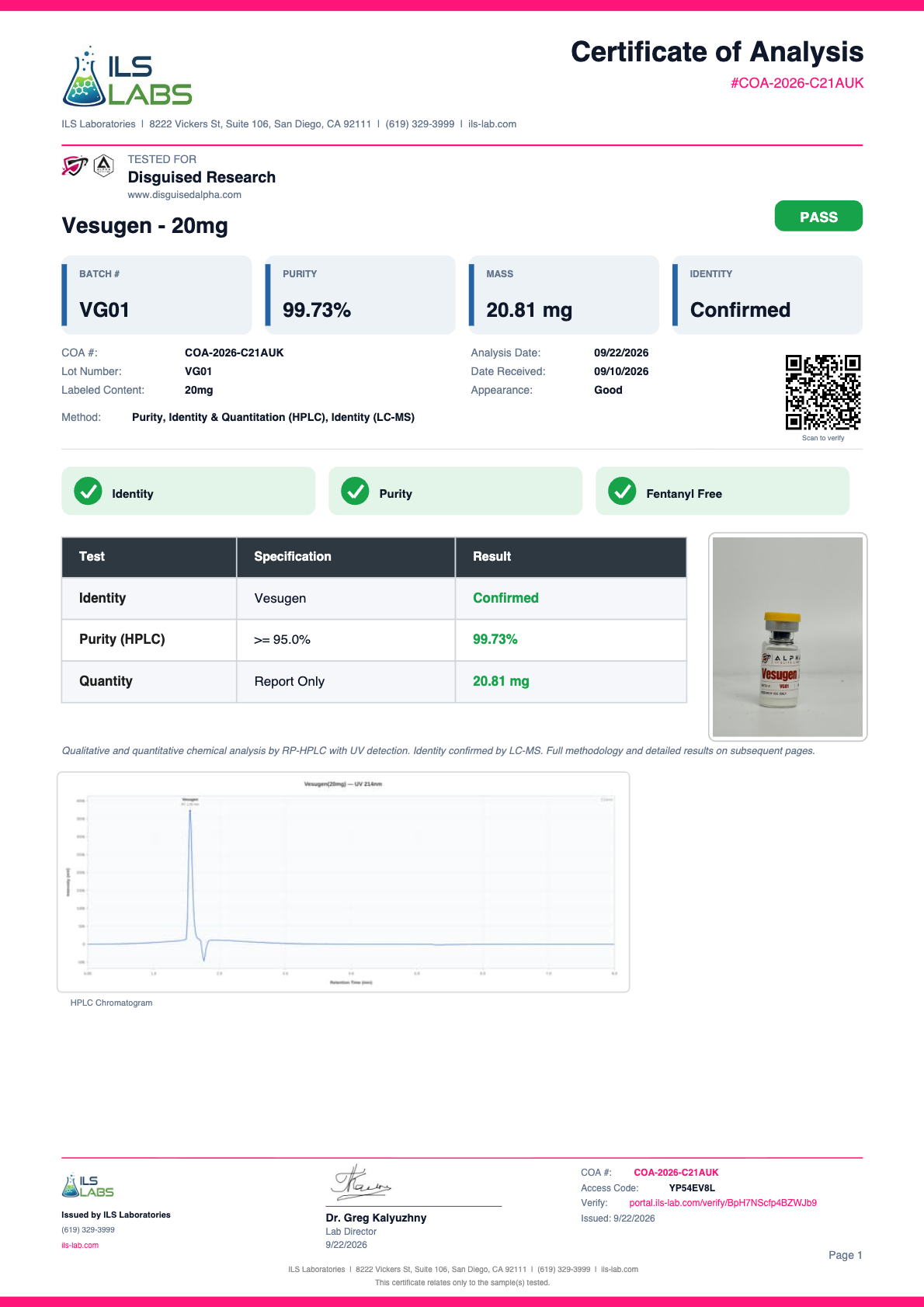
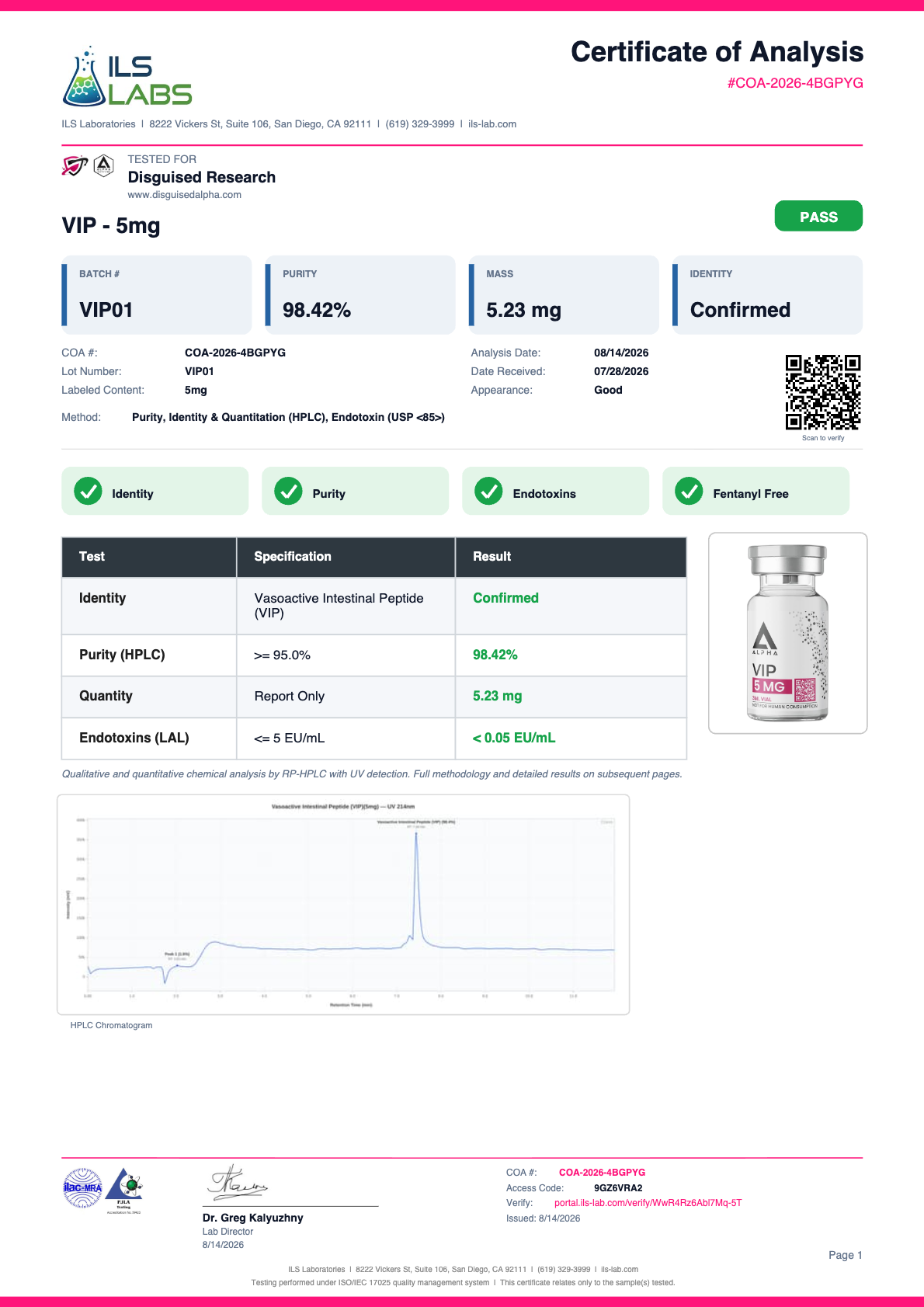
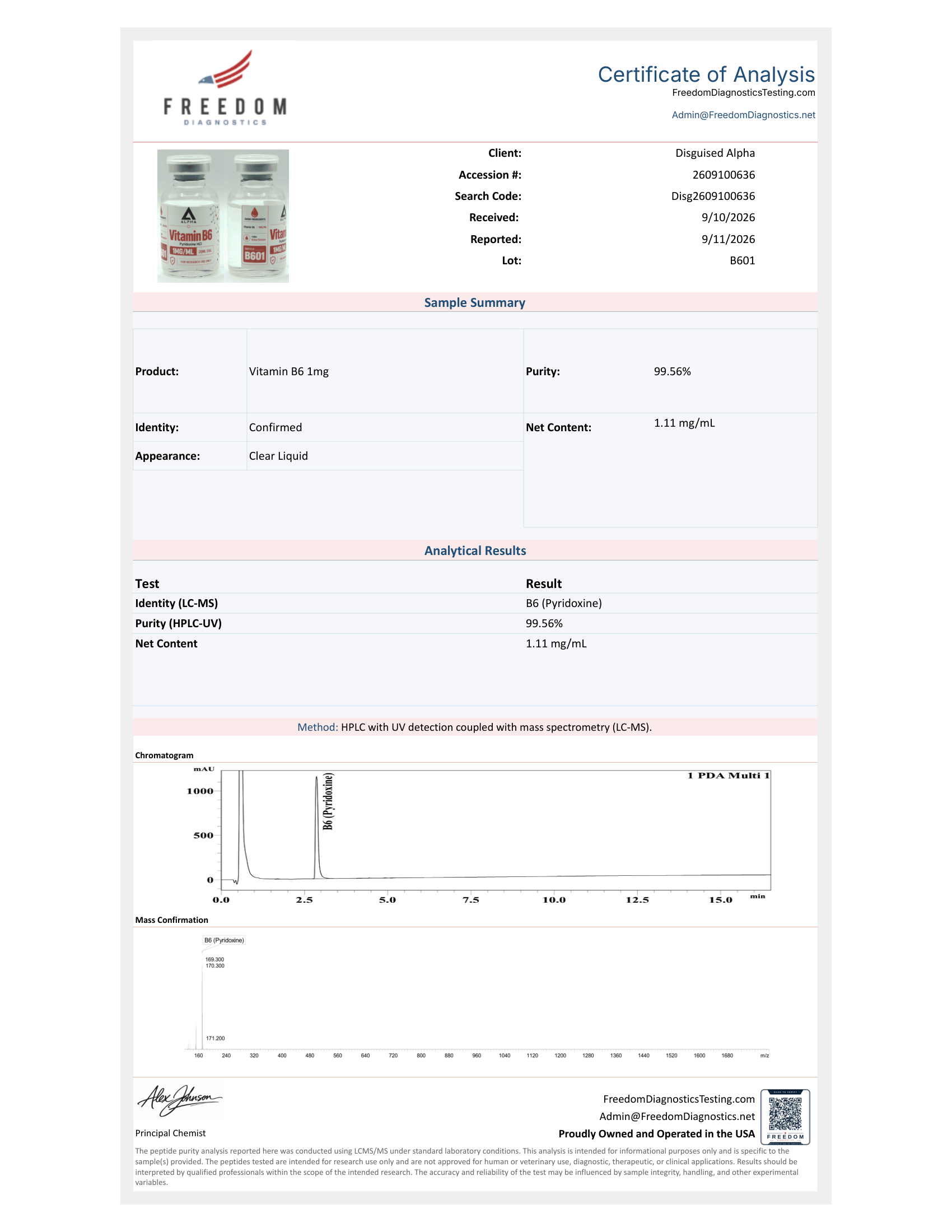
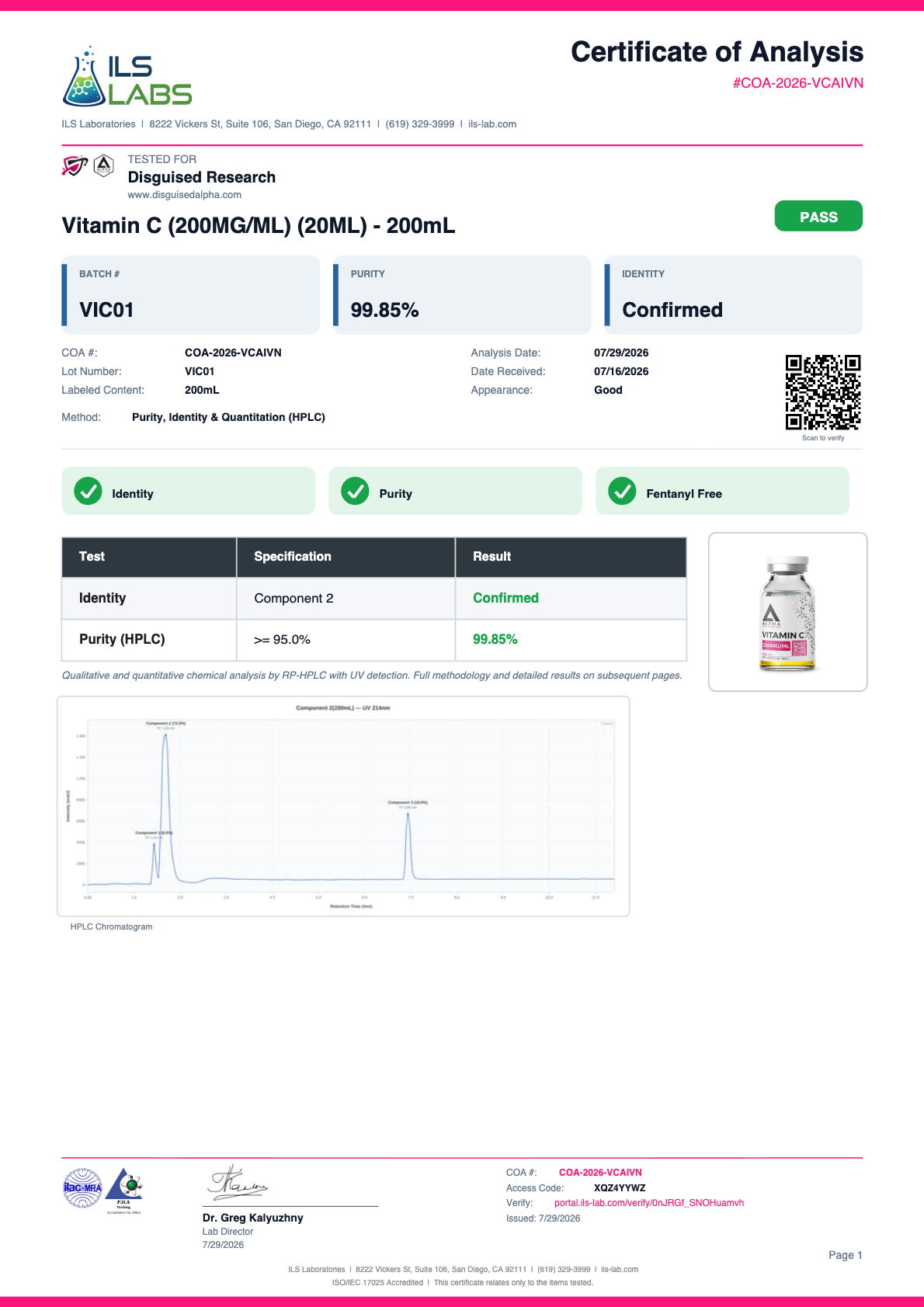
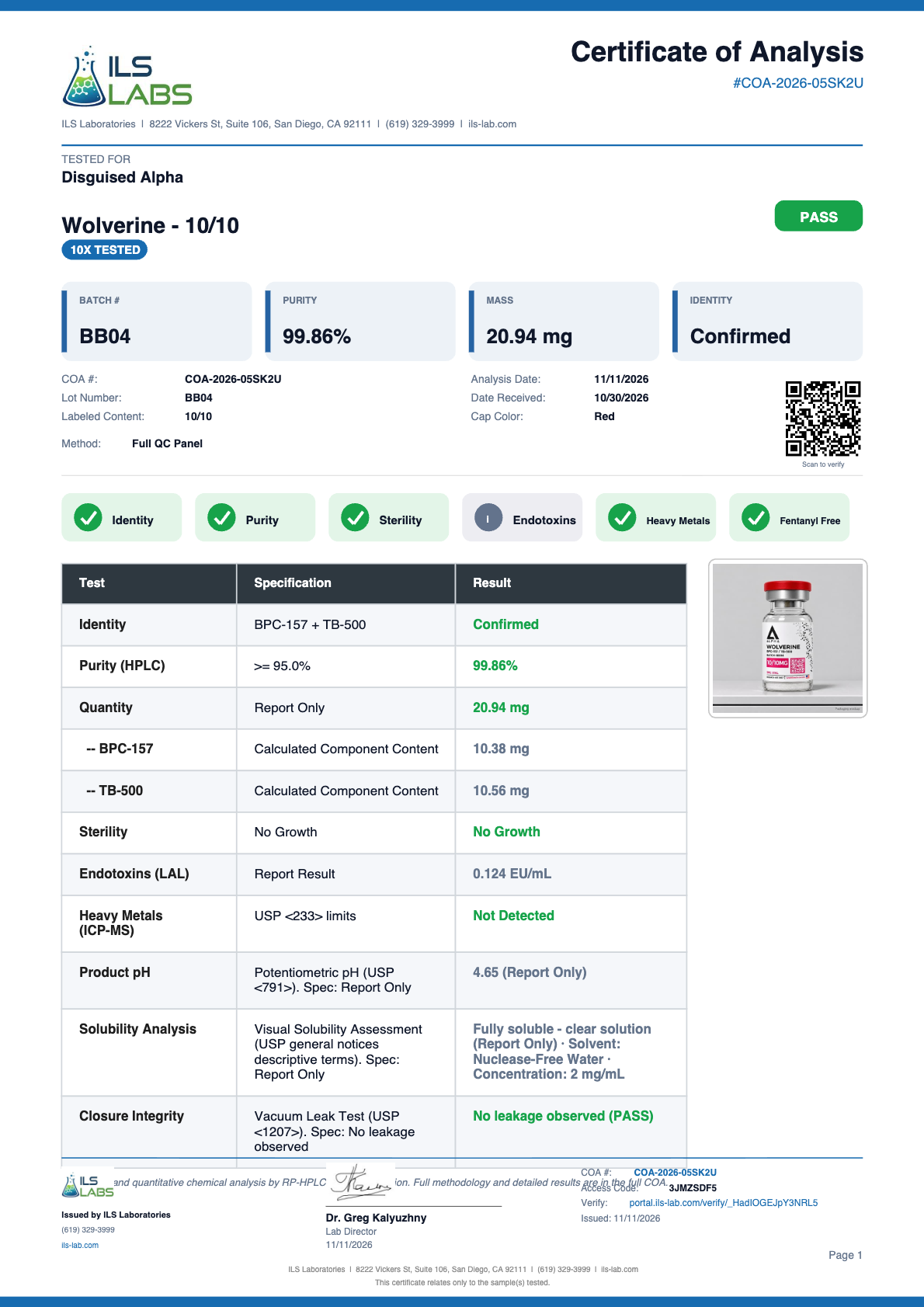
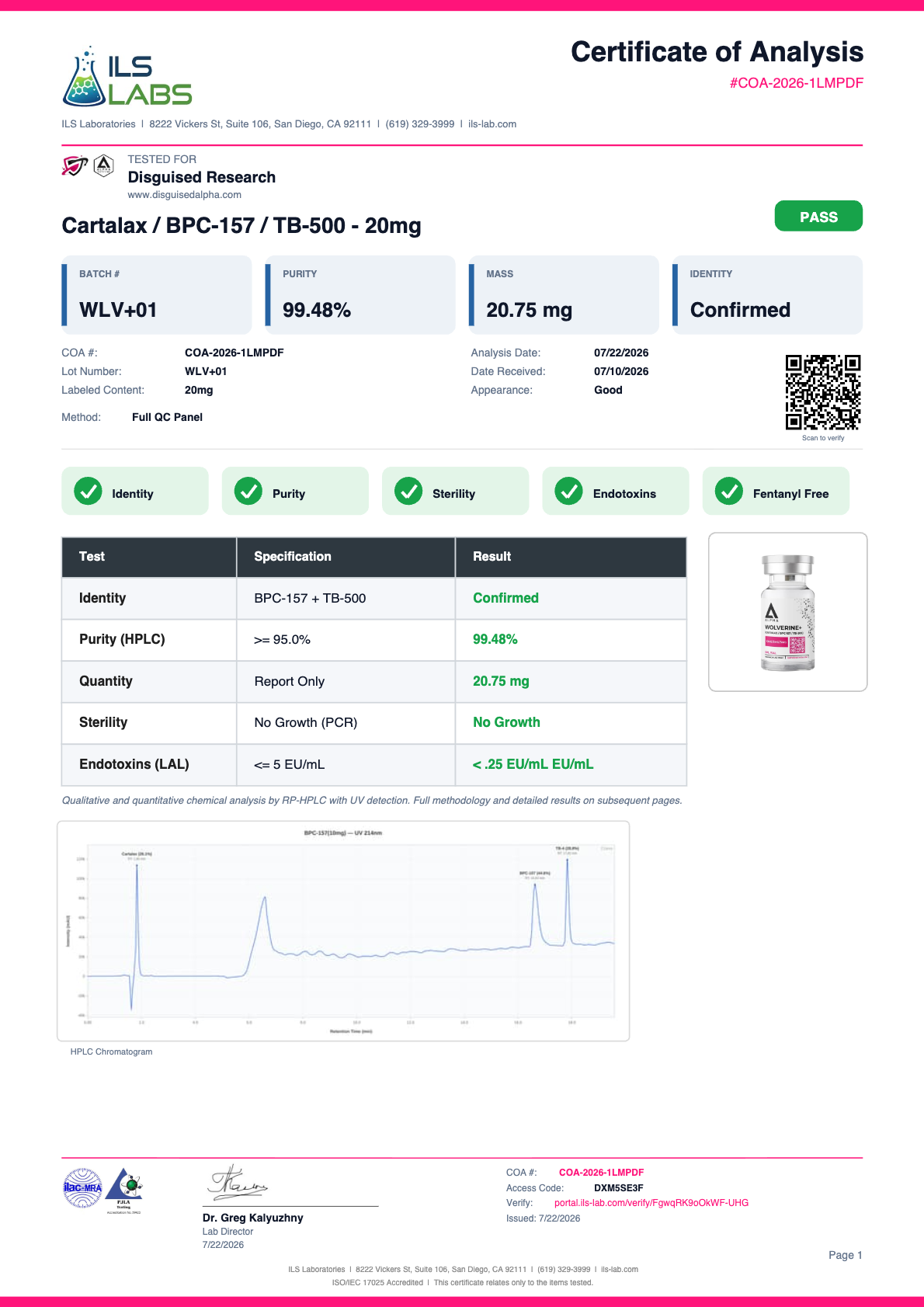
Search third-party laboratory reports for Disguised Alpha research peptides and compounds. Match the product, labeled strength, and batch or report number, then open the original certificate.
Coverage is batch-specific. Up to 10 tests per batch, as applicable. The published report shows which tests were completed.
202Products with reports
469Published report records
5Laboratories represented
Reading the report
How to read your certificate.
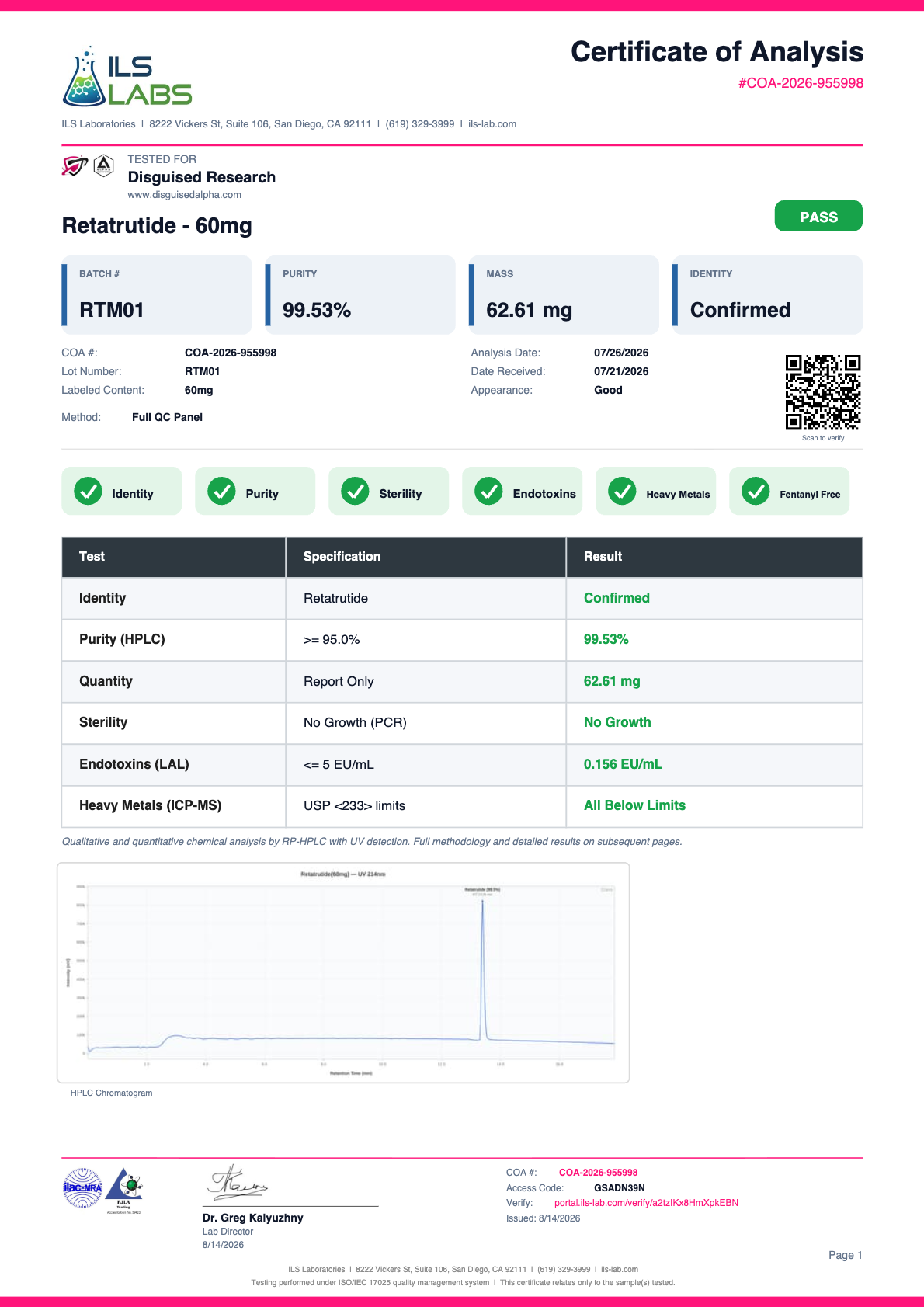
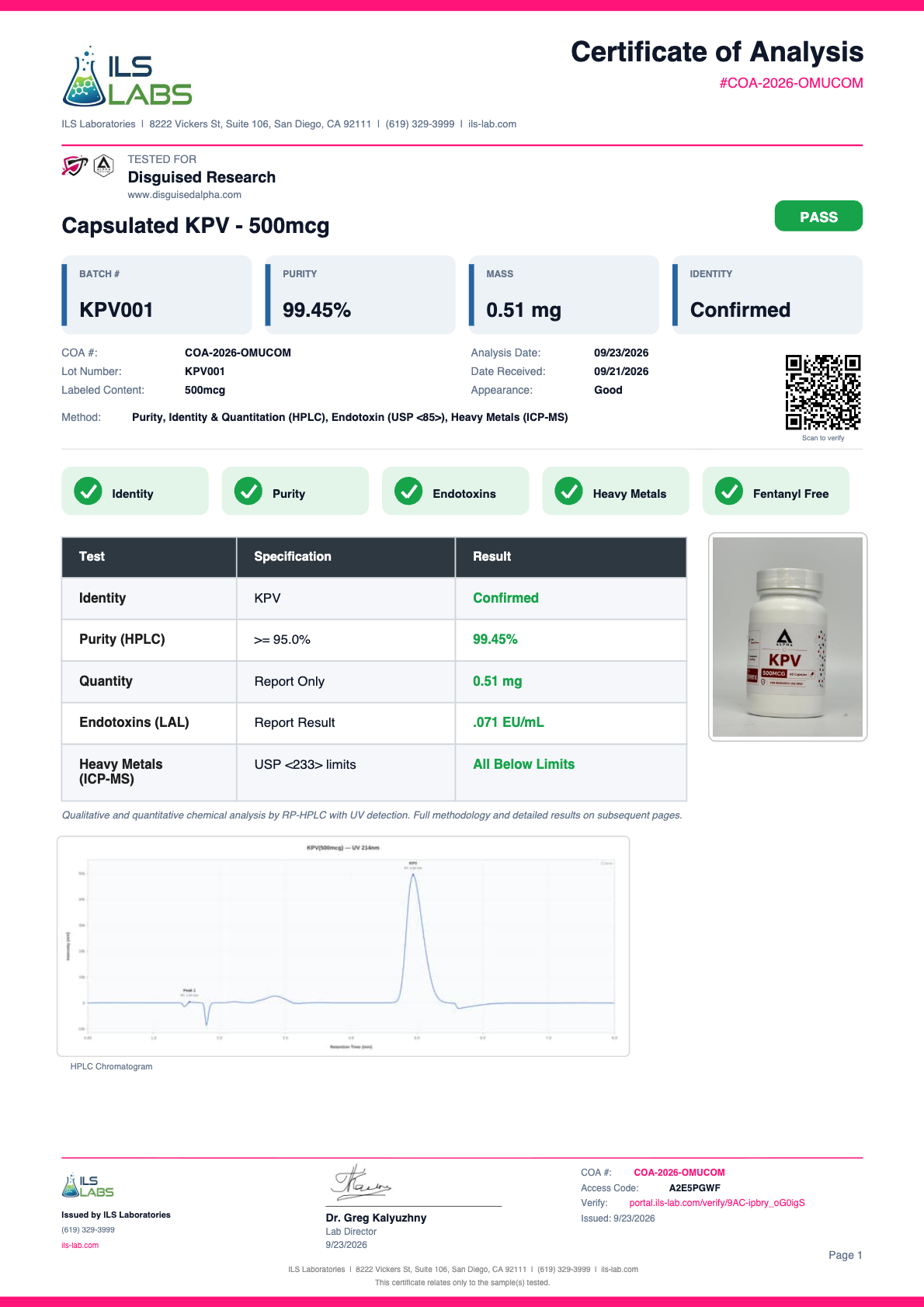
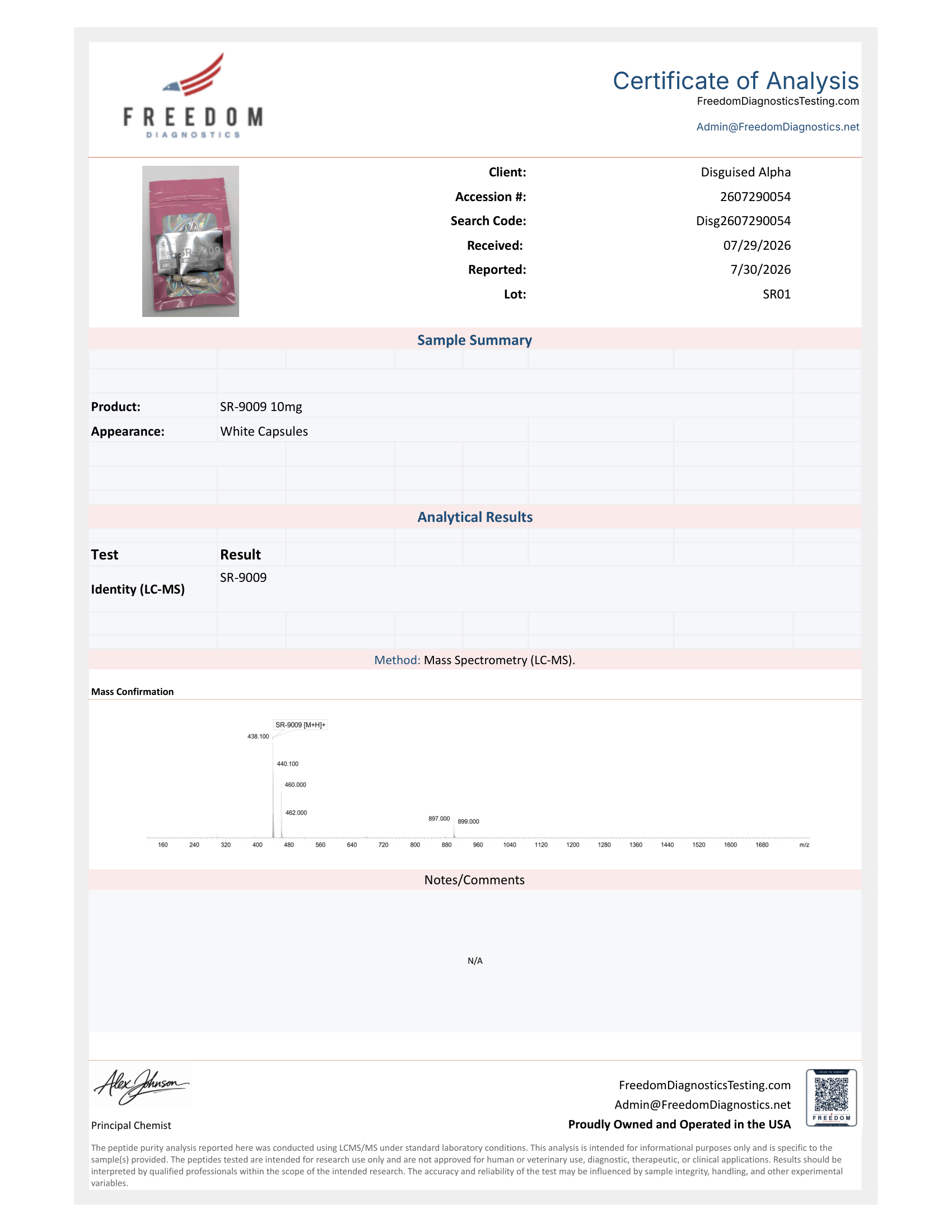
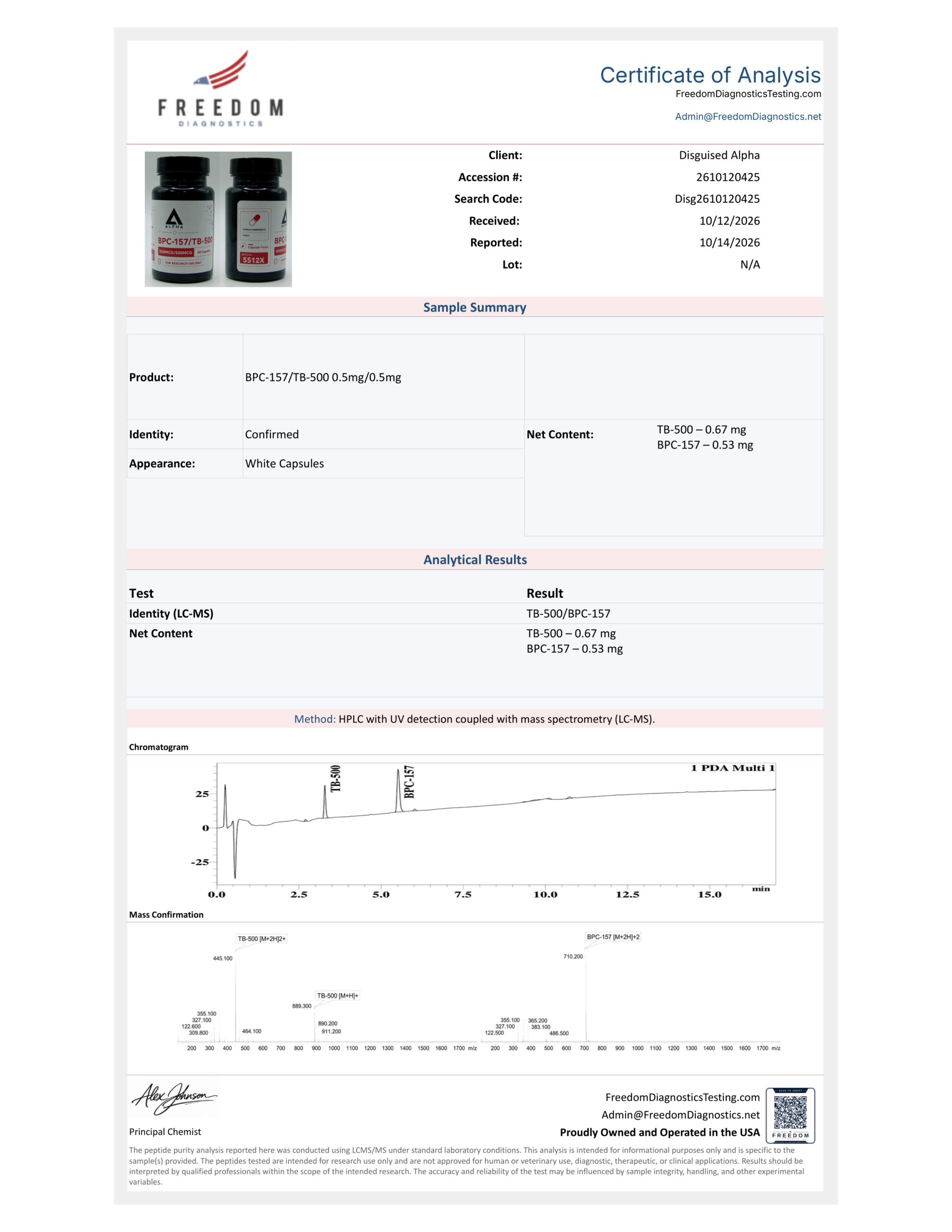
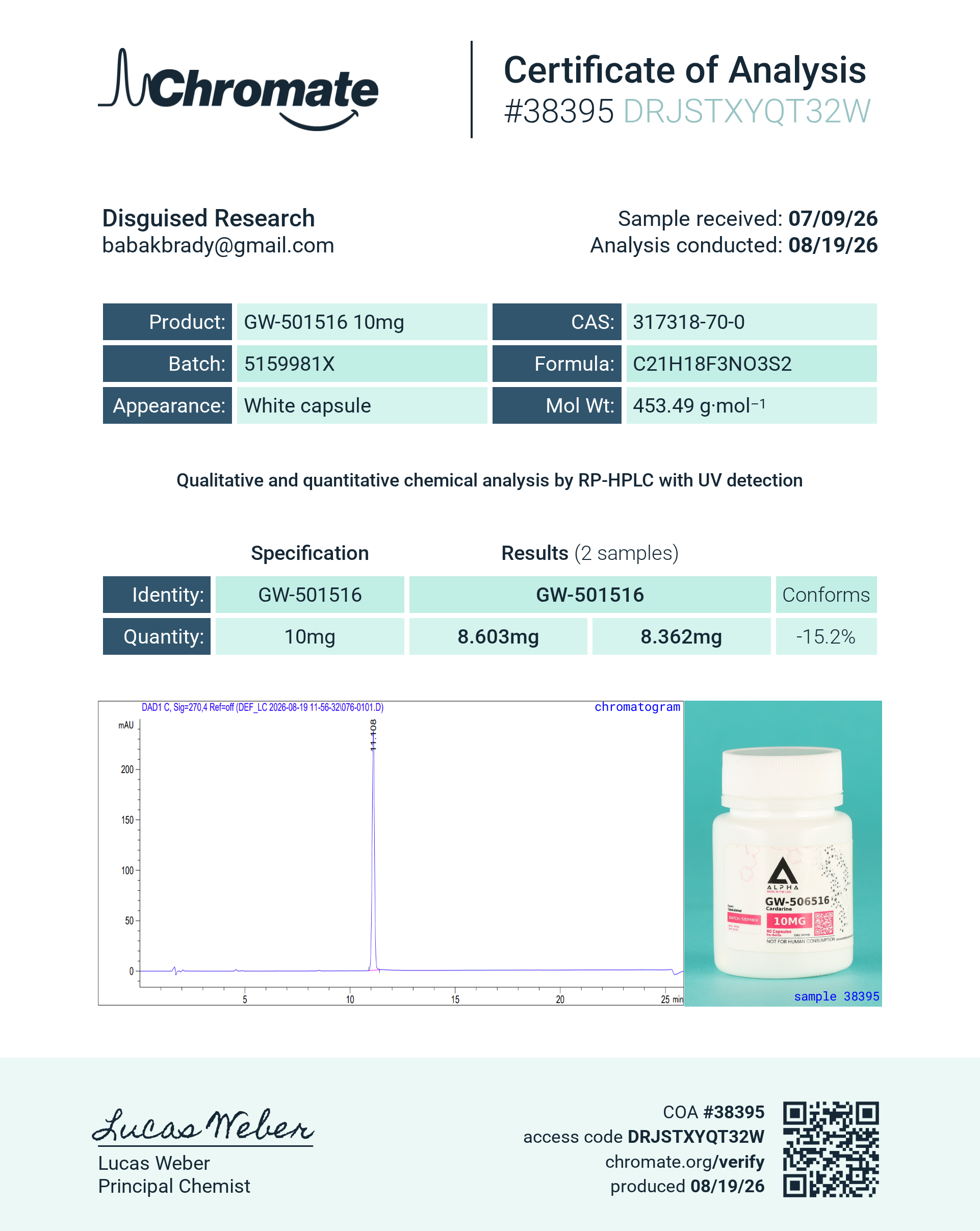
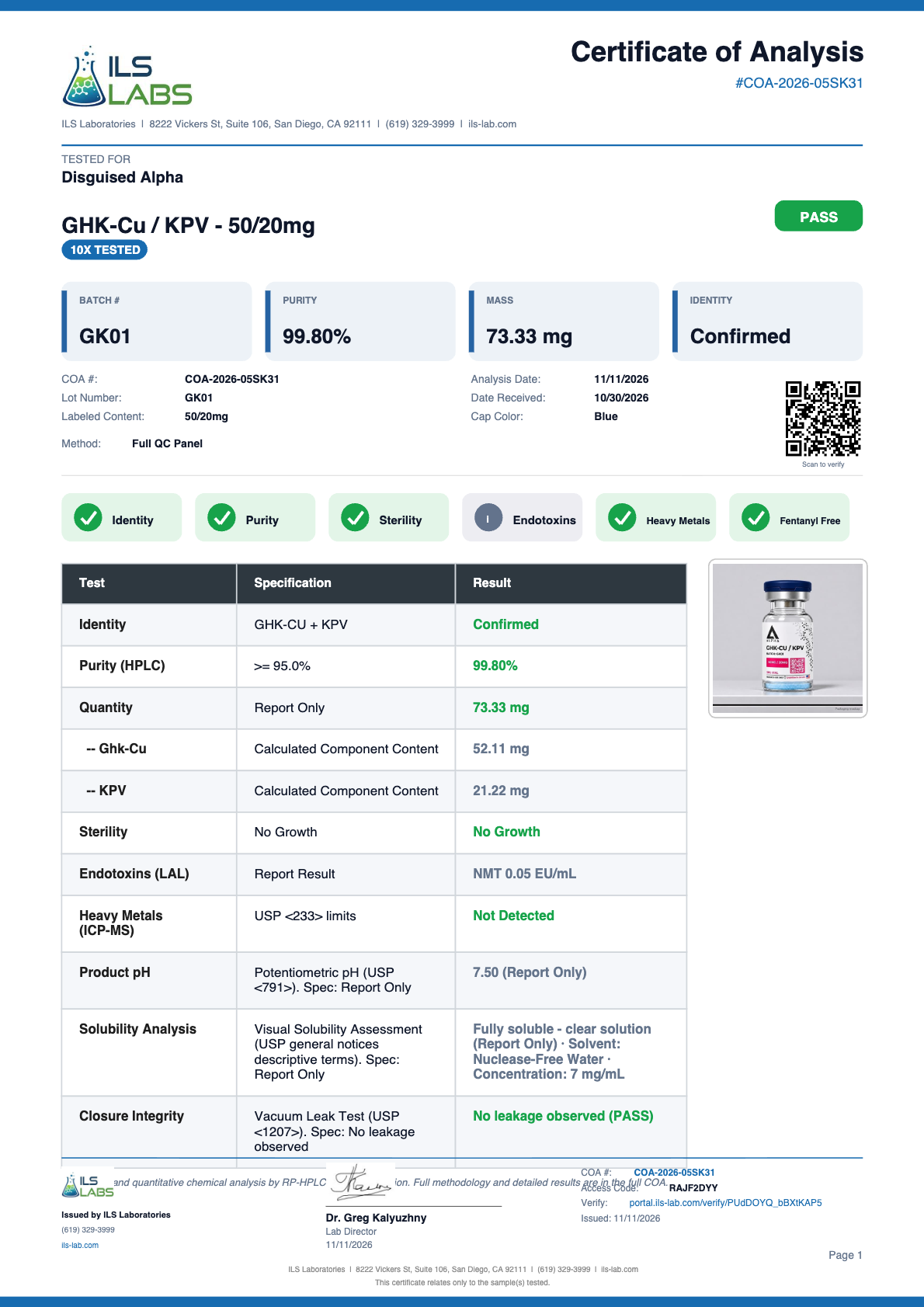
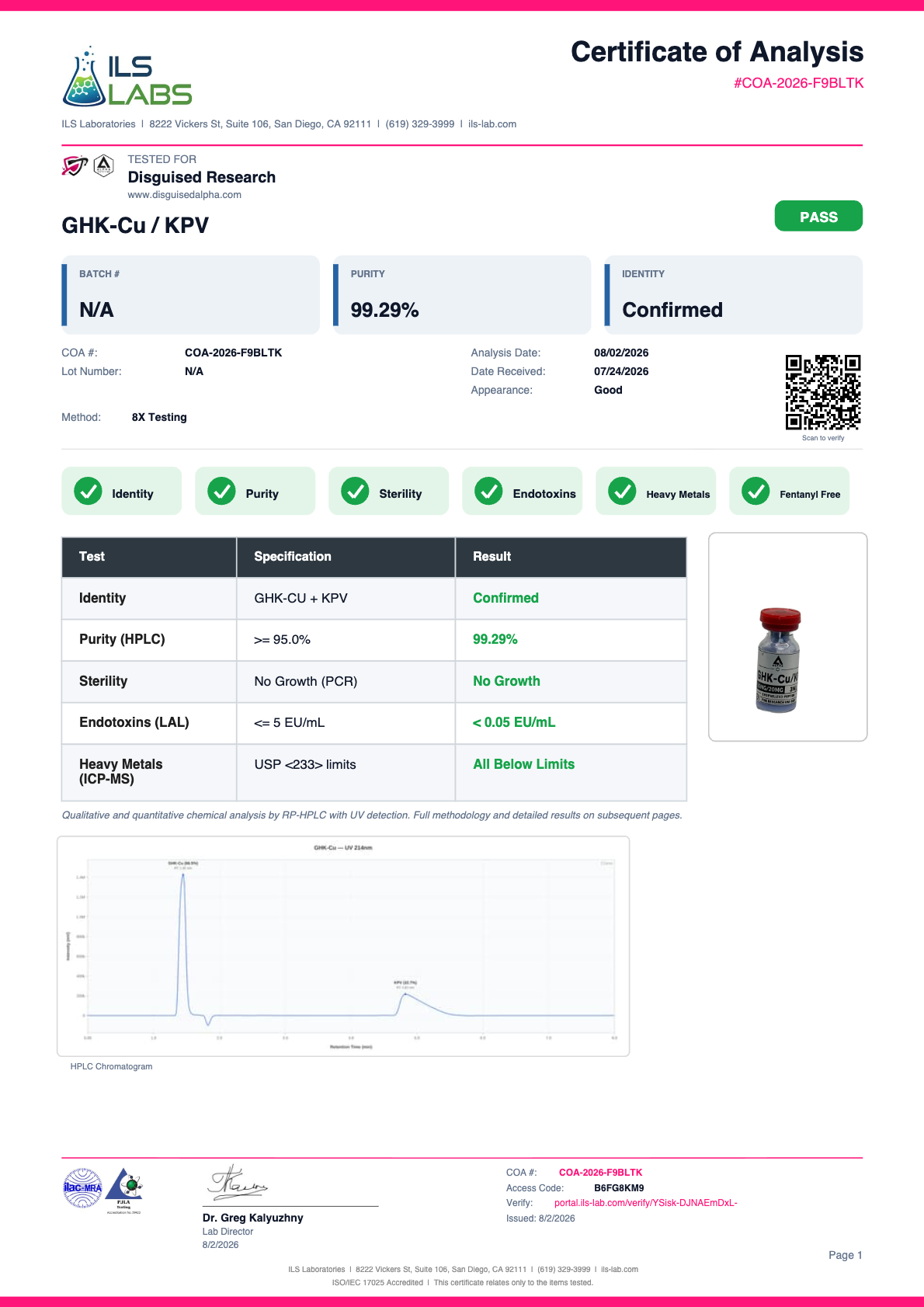
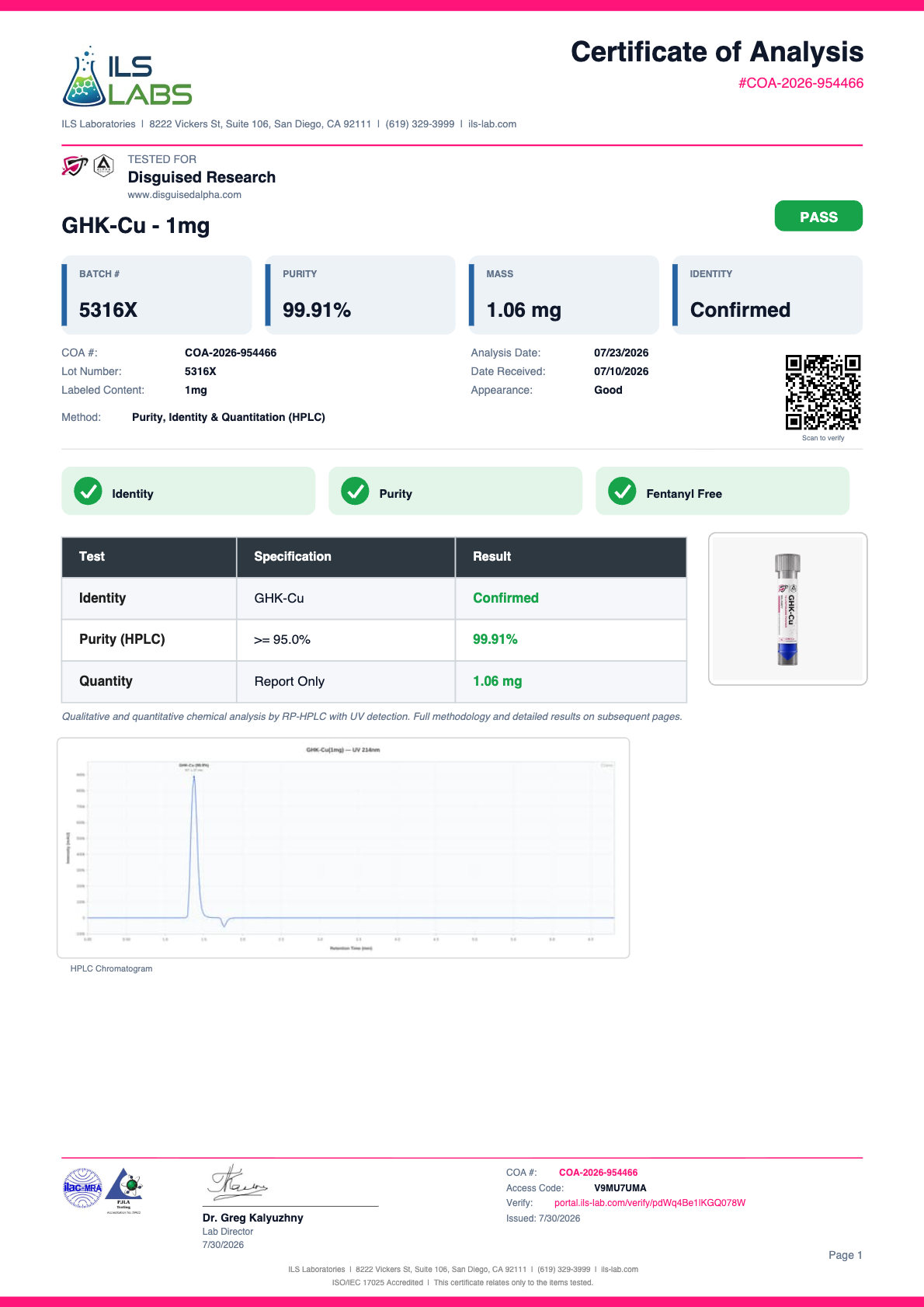
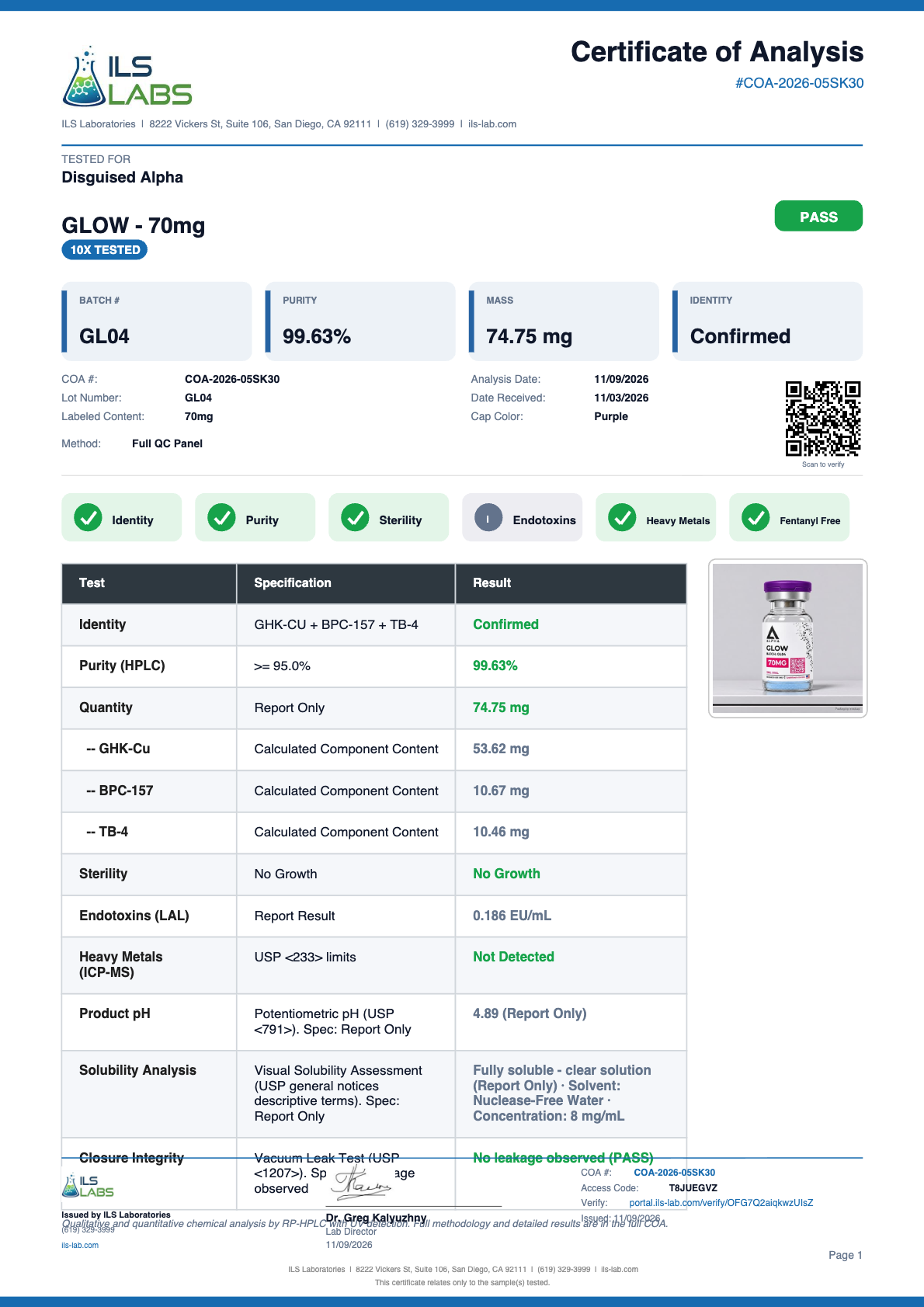
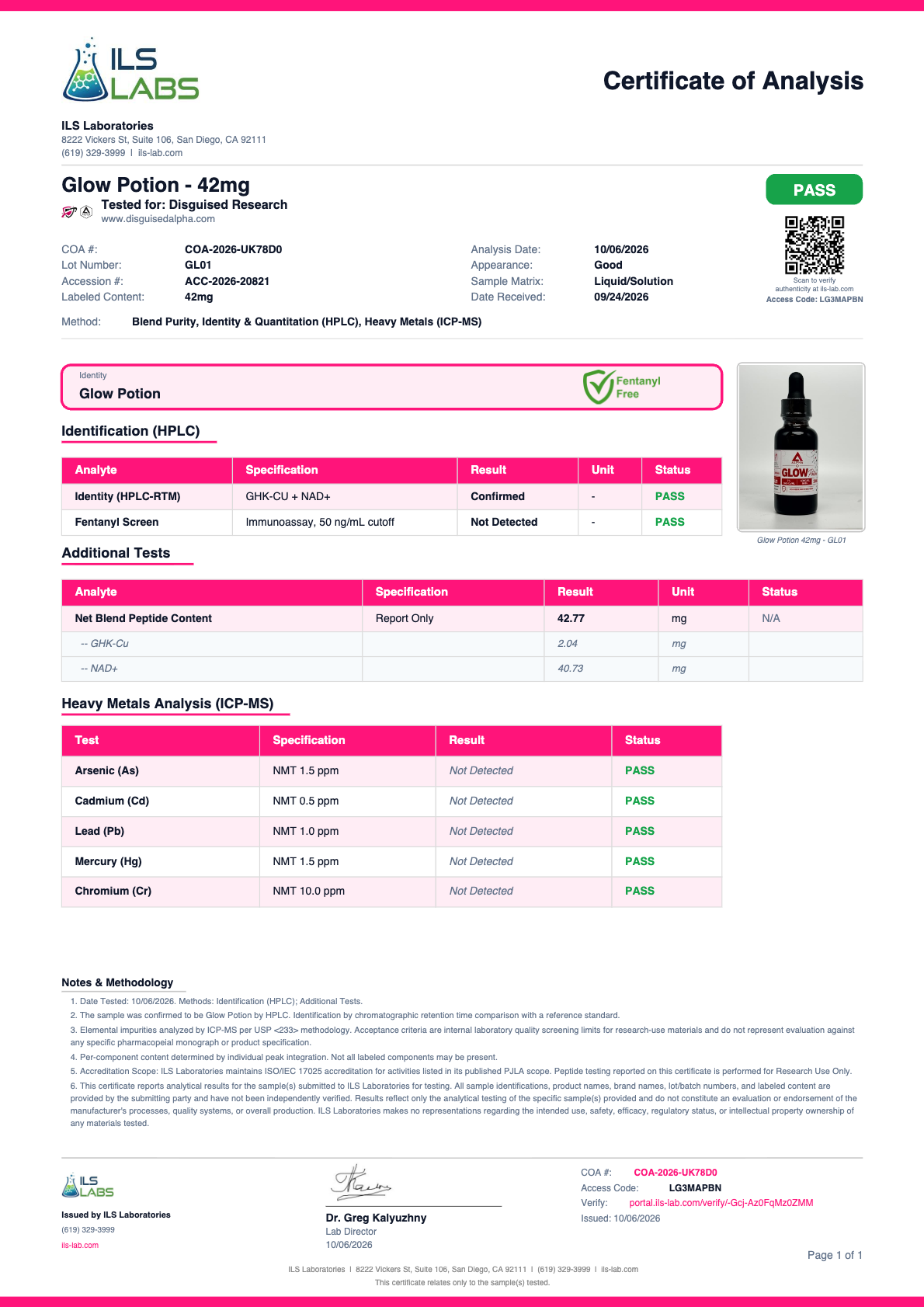
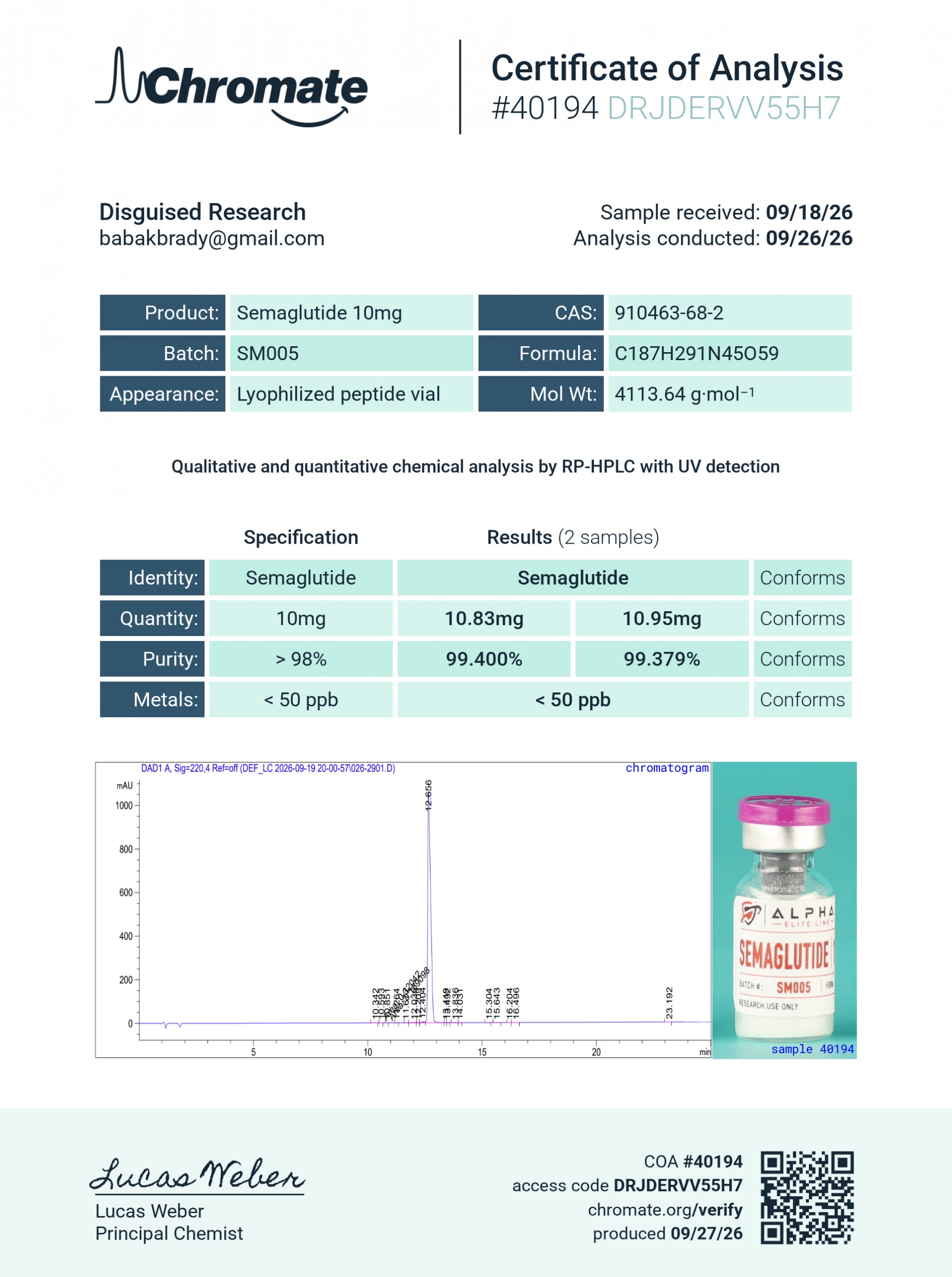
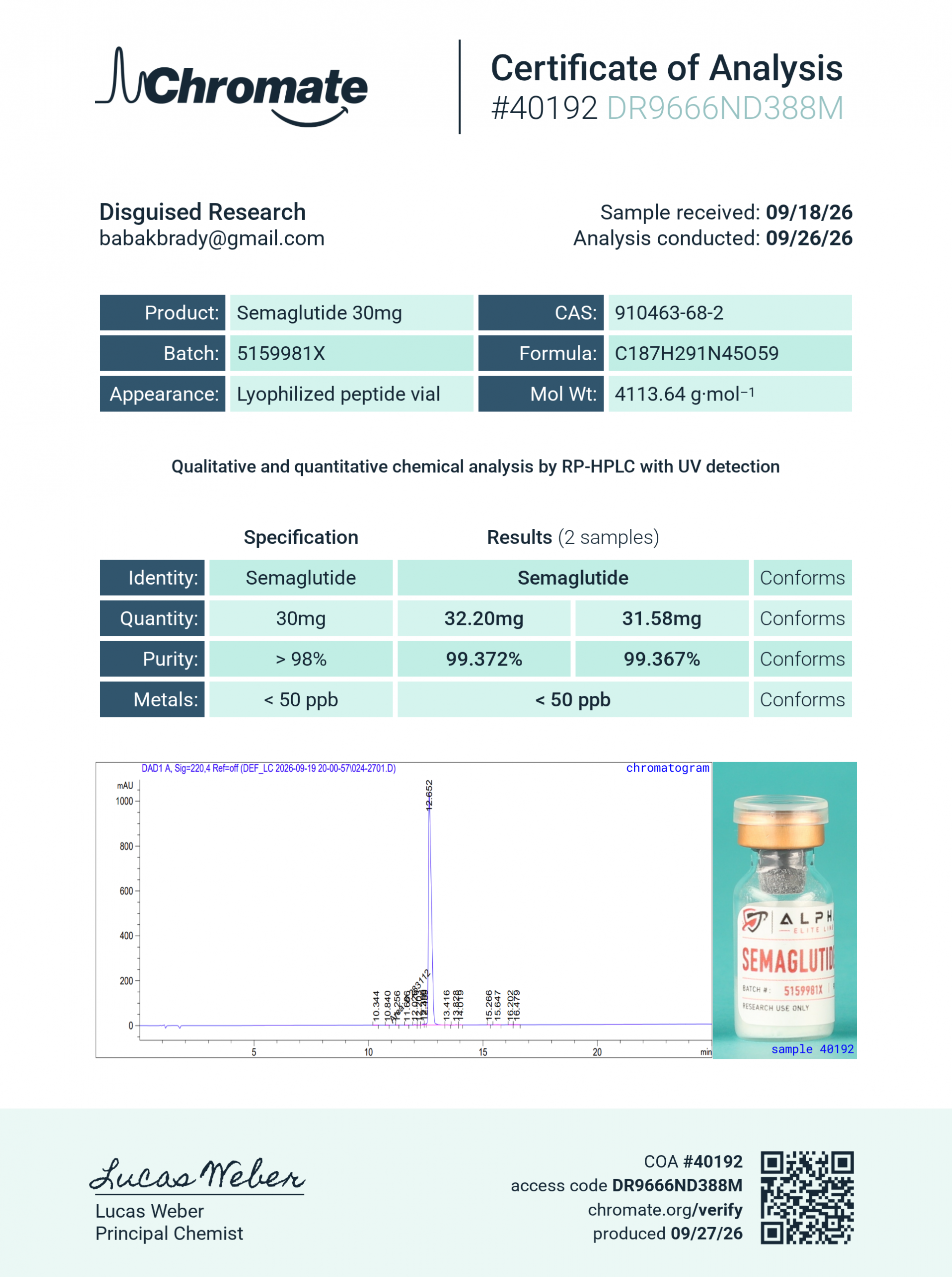
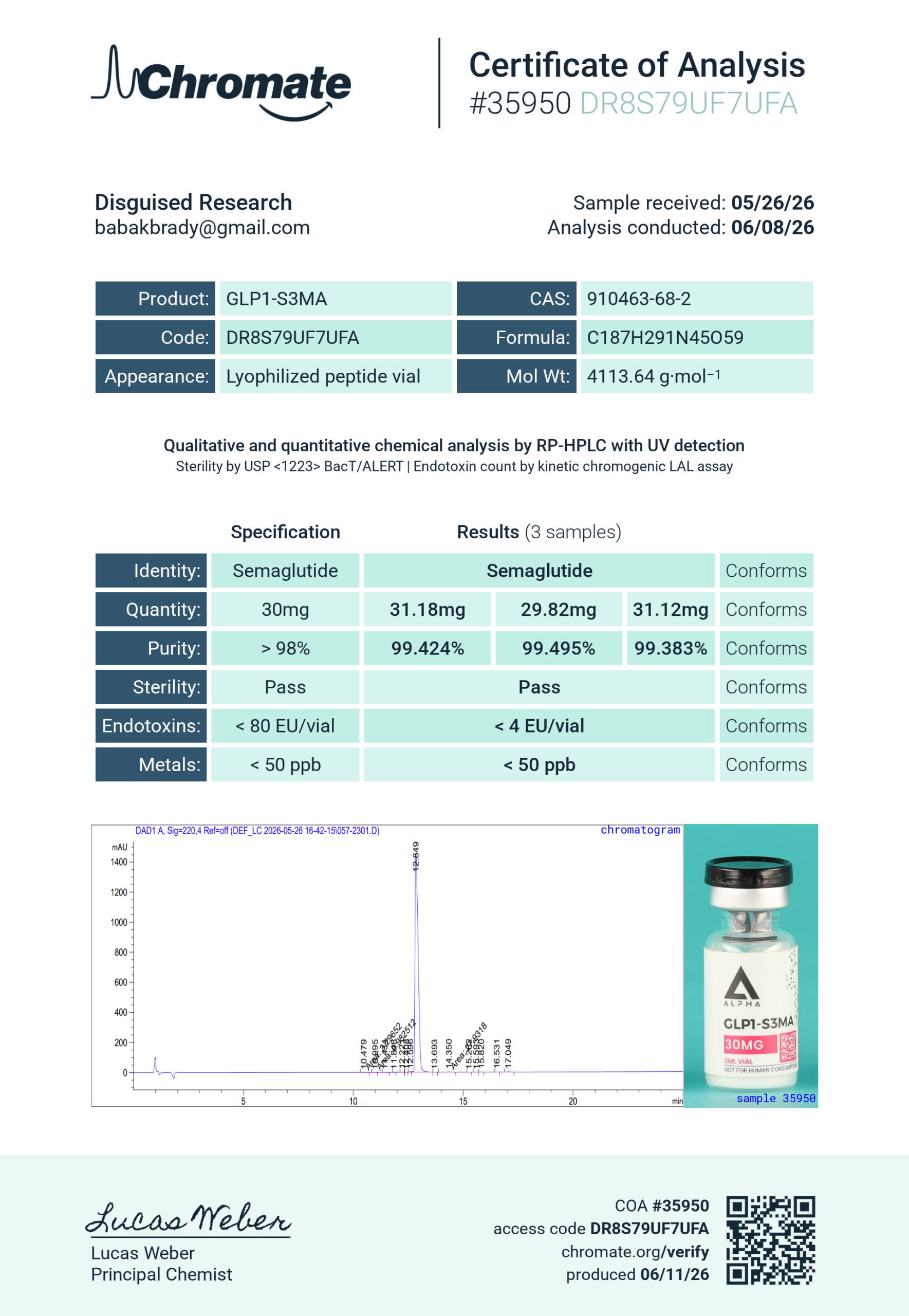
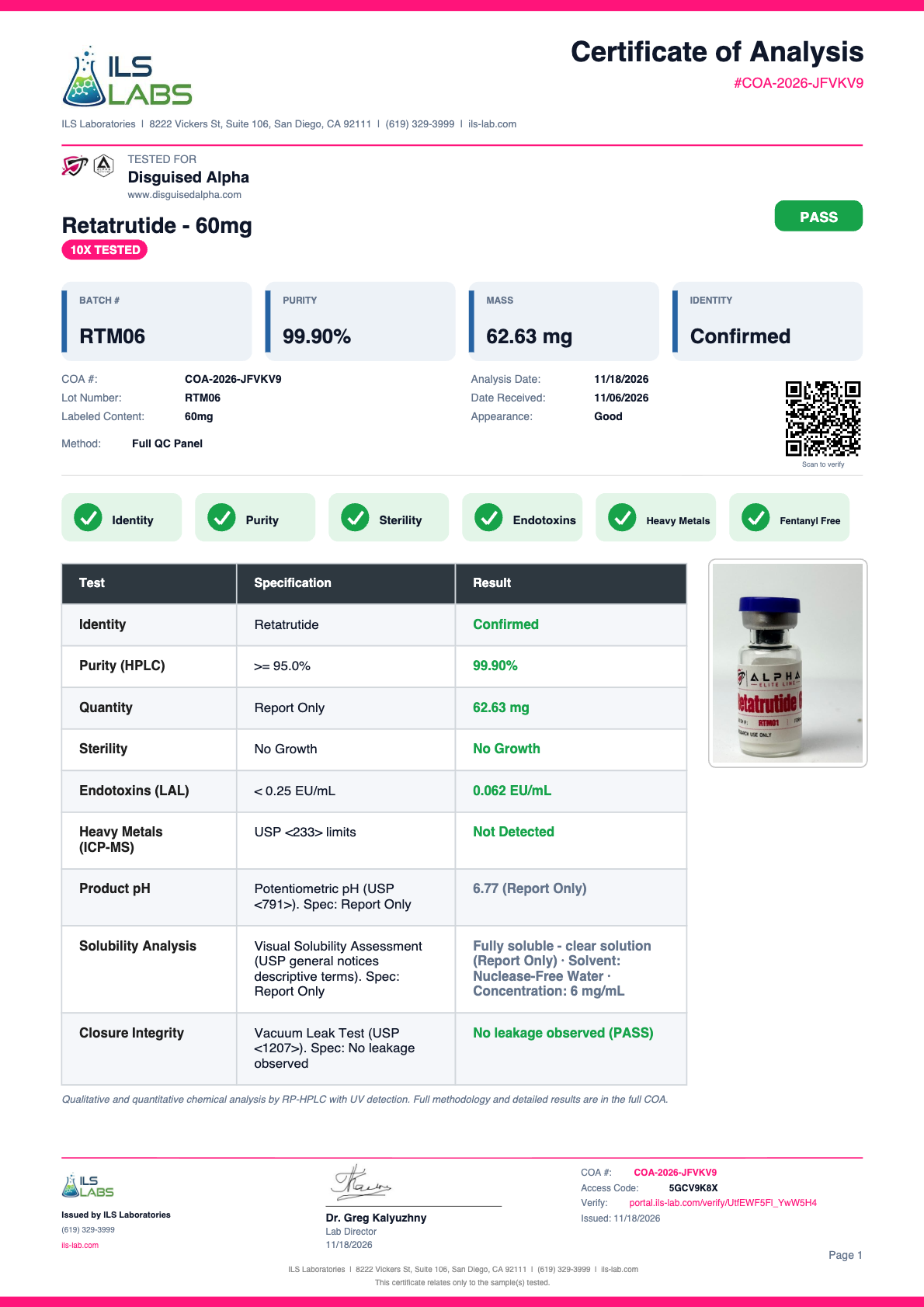
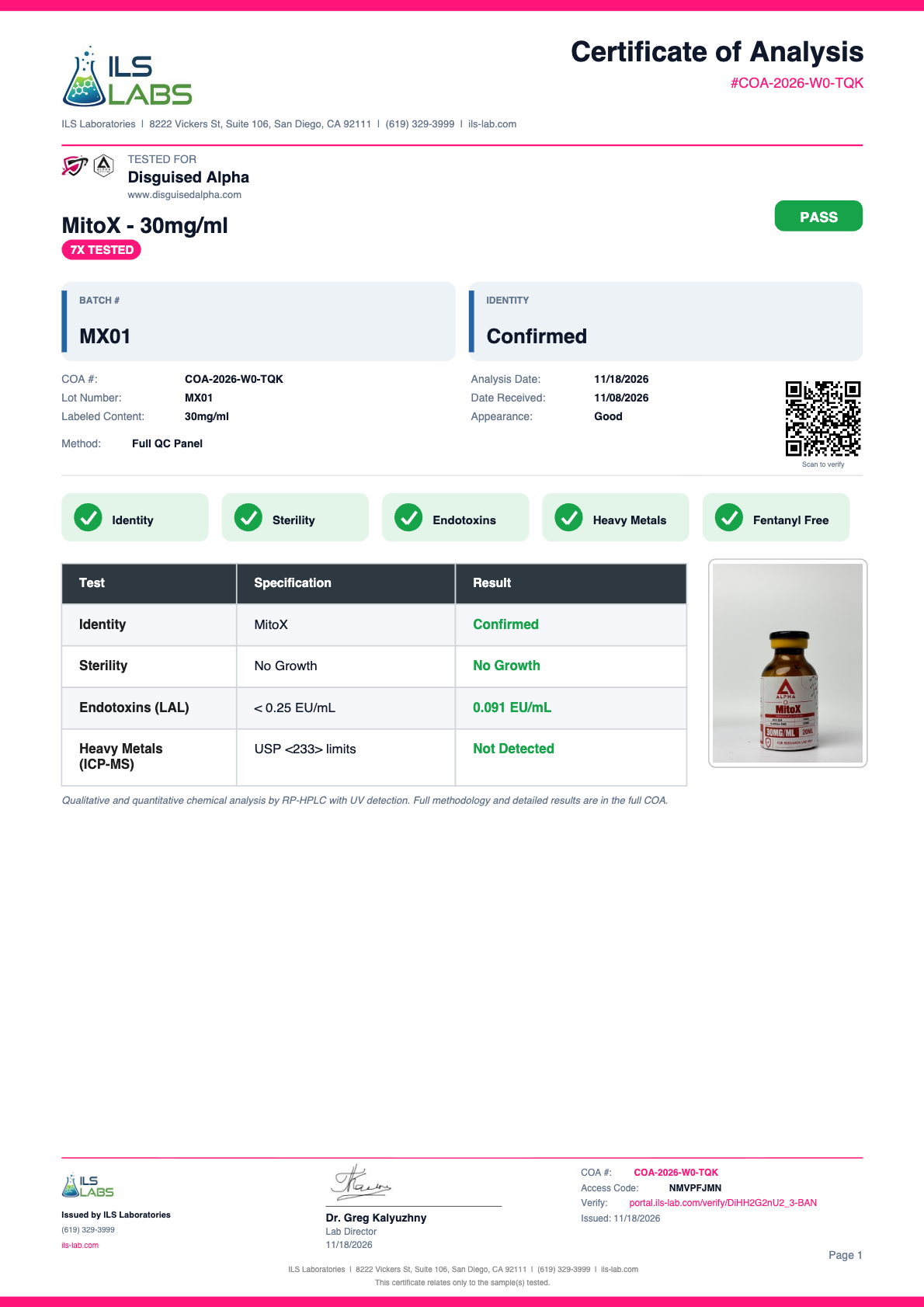
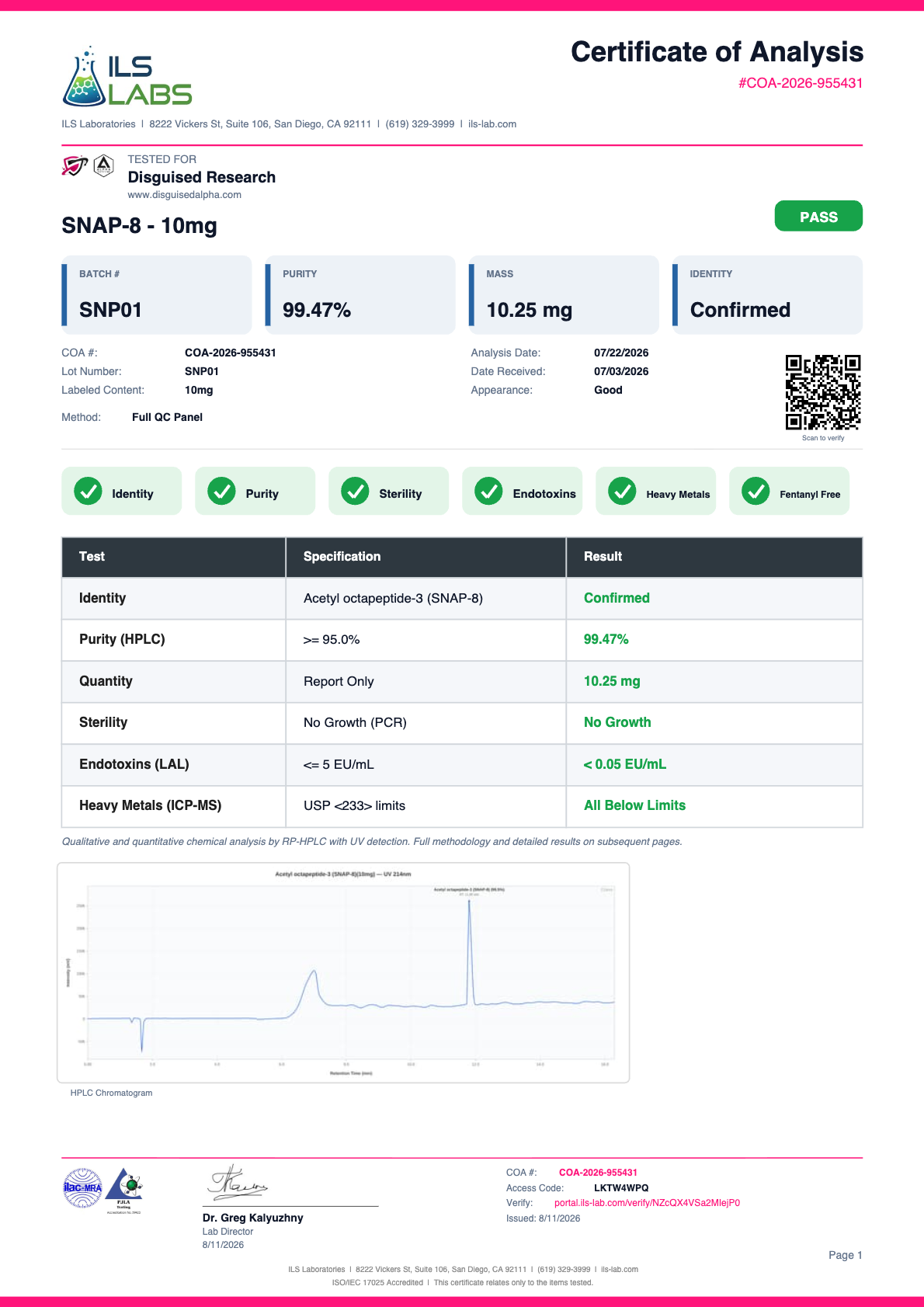
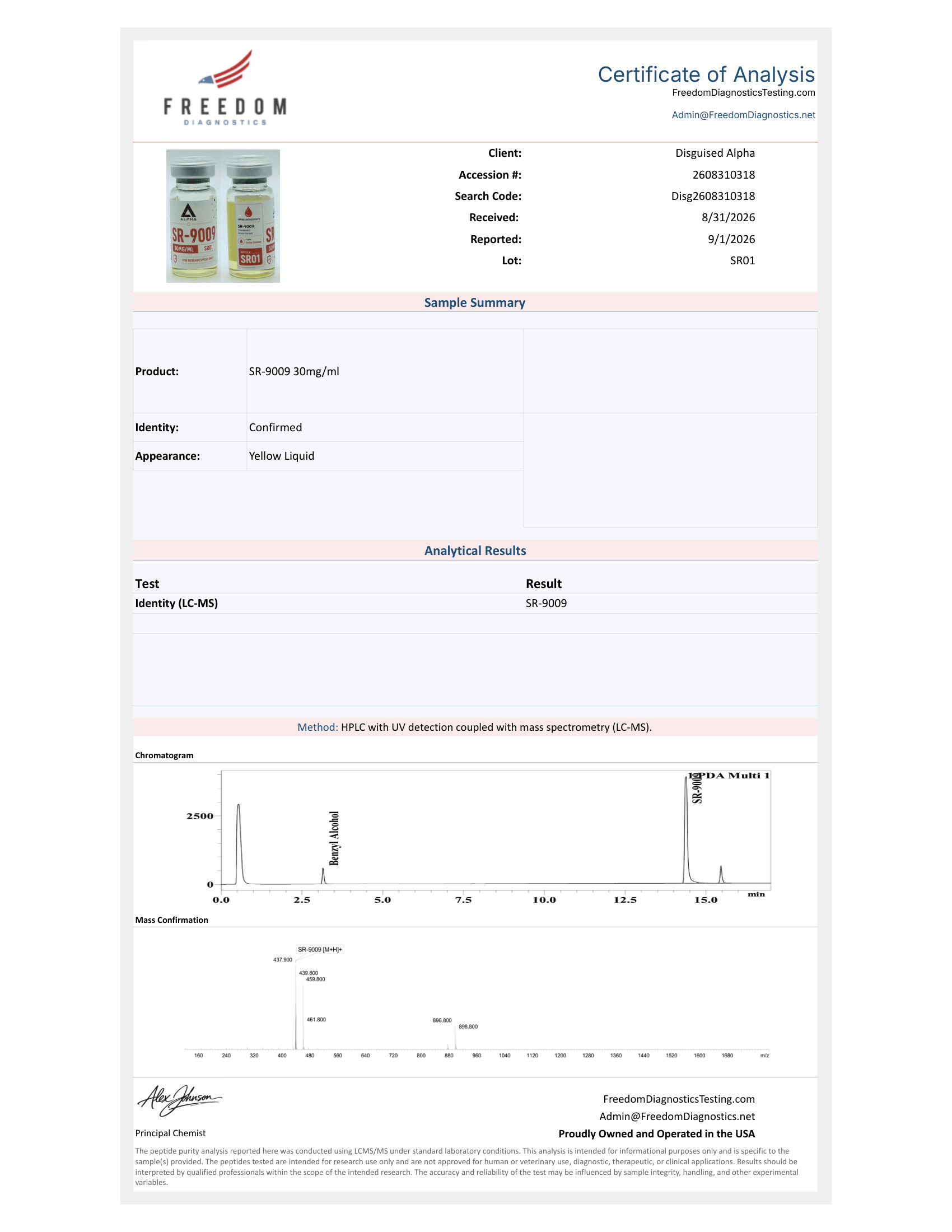
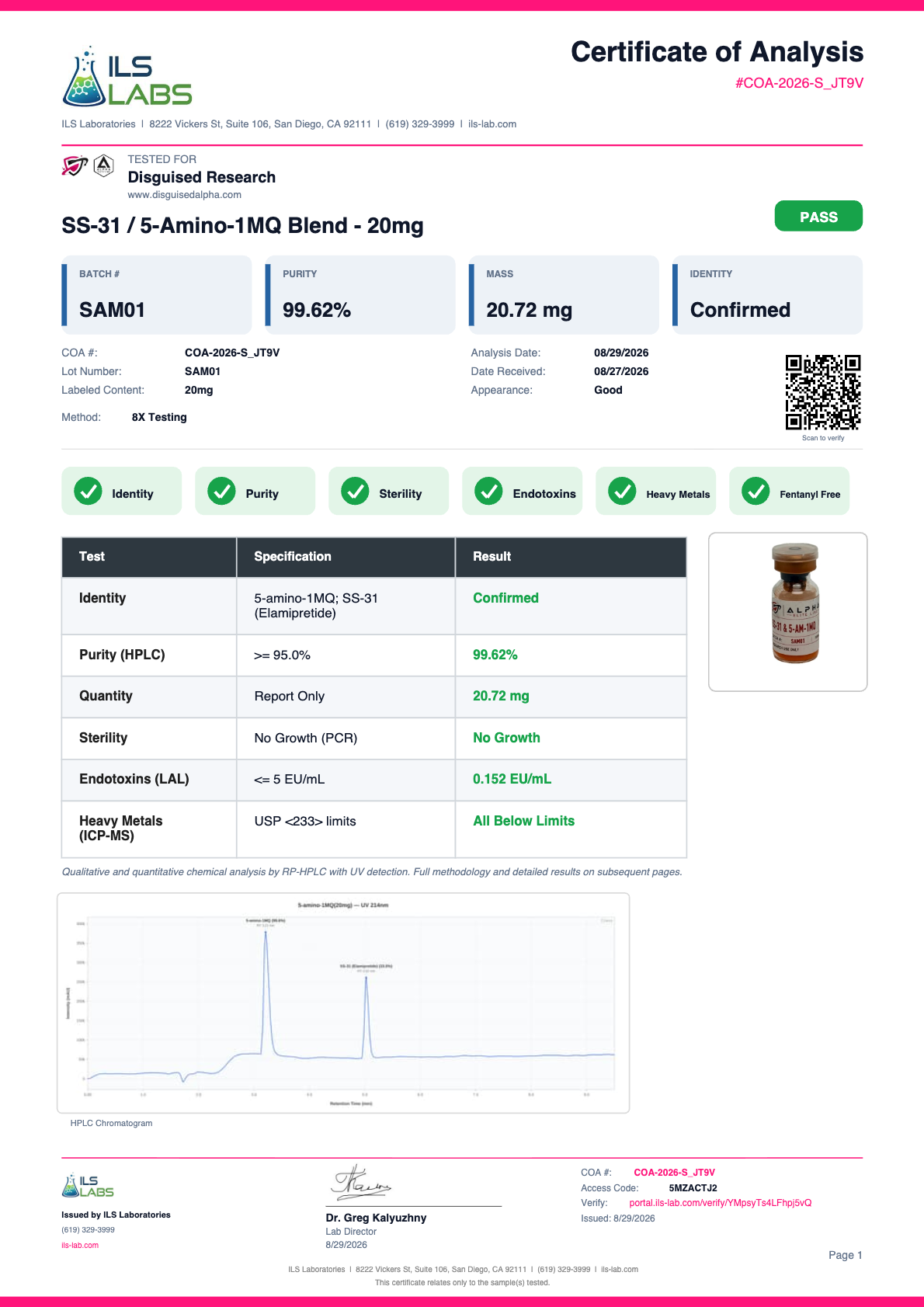
Every certificate in this library is the laboratory's own report. Five things on it tell you what you need to know. Hover the document to look closer.
Batch number
Step 1 of 5Batch number
RTM01
Same lot as the label on your vial.
COA numberCOA-2026-955998
LaboratoryILS Laboratories
StandardISO/IEC 17025
Received07/21/2026
Analyzed07/26/2026
Issued8/14/2026
Example: GLP-3 RT, lot RTM01, tested July 26, 2026. This older certificate has a six-check summary; it is not the expanded 10-test panel.Open this certificate →
Search the library
Your report, a few details away.
Current and historical reports, together.
Combine details such as “BPC 10mg” or search the number printed on your report.
Counts reflect the report records displayed here. Historical reports may relate to earlier inventory. Product cards may include multiple strengths; match the details on the original certificate before using it as a batch reference.
THE 10 TESTS, EXPLAINED
One clear list. Every check explained.
Each test answers a different question. Match your product, strength, and batch first, then review the methods and results on the original certificate.
01
Identity
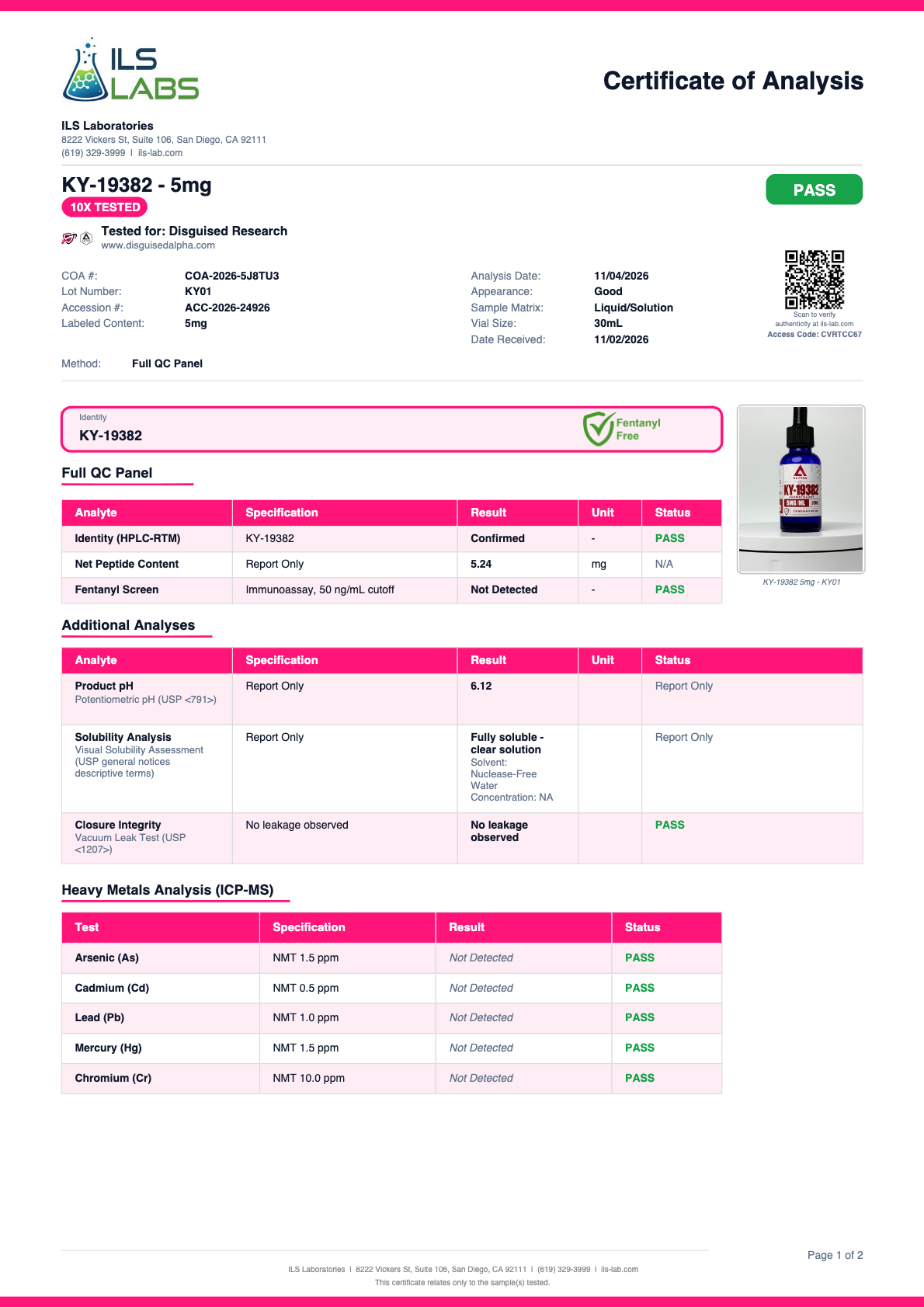
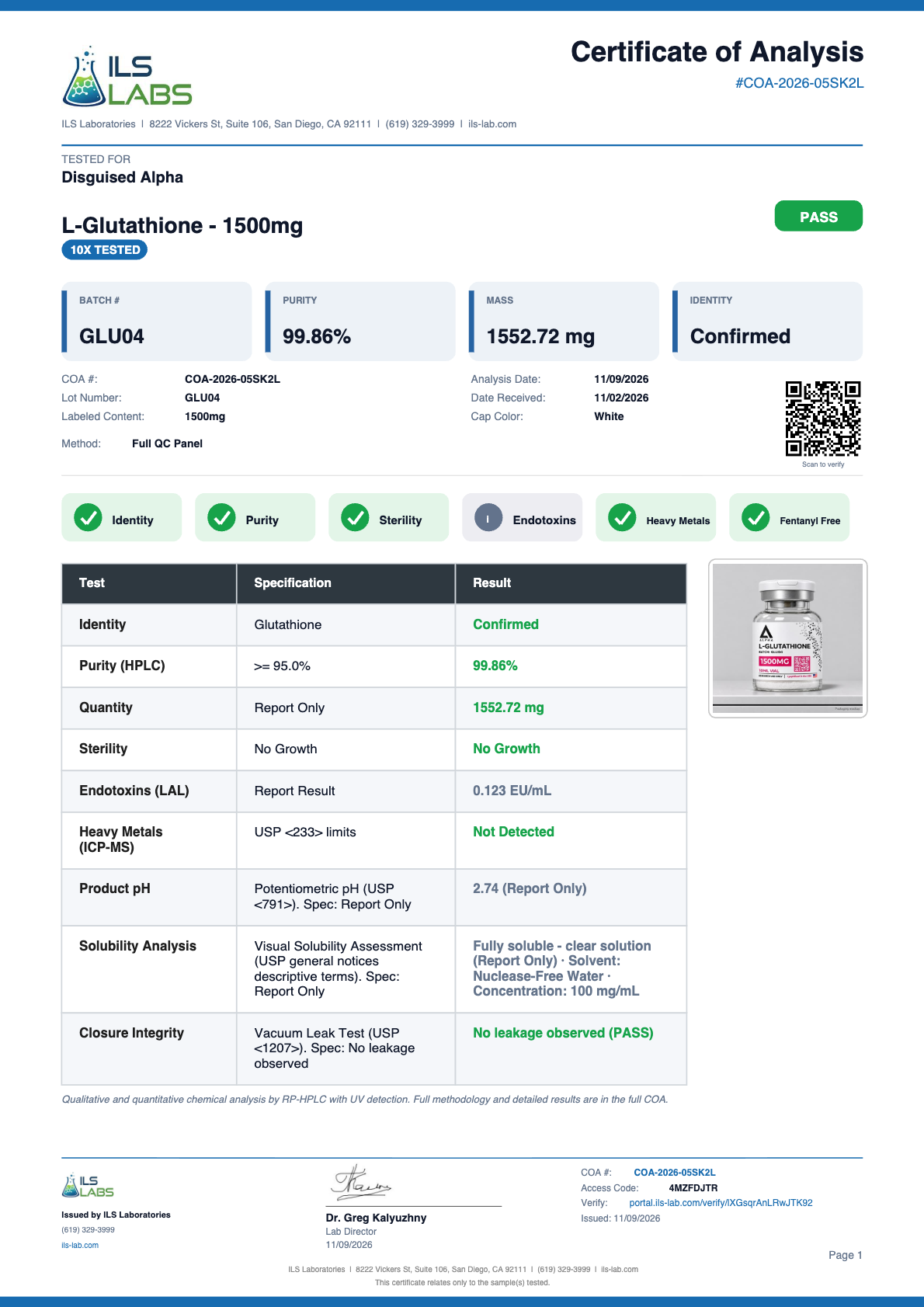
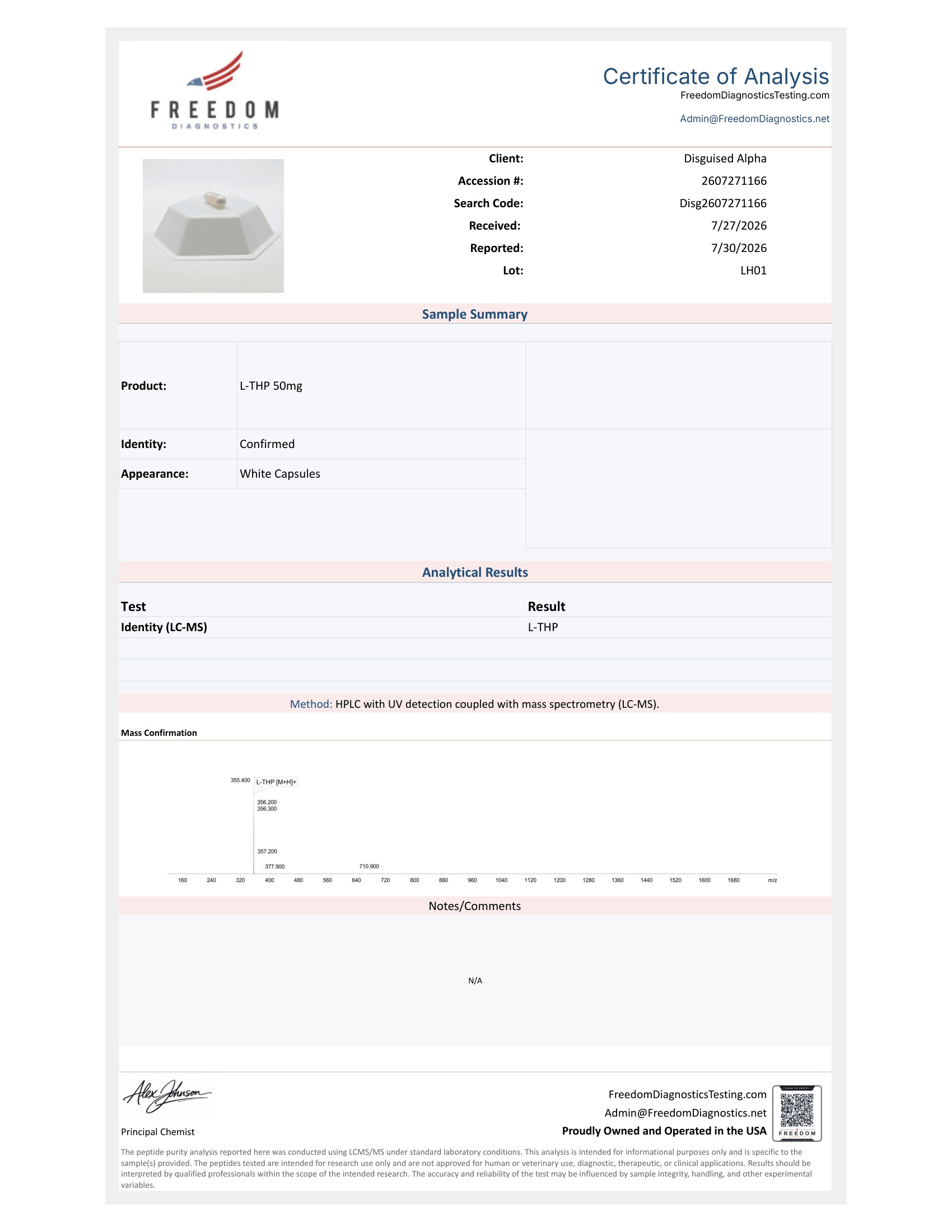
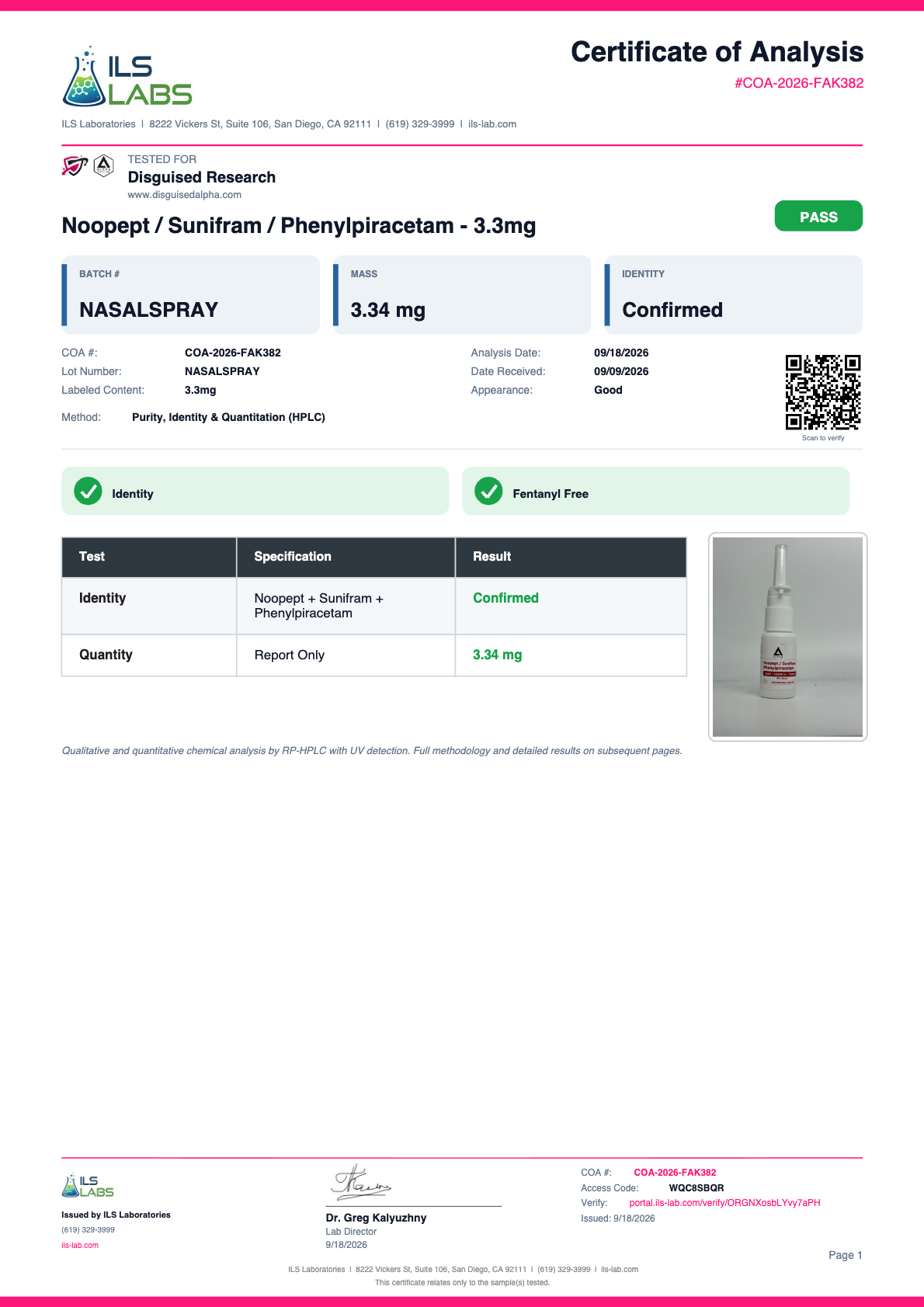
Confirms the identity of the submitted compound using the method stated on the certificate, such as LC-MS.
Why it matters Research starts with the correct material. Identity evidence helps check that the submitted sample matches the intended compound.
02
Purity
Reports a method-specific purity percentage, often measured by HPLC. Purity is separate from the amount of compound in the vial.
Why it matters Impurities can complicate interpretation of an experiment. A purity result describes the sample under the stated analytical method.
03
Measured content
Measures the amount of compound in the tested sample. Compare the reported quantity and units with the labeled amount.
Why it matters A high purity percentage does not establish the milligrams present. Quantitation helps researchers compare the measured amount with the label.
04
Microbial testing
Checks for microbial contamination using the stated method. A microbial DNA screen and a growth-based sterility test are different tests.
Why it matters Microbial contamination can interfere with laboratory work. Knowing the method prevents a screening result being mistaken for a different type of test.
05
Endotoxins
Measures bacterial endotoxins against the stated limits. Read the units and detection limit; this is separate from microbial testing.
Why it matters Endotoxins can affect biological research even when a separate microbial result is negative. They require their own measurement.
06
Heavy metals
Screens for the metals included in the laboratory panel. Review the individual results, units, and acceptance limits.
Why it matters Metal contamination is a separate analytical question from peptide purity. An elemental screen adds information that a purity percentage alone does not provide.
07
Fentanyl screen
Checks for fentanyl within the assay's stated scope and detection limit. Refer to the result on the original report.
Why it matters A targeted contaminant screen answers a question that a general purity claim cannot. A negative result applies to the stated detection limit, not to every possible contaminant.
08
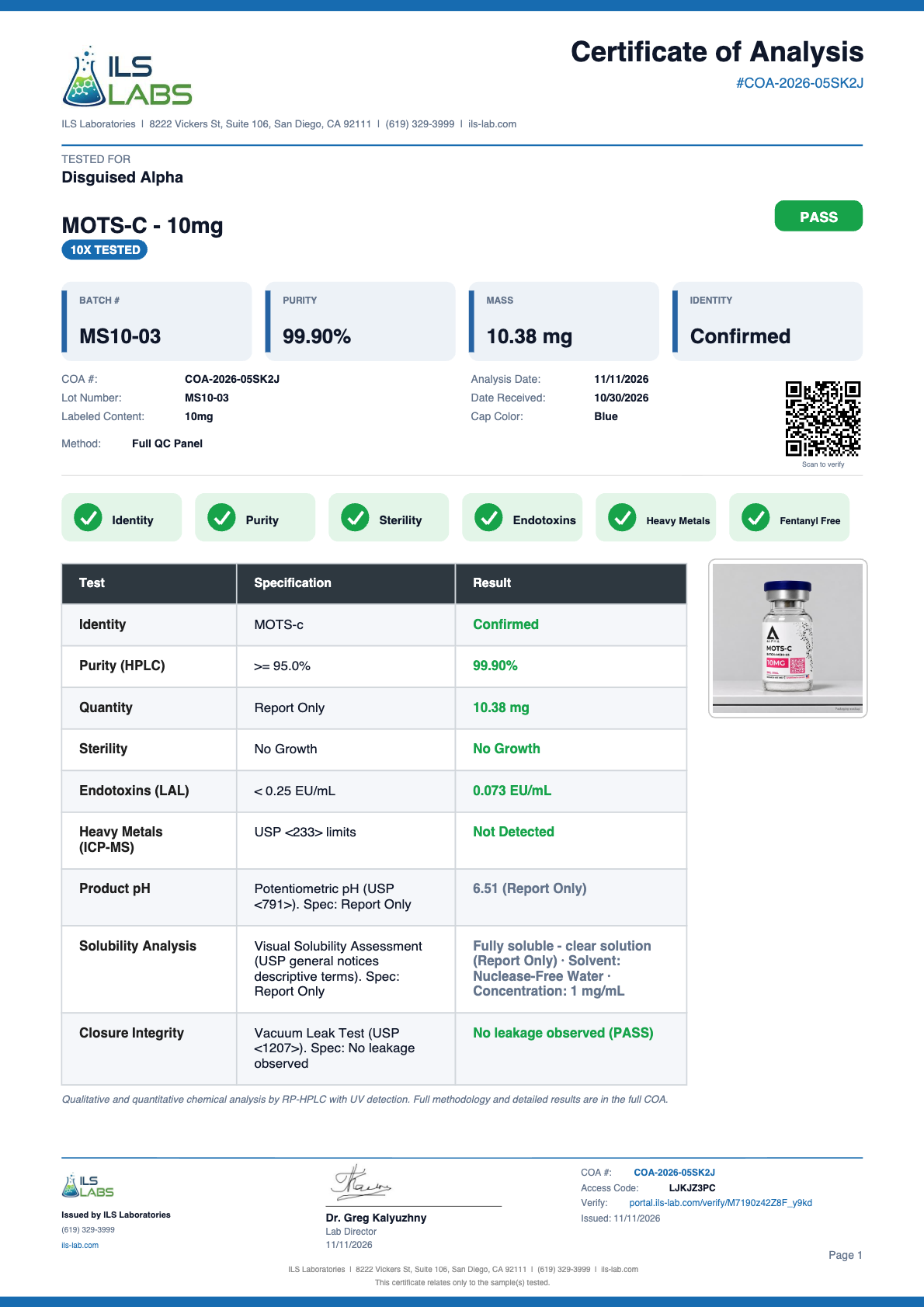
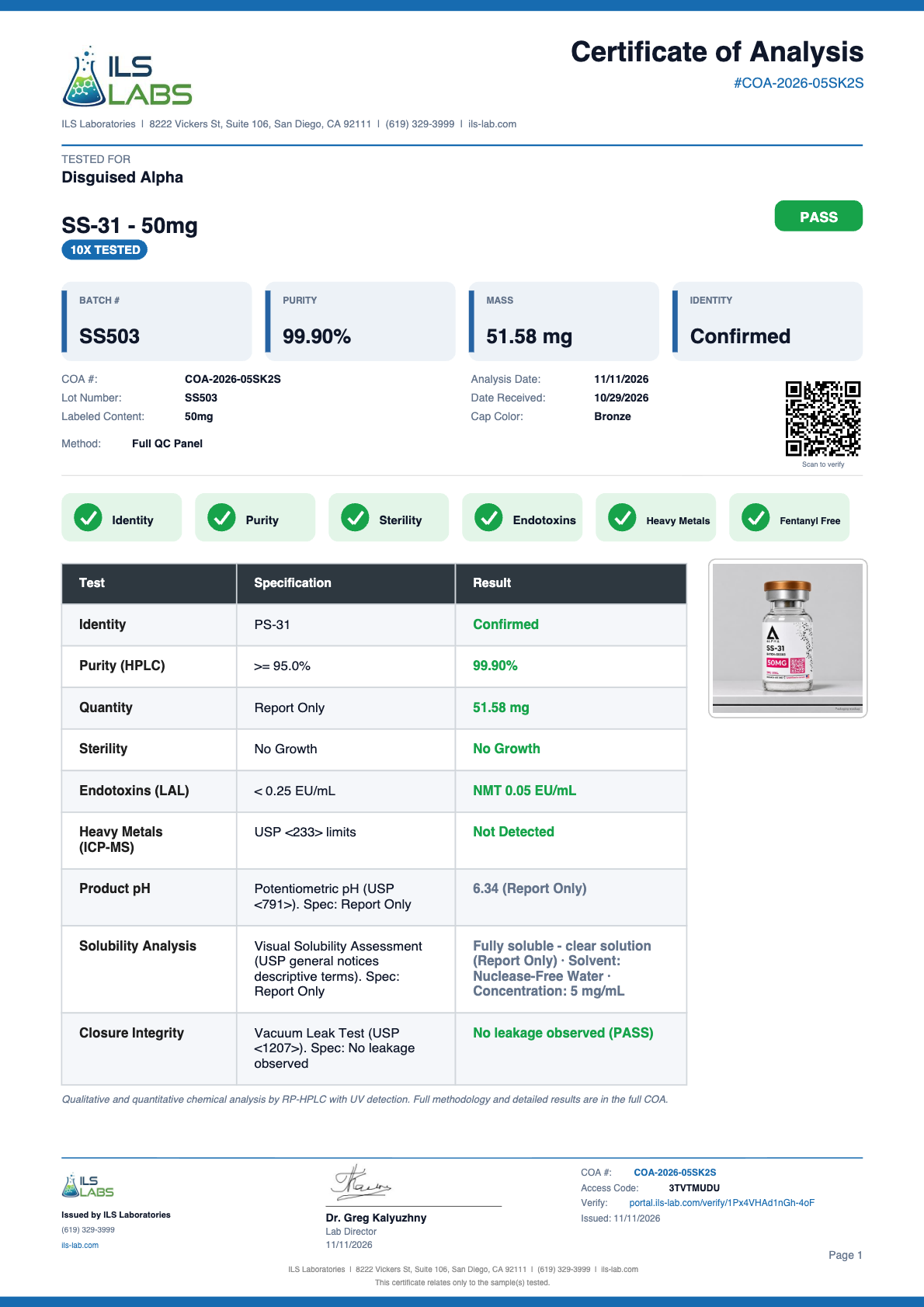
Closure integrity NEW ADDITION
Evaluates the integrity of the vial or container seal using the laboratory's stated method and acceptance criteria.
Why it matters The container is part of sample quality. Seal testing provides evidence about packaging integrity that chemical identity and purity measurements do not address.
09
Solubility analysis NEW ADDITION
Evaluates how the sample dissolves under the conditions specified by the laboratory. Read the solvent and test conditions on the report.
Why it matters Dissolution behavior matters when preparing consistent laboratory samples. Results are meaningful only alongside the conditions used for the test.
10
Product pH NEW ADDITION
Measures how acidic or alkaline the tested solution is under the specified test conditions. Review the result and stated range.
Why it matters Solution pH is an important experimental condition. A recorded pH helps researchers assess whether the tested sample fits their laboratory protocol.
Your batch report is the source of truth.
Testing coverage varies by product and batch. New additions are being introduced on new batches; older reports may contain fewer tests. A test is completed only when it appears on that batch's published report. “Pass” or “Conforms” refers to the laboratory's criteria for that test and does not establish suitability for human or veterinary use.
When comparing research suppliers, look beyond a purity badge or a test count. Compare the batch match, methods, measured results, and access to the original laboratory report.
What to compare in research peptide testing
What to check
A limited claim leaves open
The Disguised Alpha approach
Batch traceability
A product name or general testing badge alone does not identify a production lot.
Search product, strength, batch, or report number, then confirm the match on the original certificate.
Identity, purity & amount
A purity percentage alone leaves identity and measured quantity unconfirmed.
These are explained as three separate results. Check which results your batch report actually contains.
Contaminant coverage
A single purity result does not establish microbial, endotoxin, metal, or fentanyl results.
Each screen has its own entry in our expanded panel guide. The certificate establishes completion and limits.
Packaging & solution checks
An identity-and-purity report does not, by itself, document seal integrity, solubility, or pH.
Closure integrity, solubility analysis, and product pH are the announced additions for new batches, where applicable.
Source verification
A cropped screenshot may omit the method, date, specification, or laboratory verification details.
Open the original report and use the issuing laboratory's verification process where provided.
Fair test counts
Suppliers and labs may group the same measurements differently or apply different panels by formulation.
We list 10 testing checks individually. The actual methods and completed results matter more than the headline count.
Comparison scope: This compares documentation practices, not named suppliers or a measured industry average. Other suppliers may publish comparable or broader testing. Missing public information means coverage is unverified, not that testing was never performed. Compare equivalent products, batches, methods, and reporting dates.
DIRECT ANSWERS
Research peptide testing, explained.
Clear answers to common questions about expanded testing, report coverage, and comparing laboratory evidence.
What are the 10 testing checks in Disguised Alpha's expanded panel?
The expanded panel guide lists identity, purity, measured content, microbial testing, endotoxins, heavy metals, fentanyl screening, closure integrity, solubility analysis, and product pH. Up to 10 tests apply per batch; read the batch-specific report to see which checks were completed.
Does every Disguised Alpha product have all 10 tests completed?
No blanket 10-test completion claim is made. Coverage varies by product, formulation, and batch. Closure integrity, solubility analysis, and product pH are announced additions for new batches. A planned test is not a completed result until it appears on the published report.
Why add closure integrity, solubility analysis, and product pH?
These checks add information about the container seal and the tested sample's solution properties. They answer different questions from identity, purity, and measured content. Their significance depends on the product and the laboratory's specified test conditions.
Does a not-detected result mean there is zero contamination?
No. Not detected means the target was not detected under that method and its stated detection limit. It is not a claim of absolute zero, and it does not cover substances or organisms outside the test's scope.
Is a larger number of tests always a better comparison?
No. A panel can group purity and quantity together or list them separately. Compare the actual measurements, method suitability, sample details, detection limits, and batch relevance. A headline count alone does not establish broader or more reliable evidence.
How should I compare peptide testing between research suppliers?
Request the original report for the exact product, strength, and batch. Compare identity, purity, measured amount, specific contaminant screens, and any packaging or solution checks. Confirm dates and laboratory verification details. Treat unlisted tests as unverified.
Does a laboratory quality standard mean every peptide test is accredited?
No. A laboratory quality management system and the accreditation scope of an individual method are different. Check the laboratory's current scope rather than inferring coverage from an ISO reference. ILS states that its peptide testing is for research use and is outside any accreditation scope.
Explanations reviewed November 14, 2026. These references explain methods; they do not certify that any particular DA batch received every test.
Common questions
Understanding peptide COAs.
What is a certificate of analysis (COA)?
A COA is a laboratory report describing a tested sample, the methods used, and the reported results. Depending on the report, it may include identity, purity, measured content, or additional quality tests. Read the original certificate to see exactly what was tested.
How do I find the right COA for my product?
Search the product name or the batch number on your label. Check the labeled strength and compare the identifiers with the original laboratory report. If you cannot establish an exact match, contact support with your order and batch details.
Is a laboratory report number the same as a batch number?
Not necessarily. A report number identifies a laboratory document; a batch or lot number identifies a production lot. Entries labeled Report should not be treated as a batch match unless the original report or supporting documentation establishes that connection.
Which laboratories appear in this library?
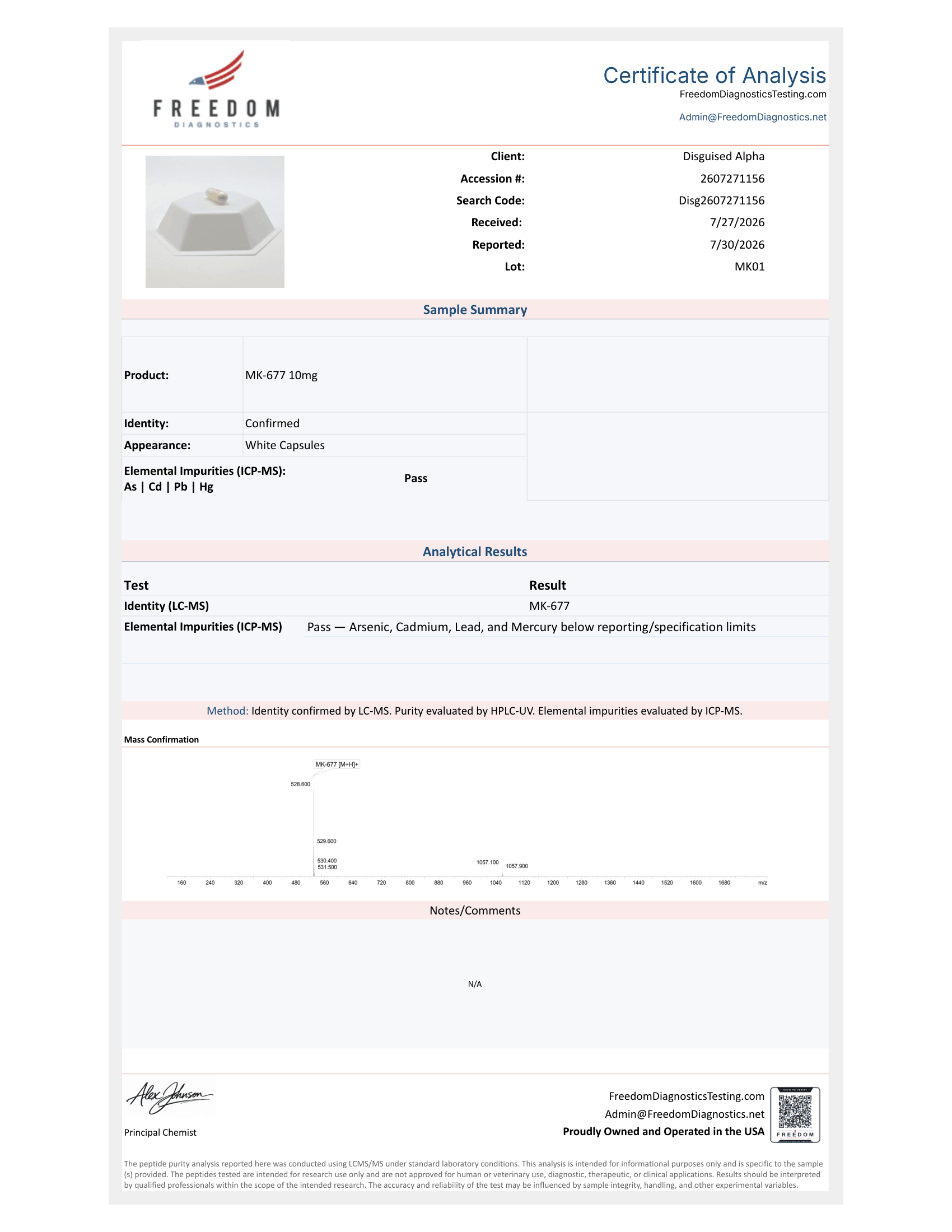
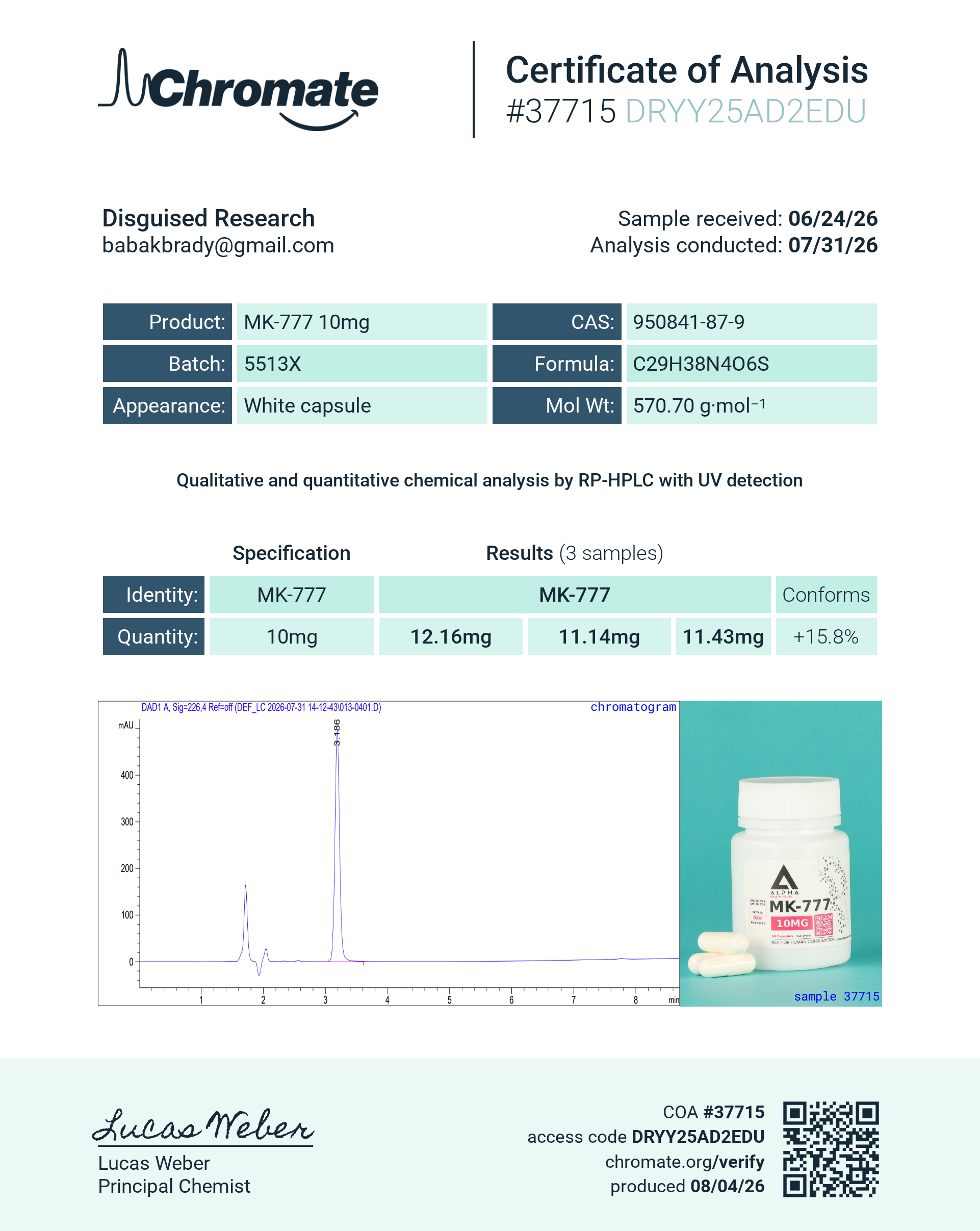
Published records include reports from Chromate, Freedom Diagnostics, Gold Standard Analytics, ILS Laboratories, Janoshik. The laboratory name is shown with each report. Refer to the original document for the issuing laboratory and the scope of its testing.
Does purity tell me how many milligrams are in a vial?
No. Purity and measured content are separate results. Purity is reported as a percentage under the stated method, while measured content is an amount with units such as milligrams. Check both fields and any individual sample results on the certificate.
Does an endotoxin or microbial screen prove sterility?
No. Endotoxin testing, microbial DNA screening, and growth-based sterility testing address different questions. Use the exact test name, method, and result shown on the report; do not infer an unlisted test.
Can I verify a COA with the issuing laboratory?
Use the verification link, QR code, or access code printed on the certificate where provided. Check that the laboratory's record matches the report number and sample details. If no verification method is supplied, contact the issuing laboratory or ask support for help.
What if my batch is missing or the report is older?
Historical reports may relate to earlier inventory and should not be substituted for an unmatched batch. Contact support with the product name, labeled strength, batch number, and order number so the correct documentation can be located.
Can't find the exact match?
Send support your product name, labeled strength, batch number, and order number.
For laboratory research use only. Not for human, veterinary, or food use. Certificates support transparency and sample verification; they do not establish safety, clinical efficacy, or regulatory approval.
25% offGLPs15% off automaticallyUse code GLP or any code for 25% off0days00hrs00min00secShop the sale →Shop
Your privacy choices
We share visit and purchase data with advertising partners to measure and show ads. Some US state laws, including California's, call that a sale or sharing of personal information. You can turn it off for this browser.